// book · by Ada Fenwick (pen name)
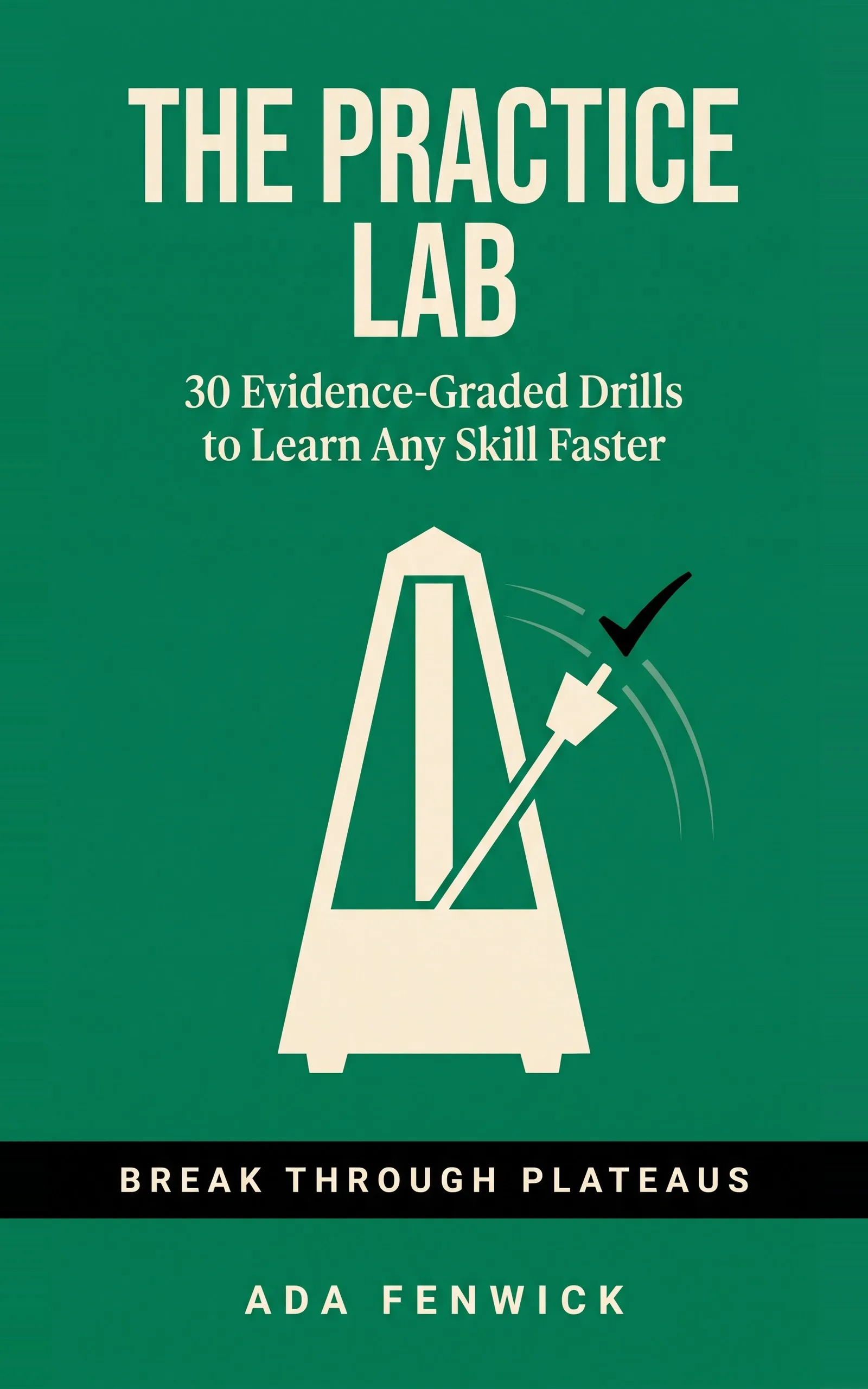
The Practice Lab
30 Evidence-Graded Drills to Learn Any Skill Faster, Break Through Plateaus, and Make It Stick
A lab manual for adults learning a skill, or coming back to one. Thirty drills, each with an honest badge for the evidence behind it.
Links go to Amazon. ToolGenX publishes this book under a pen name and earns from every sale. Amazon sets the price and handles delivery and returns.
This book is for general education about practice methods. It is not medical, physical therapy or coaching advice. If practice hurts, stop and see a qualified professional.
- author
- Ada Fenwick
- length
- 225 pages (paperback)
- formats
- Kindle, paperback
- sold by
- Amazon
This book is for you if
- You are picking up a skill, or coming back to one: piano, golf, pickleball, drawing or a language you speak
- You get it right at home, and it falls apart when it counts
- You practice a lot and still feel stuck at the same level
- You want drills with the evidence behind them, not slogans
Skip it if
- You are studying for an exam or trying to remember facts (the companion book Stop Rereading covers that)
- Practice hurts (pain is not part of any drill; see a teacher, coach, doctor or physical therapist)
// problems this book helps with
Start from your problem
Each page below answers one real question in plain words, then shows where The Practice Lab goes further.
- Blocked vs random practice: which one helps an adult learner more?
Random practice beats blocked practice in the lab. On real courts and in practice rooms the edge is small. Here is how to use both, in the right order.
- Does practicing in your head work? What three reviews of mental practice found
Mental practice helps a skill, but less than real practice. Three reviews over 27 years agree on a small to medium effect, best added to real reps.
- A gift for an adult learning an instrument or a new skill, beyond one more gadget
Shopping for a grown-up who just took up piano, guitar or pickleball? Give drills that show what works, plus an offer to be their first listener.
- How long should a practice session be, and how often should you practice?
No study backs 20 or 45 minutes. The evidence points to about an hour or less per sitting, most days, rather than one long weekend session.
- Is the 10,000-hour rule true? What the violin study really found
The 10,000-hour rule came from one violin study and a best-known retelling. Here is what the hours really showed, and what predicts progress better.
- You had it perfect last night. Why did it fall apart when it counted?
You played it clean ten times last night and lost it today. The research on practice versus learning explains why, and a three-minute check fixes it.
- Recital, match or big game tomorrow? How to spend tonight before the day
The night before a recital or match is too late to learn much new. Do one full run, protect your sleep and plan a real warm-up for the morning.
- Too old to learn an instrument or a sport at 50, 60 or 70? What the studies say
A 2008 review found older adults keep the ability to learn new movement skills. Here is what does change with age, and how to adjust your practice.
// Also on this topic
- guideYou studied it last night and it is gone today. Why that happens, and what fixes it
Read your notes three times and still blank on the first question? Familiar is not the same as remembered. Here is why, and a five-minute fix.
- guideAre learning styles real? What the research says about visual and auditory learners
Are you a visual learner? People have preferences, but teaching to a style has not held up. Here is what the research supports instead.
- guideDoes having your phone nearby hurt studying? The brain drain study, checked again
A 2017 study said a silent phone on your desk drains your thinking. A careful 2022 repeat did not find it. Here is what does cost you when you study.
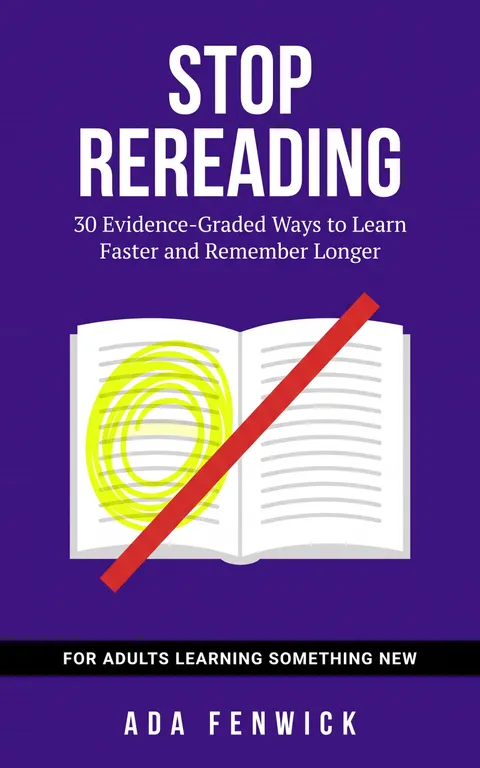
- bookStop Rereading
30 Evidence-Graded Ways to Learn Faster, Remember Longer, and Use What You Study, for Adults Learning Something New
A lab manual for the gap between practice and learning
Most practice advice comes as slogans. Put in your 10,000 hours. Practice makes perfect. The research behind those lines is more interesting, and far more useful.
The Practice Lab rests on one sentence from that research: a good practice session often feels worse than a bad one. In a 2001 keypad study, repeating one pattern over and over made practice look better and the next-day test worse. The learners still bet on the repetition.
Each chapter opens with an adult stuck on a skill: a pianist with a spreadsheet of hours, a pickleball player whose drops sail long, a grandmother learning sign language in one long Sunday session. Then it explains what the research found, including the parts that did not hold up. Then it hands you two drills to try at your next session, usually with a pen, a timer and the thing you are practicing.
Thirty drills, and an honest count
Every drill carries a badge. SOLID means it was tested on people more than once, or a review that pools many studies supports it. PROMISING means real evidence that is thin, small, indirect or mixed. STORY ONLY means a sensible, widely taught practice that has never had a proper test.
The count is 5 SOLID, 23 PROMISING and 2 STORY ONLY. That may look stingy. The book explains why: several famous findings were checked with better methods, and they shrank. A 2022 analysis found no significant effect from cutting back on feedback. A 2024 reanalysis found the benefit of focusing on a movement's effect "small to nil" once publication bias was corrected. A 2015 review concluded that sleep does not enhance motor learning, though it may help you keep what you practiced.
Even the five SOLID drills come with modest effects, and the book says so. Mental practice, for example, showed "a small but significant positive effect" once bias was checked.
Start where you are stuck
You can read it straight through, or take the fast path through Chapters 2, 7, 9 and 14. If you want to try the approach first, our free guides use the same drills and badges:
- Is the 10,000-hour rule true? What the violin study really found, and what to count instead.
- Practiced it perfectly, then messed it up? The Next-Day Test.
- Blocked vs random practice Why mixing wins in the lab and barely shows up outside it.
- How long should a practice session be? The typing study and the Practice Week Map.
- Does mental practice work? What three reviews found, and how to add imagined reps.
- Too old to learn an instrument? What a 2008 review found about older learners.
- Recital or match tomorrow? How to spend the night before.
Buying it for someone who just took up an instrument or a sport? Start with our gift page.
If you are also studying for a course or memorizing words, the companion book Stop Rereading covers knowledge: retrieval, spacing and remembering what you read.
Who it is for, and who it is not
It suits you if you are picking up a skill or coming back to one, like piano, golf, pickleball, drawing or a language you speak. It suits you if you get something right at home and it falls apart when it counts, or if you practice a lot and still feel stuck at the same level. It also suits anyone who wants drills with the evidence behind them, not slogans.
It is not for you if you are studying for an exam or trying to remember facts; Stop Rereading covers that. It is not for practice that hurts. Pain is not part of any drill. See a teacher, coach, doctor or physical therapist. The book is general education about practice methods, not medical, physical therapy or coaching advice.
What is inside
- The 10,000-hour story, checked: where the number came from, and what the violin study and its 2019 replication found
- The Next-Day Test, a three-minute cold check that shows whether a session actually stuck
- Blocked or mixed practice, and why the big lab advantage of mixing shrinks on real courts and in practice rooms
- Short sessions spread out: the Practice Week Map, one of the best-supported drills in the book
- What sleep really does for a skill, and why the famous overnight boost mostly vanished in better studies
- Practice in your head that helps, and why it adds to real practice instead of replacing it
- Plateaus, breaking a skill into chunks, learning from misses, filming yourself and shaking off the rust
- Four sample four-week plans (an instrument, a sport, a spoken language and drawing) and Practice Log pages
Chapters
- 01How to Use This Lab
- 02The 10,000-Hour Story, Checked
- 03Practice Is Not Performance
- 04One Clear Target and the Right Feedback
- 05Blocked or Mixed?
- 06Vary It
- 07Where Your Attention Goes
- 08Short Sessions, Spread Out
- 09Sleep and Skill
- 10Practice in Your Head
- 11Plateaus
- 12Break It Down, Build It Back
- 13Learn from Mistakes
- 14Choosing Your Own Practice
- 15Watch, Copy, Get Coached
- 16Keep It: Overlearning and Coming Back
- 17Practice Plans
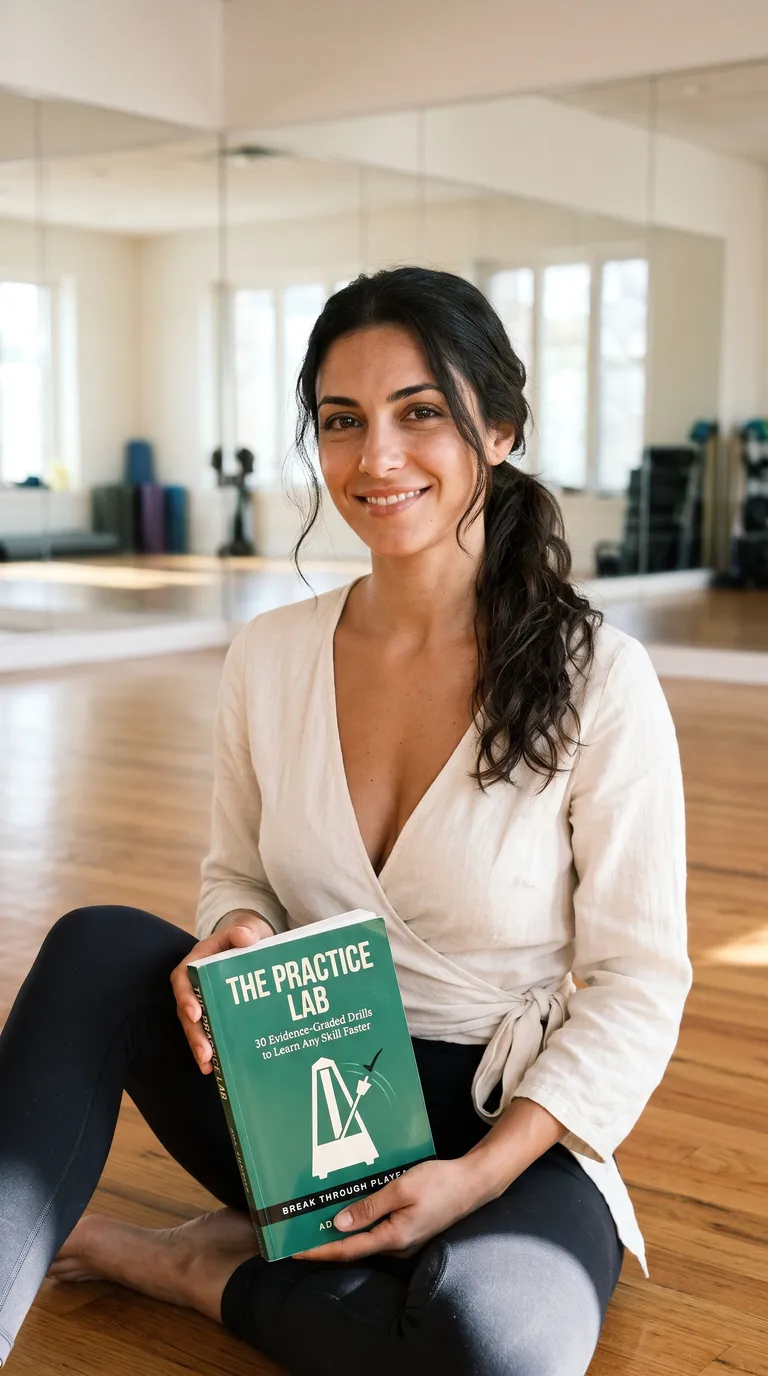
The paperback, up close





Questions about The Practice Lab
- Who is The Practice Lab for?
- Adults picking up a skill, or coming back to one, on top of a full life. The examples include piano at 49, pickleball, golf, swimming, sign language, a guitar chord change and a wedding toast. It is not written for children or for studying facts for an exam.
- Why are so many drills only PROMISING?
- Because that is the honest score for this field. Research on learning movement skills has many small studies, and several famous findings shrank when checked with better methods: cutting back on feedback, focusing on the effect of a movement and the overnight sleep boost. PROMISING means real evidence that is thin, small or indirect. The five SOLID drills cover next-day checks, spreading sessions out, practice in your head and watching a good model.
- How is it different from Stop Rereading?
- Both are by Ada Fenwick and use the same badges. Stop Rereading is the companion book for knowledge: studying, exams and remembering what you read. The Practice Lab is for skills you do with your hands, voice or body. If you are learning words for a language, Stop Rereading covers that; speaking the language is here.
- Do I have to read it in order?
- No. The fast path is four chapters: Chapter 2 for the Next-Day Test, Chapter 7 for the Practice Week Map, Chapter 9 for practicing in your head and Chapter 14 for learning from a model. Those four hold all five SOLID drills. Come back to the rest when you hit a specific problem.
- Is it safe to use if I have an injury?
- The book is general education, not medical, physical therapy or coaching advice. Its one safety rule sits above every drill: pain is not part of the method. Stop and ask a professional. If you are resting an injury, ask your doctor or physical therapist before adding any reps, even imagined ones.
Get The Practice Lab
Thirty practice drills for adults learning a skill, each traced to its research and badged SOLID, PROMISING or STORY ONLY, from the Next-Day Test to shaking off the rust.
Links go to Amazon. ToolGenX publishes this book under a pen name and earns from every sale. Amazon sets the price and handles delivery and returns.