// book · by Ada Fenwick (pen name)
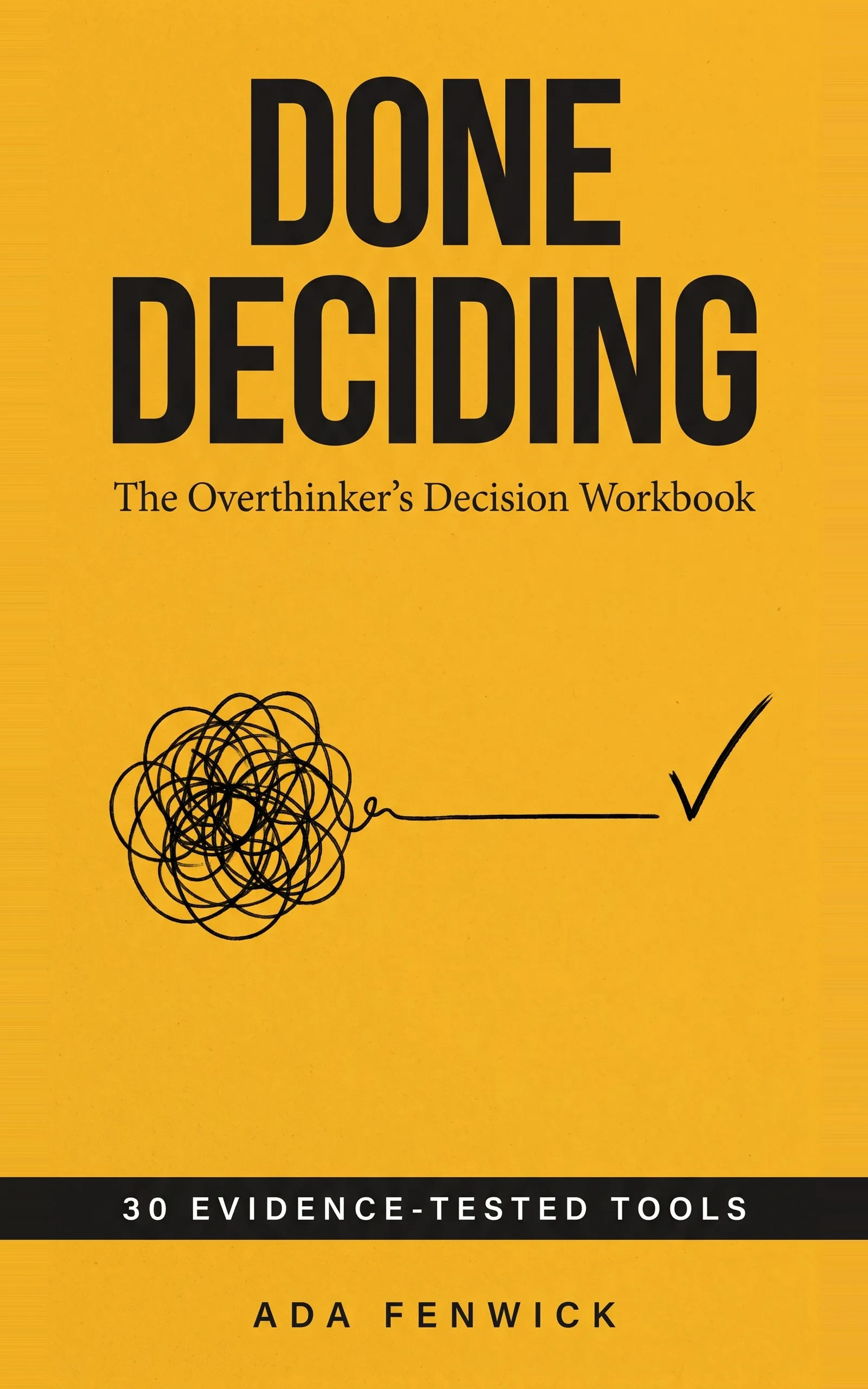
Done Deciding
The Overthinker's Decision Workbook. 30 Evidence-Tested Tools to Make Hard Choices Faster, Quiet the What-Ifs, and Stop Second-Guessing
A workbook for people who think twice, then a third time, then lie awake. Thirty small tools, each with an honest badge for the evidence behind it.
Links go to Amazon. ToolGenX publishes this book under a pen name and earns from every sale. Amazon sets the price and handles delivery and returns.
- author
- Ada Fenwick
- length
- 207 pages (paperback)
- formats
- Kindle, paperback
- sold by
- Amazon
This book is for you if
- You reread the same pros-and-cons list for days and still cannot choose
- You chose already and keep replaying it at night
- You ask everyone for an opinion before every decision
- You want decision tools with the evidence behind them, not pep talks
Skip it if
- You want treatment for anxiety (the book is not therapy)
- You want someone to tell you what to decide, or financial, legal or medical advice
// problems this book helps with
Start from your problem
Each page below answers one real question in plain words, then shows where Done Deciding goes further.
- Afraid of making the wrong decision? Find out what you are scared of losing
When the facts point one way and you still cannot move, a fear is usually holding the door. Name it in five minutes, then size the regret.
- You keep asking everyone for advice before you decide, and it never settles it
Polling friends until someone says it will be fine? Sort advice that taught you something from asking that only soothed you, then ask one person well.
- Bad decision or bad luck? How to judge a choice that went wrong
A choice went wrong and you blame yourself. Split it into what you knew and what you could not control, then keep only the lesson about how you chose.
- Can't stop thinking about a decision you already made? Give it a time slot
The choice is made but the replay runs all day. Close the door first, then move the what-ifs into one short daily worry window. Here are the rules.
- A gift for an overthinker that helps, without telling them to just relax
Shopping for someone who overthinks every choice? Give small tools they can use at 11 p.m., plus one offer from you that beats any pep talk.
- You have to make a decision by tomorrow and you still can't choose
A decision is due tomorrow and you are stuck. Size it in two minutes, set a default, make one call, and break a true tie with a coin.
- Small decisions take you forever? How to make everyday choices faster
Fourteen tabs for one laptop? Write a good-enough bar before you look, turn repeat choices into rules, and see what the decision fatigue research found.
- Stuck in analysis paralysis? Check whether you are thinking or just spinning
Stuck in analysis paralysis? A five-minute test shows whether you are still learning or just looping, and what to do next in each case.
// Also on this topic
- guideYou read it three times and still can't explain it. The Feynman technique, done properly.
Feel like you understand something until you try to explain it? That gap is normal. Here is the explain-it test, the study behind it, and how to run it.
- guideHow to keep a decision journal: what to write, and when to look back
How to keep a decision journal: the six fields to write before you decide, when to review, and how to judge the choice apart from how it turned out.
- guideHow to build a memory palace when you have never tried one before
A memory palace uses a place you know to hold a list. Here is how to build your first one in 20 minutes, why it works, and what the studies found.
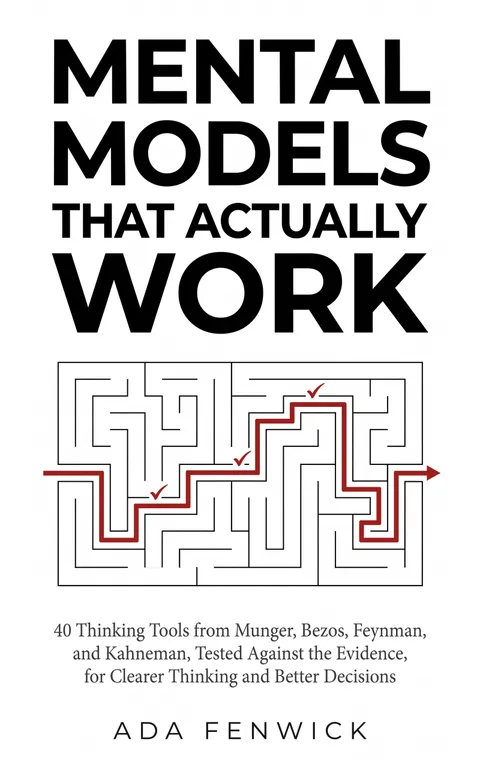
- bookMental Models That Actually Work
40 Thinking Tools from Munger, Bezos, Feynman, and Kahneman, Tested Against the Evidence, for Clearer Thinking and Better Decisions
A workbook that treats a decision as finished only when you stop reopening it
Most books for overthinkers do one of two things. Some say trust your gut and be kind to yourself, which is warm but leaves you nothing to do at 11 p.m. Others hand you forty thinking tools at once.
Done Deciding sits between them. Each chapter opens with a person stuck on a real choice, like a job offer, a move, a daycare or a youth soccer team someone no longer wants to coach. Then it gives two small tools. Each takes a pen and a few minutes.
The book also does something most decision books skip. Choosing is half the work. The other half is closing the door, quieting the replay and judging the choice fairly later. Part IV is about that second half.
Thirty tools, and an honest count
Every tool carries a badge. SOLID means it was tested on people more than once and held up. PROMISING means real evidence that is thin, small or indirect. STORY ONLY means a sensible practice nobody has properly tested.
The count is 1 SOLID, 19 PROMISING and 10 STORY ONLY. The one SOLID tool is the Worry Window, a daily slot for the what-ifs, and even there the book says plainly that the effect in trials was small but real.
Ada Fenwick explains why the count matters. An overthinker is already hard on their own judgment. If a book promises a tool "works" and it does not work for you, you blame yourself. The badges tell you how much weight each tool can hold before you lean on it.
What the myth checks remove
Near the end of most chapters, a myth check takes one popular claim and reports what the research found. The willpower-tank idea of decision fatigue did not hold up in two large multi-lab tests. The jam study is usually retold with the wrong percentages. Nobody has traced "35,000 decisions a day" to a study. The idea that we mostly regret what we did not do shrank to a 51 to 49 split in a large replication.
The book also names two well-known papers that were retracted, one on deadlines and one on rituals, and builds nothing on them.
Start where you are stuck
You can read it straight through, or open the Decision Map at the back and find the line that sounds like you. If you want to try the approach first, our free guides use the same tools and badges:
- Stuck in analysis paralysis? The five-minute test for thinking versus spinning.
- Afraid of making the wrong decision? Name the fear, then size the regret.
- Have to decide by tomorrow? Triage, a default and an honest coin flip.
- Can't stop replaying a decision? The rules of the Worry Window.
- Bad decision or bad luck? The two-column review.
Buying it for someone who overthinks? Start with our gift page.
Who it is for, and who it is not
It suits you if you reread the same pros-and-cons list for days, if you chose already and keep replaying it at night, or if you ask everyone for an opinion before every choice. It also suits anyone who wants decision tools with the evidence behind them, not pep talks.
It is not for you if you want treatment for anxiety, or if you want someone to tell you what to decide. It gives no financial, legal or medical advice. Its chapters on money show how to decide, not what to buy.
What is inside
- The New-Information Test: five minutes to see whether you are still deciding or just spinning
- Name the Fear: the five fears that sit under most stuck choices, and a sentence that turns dread into something you can weigh
- A Two-Minute Triage and a deadline card, so the menu board gets ten minutes and the lease gets real attention
- Fast tools for small choices: a good-enough bar written before you look, personal if-then rules and the coin flip done honestly
- A field guide to the five decisions that keep people up: a job, a big purchase, a move, a relationship and quitting
- The part most decision books skip: closing the door, the Worry Window (the one SOLID tool) and judging the choice instead of the luck
- Myth checks on the willpower tank, the jam study, 35,000 decisions a day and two well-known papers that were retracted
- A one-page Decision Map, a 30-Day Decisiveness Plan, Decision Log pages, a Worry Window log and a reps tracker
Chapters
- 01How to Use This Book
- 02The Loop: Are You Thinking, or Just Spinning?
- 03What You're Protecting: The Fear Underneath the Choice
- 04Not Deciding Is a Decision: What Waiting Chooses for You
- 05How Big Is This, Really? Give Each Decision the Time It Actually Deserves
- 06Small Decisions, Fast: Three Ways to Stop Giving Little Choices Big-Decision Energy
- 07Get Out of Your Own Head: Give Yourself the Advice You'd Give a Friend
- 08More Than Two Options: Stop Choosing Between Yes and No
- 09See Both Futures: Picture the Life You Want, Then Look at What's in the Way
- 10Weigh It Without Drowning: Fewer Columns, Smaller Regrets
- 11Stop Polling Everyone: Ask Well, Ask Once, Then Decide
- 12Field Guide: The Five Decisions That Keep People Up
- 13Close the Door: Why a Final Choice Feels Better Than an Open One
- 14Quiet the Replay: Give the What-Ifs a Time Slot and Get Your Day Back
- 15Judge the Decision, Not the Result: How to Stop Grading Yourself on Luck
- 16Becoming Someone Who Decides: Small Reps That Make Big Choices Easier
- 17The Decision Map
- 18Workbook Pages
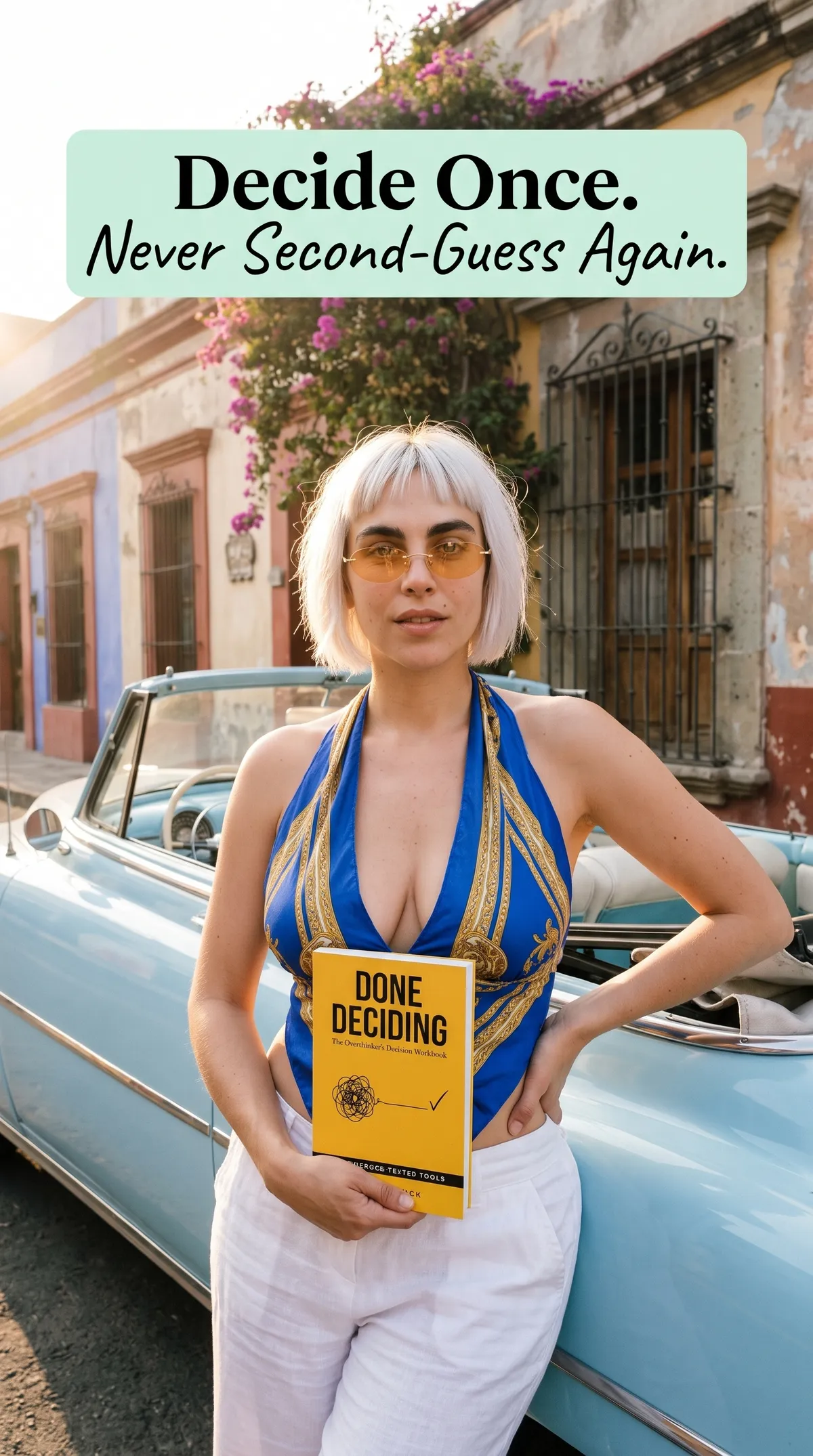
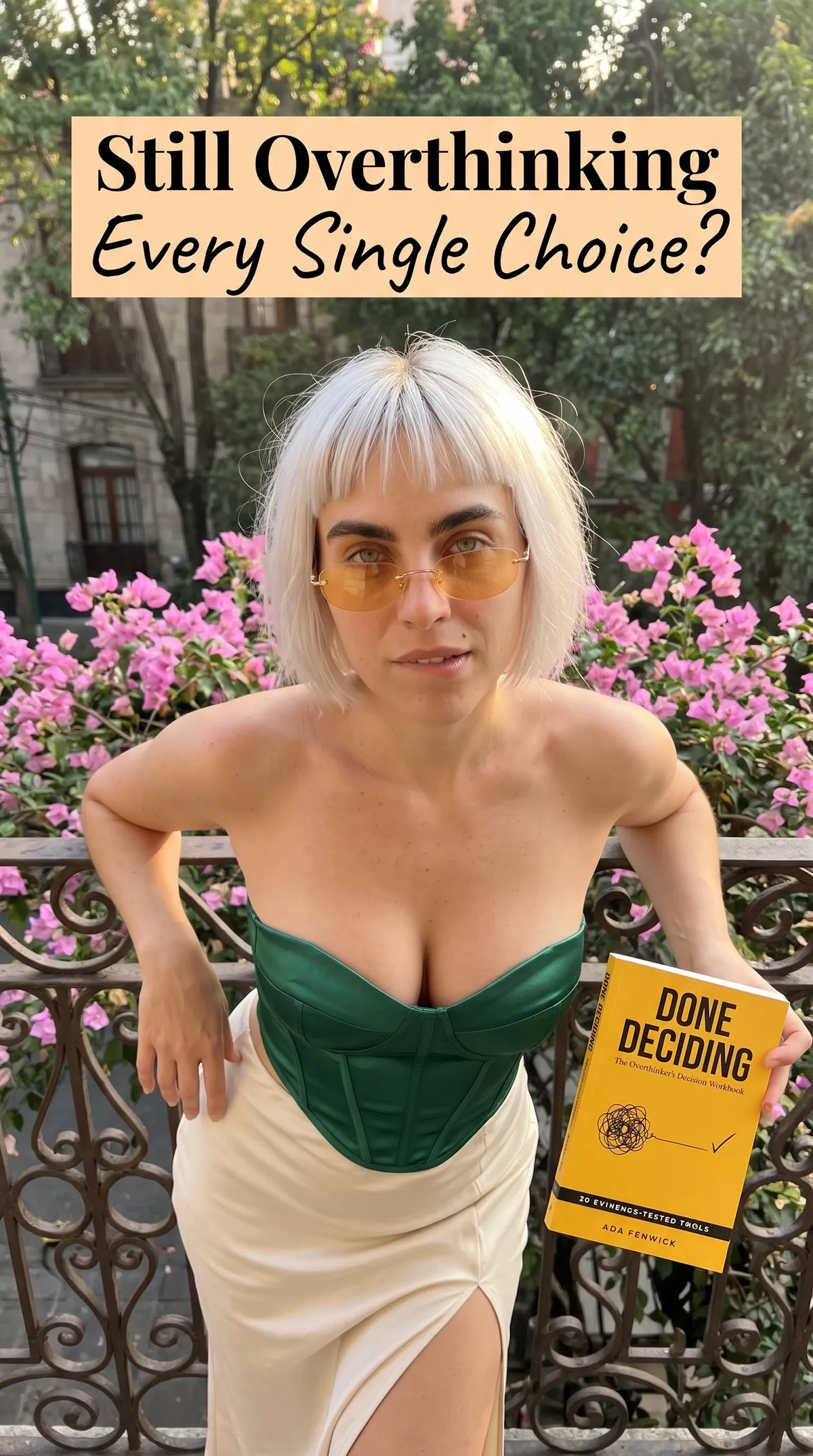
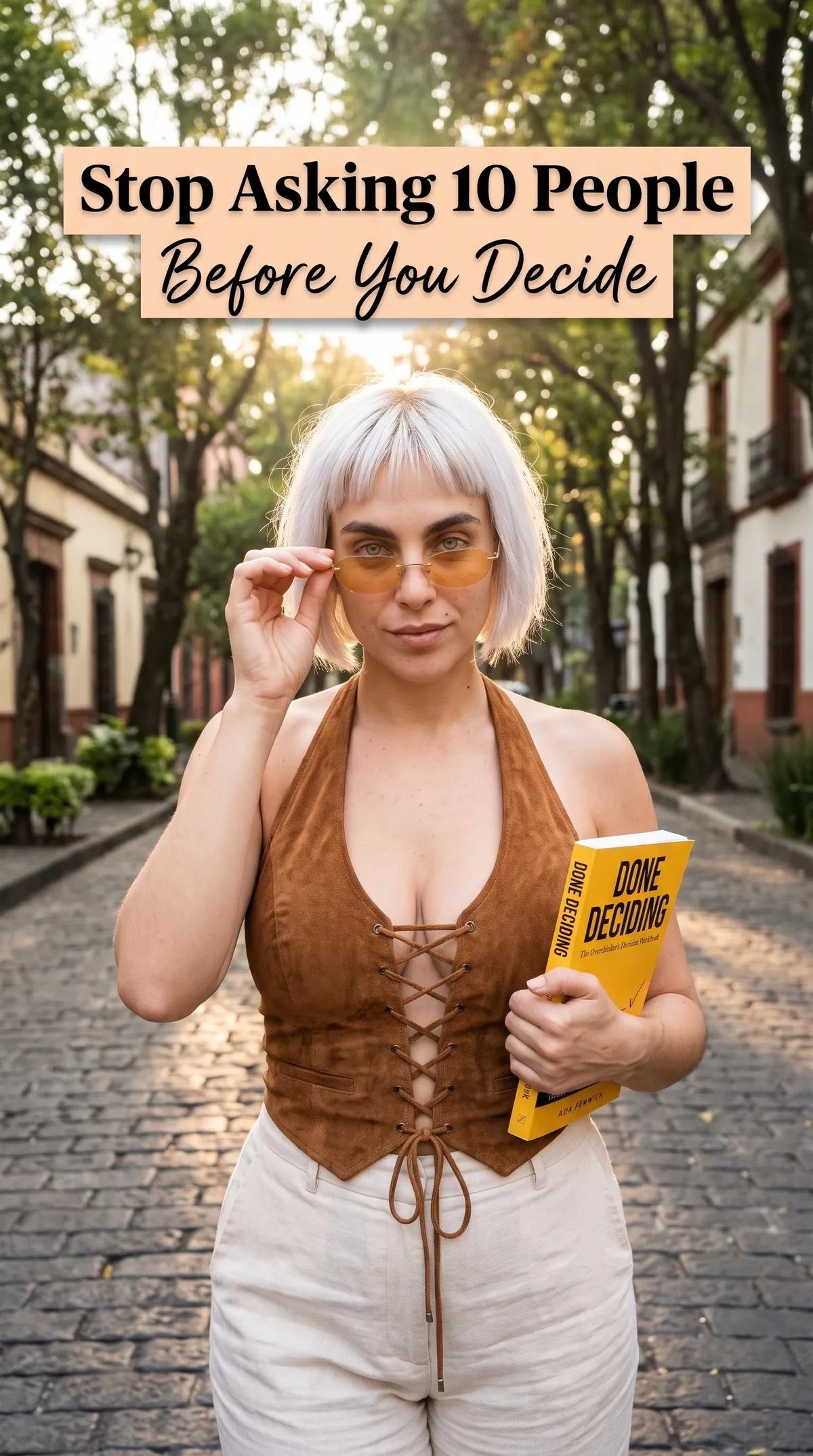
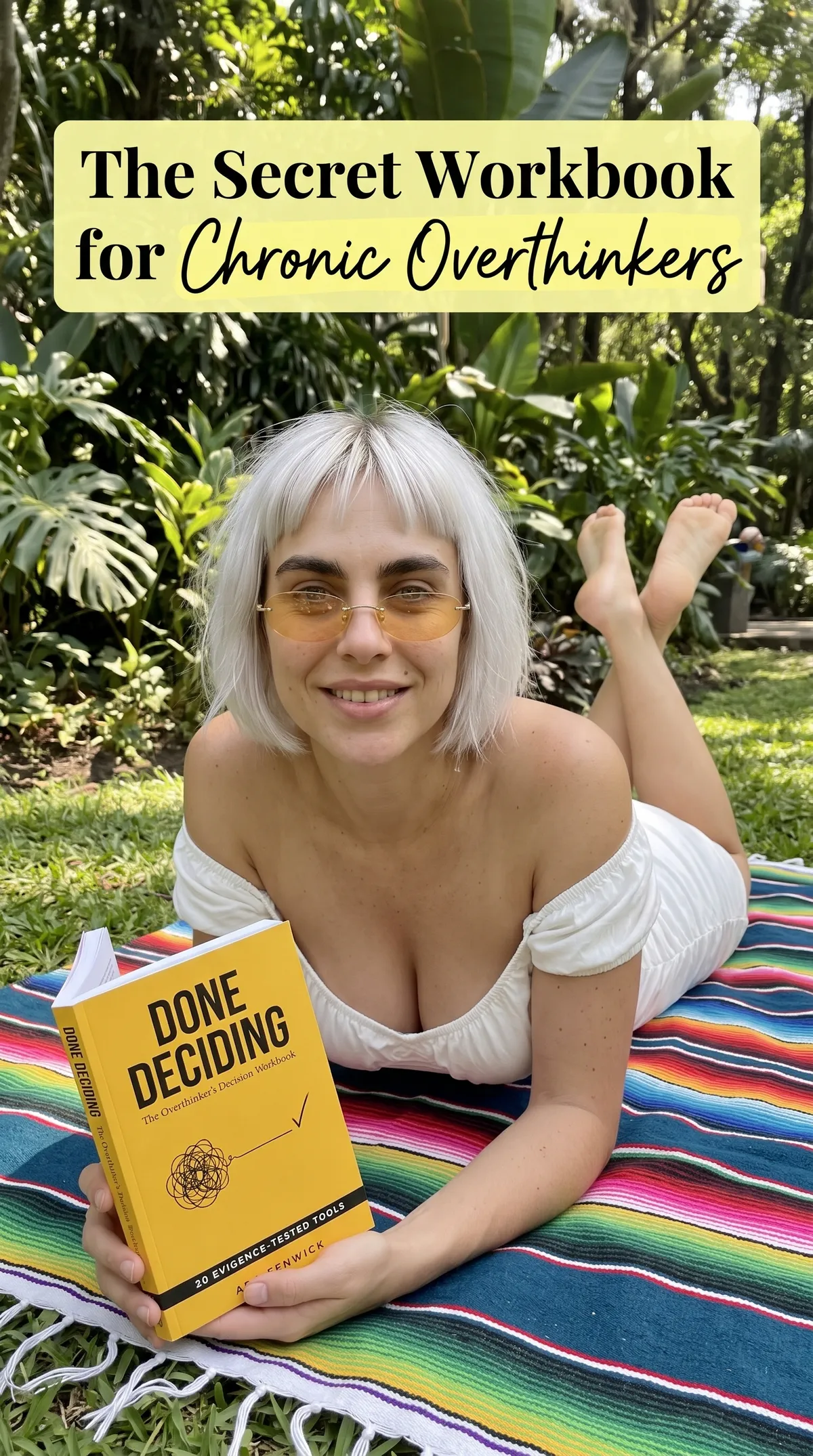
The paperback, up close





Questions about Done Deciding
- Is Done Deciding therapy or a treatment for anxiety?
- No. It is a set of tools for making and closing decisions, and it says so on its first pages. It quotes the US National Institute of Mental Health on generalized anxiety: if worry has been hard to control on most days for at least 6 months, or it is wearing down your sleep, work or relationships, talk to a health care provider.
- Why does only one tool get a SOLID badge?
- Because that is the real score. Decision research is younger and messier than the books built on it, and many tools that feel useful have never been tested the way people use them. STORY ONLY does not mean useless. It means the honest answer to "does this work?" is "try it and see."
- How is it different from Mental Models That Actually Work?
- Both are by Ada Fenwick and use the same honest badges. Mental Models That Actually Work is the deeper toolkit of 40 thinking tools. Done Deciding is shorter cards for the overthinker, and it spends a whole part on what happens after you choose: closing the door, quieting the replay and judging the decision fairly.
- Do I have to read it in order?
- No. If a decision is due tonight, start with the Two-Minute Triage in Chapter 4, then use the Decision Map at the back to find the tool for your stuck moment. Reading straight through also works, since the first three chapters explain why the loop is so hard to break.
- Kindle or paperback?
- The tools are the same. The paperback has lines to write on, including Decision Log pages, a page for picturing the day you want, a Worry Window log and a reps tracker. With the Kindle edition, you copy the fields from each card into a notebook.
Get Done Deciding
Thirty small decision tools for overthinkers, each traced to its research and badged SOLID, PROMISING or STORY ONLY, from the first loop test to closing the door after you choose.
Links go to Amazon. ToolGenX publishes this book under a pen name and earns from every sale. Amazon sets the price and handles delivery and returns.