Last updated
Too old to learn an instrument or a sport at 50, 60 or 70? What the studies say

Fifty-eight, a keyboard and a quiet doubt
Picture a keyboard on a desk in a spare bedroom. Its owner is 58. He always meant to learn piano, and this winter he finally bought one.
Three weeks in, he can play a simple melody with his right hand. Adding the left hand feels like patting his head and rubbing his belly. His nine-year-old granddaughter plays the same piece after a week of lessons.
That night he types a question into his phone. Is it too late to learn an instrument at 58?
It is a fair worry. It is also one that research can answer better than a pep talk can. The short answer is that age changes the speed and the plan. It does not shut the door.
What a 2008 review found about older learners
In 2008, Voelcker-Rehage reviewed the studies on movement skills in older adults. The finding has two halves, and both matter.
The first half is the hard one. Motor performance tends to decline with age. Gains in complex fine-motor tasks may be smaller.
The second half is the one to hold on to. Older adults' "learning capabilities remain intact." The ability to get better with practice is still there.
The book sums it up in one short line: smaller is not zero.
Other findings point the same way. In a small 2016 study by Bugos and colleagues, 17 adults aged 60 to 85 completed 30 hours of piano training. They had little or no musical training before. It is a small group, and the book cites it only to show that age is not a wall.
A review of sports studies by Macnamara and colleagues found that highly skilled athletes "did not begin their sport earlier in childhood" than others. The idea that you must start as a child is weaker than it sounds.
And the strongest predictor in the book's piano research was not age or talent. In a 2009 study of 17 advanced pianists, the share of clean attempts predicted next-day playing better than minutes did. That is something you can change at any age.
Where age does change the plan
Age does not close the door, but it does tilt a few choices.
Block first, then mix. Mixing skills in a random order is popular coaching advice. For older adults the studies disagree. One 2024 analysis found a large benefit of random practice in older adults. Data reported by another group found adults over 65 doing better with blocked practice. Until that is settled, the book's advice in Blocked or Mixed? is the safer bet: block a new skill until it works, then mix it.
Do not trust the overnight story. You may have read that you wake up better after sleep. That claim mostly vanished once better studies controlled for fatigue and time of day. For older adults, Sleep and Skill reports mixed results. A 2014 study by Fogel and colleagues found that "older subjects did not exhibit sleep-dependent gains in performance." A 2015 study by Gudberg and colleagues found that older adults did improve after sleep on a whole-hand task, though not with single fingers. The book's advice: expect no morning surprise, and never read a flat morning as a verdict on your age.
Judge tomorrow, not tonight. A session that ends well can look worse the next day, at any age. A cold check the next morning, before warm-up, tells you what stuck.
Coming back to a skill you had years ago
Many people past 50 are not starting from zero. They played tennis at 25 or piano at 12, then life took over.
The book's last chapter, Keep It: Overlearning and Coming Back, covers that return. A 1998 review by Arthur and colleagues pooled 189 data points from 53 articles. Skill loss grew with time off, from almost nothing right after training to a large loss after more than a year away.
Skills do not fade evenly, though. Physical tasks held up better than thinking tasks. Tasks built on accuracy faded more than three times as much as speed-based ones. So expect your swing or your touch to come back before your aim does.
There is also a smaller, short-lived rust after any rest, called warm-up decrement. In a 1993 study of skilled tennis players, a few practice swings cleared it. So warm up with real reps before you judge how rusty you are.
That chapter's Rust Check (PROMISING) puts this into steps. Warm up first. Test two or three key parts with five tries each. Note which slipped most, and make that next week's target. Repeat the check the next day before you decide how much you lost.
The Practice Lab was written for adults in exactly this spot: picking up a skill, or coming back to one, on top of a full life. Its Practice Plans section includes a month-long plan for an instrument, built around short sessions most days. It repeats the book's one safety rule too. Pain is not part of the method. Stop and ask a professional.
If you are buying for someone else who just started, see our gift for an adult learning an instrument.
The book for this problem
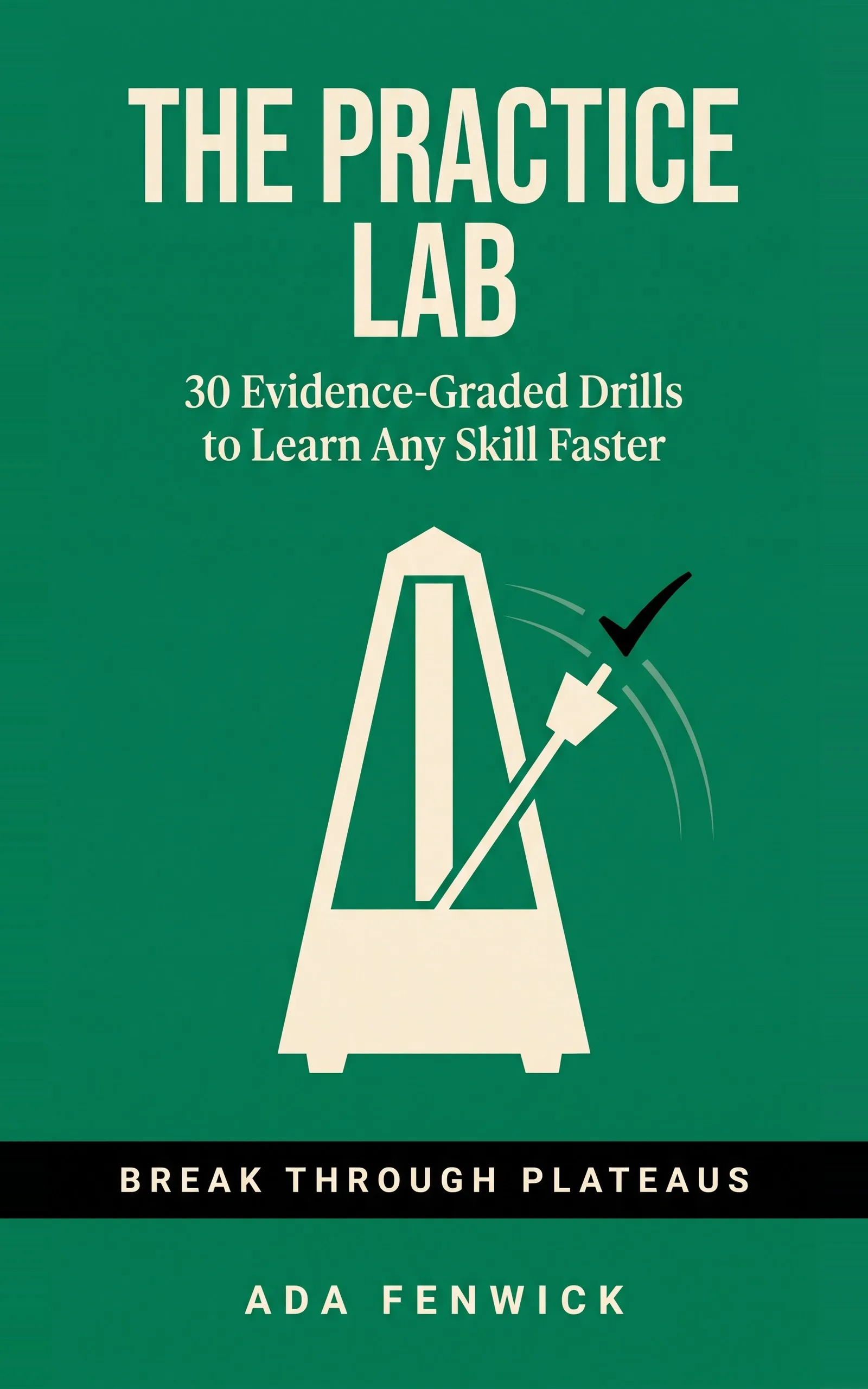
The Practice Lab
30 Evidence-Graded Drills to Learn Any Skill Faster, Break Through Plateaus, and Make It Stick. By Ada Fenwick, 225 pages.
Where this problem is in the book:
- Keep It: Overlearning and Coming Back
- Blocked or Mixed?
- Sleep and Skill
- Practice Plans
Links go to Amazon. ToolGenX publishes this book under a pen name and earns from every sale. Amazon sets the price and handles delivery and returns.
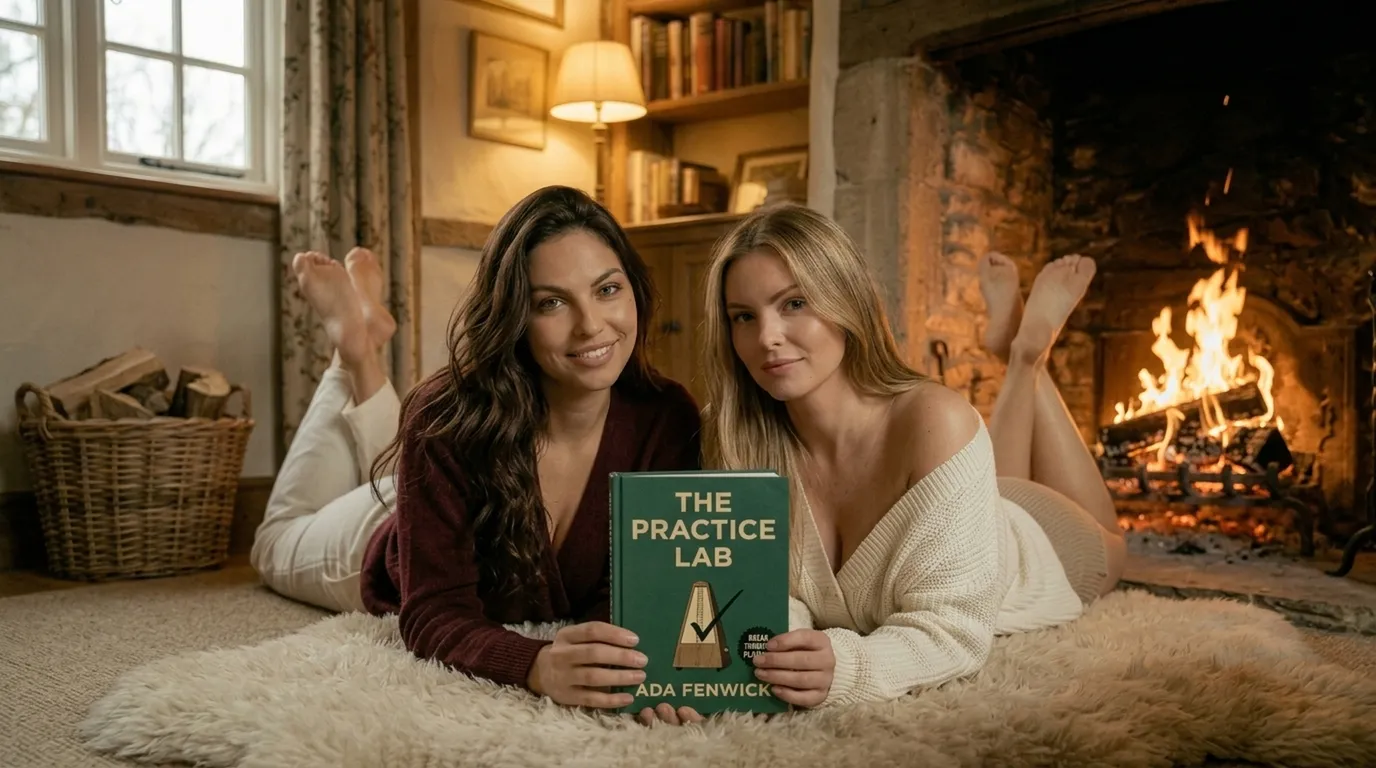
Is The Practice Lab the right book for you?
Yes, if
- You are starting an instrument, a sport or a language after 50 and quietly wonder if it is too late
- You are coming back to a skill you had years ago and feel rusty
- You want the research on age, not a pep talk
Skip it if
- Practice causes pain, numbness or strain (stop and see a doctor or physical therapist)
- You want a promise that you will play like someone who started at six
Fair doubts before you buy
Everyone good started as a kid. Is that not proof?
Not in the research the book cites. A review of sports studies found that highly skilled athletes "did not begin their sport earlier in childhood" than others. Practice matters a lot, but the hours you start at 50 still count, and how you use them matters more than when you began.
Are you just being encouraging?
We try not to be. The same 2008 review says motor performance tends to decline with age, and gains on complex fine-motor tasks may be smaller. The book reports that plainly. Its point is narrow: smaller gains are still gains, and the ability to learn is still there.
Get The Practice Lab
Thirty practice drills for adults learning a skill, each traced to its research and badged SOLID, PROMISING or STORY ONLY, from the Next-Day Test to shaking off the rust.
Links go to Amazon. ToolGenX publishes this book under a pen name and earns from every sale. Amazon sets the price and handles delivery and returns.
This book is for general education about practice methods. It is not medical, physical therapy or coaching advice. If practice hurts, stop and see a qualified professional.

Questions people ask about this
- Is 50 too old to learn an instrument?
- No. A 2008 review of motor skill learning in older adults found their "learning capabilities remain intact." Progress on fine finger work may be slower than for a child. In one small study, adults aged 60 to 85 with little or no musical background completed 30 hours of piano training.
- Is it too late to get good at a sport in my 60s?
- It is not too late to improve. Highly skilled athletes, a review found, did not start their sport earlier in childhood than others. Expect slower gains on fine, precise moves and plan for them. Short sessions most days and a cold check the next morning help at any age.
- Does sleep still help older adults learn a skill?
- The evidence is mixed and depends on the task. One 2014 study found no sleep-related gains for older adults. A 2015 study found older adults did improve after sleep on a whole-hand task, but not with single-finger moves. A flat morning is not a verdict on your age.
- Should older adults use blocked or random practice?
- The studies disagree. One analysis found a large benefit from random practice in older adults, while other data found adults over 65 doing better with blocked practice. The book suggests starting a new skill in a block, then mixing it once it works, which is safe under both findings.
- Will I get my old skill back after years away?
- Expect some rust, and plan for it. A 1998 review found skill loss grows with time off and is large after more than a year. Physical skills held up better than thinking tasks, and speed held up better than accuracy. Expect your swing or touch to be there before your aim is.
Related problems
- Is the 10,000-hour rule true? What the violin study really found
The 10,000-hour rule came from one violin study and a best-known retelling. Here is what the hours really showed, and what predicts progress better.
- Does practicing in your head work? What three reviews of mental practice found
Mental practice helps a skill, but less than real practice. Three reviews over 27 years agree on a small to medium effect, best added to real reps.
- A gift for an adult learning an instrument or a new skill, beyond one more gadget
Shopping for a grown-up who just took up piano, guitar or pickleball? Give drills that show what works, plus an offer to be their first listener.
- Everything inside The Practice Lab
Every chapter, who the book is for, and every problem it helps with.
// Also on this topic
- guideTaking notes by hand or on a laptop: what the repeat studies found
The famous laptop note-taking study did not hold up when it was repeated. Here is what the newer studies found, and what matters more than the pen.
- guideDoes having your phone nearby hurt studying? The brain drain study, checked again
A 2017 study said a silent phone on your desk drains your thinking. A careful 2022 repeat did not find it. Here is what does cost you when you study.
- bookStop Rereading
30 Evidence-Graded Ways to Learn Faster, Remember Longer, and Use What You Study, for Adults Learning Something New