// book · by Ada Fenwick (pen name)
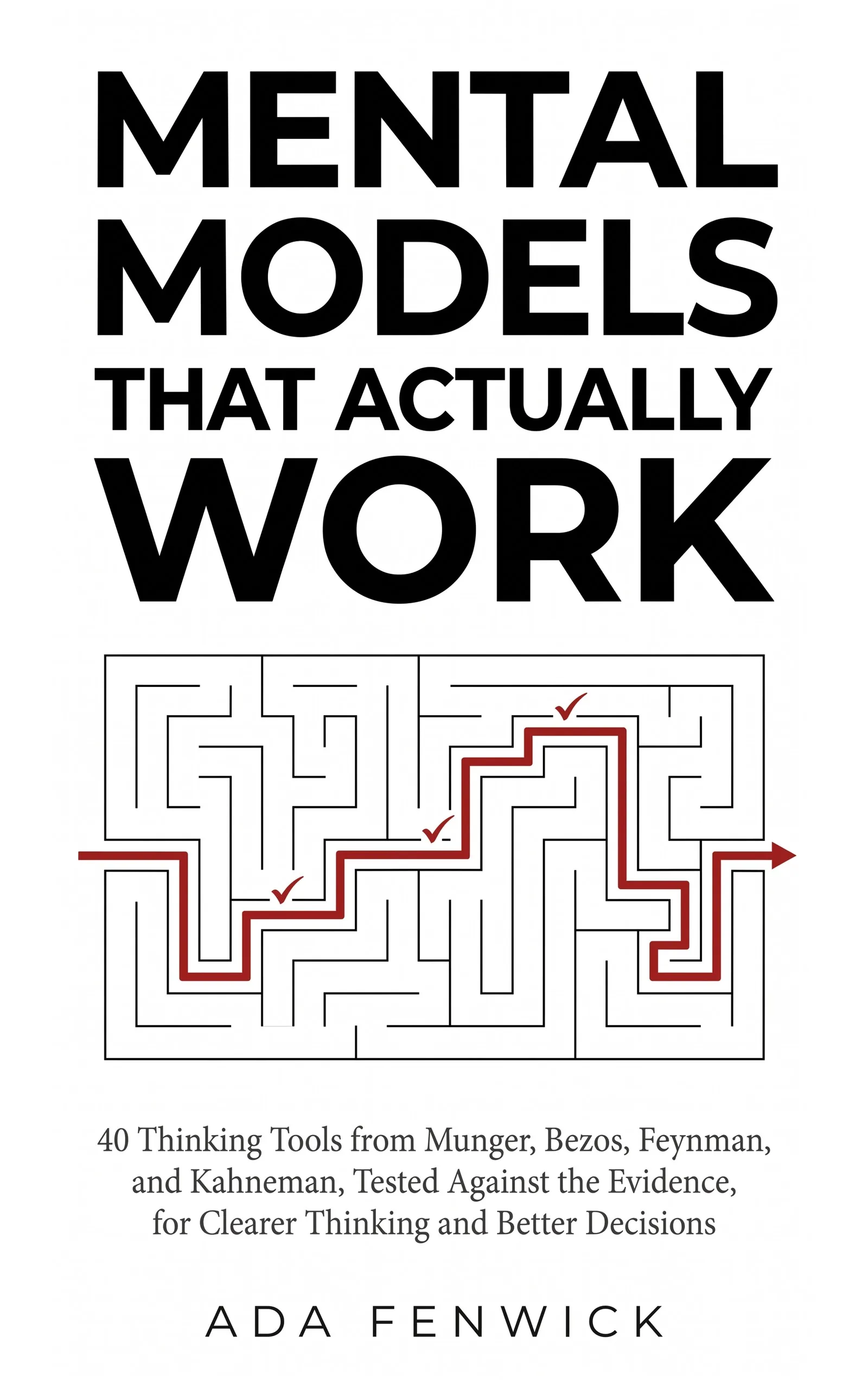
Mental Models That Actually Work
40 Thinking Tools from Munger, Bezos, Feynman, and Kahneman, Tested Against the Evidence, for Clearer Thinking and Better Decisions
Forty famous thinking tools, traced back to the letter, talk or study they came from, with an honest badge on each one.
Links go to Amazon. ToolGenX publishes this book under a pen name and earns from every sale. Amazon sets the price and handles delivery and returns.
- author
- Ada Fenwick
- length
- 288 pages (paperback)
- formats
- Kindle, paperback
- sold by
- Amazon
This book is for you if
- You keep making the same kind of bad call and want a repeatable way to decide
- You read a mental models bestseller and found quotes with no sources
- You face an expensive decision you cannot undo this month
- You want forecasting habits, not slogans
Skip it if
- You want financial, legal or medical advice (the book gives none)
- You want the famous legends kept intact (the myth checks remove several)
// problems this book helps with
Start from your problem
Each page below answers one real question in plain words, then shows where Mental Models That Actually Work goes further.
- First principles thinking explained simply, with a way to try it today
First principles thinking means splitting a problem into what is true and what is habit, then rebuilding. Plain steps and an honest evidence note.
- How to keep a decision journal: what to write, and when to look back
How to keep a decision journal: the six fields to write before you decide, when to review, and how to judge the choice apart from how it turned out.
- How to make better decisions when you keep making the same kind of bad call
Want to make better decisions? Start with two tested questions, then keep a short written log so you can see your own patterns.
- The plan launches soon. Here is how to run a pre-mortem in 20 minutes
Launch coming up? Run a pre-mortem in 20 minutes with your team or 10 alone. Plain steps, plus the one fix most guides leave out.
- One-way vs two-way door decisions: which kind is the choice in front of you?
One-way vs two-way door decisions compared: what each means, how much care each deserves, and the catch about keeping doors open.
- You keep overthinking a big decision. Is something wrong with you?
Stuck overthinking a big decision? Sort it by whether you can undo it, then set a bar and a stop date so more research stops buying comfort.
- Should you quit after investing so much? The sunk cost question, asked plainly
Hard to quit after so much time or money? Learn why the sunk cost pull is so strong, and the fresh-start question that helps you decide from today.
- Which mental models actually work, and which are just famous quotes?
Which mental models actually work? See which tools have real studies behind them, and which famous quotes, like Munger's incentive line, have no source.
Why we like a book that marks its own tools down
Most mental model lists hand you a quote, a famous name and a neat idea. This one asks two questions of every tool. Where did it really come from? And does it help ordinary people decide better?
The answers are not always flattering. Bezos's one-way and two-way doors, from his 2015 shareholder letter, come out STORY ONLY. So does Munger's circle of competence. Smart people with long track records used them, but a track record is not a test. Meanwhile, plain habits like asking why you might be wrong, or writing an if-then plan, come out SOLID.
That honesty is the point. When a SOLID tool and a STORY ONLY tool pull in different directions, you know which one has more behind it.
How each chapter is built
Every chapter opens with a story from the record: a 2012 Wired interview, a 1985 theater ticket study, a day-care fine in Haifa. Then it checks the famous version against the source and says where they differ.
Each tool has the same short card. A badge, the time it takes, four to seven steps, when to reach for it, what you are training, what the science says and what to log. The card is what you come back to later. The chapter around it holds the story and the evidence.
Every chapter ends with a myth check. These are where the book corrects claims you will meet online, such as the 30 percent figure attached to pre-mortems, or the idea that people mostly regret what they did not do.
What you do with it
The thread through the whole book is one notebook kept only for decisions. Each time you use a tool on a real choice, you write what you decided, what you expect, how sure you are as a percent and what would change your mind. Weeks later you write what happened.
That last step is where the learning is. Without a dated record, memory edits your old guess to match the result. With one, you can see where you run too sure and which tools you skip.
At the back, the Decision Selector matches 26 common situations to tools, and the 30-Day Clear Thinking Plan starts with easy drills and builds toward the six SOLID habits. Every seventh day is a review day.
Who it is for, and who it is not
It suits you if you keep making the same kind of bad call, if you face an expensive choice you cannot undo this month, or if you read a mental models book and found quotes with no sources. It also suits anyone who wants forecasting habits instead of slogans.
It is not for you if you want financial, legal or medical advice. The book gives none. And if you want the famous legends kept intact, be warned: the myth checks remove several of them.
What is inside
- 40 tool cards, each with steps, time needed, when to reach for it and what the science says
- A badge on every tool: 6 SOLID, 20 PROMISING and 14 STORY ONLY, with the studies named
- A myth check in each chapter, including the Munger incentive line that appears in neither version of his Harvard talk
- The Decision Selector, a table that matches common situations to the tools that fit them
- A 30-Day Clear Thinking Plan with drills of ten to twenty minutes a day
- Decision Log pages, a calibration tracker and a page for your too-tough basket
- Chapters on pre-mortems, sunk costs, one-way and two-way doors, decision journals and incentives
Chapters
- 01How to Use This Book
- 02First Principles: What Is Actually True Here?
- 03The Map Is Not the Territory
- 04Circle of Competence
- 05Inversion: Find the Way to Fail, Then Don't Take It
- 06Second-Order Thinking
- 07The Outside View
- 08Calibration: How Sure Should You Be?
- 09Updating: How Much Should New Evidence Move You?
- 10Expected Value
- 11Consider the Opposite
- 12The Pre-Mortem: Imagine It Failed, Then Ask Why
- 13Steelman and Red Team
- 14Razors: Shave Off the Explanations You Don't Need
- 15Sunk Costs: Would You Choose This Again Today?
- 16One-Way and Two-Way Doors
- 17Regret: Choosing Now So You Can Live With It Later
- 18Good Enough: When to Stop Searching and Choose
- 19Rules and Checklists
- 20Decision Journals
- 21Incentives: Who Gets Paid If This Happens?
- 22Crowds: Why Everyone Should Guess Alone Before Anyone Talks
- 23Dissent: How to Hear the Argument Nobody Wants to Make
- 24The Decision Selector and the 30-Day Plan
The paperback, up close









Questions about Mental Models That Actually Work
- Is this book financial, legal or medical advice?
- No. The book teaches ways to think through a decision, not what to decide. The expected value chapter shows how to weigh outcomes, not what to buy. For money, health or legal choices, it says to talk to a qualified professional.
- What do the badges mean?
- SOLID means the tool was tested on people more than once, or a review of many studies supports it. PROMISING means real but thin or indirect evidence. STORY ONLY means a real, documented practice that nobody has properly tested. A fourth label, MYTH, is used only for quotes and stories, never for a tool.
- Who is Ada Fenwick?
- Ada Fenwick is a pen name. The author is not a psychologist or decision scientist and says so. The method is to go back to the letters, speeches and studies, report what they found, and list every source at the back so you can check them.
- Do I need to read it in order?
- No. You can read the five parts straight through, or start from a decision you face today. The Decision Selector at the back points you to the chapters that fit, and the 30-day plan offers a reading order if you like structure.
- Is the Kindle edition enough, or do I need the paperback?
- Both have the same tools. In the paperback you can fill in the Decision Log pages directly. In the Kindle edition, you copy the fields into your own notebook, which the book asks you to keep for decisions anyway.
Get Mental Models That Actually Work
Forty thinking tools, each traced to its source and labeled by how well it holds up, so you know which to use and when.
Links go to Amazon. ToolGenX publishes this book under a pen name and earns from every sale. Amazon sets the price and handles delivery and returns.