// book · by Ada Fenwick (pen name)
Stop Rereading
30 Evidence-Graded Ways to Learn Faster, Remember Longer, and Use What You Study, for Adults Learning Something New
A study book for adults who read their notes four times and still blank on the first question. Thirty tools, each with an honest badge for the evidence behind it.
Links go to Amazon. ToolGenX publishes this book under a pen name and earns from every sale. Amazon sets the price and handles delivery and returns.
This book is for general education about learning methods. It is not medical or psychological advice. If you have ongoing trouble with sleep, attention or memory, talk to a health care provider.
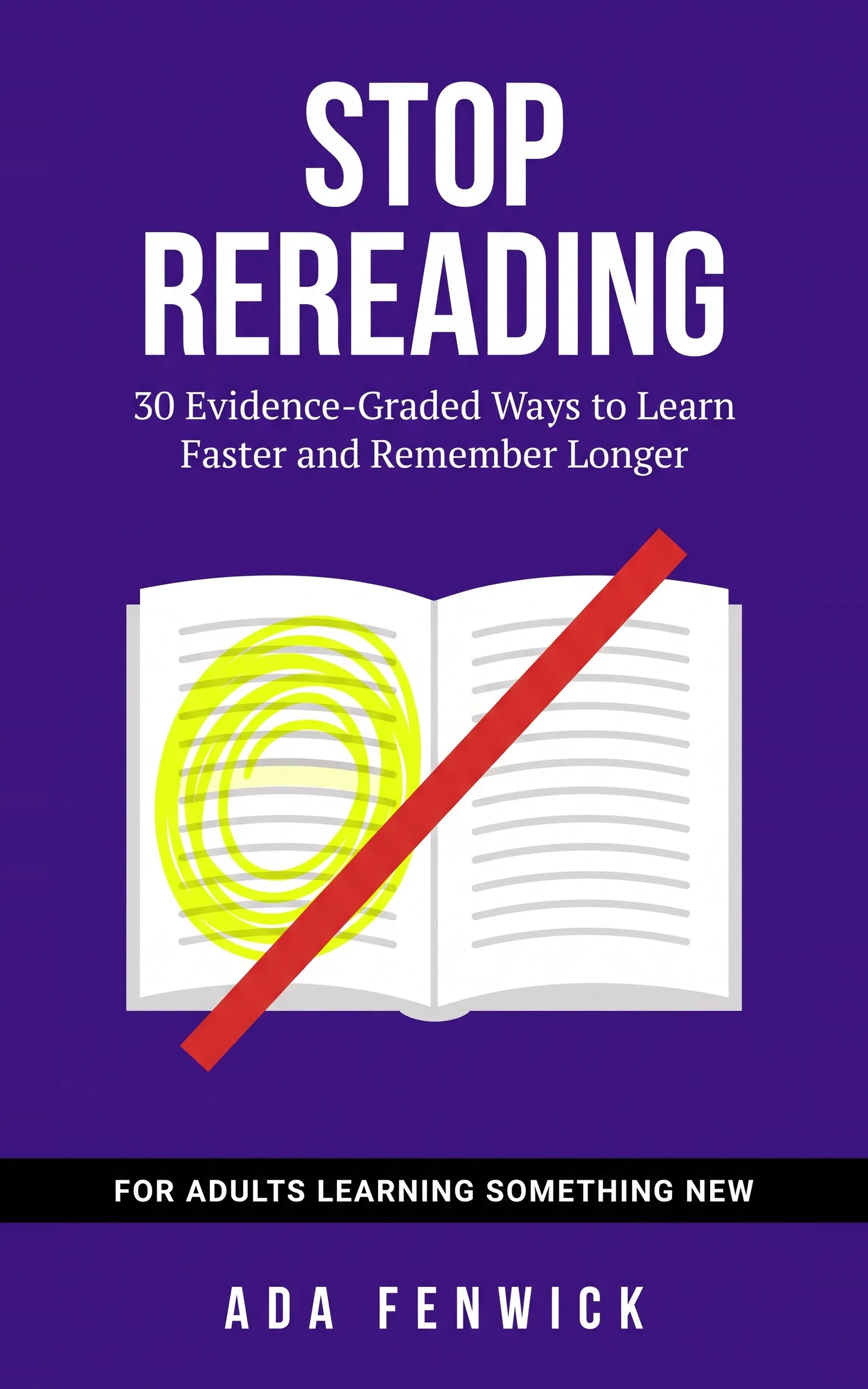
- author
- Ada Fenwick
- length
- 224 pages (paperback)
- formats
- Kindle, paperback
- sold by
- Amazon
This book is for you if
- You reread your notes again and again, and the answers still will not come
- You are studying for an exam, a course or a language on top of a full life
- You quietly worry that your memory is not what it was
- You want study methods with the evidence behind them, not a list of tips
Skip it if
- You want to learn a skill you do with your hands, voice or body (the companion book The Practice Lab covers that)
- You have an ongoing sleep, attention or memory problem (talk to a health care provider)
// problems this book helps with
Start from your problem
Each page below answers one real question in plain words, then shows where Stop Rereading goes further.
- Are learning styles real? What the research says about visual and auditory learners
Are you a visual learner? People have preferences, but teaching to a style has not held up. Here is what the research supports instead.
- Does having your phone nearby hurt studying? The brain drain study, checked again
A 2017 study said a silent phone on your desk drains your thinking. A careful 2022 repeat did not find it. Here is what does cost you when you study.
- Your exam is in a week. How to spend the seven days so it sticks
One week left and a pile of material? Test yourself instead of rereading, come back to each topic twice and keep your sleep. Here is the plan.
- A gift for an adult going back to school or studying for a big exam
Shopping for an adult student or someone facing a licensing exam? Give study tools with real evidence behind them, plus a few cheap extras and one offer.
- How far apart to space your study sessions, based on when the test is
The best gap between reviews grows with the time until your test: about 1 to 3 days for next week, 3 to 5 weeks for next year. Here is the rule.
- Taking notes by hand or on a laptop: what the repeat studies found
The famous laptop note-taking study did not hold up when it was repeated. Here is what the newer studies found, and what matters more than the pen.
- How to use ChatGPT to study without letting it do the learning for you
In a trial with nearly 1,000 students, a plain chatbot raised practice scores and lowered exam scores. Here is how to use AI for hints, not answers.
- You studied it last night and it is gone today. Why that happens, and what fixes it
Read your notes three times and still blank on the first question? Familiar is not the same as remembered. Here is why, and a five-minute fix.
// Also on this topic
- guideDoes practicing in your head work? What three reviews of mental practice found
Mental practice helps a skill, but less than real practice. Three reviews over 27 years agree on a small to medium effect, best added to real reps.
- guideYou had it perfect last night. Why did it fall apart when it counted?
You played it clean ten times last night and lost it today. The research on practice versus learning explains why, and a three-minute check fixes it.
- guideIs the 10,000-hour rule true? What the violin study really found
The 10,000-hour rule came from one violin study and a best-known retelling. Here is what the hours really showed, and what predicts progress better.
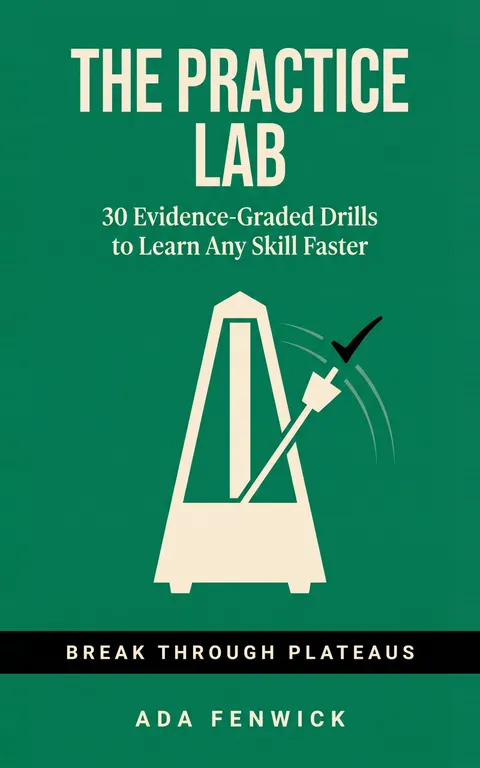
- bookThe Practice Lab
30 Evidence-Graded Drills to Learn Any Skill Faster, Break Through Plateaus, and Make It Stick
A study book for the feeling of being ready that turns out to be wrong
Most learning books do one of two things. Some are long, with a few useful ideas buried under stories. Others hand you a list of quick tips with no way to tell which were ever tested.
Stop Rereading sits between them. Each chapter opens with an adult stuck while learning: a nurse three weeks before a certification exam, a 52-year-old in a biology class, a parent studying networking after the kids are asleep. Then it explains in plain words what the research found and gives two tools you can use the same day, usually with a pen and a few minutes.
The whole book rests on one idea. The study habits that feel productive often are not. Rereading feels smooth because the page grows familiar, but a page you recognize is not a page you can recall. The methods that work, like testing yourself and spacing your study out, feel slower and clumsier while you do them. The book repeats one line for that reason: if it feels easy, it probably isn't sticking.
Thirty tools, and an honest count
Every tool carries a badge. SOLID means it was tested on people more than once, or a review pooling many studies supports it. PROMISING means real evidence that is thin, small, indirect or mixed across subjects. STORY ONLY means a reasonable practice that has never had a proper test.
The count is 17 SOLID, 11 PROMISING and 2 STORY ONLY. That is generous next to Done Deciding, which had one SOLID tool out of thirty. The grading is the same. Learning research has simply run the same comparisons again and again, in labs and real classrooms, for decades.
The book is just as clear about where the evidence stops. Retrieval practice, its best-supported method, is not yet proven for math: a 2025 review found only seven studies. Mixing problem types helps with math, but word lists did better grouped. Some SOLID badges carry a qualifier, so you can see exactly what the evidence covers.
What the myth checks remove
Near the end of most chapters, a myth check takes one popular claim and reports what the research found. Two famous findings get the most room. The idea that laptop notes hurt learning came mostly from one 2014 study, and a direct repeat in 2021 found laptop users did no worse on the quiz. The idea that a silent phone on the desk drains your thinking failed a preregistered repeat in 2022.
Others are smaller and stick around anyway. A major review found no adequate evidence base for using learning-styles tests in teaching. Nobody has found data behind "we remember 10% of what we read." The goldfish attention span came from a website, not a study. And "we forget 70 percent in a day" misreads what Ebbinghaus measured in 1880.
Start where you are stuck
You can read it straight through, or take the fast path: Chapters 1, 3, 4 and 15. If you want to try the approach first, our free guides use the same tools and badges:
- Why can't you remember what you study? The five-minute Closed-Book Check.
- Exam in a week? Seven days of recall, spacing and sleep.
- How far apart should study sessions be? The gap that fits your test date.
- Notes by hand or on a laptop? What the repeat studies found.
- Are learning styles real? What to do instead of a style quiz.
- Does a phone nearby hurt studying? The brain drain study, checked again.
- Using ChatGPT to study? Try first, then ask for hints.
Buying it for someone heading back to school? Start with our gift page.
Who it is for, and who it is not
It suits you if you reread your notes again and again and the answers still will not come. It suits you if you are studying for an exam, a course or a language on top of a full life, or if you quietly worry that your memory is not what it was. It also suits anyone who wants study methods with the evidence behind them, not a list of tips.
It is not for you if you want to learn a skill you do with your hands, voice or body. The companion book, The Practice Lab, covers that side. It is also not for an ongoing sleep, attention or memory problem. For that, talk to a health care provider.
What is inside
- The Closed-Book Check: five minutes to swap the feeling of knowing for a quick test of knowing
- Retrieval practice with the Blank Page, and flashcards done right, without the small piles and early retirements that waste the effort
- A Spacing Calendar with gaps that grow with your test date, and a three-box card system for big decks
- When mixing problem types helps and when it backfires, plus why questions, an empty chair and drawings you explain out loud
- Notes and reading habits that pay off later, and a small memory palace for lists you need in order
- Sleep, phones and breaks: what held up and what did not, including the phone study that failed when it was repeated
- How to use an AI chatbot as a coach and not a crutch, built on a 2025 field trial with nearly 1,000 high school math students
- A weekly learning plan, a score you keep on older material, a 30-day plan, Study Log pages and a blank Spacing Calendar
Chapters
- 01How to Use This Book
- 02The Rereading Trap: Why Familiar Isn't the Same as Remembered
- 03Forgetting Is Normal, and Useful: What Your Memory Does Overnight
- 04Retrieval Practice: Pull It Out, Don't Pour It In
- 05Spacing: Less Cramming, More Coming Back
- 06Mixing It Up: Why Shuffled Practice Feels Worse and Works Better
- 07Ask Why, Then Explain It: Turning What You Read into What You Understand
- 08Examples, Pictures and Words Together: Making an Abstract Idea Concrete
- 09Make It Hard in the Right Way: Good Guesses, Useful Gaps and Mistakes That Teach
- 10Notes That Help Later
- 11Reading So It Sticks
- 12Memory Palaces and Other Tricks
- 13Sleep Is Part of Studying
- 14Attention, Phones and Breaks
- 15Use AI as a Coach, Not a Crutch
- 16Your Own Learning System
- 17The 30-Day Plan
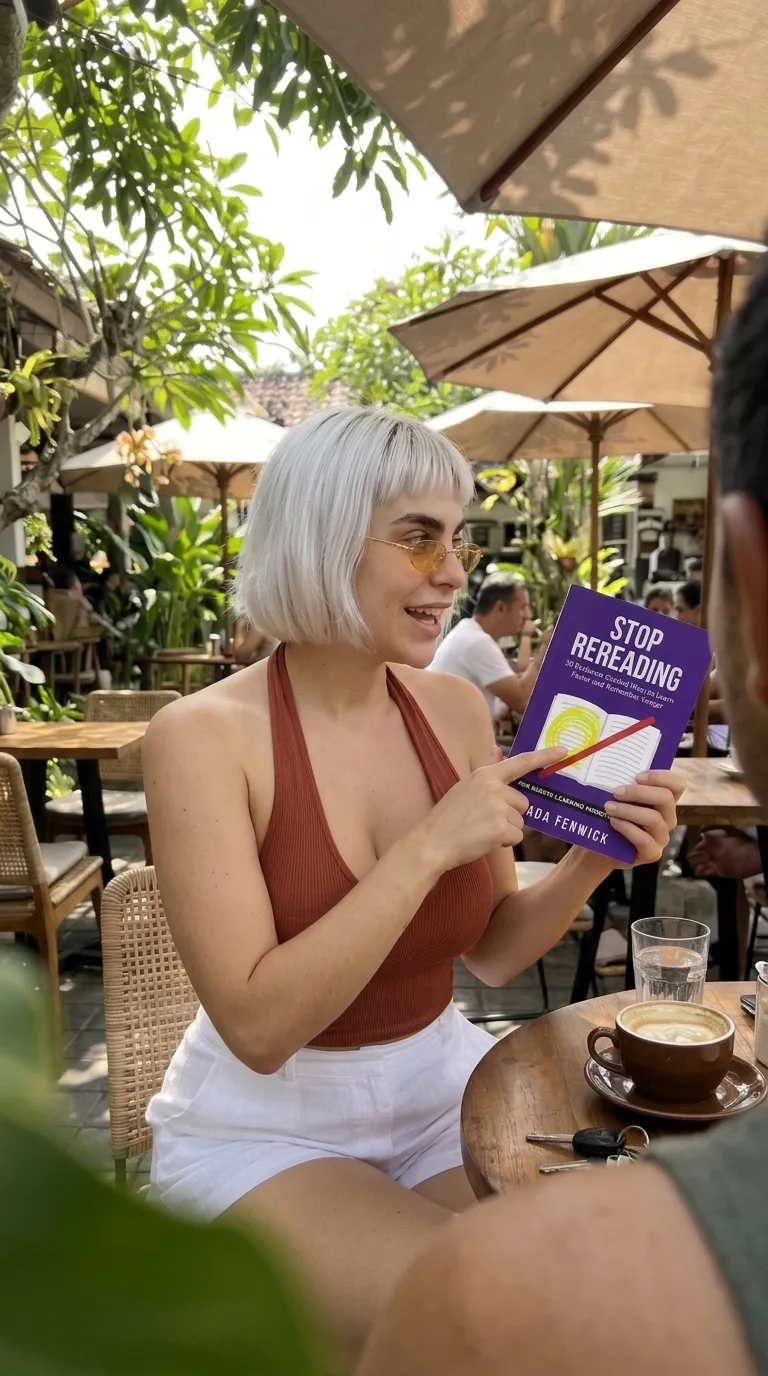
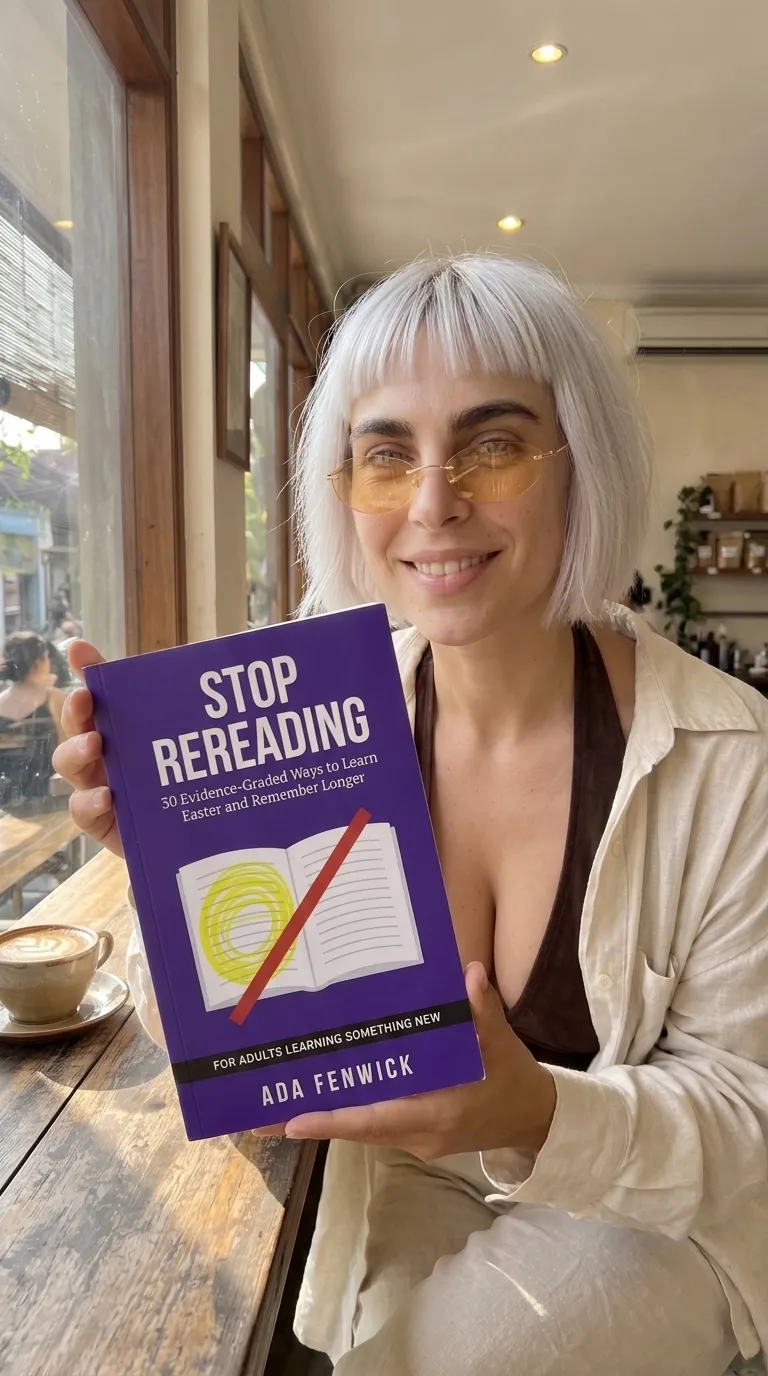
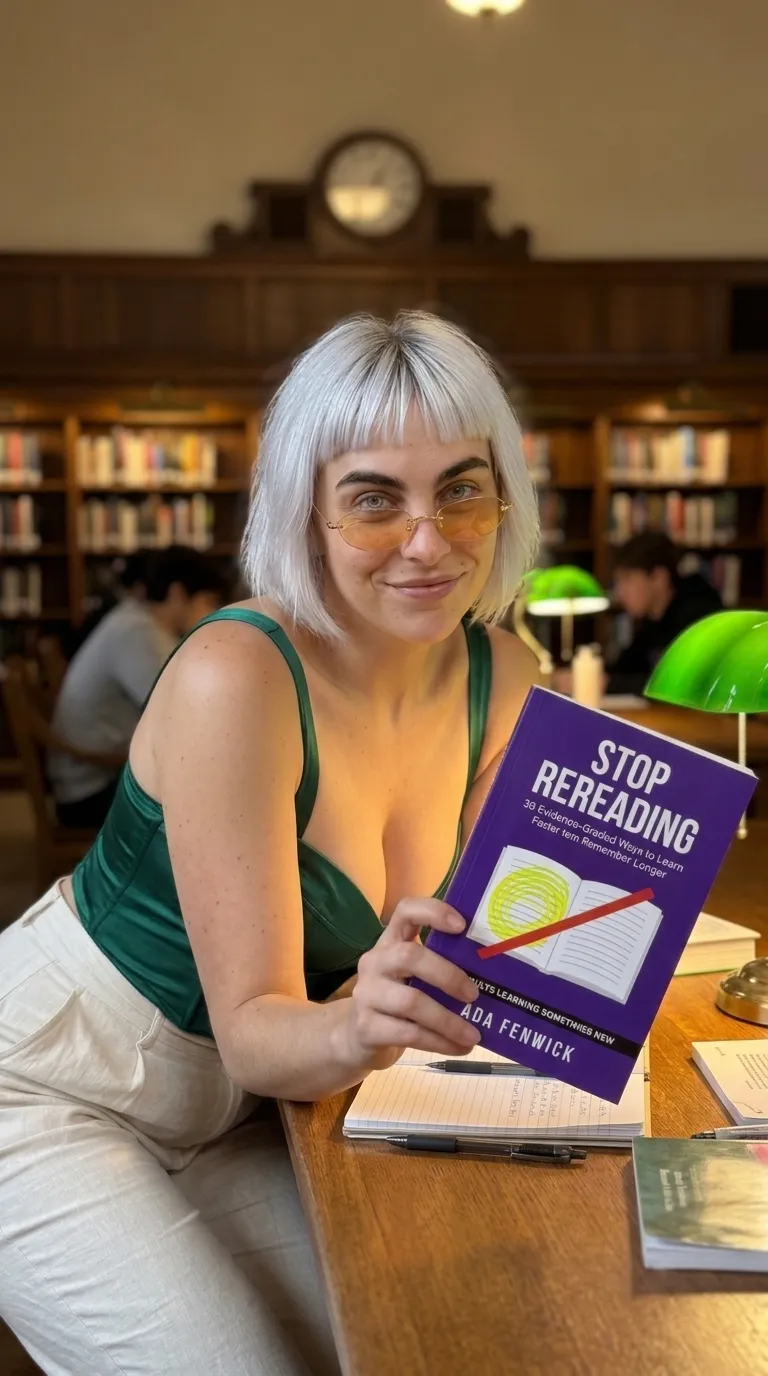
The paperback, up close



Questions about Stop Rereading
- Who is Stop Rereading for?
- Adults learning something new while working or raising a family: an exam, a course, a language or a new field at work. It suits anyone who rereads their notes and still blanks on practice questions, and anyone who quietly worries their memory is not what it was.
- Why do so many tools get a SOLID badge?
- Because learning science is one of the better-tested corners of psychology. One review of spacing pulled together 839 assessments from 317 experiments. A meta-analysis of classroom quizzing covered 222 studies with 48,478 students. The book grades the same way as Done Deciding, which had one SOLID tool out of thirty. The field is what differs.
- Does it say which famous study claims did not hold up?
- Yes. A myth check near the end of most chapters takes one popular claim and reports what the research found. Among them: learning styles, the "we remember 10% of what we read" pyramid, the goldfish attention span, the laptop note-taking study and the phone-on-the-desk study, both of which failed when they were repeated.
- How is it different from The Practice Lab?
- Both are by Ada Fenwick and use the same badges. Stop Rereading covers knowledge: facts, concepts, exams and a new field. The Practice Lab covers skills you do with your hands, voice or body, like an instrument, a sport or a language you speak.
- Is it medical advice about sleep or attention?
- No. The chapters on sleep and attention describe research only. The book says plainly that it is general education about learning methods. If you have ongoing trouble with sleep, attention or memory, talk to a health care provider.
Get Stop Rereading
Thirty study tools for adults learning something new, each traced to its research and badged SOLID, PROMISING or STORY ONLY, from the Closed-Book Check to a weekly learning system.
Links go to Amazon. ToolGenX publishes this book under a pen name and earns from every sale. Amazon sets the price and handles delivery and returns.