// book · by Ada Fenwick (pen name)
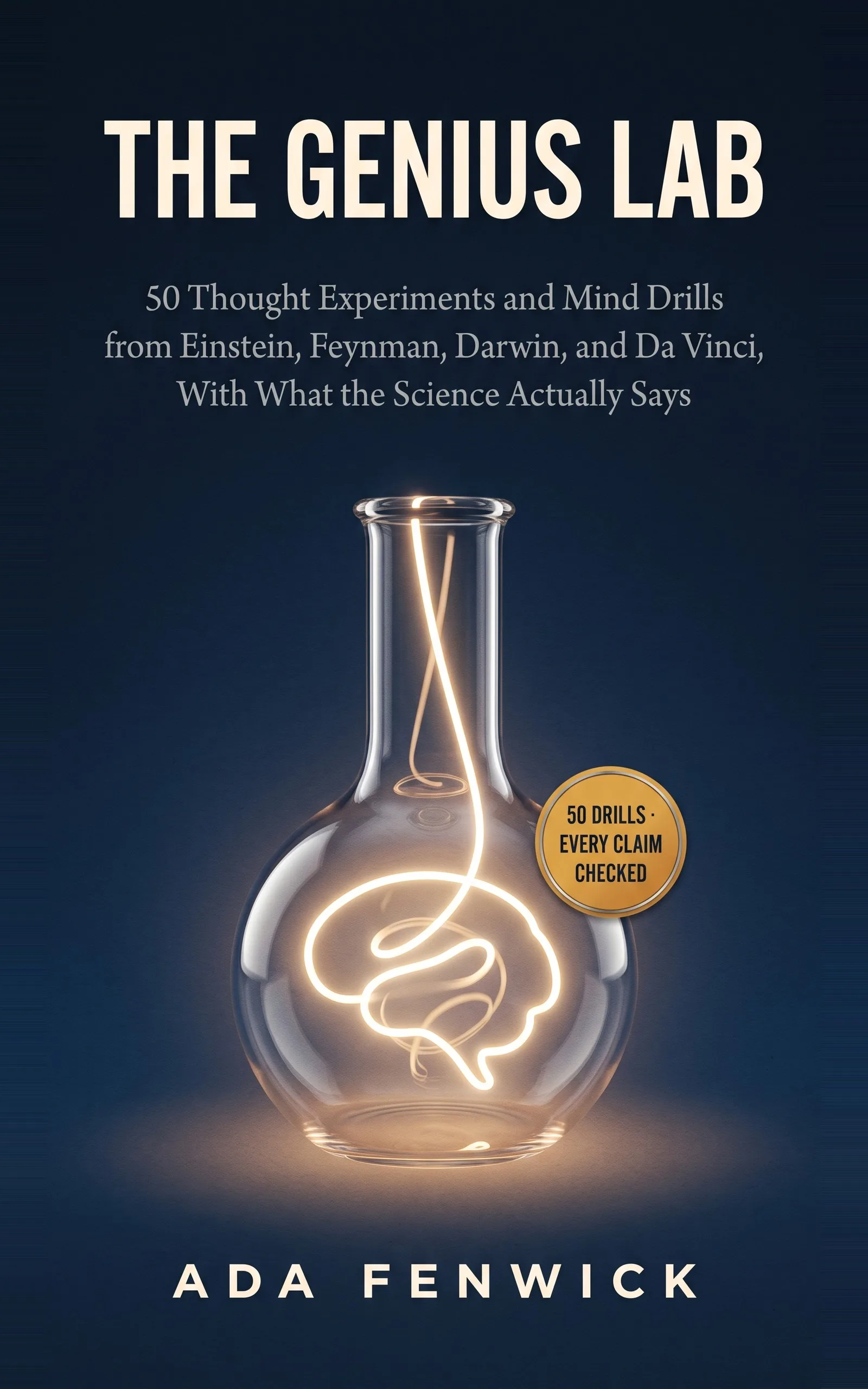
The Genius Lab
50 Thought Experiments and Mind Drills from Einstein, Feynman, Darwin, and Da Vinci, With What the Science Actually Says
Fifty drills taken from what famous thinkers really did, each one marked SOLID, PROMISING or STORY ONLY, with the myths checked and set aside.
Links go to Amazon. ToolGenX publishes this book under a pen name and earns from every sale. Amazon sets the price and handles delivery and returns.
- author
- Ada Fenwick
- length
- 233 pages (paperback)
- formats
- Kindle, paperback
- sold by
- Amazon
This book is for you if
- You are stuck on a creative problem and want a drill to try tonight
- You are tired of "think like Einstein" articles with made-up quotes
- You want the memory palace and the explain-it test done properly
- You want brain exercises checked against evidence, without supplement hype
Skip it if
- You want extreme mind hacks (the last chapter says which ones were left out and why)
- You want medical or psychiatric guidance
// problems this book helps with
Start from your problem
Each page below answers one real question in plain words, then shows where The Genius Lab goes further.
- Do brain supplements work? Thirteen popular ones checked against the human evidence
Lion's mane, magnesium L-threonate, omega-3, creatine and more, each rated by the human studies behind it. No doses, no advice, just the evidence.
- Do brain training games work, or do you just get better at the game?
Brain games make you better at brain games. Here is what the big 2016 reviews found, what the FTC said, and what to practice instead.
- The Edison nap: how to catch ideas at the edge of sleep, and when to stop
The steel-ball story has no source, but a 2021 study tested the nap. Here are the steps, the stop rules, and what the evidence really shows.
- You read it three times and still can't explain it. The Feynman technique, done properly.
Feel like you understand something until you try to explain it? That gap is normal. Here is the explain-it test, the study behind it, and how to run it.
- How to build a memory palace when you have never tried one before
A memory palace uses a place you know to hold a list. Here is how to build your first one in 20 minutes, why it works, and what the studies found.
- How to think like Einstein: what he really did, and the parts the internet made up
Einstein did not ride a light beam or picture an elevator. Here is the method he described in his own words, and a 15-minute drill to try it.
- Stuck on a problem and your brain has stopped working? Do this in the next hour.
Creative block with a deadline? Work hard for 25 minutes, take a real break with no phone, then check. Here is the order, and the study behind it.
- Thought experiments for adults: how to start using them on real problems
Thought experiments are not just for physicists. Here is what one is, how Einstein ran them, and three you can try on your own work this week.
Steal the method, not the myth
Type "how to think like a genius" into a search bar and you get a flood of answers. Some are wonderful. Many are made up. A few are both: a real story about a real person, stretched until it says something they never did.
The Genius Lab is a sorting job. For every famous method, the book asks two questions. Did they actually do it, according to their letters, notebooks or a careful biography? And does it work for the rest of us?
What survived became fifty drills. We like that the book is blunt about the results. Well over half the drills carry a STORY ONLY badge, because most of what great thinkers did has never been put through a study. The book says so on the page instead of hiding it.
What the four parts cover
Part I follows the famous names. Einstein chasing a beam of light at 16. Feynman's blackboard note from 1988. Darwin's rule of writing down every fact that hurt his theory. Da Vinci's to-do list, Tesla's workshop in his head, and Poincaré's answer on a bus step. Each chapter tells you what they really did, then turns it into drills.
Part II collects drills for the mind: thinking without words, holding two opposite ideas, building memory rooms, switching tasks and changing scale.
Part III brings in the body, from juggling and balance to breathing, sleep and walking. It ends with the supplement aisle, where not one of thirteen popular pills earns a SOLID badge.
Part IV goes to the edge of strange mental states and explains which extreme drills were left out, and why.
The drills with the strongest evidence
A few drills carry the SOLID badge, and they are worth starting with. The Loaded Break comes from a 2009 review of 117 studies, where a break helped people solve problems in 85 of them. The Zipper Test is the explain-it habit behind what people call the Feynman technique. Your First Memory Palace rests on two reviews of many experiments. Sleep on It tests what many lab studies show: sleeping after you learn helps you keep facts.
The book's PROMISING drills are newer leads. The Bottle Nap comes from a 2021 study where people who spent at least 15 seconds in the lightest stage of sleep were about three times as likely to spot a hidden shortcut. The Thinking Walk comes from a 2014 Stanford study on walking and ideas.
How to use it
You need one notebook. On the first page, write a problem you are stuck on, a subject you want to understand better, and one habit of mind you want to change. Many drills use those three lines, so the work lands on your real life instead of on made-up puzzles.
You can read straight through, or start with the 30-Day Lab at the back. It gives you one drill a day, ten to twenty minutes each, and a review every seventh day. If you miss a day, you pick up where you left off.
If you want a taste first, our problem pages cover some of the drills in short form, like what to do when you are stuck on a problem or whether brain supplements work.
What is inside
- Fifty drills with numbered steps, a time, and a one-line log, so after two weeks you can see what changed
- Four badges on every claim: SOLID, PROMISING, STORY ONLY, and MYTH for the stories that turned out false
- Part I on what Einstein, Feynman, Darwin, Da Vinci, Tesla and Poincaré actually did, from their own letters and notebooks
- The explain-it test behind the Feynman technique, and a memory palace you can build in 20 minutes
- The edge-of-sleep nap from the 2021 Paris study, with stop rules to read first
- A plain table of thirteen brain supplements, rated by the human evidence, with no doses and no sales pitch
- A chapter on the extreme mind drills left out of the book, and why
- A 30-day plan that mixes the drills into a month, with a review every seventh day
Chapters
- 01How to Use the Lab
- 02Einstein: Chasing the Light
- 03Feynman: Play Is a Research Method
- 04Darwin: Write Down What Hurts Your Theory
- 05Da Vinci: The To-Do List of a Curious Man
- 06Tesla: The Workshop in Your Head
- 07Dalí's Key and Edison's Legend
- 08Poincaré: The Answer on the Bus Step
- 09First Principles: Down to What Is True
- 10Thinking Without Words
- 11Holding Two Opposite Ideas
- 12Building Rooms in Your Head
- 13Switching Fast, and What Switching Costs
- 14Changing Scale
- 15Giving Ideas Weight and Color
- 16The Council in Your Head
- 17Hands, Balance, and the Clumsy Side
- 18Rhythm and Cross-Body Drills
- 19Clear Head Under Strain
- 20Sleep, Movement, and the Supplement Aisle
- 21Strange States and Where We Stop
- 22The 30-Day Lab
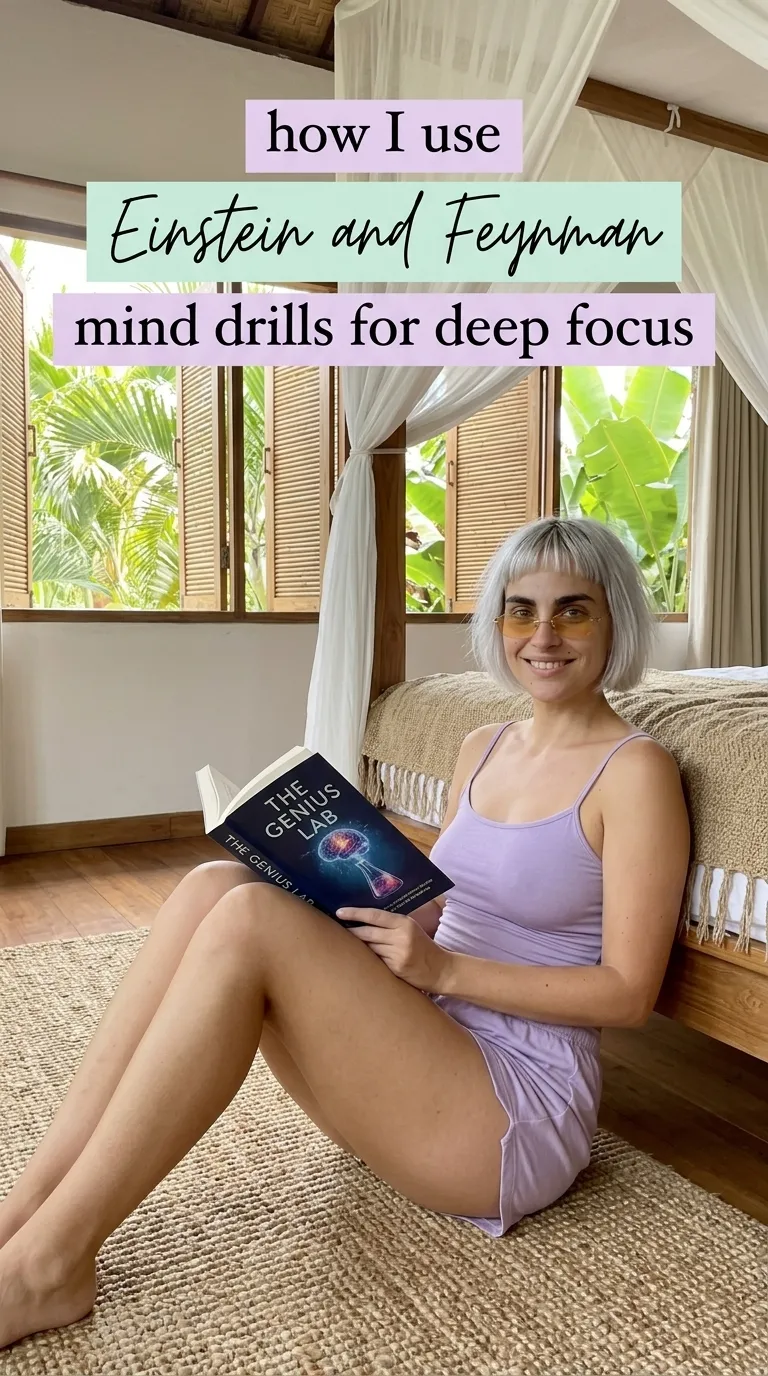
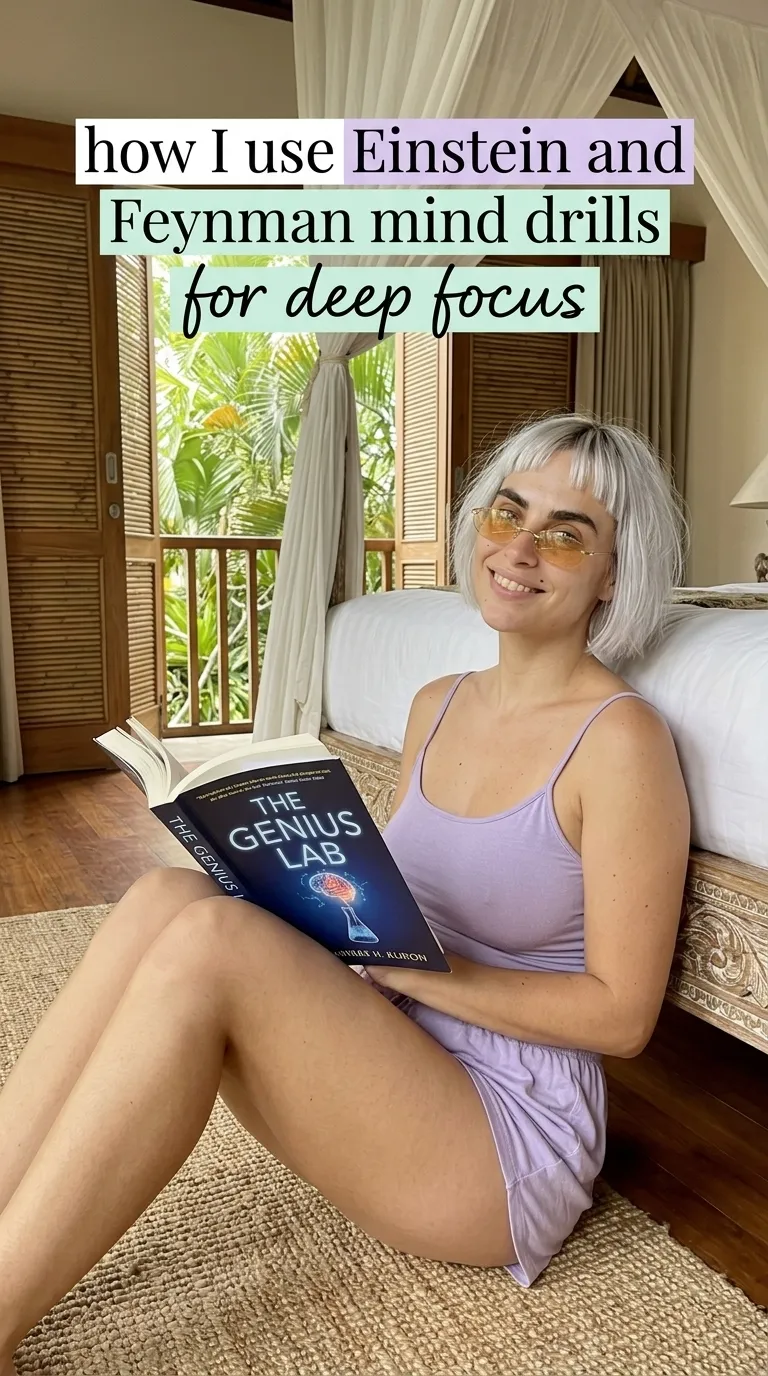
The paperback, up close






Questions about The Genius Lab
- Who is The Genius Lab for?
- It is for anyone who is stuck on a problem and wants a drill to try tonight, or who is tired of think-like-a-genius articles full of made-up quotes. It suits curious adults who like to know which stories are true before they repeat them. It is not medical or psychiatric guidance.
- Will this book make me a genius?
- No, and the book says so on its first pages. The point is narrower. These thinkers built habits for noticing, questioning and checking their own work, and habits can be copied. The book takes the method and leaves the legend.
- What do the badges mean?
- SOLID means the idea has been tested on people more than once and held up. PROMISING means there is real human evidence, but not much. STORY ONLY means nobody has tested it on groups of people yet, so you are the lab. MYTH appears only in the myth checks, for claims that turned out false or have no source.
- Do I need any equipment?
- One notebook, kept only for the drills. A cheap spiral one is fine. A few drills ask for a timer, a small empty plastic bottle, or comfortable shoes for a walk.
- Is it safe to try the drills?
- Most are as risky as a crossword puzzle. The few that involve sleep, balance or your sense of self come with their own stop rules. The rule for all of them: if a drill makes the world feel unreal, or makes you feel worse instead of curious, stop. Talk to your doctor first if you have a heart condition, a balance problem, or a history of panic, dissociation or psychosis.
- Who is Ada Fenwick?
- Ada Fenwick is a pen name. The author is not a neuroscientist, a psychologist or a doctor, and the book does not pretend otherwise. The method is to go back to the original letters and studies and report what they found, including when they found nothing.
Get The Genius Lab
Fifty short drills taken from what famous thinkers actually did, each labeled by whether it works for ordinary people, with sixty myths corrected.
Links go to Amazon. ToolGenX publishes this book under a pen name and earns from every sale. Amazon sets the price and handles delivery and returns.