Last updated
Taking notes by hand or on a laptop: what the repeat studies found
| Study | What was tested | What it found |
|---|---|---|
| Mueller and Oppenheimer, 2014 | Three lab studies of laptop and longhand notes during lectures | Laptop note-takers did worse on conceptual questions |
| Urry and colleagues, 2021 | A direct repeat of the first study, with 74 laptop and 68 longhand note-takers | Laptop users typed more word for word, but did no worse on the quiz |
| Morehead, Dunlosky and Rawson, 2019 | Another repeat of the original | Could not reproduce the original pattern (as summarized by the Learning Scientists blog) |
| Voyer and colleagues, 2022 | A meta-analysis of 39 studies | The medium has little influence on achievement (as summarized by Flanigan and colleagues) |
| Flanigan and colleagues, 2024 | A meta-analysis of 24 studies with college students | A small edge for taking and reviewing handwritten notes; typing gave far more notes |
| Lau, 2022 | A review written as a doctoral dissertation | A small edge for handwriting: about 57 percent on a quiz where typists got about 50 |
| Sana and colleagues, 2013 | A simulated classroom | Multitasking on a laptop lowered test scores, for users and for students who could see the screen |
The short answer: choose the one you will review
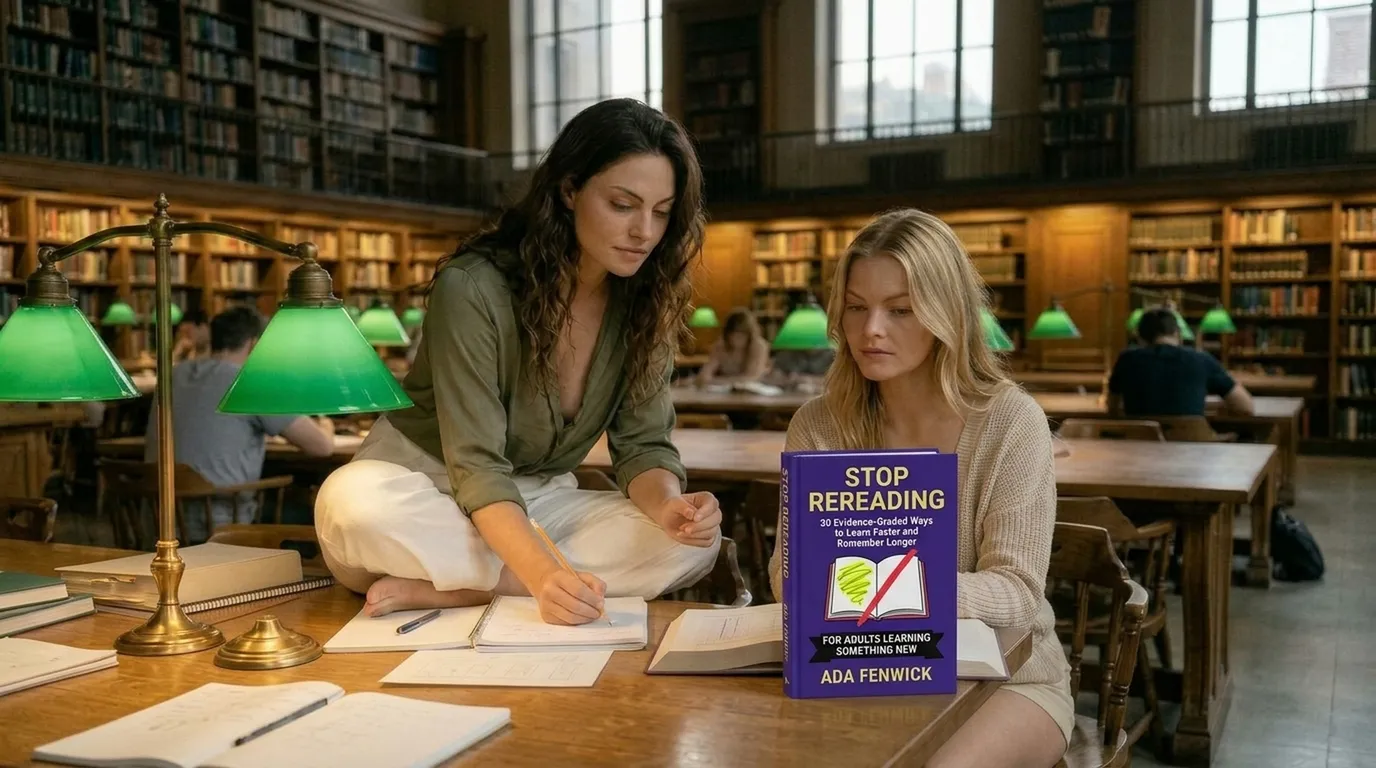
Most of us have heard that typing notes is bad for learning. The table above shows how that claim looks now. One study started it. A direct repeat did not find it. The pooled reviews land somewhere between "small edge for paper" and "little difference."
So the choice of pen or keyboard is a small one. Two other choices are bigger. Do you go back to your notes at all? And is the laptop open to anything else while you take them?

How one 2014 study became a rule
In 2014, Mueller and Oppenheimer ran three lab studies. Students watched lectures and took notes on laptops or by hand. The authors reported that "students who took notes on laptops performed worse on conceptual questions."
Their reason was simple. Typists tend to copy a lecture word for word, and copying gets in the way of putting ideas into your own words. The story was tidy, and it spread quickly.
Then other teams tried to repeat it. In 2021, Urry and colleagues ran a direct repeat of the first study. They had 74 laptop users and 68 who wrote by hand. Laptop users did type more words and more word-for-word notes, just as the first study said. But on the quiz, the laptop group did no worse. A second team, Morehead, Dunlosky and Rawson, also could not reproduce the original pattern in 2019, according to a summary on the Learning Scientists blog.
The pooled reviews do not fully agree with each other. Flanigan and colleagues' 2024 meta-analysis of 24 studies found a small edge for "taking and reviewing handwritten notes." A 2022 dissertation by Lau put that edge in plain numbers: where typists averaged about 50 percent on a quiz, handwriters would average about 57. Lau also found some sign that letting people review their notes shrank the gap.
Review matters more than the pen
Researchers split the value of notes into two parts. One is writing them. The other is what you do with them later.
In 1985, Kiewra reviewed the research on notes. Taking notes helps on its own, he found, and reviewing them "is additionally beneficial." Flanigan's team put it more bluntly in their summary of older work: the main benefit of lecture notes "emerges from the review of notes."
That is a problem, because review is the step most people skip. Online courses make it easy to skip the notes too. A 2019 survey of 577 college students by Morehead and colleagues found that students often chose not to take notes in online courses at all.
The laptop risk that does hold up is the other tabs. In a simulated classroom, Sana and colleagues (2013) found that students who multitasked on a laptop during a lecture scored lower on a test. So did students who could see a classmate's screen. If you type, close everything the lecture does not need.

Two ways to make notes pay off
The chapter Notes That Help Later in Stop Rereading gives two tools. Both work on paper or on a screen.
Close the Book, Then Write carries a SOLID badge. As soon as a lecture or video ends, close everything. Write what you remember for 5 to 10 minutes. When you stall, wait a full minute, since the last few items often show up late. Then open the notes and add what you missed in a second color. The second-color items are your study list. The badge comes from work like Karpicke and Blunt (2011), where recall practice beat building concept maps, even on questions that needed inferences.
The Cover-and-Quiz Page carries a STORY ONLY badge, and the book says why. Draw a line a third of the way across the page and take notes on the right. Within a day, write a question on the left for each chunk. To review, cover the right side and answer out loud. No careful study has tested this layout itself. It borrows from strong evidence that quizzing beats rereading, but the page as a whole is untested.
We like that the chapter does not ask you to switch tools. It asks you to use the notes you already take, later, in a way that makes you pull the ideas back out. If the laptop is open during study, our page on whether a phone nearby hurts studying covers the other half of that problem.
The book for this problem
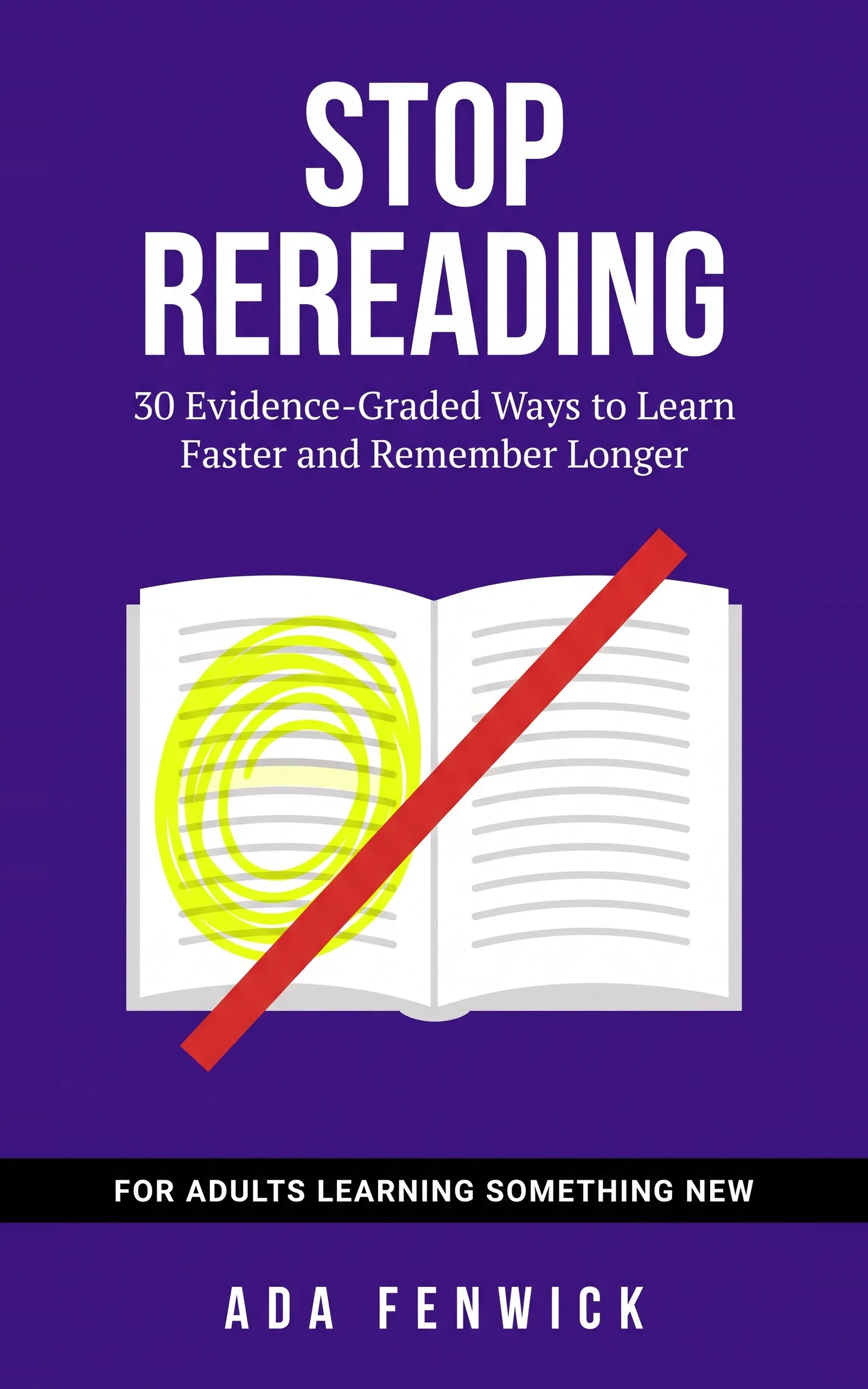
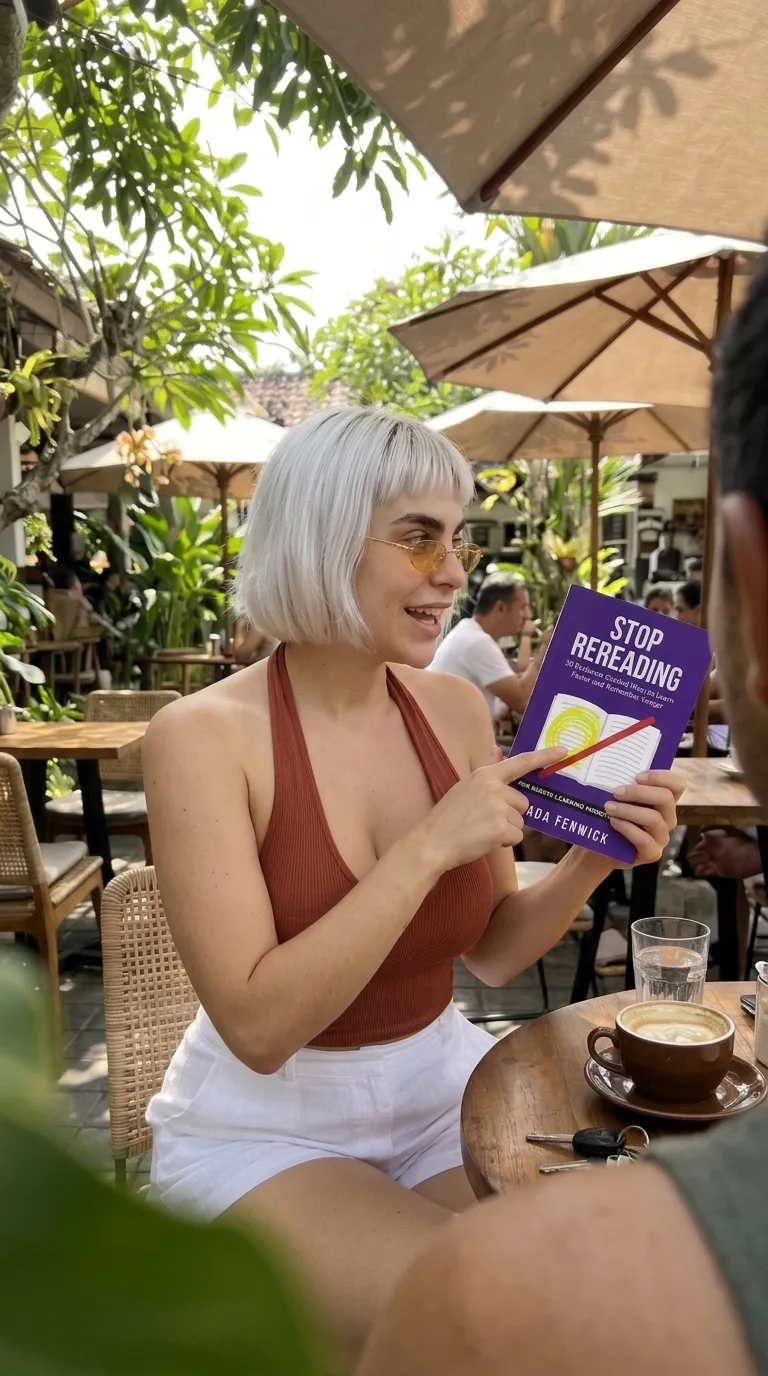
Stop Rereading
30 Evidence-Graded Ways to Learn Faster, Remember Longer, and Use What You Study, for Adults Learning Something New. By Ada Fenwick, 224 pages.
Where this problem is in the book:
- Notes That Help Later
Links go to Amazon. ToolGenX publishes this book under a pen name and earns from every sale. Amazon sets the price and handles delivery and returns.
Is Stop Rereading the right book for you?
Yes, if
- You take notes on a laptop and keep hearing you should switch to paper
- You write pages of notes and never look at them again
- You study from online lectures or videos
Skip it if
- You want a verdict that one method always wins
- You need notes for a skill you practice with your hands (the companion book covers that)
Fair doubts before you buy
Did the 2014 study not prove handwriting is better?
It found that in three lab studies, and it spread fast. Then other teams tried to repeat it. Urry and colleagues ran a direct repeat of the first study in 2021 with 74 laptop users and 68 longhand note-takers. Laptop users typed more, and more word for word, but did no worse on the quiz.
So should I just keep typing everything?
Typing is a reasonable choice if you review. Flanigan and colleagues (2024) found typing produced far more notes, but more notes did not mean better scores. The clear risk is using the laptop for other things during class. In a study by Sana and colleagues (2013), that lowered test scores.
Get Stop Rereading
Thirty study tools for adults learning something new, each traced to its research and badged SOLID, PROMISING or STORY ONLY, from the Closed-Book Check to a weekly learning system.
Links go to Amazon. ToolGenX publishes this book under a pen name and earns from every sale. Amazon sets the price and handles delivery and returns.
This book is for general education about learning methods. It is not medical or psychological advice. If you have ongoing trouble with sleep, attention or memory, talk to a health care provider.
Questions people ask about this
- Is handwriting notes better for memory?
- Maybe by a little. A 2024 meta-analysis of 24 studies found a small edge for taking and reviewing handwritten notes. A 2021 direct repeat of the famous laptop study found no difference on the quiz. The reviews disagree on how reviewing your notes changes the gap.
- Why do laptop notes seem worse?
- The original 2014 authors argued that typists copy lectures word for word, which gets in the way of putting ideas in their own words. Later studies did find that typists write more word for word. They did not reliably find worse scores.
- What is the best way to review notes?
- Make the review a quiz. Cover your notes and answer questions from memory, then check. Kiewra found in 1985 that reviewing notes adds benefit beyond taking them. Quizzing yourself beats rereading, which is why the book turns review into recall.
- Should I recopy my messy notes into neat ones?
- It feels like review, but you look at the page the whole time, so it is mostly copying. A better second pass is to close the notes and rebuild them from memory, then fill the gaps in a second color.
Related problems
- Does having your phone nearby hurt studying? The brain drain study, checked again
A 2017 study said a silent phone on your desk drains your thinking. A careful 2022 repeat did not find it. Here is what does cost you when you study.
- You studied it last night and it is gone today. Why that happens, and what fixes it
Read your notes three times and still blank on the first question? Familiar is not the same as remembered. Here is why, and a five-minute fix.
- Are learning styles real? What the research says about visual and auditory learners
Are you a visual learner? People have preferences, but teaching to a style has not held up. Here is what the research supports instead.
- Everything inside Stop Rereading
Every chapter, who the book is for, and every problem it helps with.
// Also on this topic
- guideToo old to learn an instrument or a sport at 50, 60 or 70? What the studies say
A 2008 review found older adults keep the ability to learn new movement skills. Here is what does change with age, and how to adjust your practice.
- guideDoes practicing in your head work? What three reviews of mental practice found
Mental practice helps a skill, but less than real practice. Three reviews over 27 years agree on a small to medium effect, best added to real reps.
- bookThe Practice Lab
30 Evidence-Graded Drills to Learn Any Skill Faster, Break Through Plateaus, and Make It Stick