Last updated
A gift for an adult going back to school or studying for a big exam
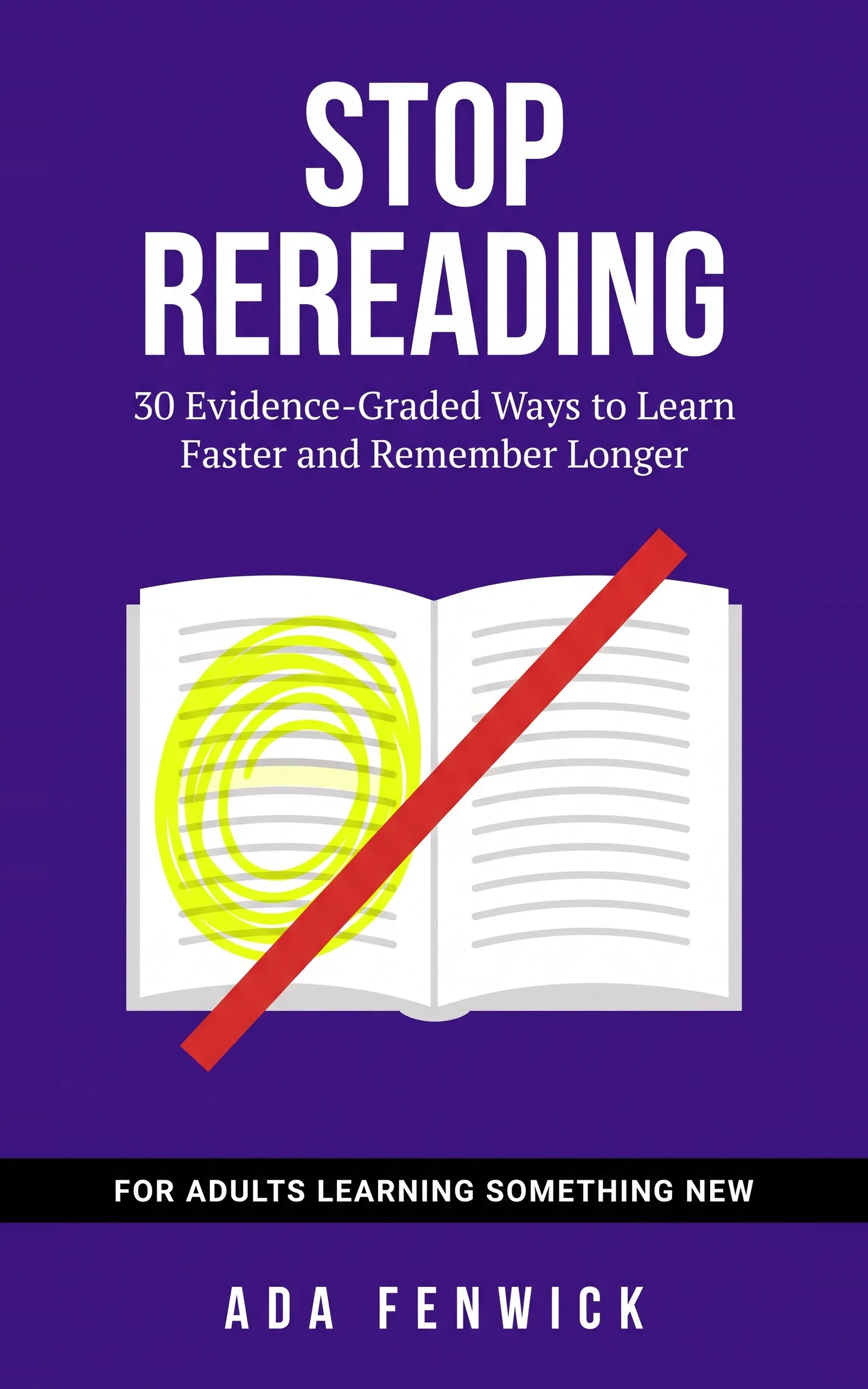
The book for this problem
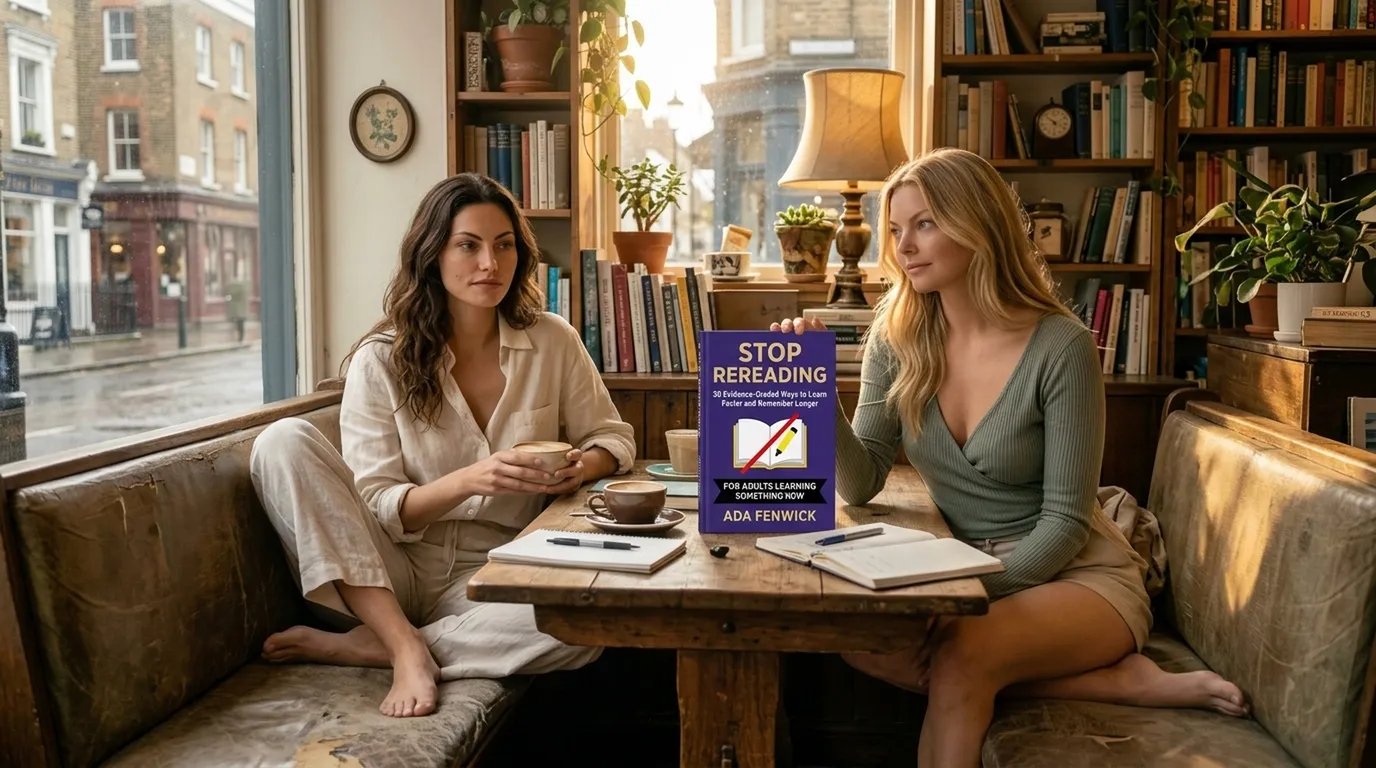
Stop Rereading
30 Evidence-Graded Ways to Learn Faster, Remember Longer, and Use What You Study, for Adults Learning Something New. By Ada Fenwick, 224 pages.
Where this problem is in the book:
- How to Use This Book
- Your Own Learning System
- The 30-Day Plan
Links go to Amazon. ToolGenX publishes this book under a pen name and earns from every sale. Amazon sets the price and handles delivery and returns.
The short shopping list for an adult student
- A short book of study methods. Pick one that tells them how strong the evidence is for each method, not a list of tips.
- A pack of index cards and two pens in different colors. Several of the book's tools use a second color for the gaps.
- A kitchen timer that is not a phone. One of the tools asks for exactly that, so the phone can leave the room.
- One offer from you. Say you will read their flashcards out loud to them once a week, and that you will not ask how the grade is going.
That is the whole gift. Write one line in the front, something like: "For the evenings after the kids are asleep. Proud of you."

Late nights at the kitchen table, after a full day
Picture a woman of 46 who has kept the books at a small company for nine years. Now she is studying for one section of a professional exam. It is twenty to eleven on a Tuesday. Her notes cover the desk in three colors of ink, and this is her fourth pass through them this week.
Every page looks familiar. Then she tries one practice question, on a topic she went over twenty minutes ago, and the answer will not come.
Adult learners in that spot often reach the same quiet conclusion: their memory is not what it was. Usually the method is the trouble. Going over notes again makes the page feel known without making it easier to recall. A gift can change the method. Nobody can give them more hours.
Why study tools beat a pep talk
Stop Rereading opens with that exact scene, and it is honest about what helps. There are 30 tools, each on a short card with steps, the time it takes and a badge for the evidence: 17 SOLID, 11 PROMISING and 2 STORY ONLY.
The book explains why it grades so strictly. Adult learners are quick to blame themselves. If a book says a method works and it fails them, they decide their memory is the problem. We think that is the kindest reason to choose a book that says where the evidence runs out.
The methods it leans on are well tested. In the 2013 review of ten study methods by Dunlosky and colleagues, practice testing and spacing were the only two rated high. Rereading and highlighting were rated low.
There is a catch your person should hear from someone. The better methods often feel worse. In a 2019 study of physics classes by Deslauriers and colleagues, students in active classes learned more but believed they had learned less. A gift that comes with "it is supposed to feel clumsy" can save a few discouraged evenings.
What the book gives a student who is short on time
This is the problem Stop Rereading by Ada Fenwick was written for: adults learning something new on top of a full life, whether that means an exam, a course, a language or a new field at work.
How to Use This Book explains the badges and offers a fast path for people short on time: four chapters that hold most of what the book has to offer.
Your Own Learning System has the two habits that hold the tools together. One is a weekly plan written as if-then lines, such as "If it is Tuesday at lunch in the break room, then 20 flashcards." The other is a weekly ten-question score on older material, so they can see whether studying is working.
The 30-Day Plan puts the tools in order, day by day, with Study Log pages and a blank Spacing Calendar. The book says plainly that the plan is its own design built from the research, not a tested schedule.
If their exam is close, our page on an exam in a week is a good one to send along with the gift.
Is Stop Rereading the right book for you?
Yes, if
- Someone you love is going back to school while working or raising kids
- They are studying for a licensing, certification or citizenship exam
- You want a gift that gets used, not a mug with a slogan
Skip it if
- They are learning a skill with their hands, voice or body (the companion book The Practice Lab fits better)
- They have ongoing trouble with sleep, attention or memory (a health care provider can help more than a book)
Fair doubts before you buy
Will a study book come across as saying they are doing it wrong?
It can, if it comes with a lecture. It lands better with a note about how much they are taking on. The book itself is kind about it. It opens by saying the reader's memory is fine and the method is the trouble, and that a method can be changed.
Is the paperback good as a gift?
Yes. Each tool has short lines to fill in, and the back has a 30-day plan with Study Log pages and a blank Spacing Calendar. It is made to be written in, so it gets used with a pen.
Get Stop Rereading
Thirty study tools for adults learning something new, each traced to its research and badged SOLID, PROMISING or STORY ONLY, from the Closed-Book Check to a weekly learning system.
Links go to Amazon. ToolGenX publishes this book under a pen name and earns from every sale. Amazon sets the price and handles delivery and returns.
This book is for general education about learning methods. It is not medical or psychological advice. If you have ongoing trouble with sleep, attention or memory, talk to a health care provider.

Questions people ask about this
- What do you give an adult who is going back to college?
- Something that makes their short study hours count. A book of tested study methods, index cards, two colored pens and a timer that is not a phone cover most of it. An offer of your time, like quizzing them once a week, is the part no store sells.
- What helps adults study when they are busy?
- Short sessions planned in advance, each with a method attached. In a 2006 review of 94 tests by Gollwitzer and Sheeran, if-then plans that name a when and a where had a medium-to-large effect on reaching goals. The book turns that into a ten-minute weekly plan.
- Is it harder to learn new things as an adult?
- Everyone forgets fast at first, at any age. That drop is the normal shape of memory, traced by Ebbinghaus in 1880 and repeated in 2015. What helps adults is the same as what helps anyone: testing yourself, spacing reviews out and sleeping on it.
- What not to say to an adult going back to school?
- Skip questions about whether they are too old for this, and skip "just study harder." They likely study plenty. If you want to help, offer time instead: quiz them, cover a chore on exam week or ask how the weekly score is going.
Related problems
- You studied it last night and it is gone today. Why that happens, and what fixes it
Read your notes three times and still blank on the first question? Familiar is not the same as remembered. Here is why, and a five-minute fix.
- Your exam is in a week. How to spend the seven days so it sticks
One week left and a pile of material? Test yourself instead of rereading, come back to each topic twice and keep your sleep. Here is the plan.
- How to use ChatGPT to study without letting it do the learning for you
In a trial with nearly 1,000 students, a plain chatbot raised practice scores and lowered exam scores. Here is how to use AI for hints, not answers.
- Everything inside Stop Rereading
Every chapter, who the book is for, and every problem it helps with.
// Also on this topic
- guideA gift for an adult learning an instrument or a new skill, beyond one more gadget
Shopping for a grown-up who just took up piano, guitar or pickleball? Give drills that show what works, plus an offer to be their first listener.
- guideBlocked vs random practice: which one helps an adult learner more?
Random practice beats blocked practice in the lab. On real courts and in practice rooms the edge is small. Here is how to use both, in the right order.
- bookThe Practice Lab
30 Evidence-Graded Drills to Learn Any Skill Faster, Break Through Plateaus, and Make It Stick