// book · by Iris Athens (pen name)
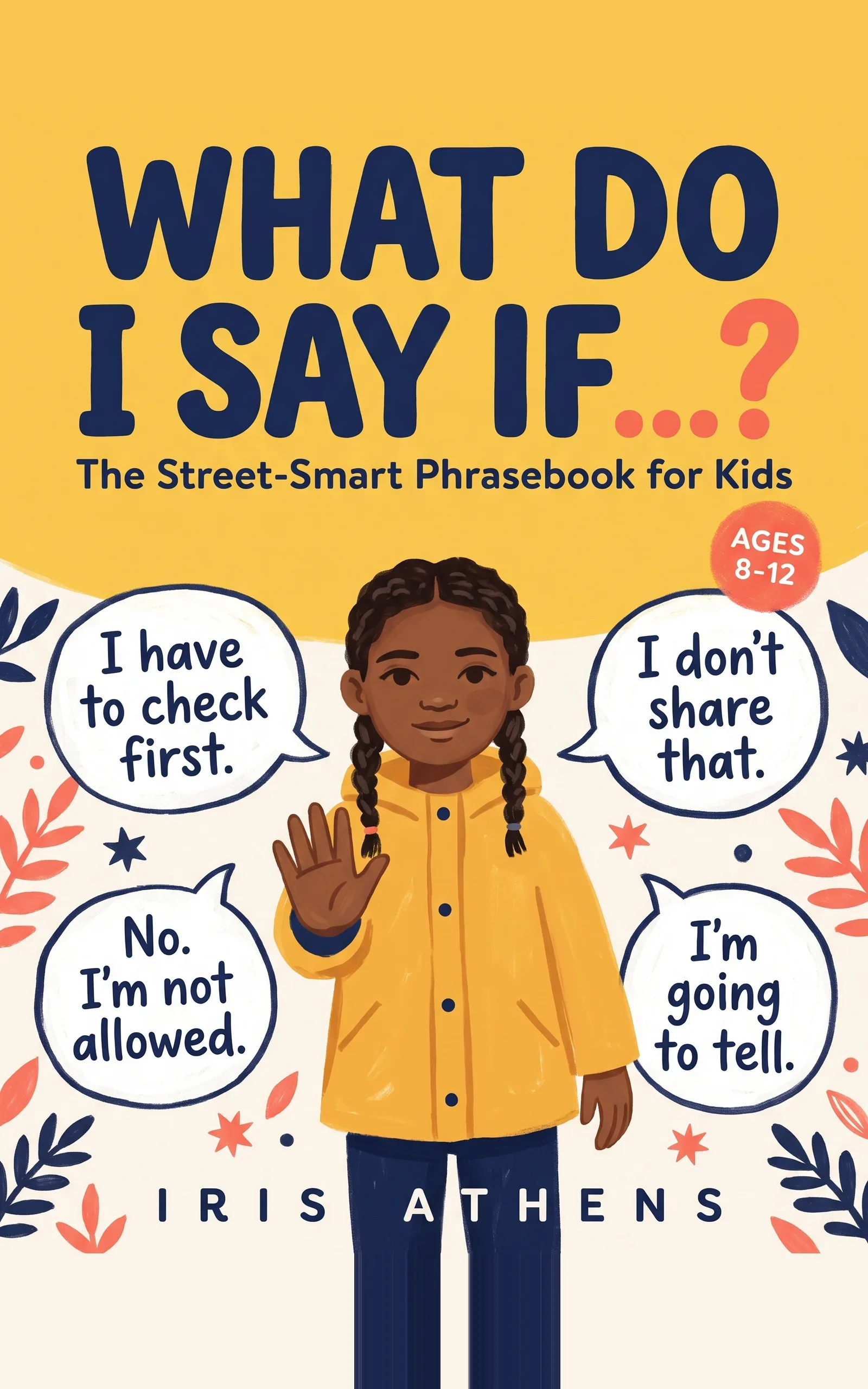
What Do I Say If...?
The Street-Smart Phrasebook for Kids 8-12: The Exact Words to Say No, Get Help, and Stay Safe With Strangers, Friends, Bullies, and People Online
Kids know the rules. In the moment they need a sentence. This book gives kids 8 to 12 the exact words for 100 tricky situations, plus a game to practice them.
Links go to Amazon. ToolGenX publishes this book under a pen name and earns from every sale. Amazon sets the price and handles delivery and returns.
This book is not a substitute for supervision or professional help. If a child may be in danger, call 911 or the Childhelp National Child Abuse Hotline at 1-800-422-4453.
- author
- Iris Athens
- length
- 159 pages (paperback)
- formats
- Kindle, paperback
- sold by
- Amazon
This book is for you if
- You told your child the rules, but they would not know what to say in the moment
- Your child is starting to walk to school, stay home alone or play online games with strangers
- You want a calm way to talk about body safety and secrets without scaring them
- You are a grandparent or teacher looking for a book to read together with a child of 8 to 12
Skip it if
- Your child is younger than 7 or already a teenager
- A child is in danger right now (call 911, or the Childhelp hotline at 1-800-422-4453)
- You want a book that replaces talking with your child
// problems this book helps with
Start from your problem
Each page below answers one real question in plain words, then shows where What Do I Say If...? goes further.
- Is a family code word enough to keep your child safe from a stranger pickup?
Many families pick a secret code word for pickups. Why it is a useful extra but not a free pass, and the rule that does more of the work.
- Home alone rules for kids the first time: what to say at the door, the phone and the smoke alarm
First time leaving your child home alone? The house rules and the exact words for the door, the phone, a burn and the smoke alarm.
- Your child can't say no to friends. Is that normal, and how do you teach them to?
Your child goes along with friends even when they know better. Why that is normal at 8 to 12, and the short lines that help them say no.
- Looking for a safety book to give a child aged 8 to 12? What to look for, and how to read it together
Buying a safety book for a grandchild, niece or student aged 8 to 12? What makes one useful instead of scary, and how to read it together.
- Secrets vs. surprises: how to explain the difference to your child without scaring them
A calm way to teach kids 8 to 12 the difference between a surprise and a secret, which secrets they always tell, and the words to say.
- A stranger in an online game is asking your child where they live. What do you do right now?
Someone in a game chat asked your child for their school, address or a photo. What to do in the next ten minutes, and the words for next time.
- Your child is being bullied and goes back to school tomorrow. What should they say to the bully?
Your child is being bullied and school is tomorrow. The calm words to say, what to do next, and how to report it if telling once did not work.
- What to teach kids about strangers, now that "stranger danger" is out
Stranger danger is out. What to teach kids 8 to 12 instead: watch what people do, check first, and know who to ask for help.
// Also on this topic
- guideTurned 18 and forgot to register for Selective Service? What to do now
Missed the 30-day Selective Service window after turning 18? You can still register online until 26. What it costs you to wait and what it does not mean.
- guideSent money to a scammer? What to do right now, step by step
Just sent money to a scammer? Call the payment company today, then report it. The steps for gift cards, fake checks, stolen IDs and photo threats.
- guideFirst apartment at 18: what to know before you sign the lease
About to rent your first apartment at 18? What to check in the lease, how to get your deposit back, renters insurance and the signs of a fake listing.
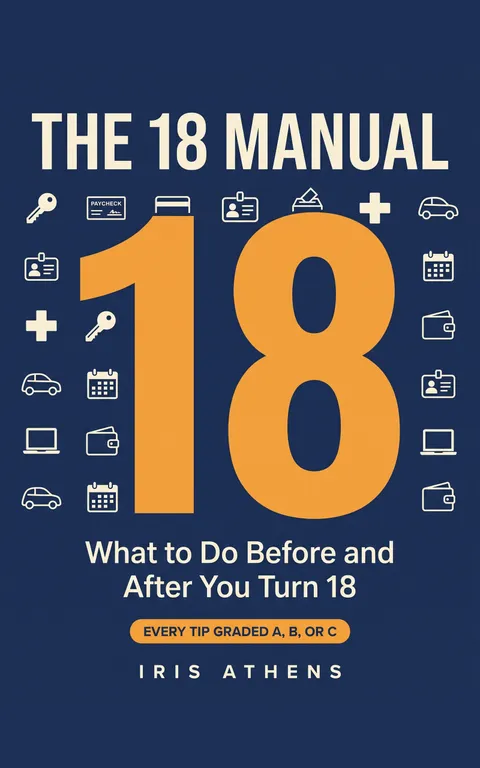
- bookThe 18 Manual
What to Do Before and After You Turn 18: Money, Work, Rent, Health, and Your Legal Rights, Graded by What It Costs and How Well It Works
A sentence beats a rule
Your child already knows a lot of rules. Don't talk to strangers. Be careful online. Tell me if anything happens. The trouble, as the book puts it, is that rules are easy to remember at the kitchen table and hard to use in the moment.
When a friend is daring them, or a grown-up is rushing them, or a message makes their stomach drop, a child does not need one more rule. They need a short sentence they have said out loud before, so it comes out on its own. That is what Iris Athens wrote: a phrasebook, like the ones you take on a trip, but for the tricky moments of being 8 to 12.
The same five steps, a hundred times
Every one of the 100 situations follows one pattern. NOTICE gives the clue that something is off. SAY THIS gives the first line, short on purpose. IF THEY PUSH gives the next line when the other person doesn't stop. DO THIS is the action that keeps the child safe, and TELL IT says who to tell and when.
Then comes the part we like most. A PRACTICE line for the grown-up to read in character, a little pushy, a little friendly, so the child can answer it out loud. "Come on, just this once. Nobody will know." The child answers in their strong voice. Then you swap roles.
The situations run from small to serious. A classmate wants to copy homework. Someone says you can't sit here. A grown-up you don't know says your dad sent them. A caller asks if you're home alone. Someone in a game wants to move the chat to a private app.
Built on public guidance, not on fear
The safety advice follows public guidance from groups like the National Center for Missing & Exploited Children, the American Academy of Pediatrics and StopBullying.gov, with the sources listed at the back. Those groups did not write or review the book, and it says so.
It skips two things on purpose. It does not teach stranger danger, because kids don't know who counts as a stranger, and a lost child needs to be able to ask one for help. And it uses no statistics or scary stories. The book's view is simple: fear makes kids freeze, practice makes them move.
Practice, then a plan for the fridge
The Practice Game turns the book into ten minutes a week, with an 8-week schedule that starts with the strong voice and ends with emergencies. Practice is always announced. The book is firm that you should never test your child with a staged stranger or a fake message.
At the back, Our Family Safety Plan has space for the numbers your child should know by heart, a safe grown-up team, who can pick them up from school, a "come get me" message and a fire escape plan. The Cut-Out Cards hold the key lines for a backpack. The last card is for the grown-up: "You will never be in trouble for telling me."
We built the problem pages for this book around the same rule the book follows: help first. If a child may be in danger right now, call 911, or the Childhelp hotline at 1-800-422-4453.
What is inside
- 100 situations, each in the same steps: NOTICE, SAY THIS, IF THEY PUSH, DO THIS, TELL IT, and a PRACTICE line for the grown-up to read
- Four starting chapters on the inside alarm, the strong voice, safe grown-ups, and the difference between secrets and surprises
- Chapters for school, friends and dares, bullies, out in public, home alone, and online and gaming
- Calm chapters on body safety and on what to do when a grown-up breaks the rules, best read together
- An emergencies chapter: what to say to 911, fire, gas, choking, poison and storms
- The Practice Game with an 8-week schedule of ten minutes a week, and a What Would You Do quiz after each chapter
- A fill-in family safety plan for the fridge and twelve cut-out cards with the key lines
Chapters
- 01For Grown-Ups: Read This First
- 02Hey, Kid: How This Book Works
- 03Your Inside Alarm
- 04Your Strong Voice
- 05Safe Grown-Ups
- 06Secrets vs. Surprises
- 07At School
- 08Friends and Dares
- 09Bullies and Mean Words
- 10Out in Public
- 11Home Alone
- 12Online and Gaming
- 13Your Body Is Yours
- 14When a Grown-Up Breaks the Rules
- 15Emergencies
- 16The Practice Game
- 17Our Family Safety Plan
- 18Cut-Out Cards
The paperback, up close
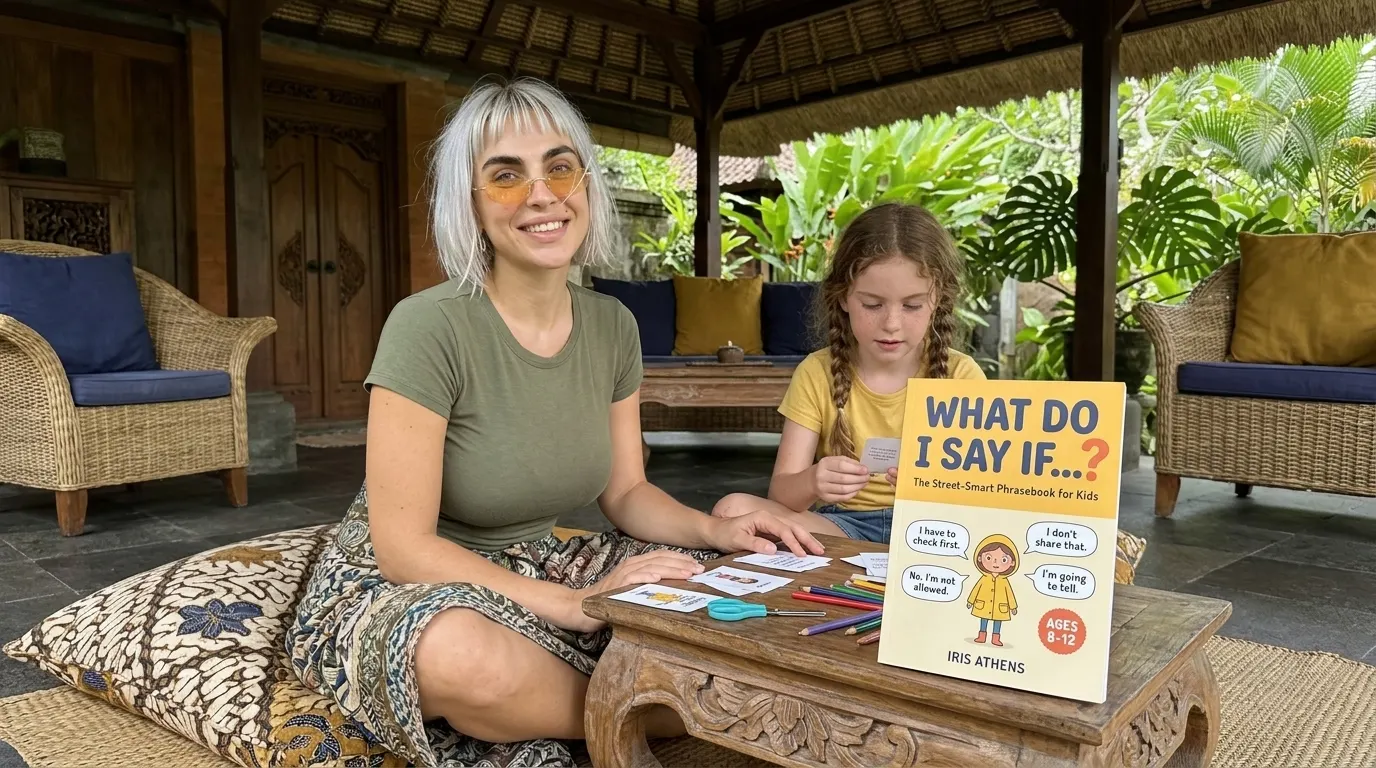








Questions about What Do I Say If...?
- What age is What Do I Say If...? for?
- Kids aged 8 to 12, read with a parent, grandparent or teacher. Older kids can read it alone, but the practice lines are written for a grown-up to read out loud while the child answers. It is not written for children under 7 or for teenagers.
- Does the book teach stranger danger?
- No. It follows the National Center for Missing & Exploited Children, which moved away from stranger danger. Kids learn to watch what people do, not how they look, to check first before going anywhere with anyone, and to pick who to ask for help, like a store worker with a name tag.
- Will it scare my child?
- The book is built not to. It uses no statistics and no scary stories, because fear makes kids freeze and practice makes them move. The body safety chapter and the chapter on grown-ups who break the rules are meant to be read together, and you can skip or pause any page.
- Does the book cover online games and chats?
- Yes. Chapter 10 has sixteen online situations, from someone asking what school you go to and offers of free game coins to a person who threatens to share a picture. Each one says what to type, or not type, and when to get a grown-up right away.
- Is this book a replacement for supervision or professional help?
- No. It is a set of words to practice, not a safety system. If a child may be in danger, call 911. The Childhelp National Child Abuse Hotline at 1-800-422-4453 offers free, confidential counseling by call or text. Iris Athens is a pen name, and the author is not a child-safety professional.
Get What Do I Say If...?
Rules are easy to remember at the kitchen table; this book gives kids 8 to 12 the exact words to say in the moment, with strangers, friends, bullies and people online.
Links go to Amazon. ToolGenX publishes this book under a pen name and earns from every sale. Amazon sets the price and handles delivery and returns.