Last updated
Looking for a safety book to give a child aged 8 to 12? What to look for, and how to read it together

The book for this problem
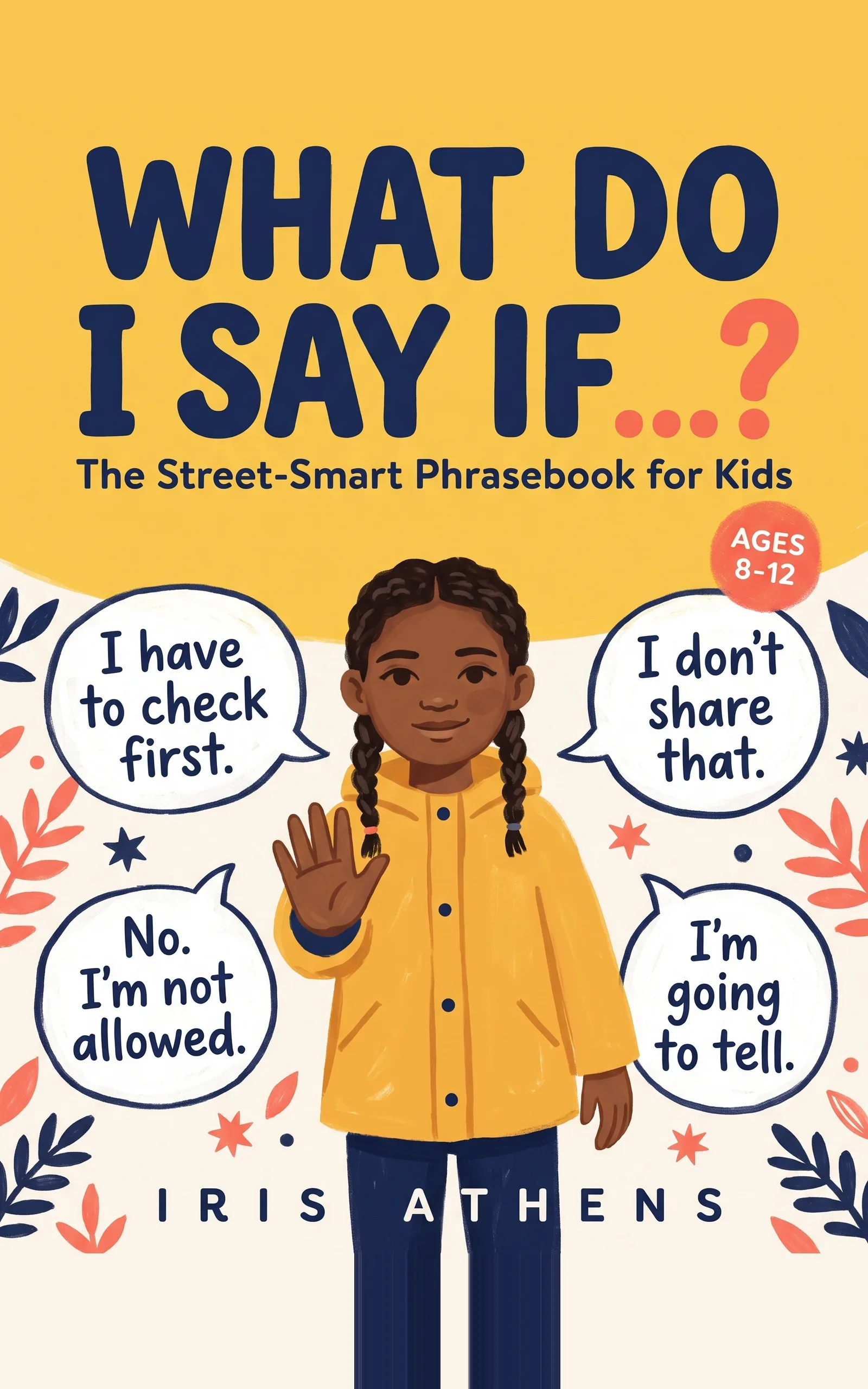
What Do I Say If...?
The Street-Smart Phrasebook for Kids 8-12: The Exact Words to Say No, Get Help, and Stay Safe With Strangers, Friends, Bullies, and People Online. By Iris Athens, 159 pages.
Where this problem is in the book:
- Hey, Kid: How This Book Works
- The Practice Game
- Our Family Safety Plan
- Cut-Out Cards
Links go to Amazon. ToolGenX publishes this book under a pen name and earns from every sale. Amazon sets the price and handles delivery and returns.
What to look for, in plain terms
A good safety book for a child of 8 to 12 does three jobs. It gives the child short words to say. It gets a grown-up to practice those words with them. And it covers the moments the child will really meet, not only the scary ones.
Here is why the first job matters most. Children already know plenty of rules. Don't talk to strangers. Be careful online. The book on this page puts the problem well: rules are easy to remember at the kitchen table and hard to use in the moment. What a child needs then is a sentence they have said out loud before.
Watch out for books built on "stranger danger." The National Center for Missing & Exploited Children moved away from that approach, partly because a lost child needs to be able to ask a stranger for help. Newer advice teaches kids to watch what people do and to check first.
The gift that comes with a game
The best part of a book like this is that you get to play too. Picture a Sunday visit. Your granddaughter picks a page. You read the pushy line in your best villain voice:
Come on, just this once. I'll give it right back. Nobody will know.
She stands tall and answers in her strong voice. Then you swap roles, and she gets to be the pushy one. The book says kids are usually great at that part, and it shows them how the tricks work. It also says to laugh when it gets silly.
Ten minutes is enough. The book's own schedule is ten minutes a week for eight weeks.

Everyday moments, not just strangers
The book behind this page has 100 situations, and many of them are small. A classmate wants to copy homework. Someone says you can't sit here. A friend keeps borrowing things. A kid is laughing at someone and wants your grandchild to join.
Small moments are where a child gets to practice. The book's view is that every time a child uses their strong voice at lunch, it gets easier to use somewhere harder. The calm plan for bullying, for example, follows StopBullying.gov's advice for kids: say stop in a calm, clear voice, walk away, don't fight back, and tell a grown-up.

The one line that is for you
There is a line in the book that is not for the child at all. It is for whoever gives the gift:
You will never be in trouble for telling me.
The book calls it the most important line in it, and asks grown-ups to say it often. If you are a grandparent, saying it on a visit makes you one more safe grown-up the child knows they can go to.

Why this book fits the brief
Iris Athens wrote What Do I Say If...? for exactly this problem. Iris Athens built it for kids 8 to 12 and the grown-ups who read with them. The part we like most is that it treats the grown-up as part of the game, not as the person handing out rules.
Hey, Kid: How This Book Works speaks straight to the child, with four steps to remember: notice it, say it, do it, tell it.
The Practice Game has the rules for role-play and the 8-week schedule.
Our Family Safety Plan is a fill-in page for the fridge: numbers to know by heart, a safe grown-up team, a "come get me" message and a fire escape plan.
Cut-Out Cards hold twelve key lines for a backpack or phone case, plus a certificate at the back for the child who practiced them.

Is What Do I Say If...? the right book for you?
Yes, if
- You are a grandparent, aunt, uncle or teacher looking for a useful gift for a child of 8 to 12
- You want something you can read together on visits
- You want a gift that will not frighten the child or worry the parents
Skip it if
- The child is younger than 7 or already a teenager
- You want a book the child reads alone and puts away; this one works best read with a grown-up
- A child is in danger right now. Call 911 or Childhelp at 1-800-422-4453
Fair doubts before you buy
Is a safety book a gloomy present?
It can be, if it is full of warnings. This one is built more like a game. The child learns a strong voice, plays the pushy person while you answer, and gets a certificate at the end for practicing. Most of the situations are everyday ones, like a classmate copying homework.
Is the Kindle version enough for a gift?
For reading together, either works. But the paperback has pages made to be written in: a safe grown-up team, a family safety plan for the fridge, a certificate and cut-out cards with the key lines. Those work best on paper.
What if the parents would rather cover some topics themselves?
The book is set up for that. It says the chapters on body safety and on grown-ups who break the rules are best read together, and that the grown-up can skip, pause and come back. You can start with school, friends and games and leave the rest for the parents.
Get What Do I Say If...?
Rules are easy to remember at the kitchen table; this book gives kids 8 to 12 the exact words to say in the moment, with strangers, friends, bullies and people online.
Links go to Amazon. ToolGenX publishes this book under a pen name and earns from every sale. Amazon sets the price and handles delivery and returns.
This book is not a substitute for supervision or professional help. If a child may be in danger, call 911 or the Childhelp National Child Abuse Hotline at 1-800-422-4453.

Questions people ask about this
- What is a good safety book for an 8 year old?
- One that gives exact words and has the child practice them out loud with a grown-up. Look for everyday situations, not just strangers, and a calm tone with no scary stories. It should say clearly that nothing that happens is the child's fault and that telling never gets them in trouble.
- How do you teach kids safety without scaring them?
- Practice instead of warnings. The book behind this page uses no statistics or scary stories, because fear makes kids freeze and practice makes them move. A grown-up reads a pushy line, the child answers, and then they swap. Ten minutes a week is plenty.
- What age is a street-smart book for?
- This one is written for kids aged 8 to 12, read with a grown-up. It is not for children younger than 7 or for teenagers. Older kids in that range can flip to whatever they are curious about, since the chapters do not need to be read in order.
- Should grandparents talk to kids about stranger safety?
- They can, and a book helps. The book asks every child to name at least three safe grown-ups besides a parent, like relatives, teachers or neighbors the family trusts. A grandparent who reads it with them can be one of the names on that list.
Related problems
- What to teach kids about strangers, now that "stranger danger" is out
Stranger danger is out. What to teach kids 8 to 12 instead: watch what people do, check first, and know who to ask for help.
- Your child can't say no to friends. Is that normal, and how do you teach them to?
Your child goes along with friends even when they know better. Why that is normal at 8 to 12, and the short lines that help them say no.
- Secrets vs. surprises: how to explain the difference to your child without scaring them
A calm way to teach kids 8 to 12 the difference between a surprise and a secret, which secrets they always tell, and the words to say.
- Your child is being bullied and goes back to school tomorrow. What should they say to the bully?
Your child is being bullied and school is tomorrow. The calm words to say, what to do next, and how to report it if telling once did not work.
- Everything inside What Do I Say If...?
Every chapter, who the book is for, and every problem it helps with.
// Also on this topic
- guideFirst apartment at 18: what to know before you sign the lease
About to rent your first apartment at 18? What to check in the lease, how to get your deposit back, renters insurance and the signs of a fake listing.
- guideTurned 18 and forgot to register for Selective Service? What to do now
Missed the 30-day Selective Service window after turning 18? You can still register online until 26. What it costs you to wait and what it does not mean.
- bookThe 18 Manual
What to Do Before and After You Turn 18: Money, Work, Rent, Health, and Your Legal Rights, Graded by What It Costs and How Well It Works