// book · by Iris Athens (pen name)
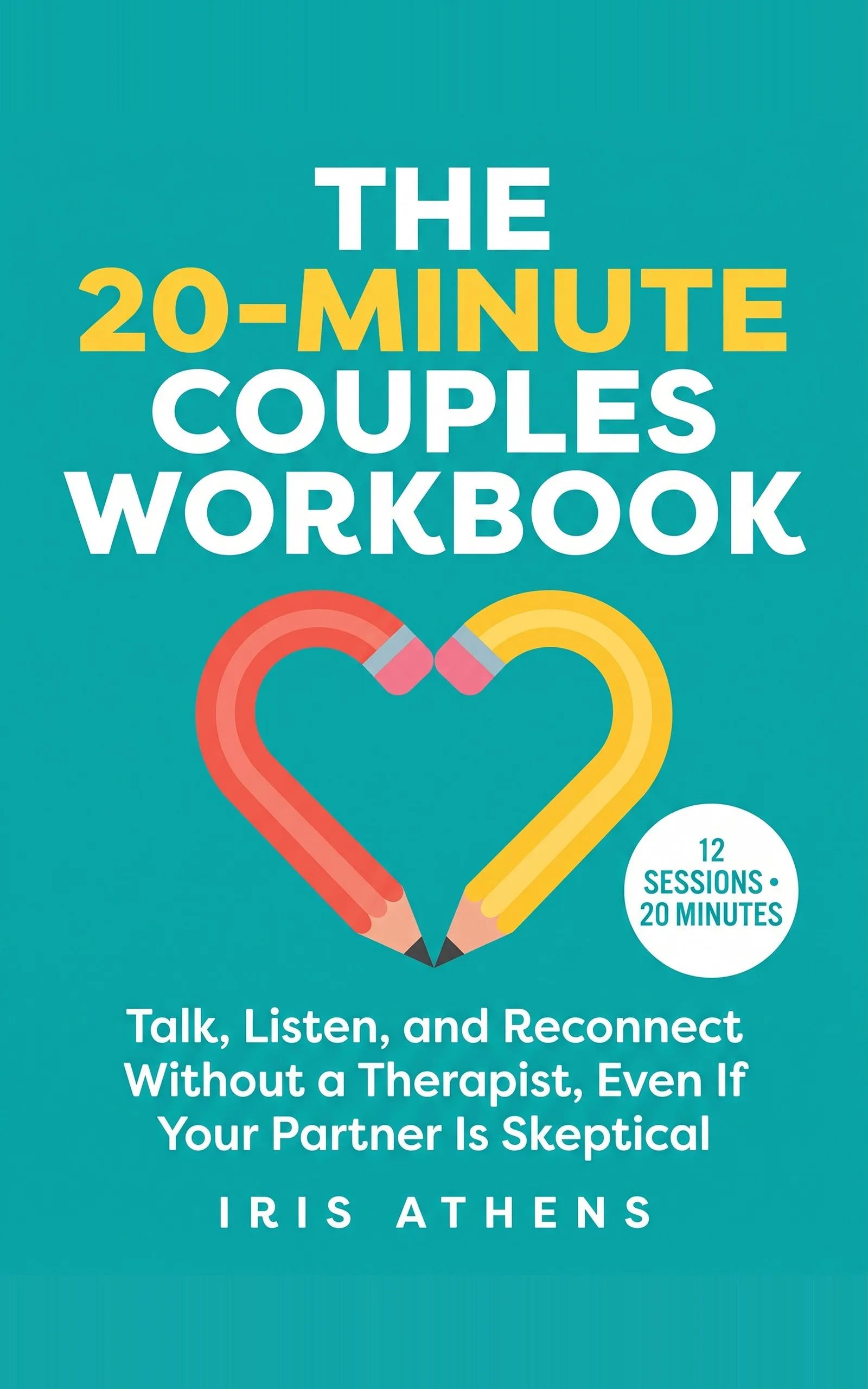
The 20-Minute Couples Workbook
Talk, Listen, and Reconnect Without a Therapist, Even If Your Partner Is Skeptical
One book, two pens, twenty minutes a week. Twelve guided sessions that give a hard talk a shape, starting with what already works between you.
Links go to Amazon. ToolGenX publishes this book under a pen name and earns from every sale. Amazon sets the price and handles delivery and returns.
This workbook is not therapy. If either of you feels unsafe, call the National Domestic Violence Hotline at 800-799-7233.
- author
- Iris Athens
- length
- 154 pages (paperback)
- formats
- Kindle, paperback
- sold by
- Amazon
This book is for you if
- You bought the book and do not know how to ask your partner to try it
- You have the same fight every month and never reach the end of it
- You cannot afford therapy, or do not want it, but want some structure
- Your talks have gone quiet rather than angry
Skip it if
- One of you is afraid of the other (the book says not to do these exercises together)
- You want therapy or a diagnosis
// problems this book helps with
Start from your problem
Each page below answers one real question in plain words, then shows where The 20-Minute Couples Workbook goes further.
- You bought something to work on your relationship. How to ask a skeptical partner to try it.
You want to work on things together and your partner rolls their eyes. Words to use, words to skip, and why the first sessions should be easy.
- Couples workbook or couples therapy: which one fits where you are right now?
A side-by-side look at doing a couples workbook at home versus seeing a couples therapist, with the clear signs that a book is not enough.
- The fight is getting too heated right now. How to take a break that actually helps.
Your heart is pounding and you can't hear your partner anymore. What to say, how long to pause, and how to come back without starting round two.
- Your partner won't go to couples therapy. What you can do instead.
Your partner said no to couples therapy. Why people refuse, what research says about smaller first steps, and what helps if you have to start alone.
- Questions to ask your partner to reconnect, and how to ask them so they work
Good questions to ask your partner when you feel distant, from easy to a little deeper, plus the simple listening rules that make them work.
- How to bring up a hard conversation with your partner without starting a fight
Every time you bring something up, it turns into a fight. A soft start-up in three plain parts, with a before and after example you can copy tonight.
- You and your partner don't really talk anymore. Is that normal, and how do you start again?
No fights, just quiet. Why couples drift into talking only about logistics, and three small habits that bring real conversation back.
- You keep having the same fight with your partner. Here is why it never ends.
Having the same argument for years is common. Learn why some fights never get solved, and a 12-minute way to talk about what sits under yours.
Twenty minutes, the same steps every week
Most couples know the feeling. One of you says "can we talk?" and the other one's shoulders go up an inch. This book gives that talk a shape.
Each of the twelve sessions takes about twenty minutes and follows the same order. A two-minute check-in. A short reading called "Why this works," read aloud by whoever's turn it is. A two-minute warm-up. A twelve-minute exercise. Then a close, where each of you names one thing you appreciated, and you stop, even if it is going well.
Stopping on time is part of the design. A session that ends at twenty minutes feels safe to start next week. One that runs an hour and ends in a fight makes the next one harder to begin. Every session also ends with Tonight's Question, one easy thing to ask over dinner, with nothing to write.
Easy first, harder later, on purpose
Sessions 1 to 3 have no conflict in them. You list what is working, play a guessing game about each other's current life, and learn how each of you reaches for attention. Then the book moves slowly toward the harder parts: starting a complaint softly, listening until your partner feels heard, taking a proper break when a fight floods you, and repair.
Session 11 handles the fight you keep having, by talking about what sits under each side instead of who is right. Session 12 looks at who carries what at home, including the planning work nobody sees.
We like that the book is written with the skeptical partner in mind. There is a chapter just for the one who bought it, with ways to ask and a plain plan if the answer is no.
Honest about the research
Every session carries a badge. SOLID means several good studies point the same way. PROMISING means there is some evidence, but not much. STORY ONLY means the idea comes from clinical experience and nobody has tested it directly.
The book also says what it is not. No trial has tested this workbook. What it borrows is the structure of programs that did help couples in large randomized trials: both partners, set times, small steps, the same routine each week. A Myth Check section at the back tests eight popular claims, like the 94 percent divorce prediction and "never go to bed angry," and says which ones don't hold up.
When this book is not the right tool
The book opens with a page called Before You Start. If either partner is afraid of the other, it says do not do these exercises together. That includes being controlled, like having your phone checked or your money taken over. It points to the National Domestic Violence Hotline at 800-799-7233, and to 911 in immediate danger.
It also lists when to see a professional instead: worsening depression or drinking, an affair you can't talk about, every session ending in a fight, or one partner wanting to leave. Needing that help doesn't mean you failed. It means you found the edge of what a book can do.
What is inside
- Twelve weekly sessions, from what is working between you to the fight you keep having and who carries what at home
- Side-by-side answer spaces for Partner A and Partner B, so one copy is enough
- An evidence badge in every session: SOLID, PROMISING or STORY ONLY, so you know how sure the research is
- A chapter for the partner who bought the book, with ways to ask a skeptical partner to try
- The Flooding Page and Repair Phrases You Can Point To, for the middle of a heated argument
- 52 Questions for the Kitchen Table, one easy question for every week of the year
- Myth Check, which tests eight popular relationship claims against the studies
- A safety page up front with the hotlines, and clear signs that you need a professional instead
Chapters
- 01How This Book Works
- 02For the One Who Bought This Book
- 03Before You Start: When This Book Is Not Enough
- 04The State of Us
- 05Love Maps
- 06Turning Toward
- 07When Good Things Happen
- 08Find, Remind, Bind
- 09Start Soft
- 10Listen Until They Feel Heard
- 11The Four Horsemen
- 12When You're Flooded
- 13Repair
- 14The Fight You Keep Having
- 15Fair Share
- 1652 Questions for the Kitchen Table
- 17Repair Phrases You Can Point To
- 18The Flooding Page
- 19Myth Check
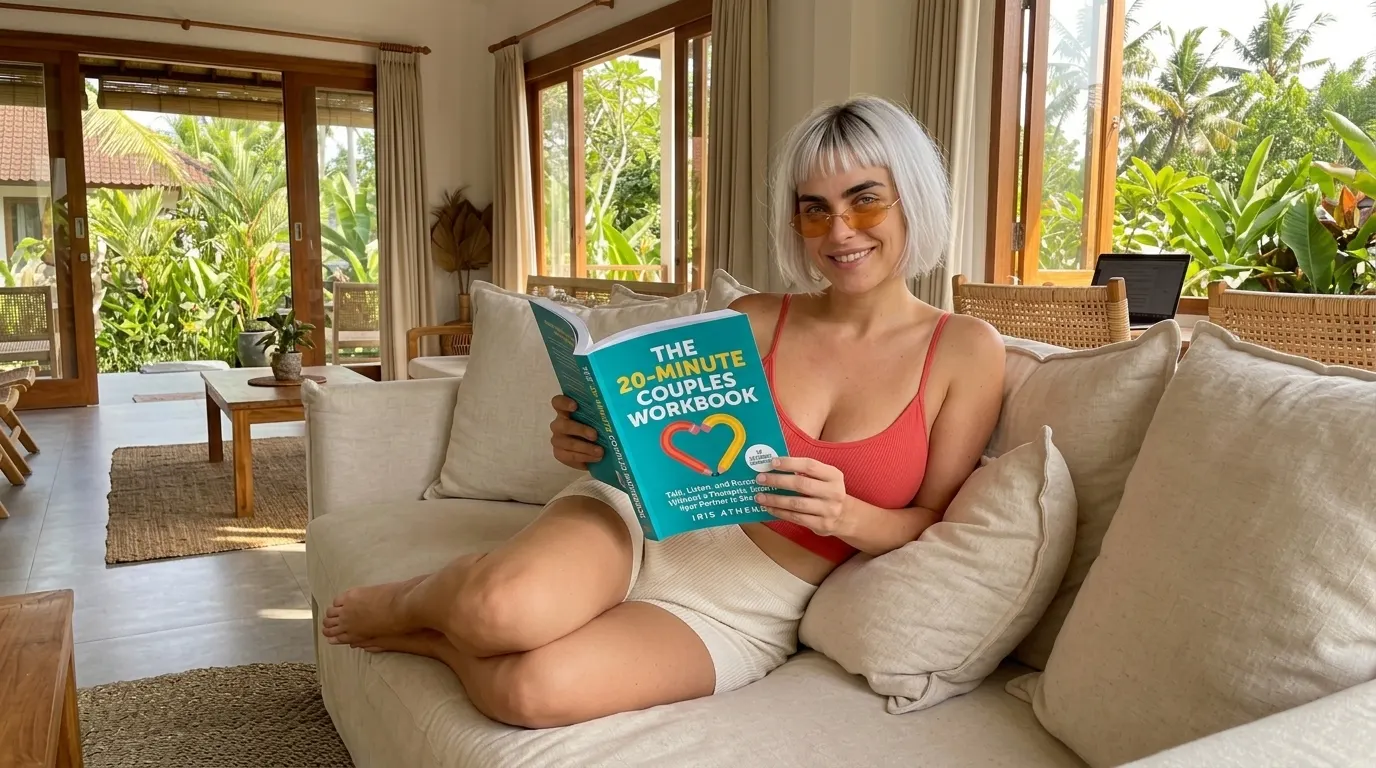
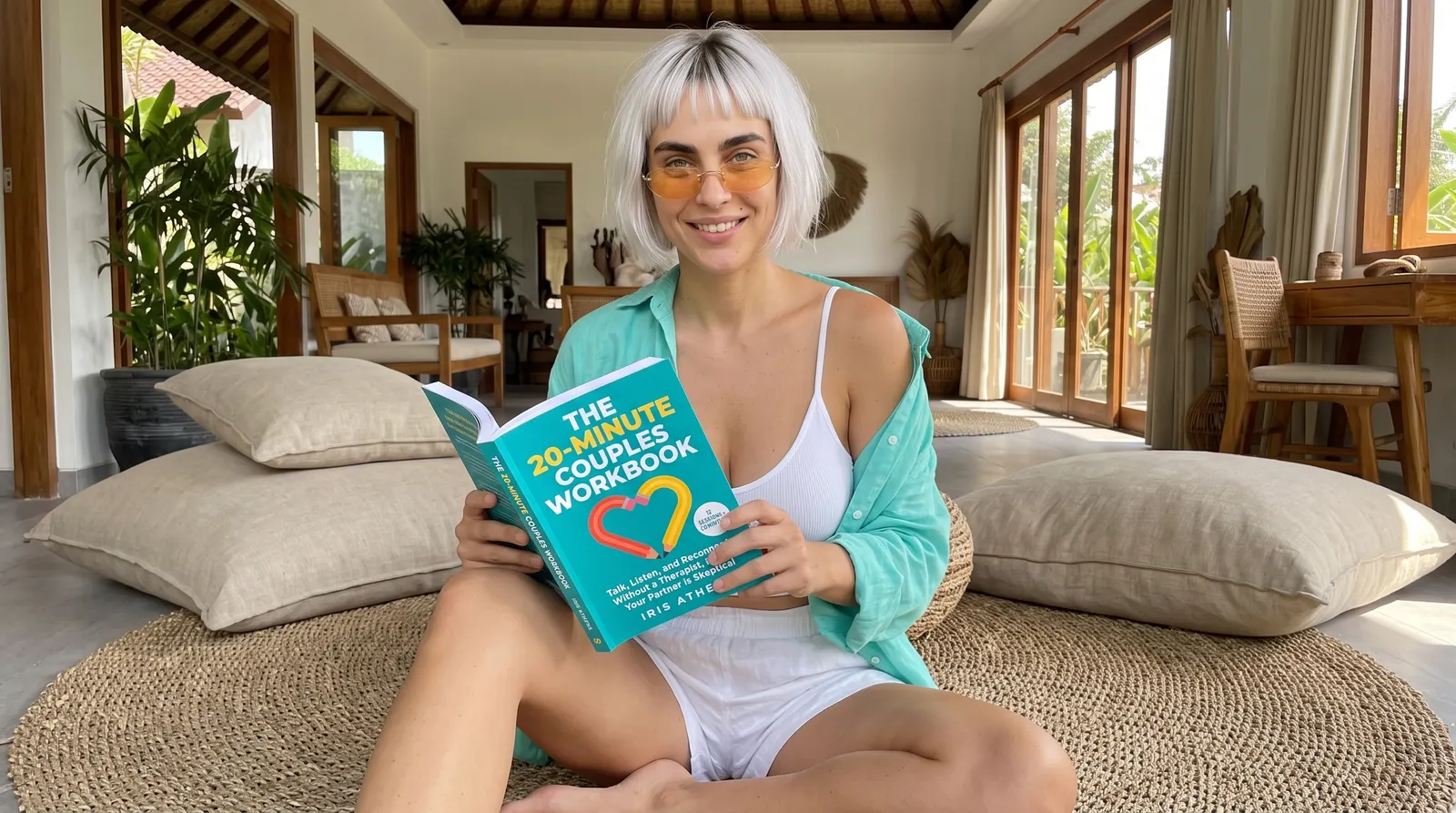
The paperback, up close







Questions about The 20-Minute Couples Workbook
- Do we need two copies of the workbook?
- No. Every exercise has a space for Partner A and a space for Partner B, side by side. When a step asks you both to write without looking, one of you writes in the book and the other uses a sticky note or a phone. You switch who gets the book each week.
- Is this couples workbook a replacement for therapy?
- No. The book says plainly that it is not therapy and can't diagnose anything. It lists the signs that you need a licensed professional instead, such as an affair you can't talk about, worsening depression or drinking, or one of you wanting to leave.
- What if your partner is skeptical?
- That is who the subtitle is written for. A chapter for the buyer gives low-pressure ways to ask, and the first three sessions have no conflict in them at all. They are about what is going well, so the first evening is easy to say yes to.
- What if one of us feels unsafe?
- Then do not do these exercises together. The book says this before the first session. Free, confidential help in the United States: the National Domestic Violence Hotline at 800-799-7233, or text START to 88788. In immediate danger, call 911.
- Has this workbook been tested in a study?
- No, and the book says so. It borrows the structure of programs that did help couples in large randomized trials: both partners, set times, small steps, the same routine each week. Each session also labels how strong the evidence is behind its idea.
Get The 20-Minute Couples Workbook
One book, two pens, twenty minutes a week: twelve guided sessions give "can we talk" a shape, starting with what already works.
Links go to Amazon. ToolGenX publishes this book under a pen name and earns from every sale. Amazon sets the price and handles delivery and returns.