Last updated
Sent money to a scammer? What to do right now, step by step

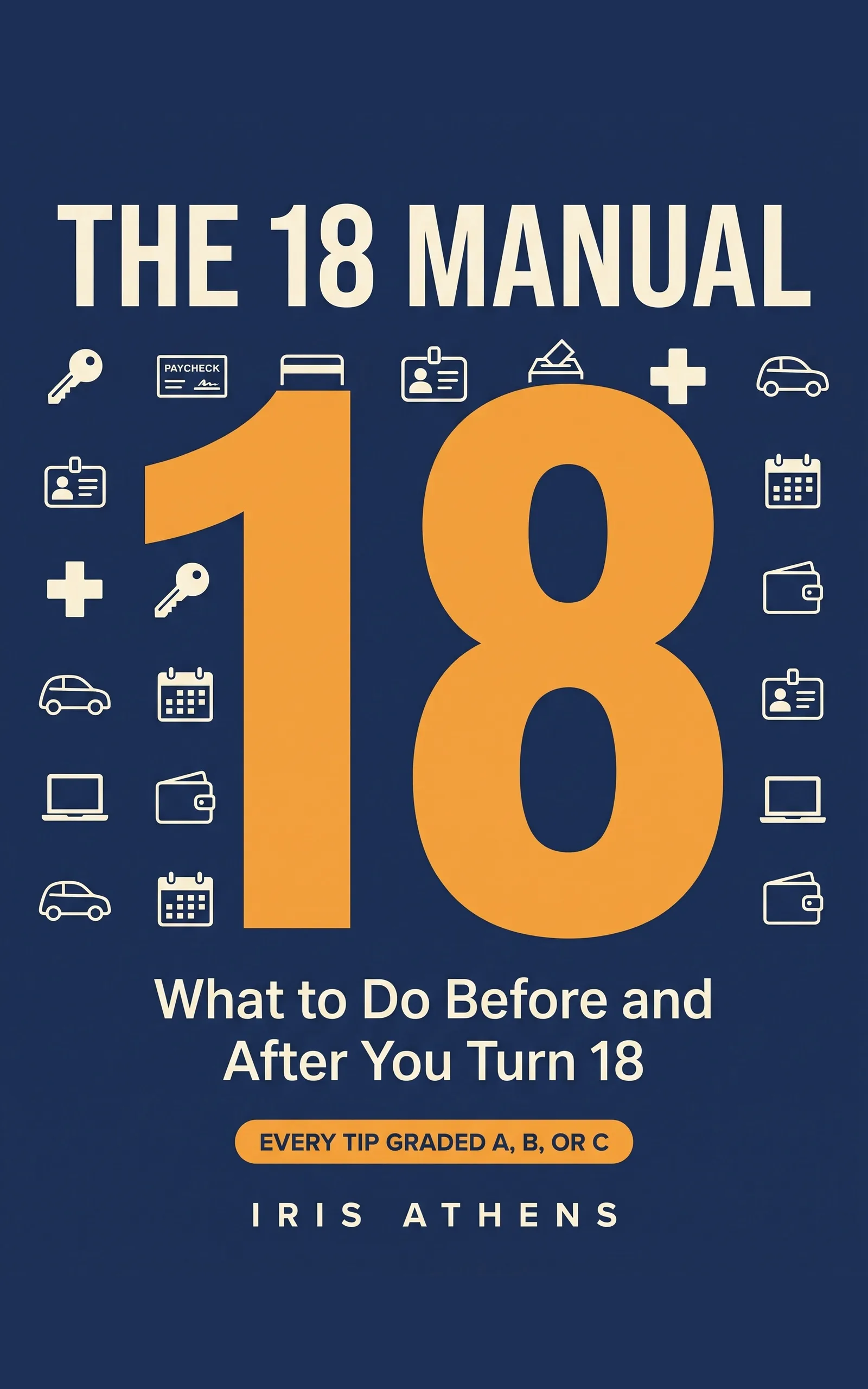
The book for this problem
The 18 Manual
What to Do Before and After You Turn 18: Money, Work, Rent, Health, and Your Legal Rights, Graded by What It Costs and How Well It Works. By Iris Athens, 142 pages.
Where this problem is in the book:
- Scams and Your Identity
- Legal Red Lines at 18
- When Things Go Wrong
Links go to Amazon. ToolGenX publishes this book under a pen name and earns from every sale. Amazon sets the price and handles delivery and returns.
Do these steps in the next hour
- Call the payment company now. The bank, card company, app or wire service you used. Ask them to reverse the payment. Do this before anything else.
- Stop paying. If they ask for more, say no. Only scammers demand gift cards, wires or crypto.
- Report it at ReportFraud.ftc.gov and to your state attorney general.
- If it happened online, report it to the FBI's Internet Crime Complaint Center at ic3.gov.
- If you gave out your Social Security number or a login, go to IdentityTheft.gov and freeze your credit at all three bureaus.
There is no promise the money comes back. But speed gives you the best shot, so do step one now.

Which scam was it?
Each one ends a little differently, so we split them up. Find yours.
A job that asked you to pay. Honest employers never charge you to get a job. If they mailed you a check and asked you to send part back for supplies, see the next one.
A check, and you sent some back. A fake check can take weeks to be caught. When it bounces, the bank takes the money back from you. Call your bank today. The FTC guide to fake check scams explains why the balance looked real.
A rental you never saw. A fake listing wanted a deposit by wire, gift card or crypto. Call the payment company and report it.
Someone you met online. They could not meet in person, then they needed money. The FTC rule is plain: never send money to someone you haven't met in person.
A missed jury duty fine or an IRS text. Courts reach you by mail. The IRS normally mails a letter first. A call or text demanding payment is a scam.

If someone is threatening to share your photos
This one needs its own steps, because paying makes it worse. It is called sextortion.
Don't pay. Block the person, but keep the messages, since they are evidence. Report it to the NCMEC CyberTipline at report.cybertip.org and the FBI at tips.fbi.gov. If a sexual image of you was taken before you turned 18, Take It Down at takeitdown.ncmec.org can help platforms find and remove it. Your image stays on your device. You can stay anonymous.

You already pressed send
Your stomach dropped about two seconds after you tapped the button. Now you are reading the chat again and every message looks fake.
You are not the first, and it is not because you are dumb. The story changes from scam to scam, but the ending is the same request: money, fast, in a way that can't be undone.
The good news is that the next hour matters. Make the call.

What the book gives you for next time
This is the problem The 18 Manual was written for. Iris Athens grades every move, so you know which rule is law and which is advice.
Scams and Your Identity has ten moves. It covers the credit freeze, fraud alerts, IdentityTheft.gov, job scams, overpayment checks, student loan scams, the payment methods only scammers demand, romance scams, spam texts, and what to do the day you already paid.
Legal Red Lines at 18 covers Take It Down, StopNCII.org for adults, and the sextortion steps above.
When Things Go Wrong covers what a debt collector can't do and free legal aid through LawHelp.org if the loss is large.
The book is not legal advice. For your own case, your bank, the FTC and your state attorney general are the places to ask.

Is The 18 Manual the right book for you?
Yes, if
- You just paid someone and now it feels wrong
- Someone asked you to pay with a gift card, a wire or crypto
- A stranger is threatening to share photos of you unless you pay
Skip it if
- You need a lawyer for a large loss (start with free legal aid)
- You live outside the United States, where the agencies differ
Fair doubts before you buy
I feel stupid. Should I just keep quiet?
No. A scam can get through to anyone, whatever story it uses. Reporting helps the agencies track the scam and warn other people. Keeping quiet only helps the scammer.
Is it even worth calling? The money is gone.
Sometimes it is. The FTC says to contact the company you used right away, because speed is your best shot. Wire, gift card and crypto payments are very hard to get back, which is exactly why the call should happen today.
Get The 18 Manual
About 130 grown-up moves, from a first bank account to a first lease, each graded by what it costs and how well it works, so a new 18-year-old knows which ones are worth the time.
Links go to Amazon. ToolGenX publishes this book under a pen name and earns from every sale. Amazon sets the price and handles delivery and returns.
This book explains published US rules and where to check them. It is not legal, tax, medical or financial advice.

Questions people ask about this
- Can you get your money back if you get scammed?
- Sometimes. Contact the payment company right away and ask for a reversal. The FTC compares wire transfers, gift cards and crypto to sending cash: once sent, they are very hard to get back. A debit card loss reported within two business days is capped at $50.
- Where do I report a scam?
- Report it at ReportFraud.ftc.gov and to your state attorney general. If it happened online, also report it to the FBI's Internet Crime Complaint Center at ic3.gov. Forward scam texts to 7726, which spells SPAM.
- What if I deposited a check and sent some of the money back?
- That is the fake check scam. Money showing in your balance does not mean the check cleared. A fake check can take weeks to be caught, and when it bounces the bank takes the money back. You owe whatever you already spent or sent. Call your bank now.
- What should I do if someone threatens to leak my photos?
- Do not pay. Block the person but do not delete the messages, because they are evidence. Report it to the NCMEC CyberTipline at report.cybertip.org and to the FBI at tips.fbi.gov or 1-800-CALL-FBI. The FBI warns that paying rarely makes it stop.
- What do I do if a scammer has my Social Security number?
- Report it at IdentityTheft.gov, which builds a recovery plan and an Identity Theft Report for you. Then freeze your credit at Equifax, Experian and TransUnion, one at a time. A freeze is free and does not affect your score.
Related problems
- First apartment at 18: what to know before you sign the lease
About to rent your first apartment at 18? What to check in the lease, how to get your deposit back, renters insurance and the signs of a fake listing.
- How to build credit at 18 without falling into a credit card trap
Secured card, credit-builder loan or authorized user? Compare the ways to build credit at 18, the under-21 rule, and the moves that do not count.
- What changes legally when you turn 18, and what to do in that first week
At 18 your contracts count, your medical records become yours and men must register with Selective Service. See each rule with its proof grade.
- Everything inside The 18 Manual
Every chapter, who the book is for, and every problem it helps with.
// Also on this topic
- guideA stranger in an online game is asking your child where they live. What do you do right now?
Someone in a game chat asked your child for their school, address or a photo. What to do in the next ten minutes, and the words for next time.
- guideWhat to teach kids about strangers, now that "stranger danger" is out
Stranger danger is out. What to teach kids 8 to 12 instead: watch what people do, check first, and know who to ask for help.
- bookWhat Do I Say If...?
The Street-Smart Phrasebook for Kids 8-12: The Exact Words to Say No, Get Help, and Stay Safe With Strangers, Friends, Bullies, and People Online