Last updated
Your child can't say no to friends. Is that normal, and how do you teach them to?

The phone call after the sleepover
It is Saturday morning. You pick up your son from a sleepover, and he is quiet in the car. A few miles later it comes out. The other boys wanted to sneak out after the parents went to bed. He did not want to. He went anyway.
Nothing bad happened. That is almost what bothers you. He knew it was wrong, and he still could not say no.
You ask why he did not just refuse. He shrugs. "They would have called me a baby."
And there it is. He had the rule. What he did not have was the words.
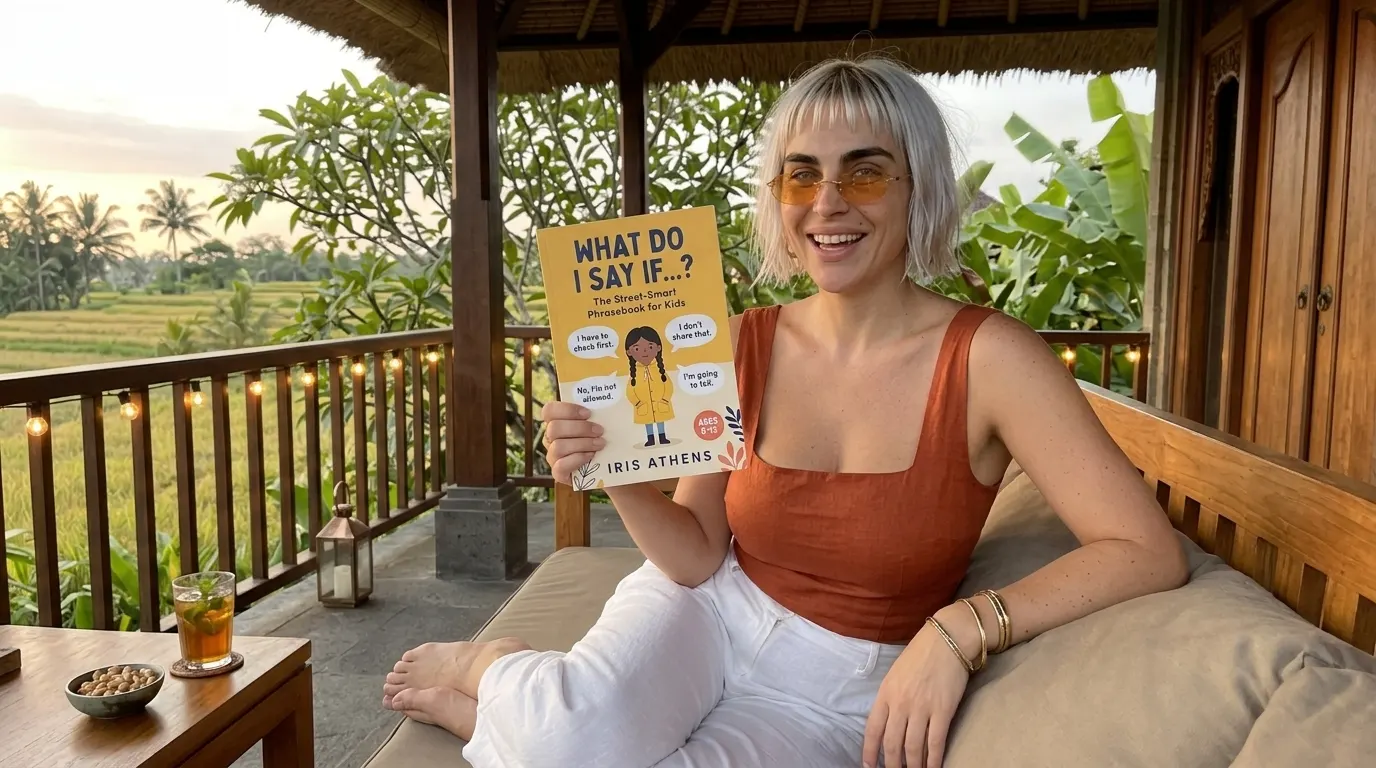
Is it normal? Yes, and it is not a character flaw
The book starts this chapter with a line we think every parent should hear. Friends are the best part of being a kid. They are also the hardest people to say no to, because you care what they think.
That is not weakness. It is how kids 8 to 12 are wired to care about friends. A child who freezes in that moment is not a bad kid. They are a kid who has never said the sentence out loud before.

Why "just say no" falls apart in the moment
"Just say no" sounds simple at the kitchen table. In the moment, your child is standing in a circle of friends. Someone is grinning. Someone says "What, are you scared?" Now your child has to invent a reply, keep their voice steady, and find a way out, all in about two seconds.
Most kids fill that gap by going along. Or they give a long, wobbly reason, which hands the friend something to argue with.
The book's fix is to remove the inventing. Your child already has the line. It is short. It needs no reason.

Short lines, said once, then move
The book teaches a strong voice: calm, clear, serious, not mean. Stand tall, look at the person, use a short sentence, don't explain, then move. The book's own way of putting it is that "No" is a complete sentence. You don't owe anyone a reason.
For a dare, the line is almost boring:
Nah. I'm good.
If they push, the next line is just as short. "Not happening." Then your child changes the subject or walks off.
For the hardest one, when a friend makes it a test of loyalty, the book gives a line that keeps the friend and the no at the same time:
I am your friend. And I'm still saying no.
There is one more idea from KidsHealth that the book builds on. Before deciding, ask one quick question: is this the right thing to do? And it is a lot easier to say no when one friend says it with you. So teach your child to be that friend for someone else.
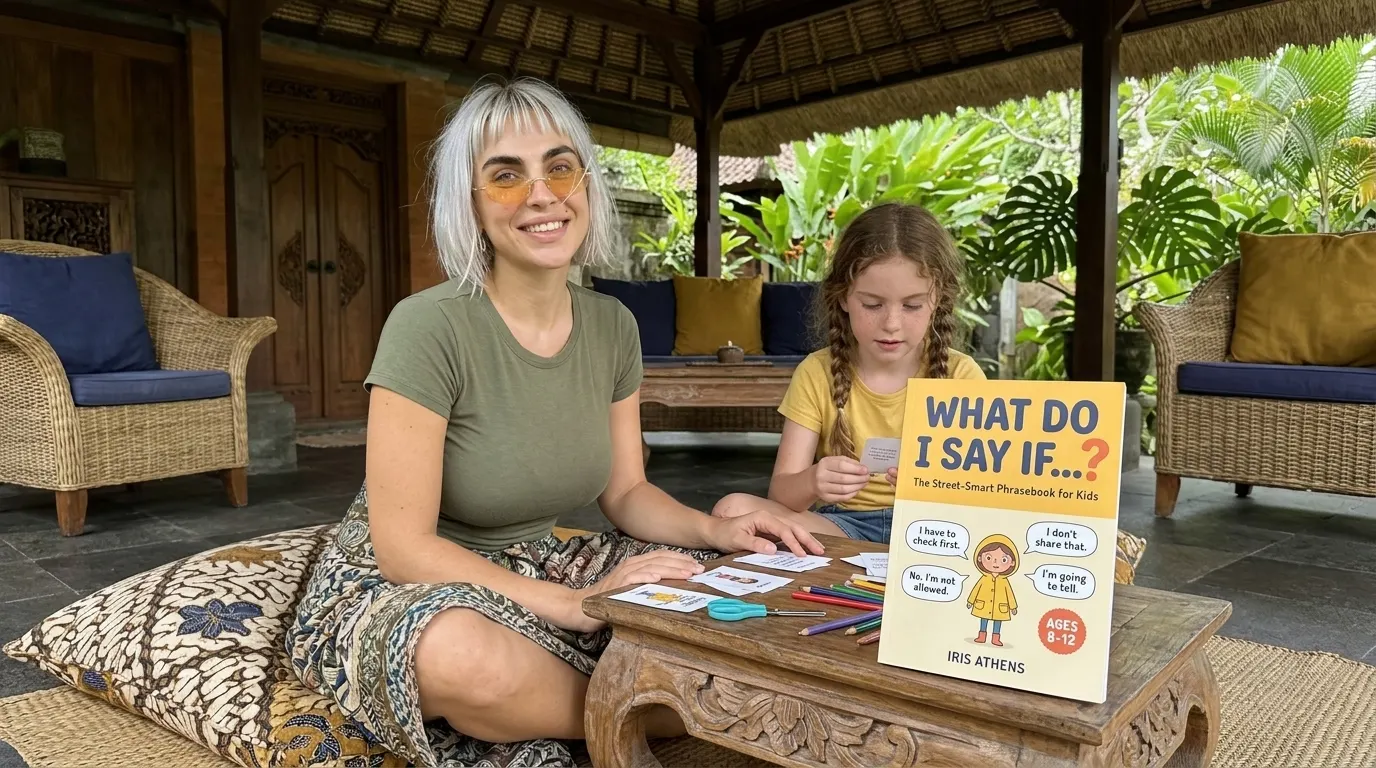
When it stops being small
Some dares are not small. The book is firm on a few. Never try a viral challenge that uses medicine, aerosol sprays, laundry pods or anything from under the sink. The AAP suggests that parents ask calmly which challenges kids have heard about and talk through the worst thing that could happen, instead of lecturing.
Never eat, drink or vape anything a friend offers unless your own grown-up says it is okay. The CDC warns that with a pill from someone else, there is no way to know what is inside.
And for sleepovers, agree on a "come get me" text ahead of time. Then promise your child a ride anytime, no questions asked in the moment. That one promise makes every other line easier to use.
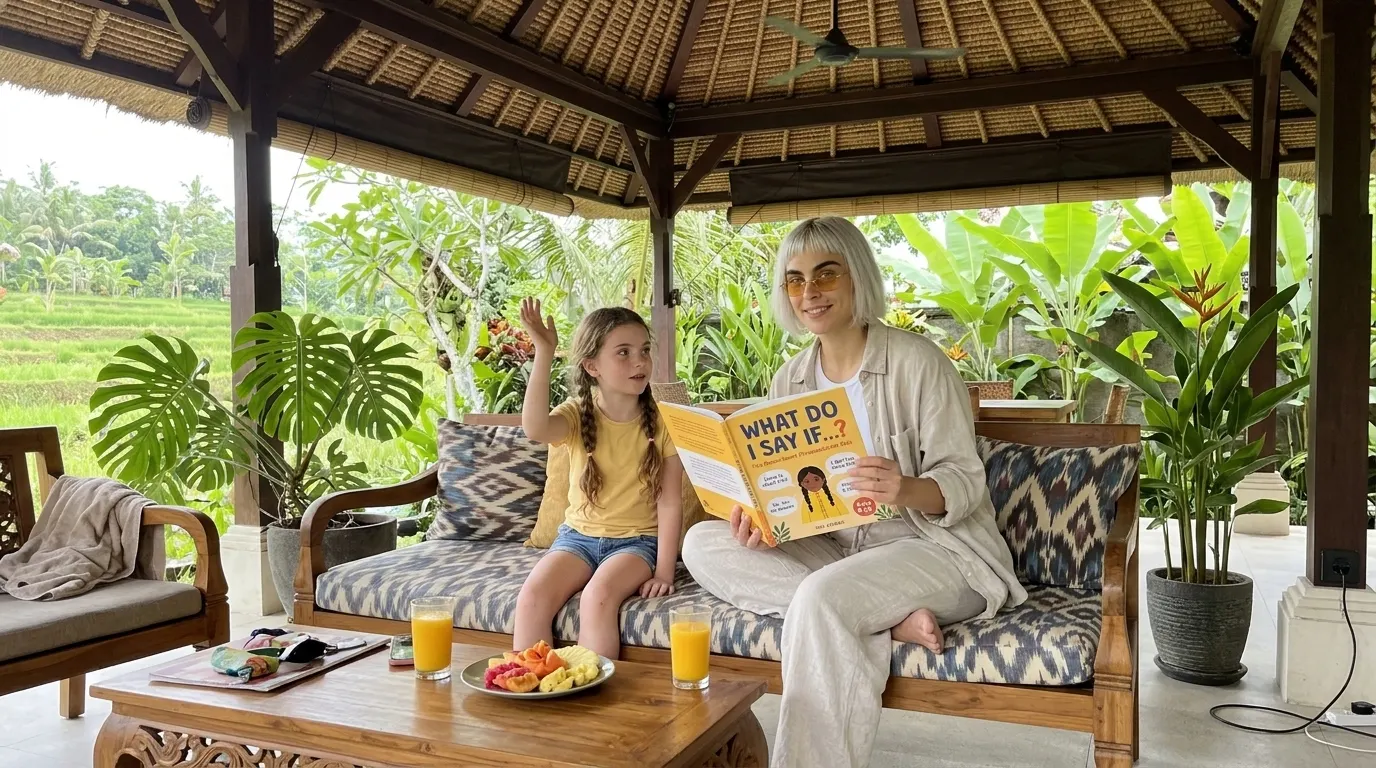
Chapters for dares and pushy friends
Iris Athens wrote What Do I Say If...? for exactly this problem.
Your Strong Voice shows your child how to stand, what to say and when to move, with a short drill: say "No" in a regular voice, then in a strong voice, and hear the difference.
Friends and Dares has twelve situations, from a dare off the shed roof to a friend who keeps borrowing things and a friend who is being bossy. Each one has the line, the push-back line and a practice line for you to read.
The Practice Game turns it into ten minutes a week. Week 4 on the schedule is friends and dares. Your child plays the pushy friend too, which shows them how the tricks work.
If the pressure is turning mean, our page on what your child can say to a bully picks up from there.
The book for this problem
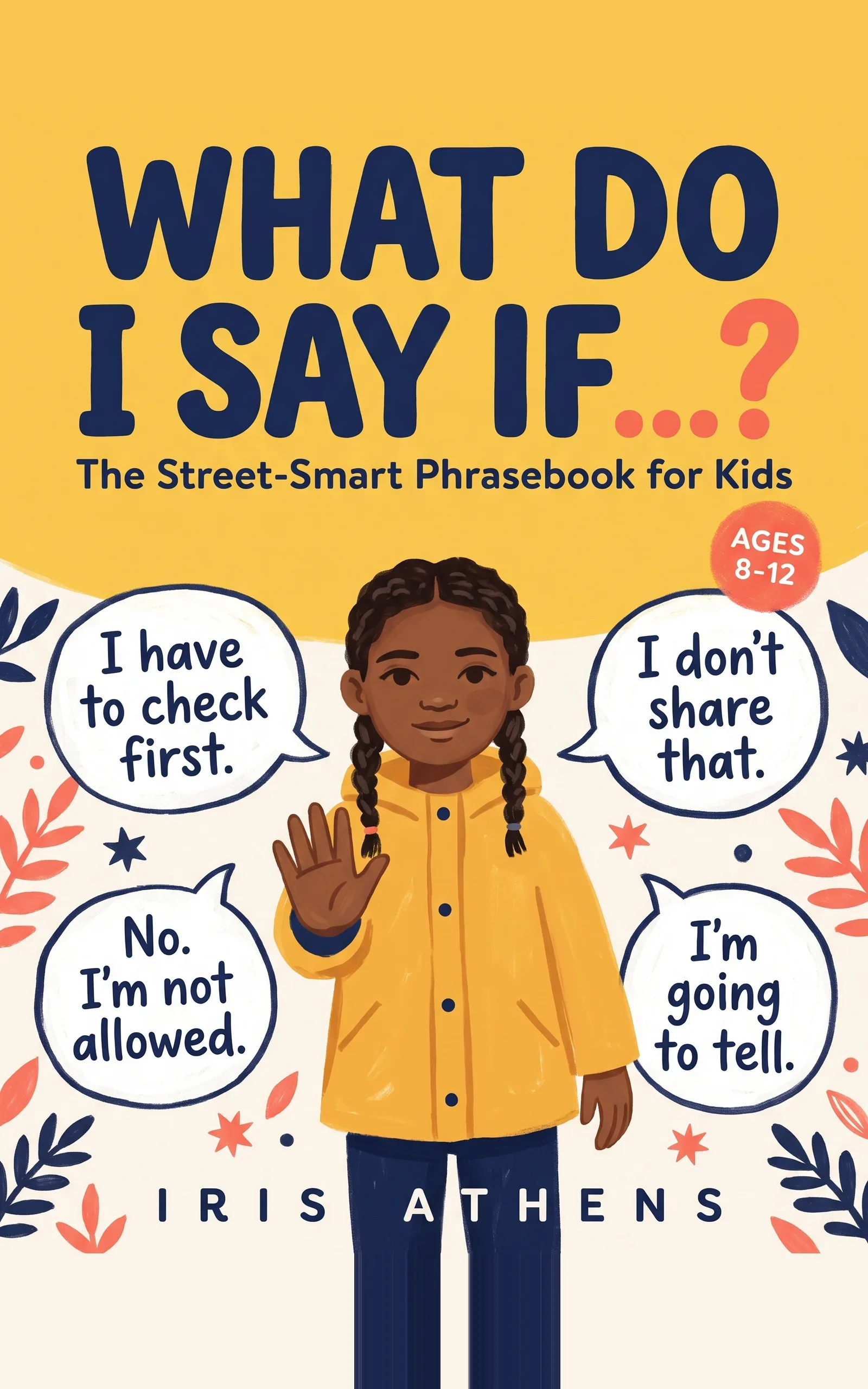
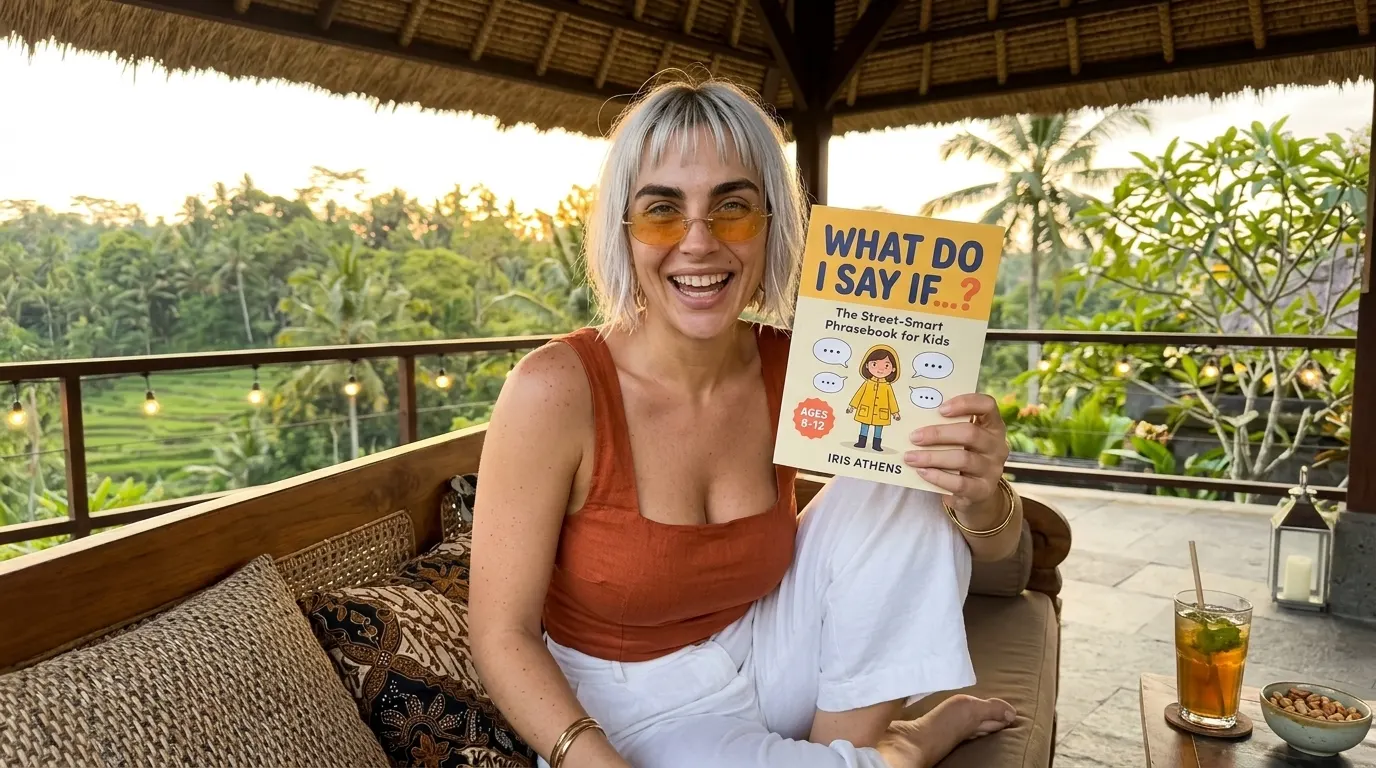
What Do I Say If...?
The Street-Smart Phrasebook for Kids 8-12: The Exact Words to Say No, Get Help, and Stay Safe With Strangers, Friends, Bullies, and People Online. By Iris Athens, 159 pages.
Where this problem is in the book:
- Your Strong Voice
- Friends and Dares
- The Practice Game
Links go to Amazon. ToolGenX publishes this book under a pen name and earns from every sale. Amazon sets the price and handles delivery and returns.
Is What Do I Say If...? the right book for you?
Yes, if
- Your child knows the right answer but goes along anyway
- You worry about dares, sleepovers or viral challenges
- You want words your child can say without losing the friend
Skip it if
- Your child is being hurt or threatened by other kids; start with the school and the bullying steps
- You want a book about teenage drinking and dating; this one is for ages 8 to 12
Fair doubts before you buy
Kids will just laugh at a scripted line.
The lines in the book are short and sound like kids, not like a poster. "Nah." "Not happening." "Do it without me." Kids can also swap in their own words. The book says any answer that keeps them safe counts, and the script is just a starting point.
We have talked about peer pressure a hundred times.
Talking is not the same as saying it. A child who has only heard the rule has to invent the words on the spot, with a friend staring at them. The book has you read the pushy line in character, so your child gets to answer it out loud before it ever counts.
Get What Do I Say If...?
Rules are easy to remember at the kitchen table; this book gives kids 8 to 12 the exact words to say in the moment, with strangers, friends, bullies and people online.
Links go to Amazon. ToolGenX publishes this book under a pen name and earns from every sale. Amazon sets the price and handles delivery and returns.
This book is not a substitute for supervision or professional help. If a child may be in danger, call 911 or the Childhelp National Child Abuse Hotline at 1-800-422-4453.

Questions people ask about this
- Why is it so hard for kids to say no to friends?
- Because they care what friends think. The book says it plainly: friends are the best part of being a kid and also the hardest people to say no to. Kids also worry the friend will be mad. The book teaches that people can be mad for a little while and still be your friend.
- How do you help a child deal with peer pressure?
- KidsHealth suggests three moves the book builds on. Ask yourself whether it is the right thing to do. Team up with a friend who will also say no. And walk away when needed. Then practice the actual words at home, so they come out on their own.
- What should a child say when a friend says if you were really my friend, you would?
- The book gives a calm line that keeps the friendship and the no: they are still your friend, and still saying no. If the friend keeps pushing, the next line turns it around: a real friend would stop asking. The point is that real friends do not make friendship a test.
- How do I talk to my child about dangerous online challenges?
- The AAP suggests asking calmly which challenges your child has heard about and talking through the worst thing that could happen, instead of lecturing. The book gives kids one hard rule: never try a challenge that uses medicine, aerosol sprays, laundry pods or anything from under the sink.
- What if my child wants to leave a sleepover?
- Agree on a come get me text ahead of time. The book has kids say they want to call home, find the grown-up of the house, or call their own grown-up for a ride. Tell your child they can always call you for a ride, no questions asked in the moment.
Related problems
- Your child is being bullied and goes back to school tomorrow. What should they say to the bully?
Your child is being bullied and school is tomorrow. The calm words to say, what to do next, and how to report it if telling once did not work.
- What to teach kids about strangers, now that "stranger danger" is out
Stranger danger is out. What to teach kids 8 to 12 instead: watch what people do, check first, and know who to ask for help.
- Looking for a safety book to give a child aged 8 to 12? What to look for, and how to read it together
Buying a safety book for a grandchild, niece or student aged 8 to 12? What makes one useful instead of scary, and how to read it together.
- A stranger in an online game is asking your child where they live. What do you do right now?
Someone in a game chat asked your child for their school, address or a photo. What to do in the next ten minutes, and the words for next time.
- Everything inside What Do I Say If...?
Every chapter, who the book is for, and every problem it helps with.
// Also on this topic
- guideWhat changes legally when you turn 18, and what to do in that first week
At 18 your contracts count, your medical records become yours and men must register with Selective Service. See each rule with its proof grade.
- guideA useful 18th birthday or graduation gift that won't end up in a drawer
Looking for a useful 18th birthday or graduation gift? Here is one that teaches the money, rent and health rules, plus an hour of your time to go with it.
- bookThe 18 Manual
What to Do Before and After You Turn 18: Money, Work, Rent, Health, and Your Legal Rights, Graded by What It Costs and How Well It Works