Last updated
Your child is being bullied and goes back to school tomorrow. What should they say to the bully?
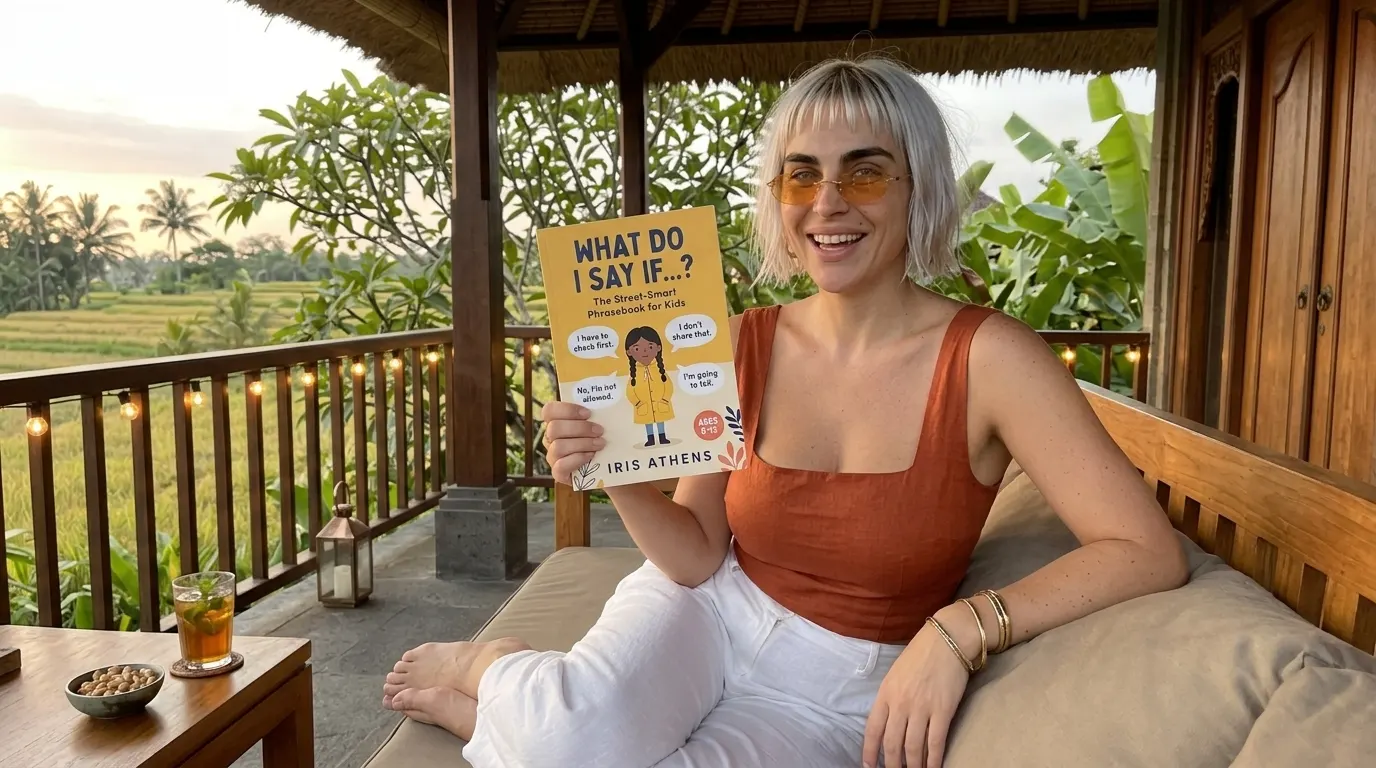
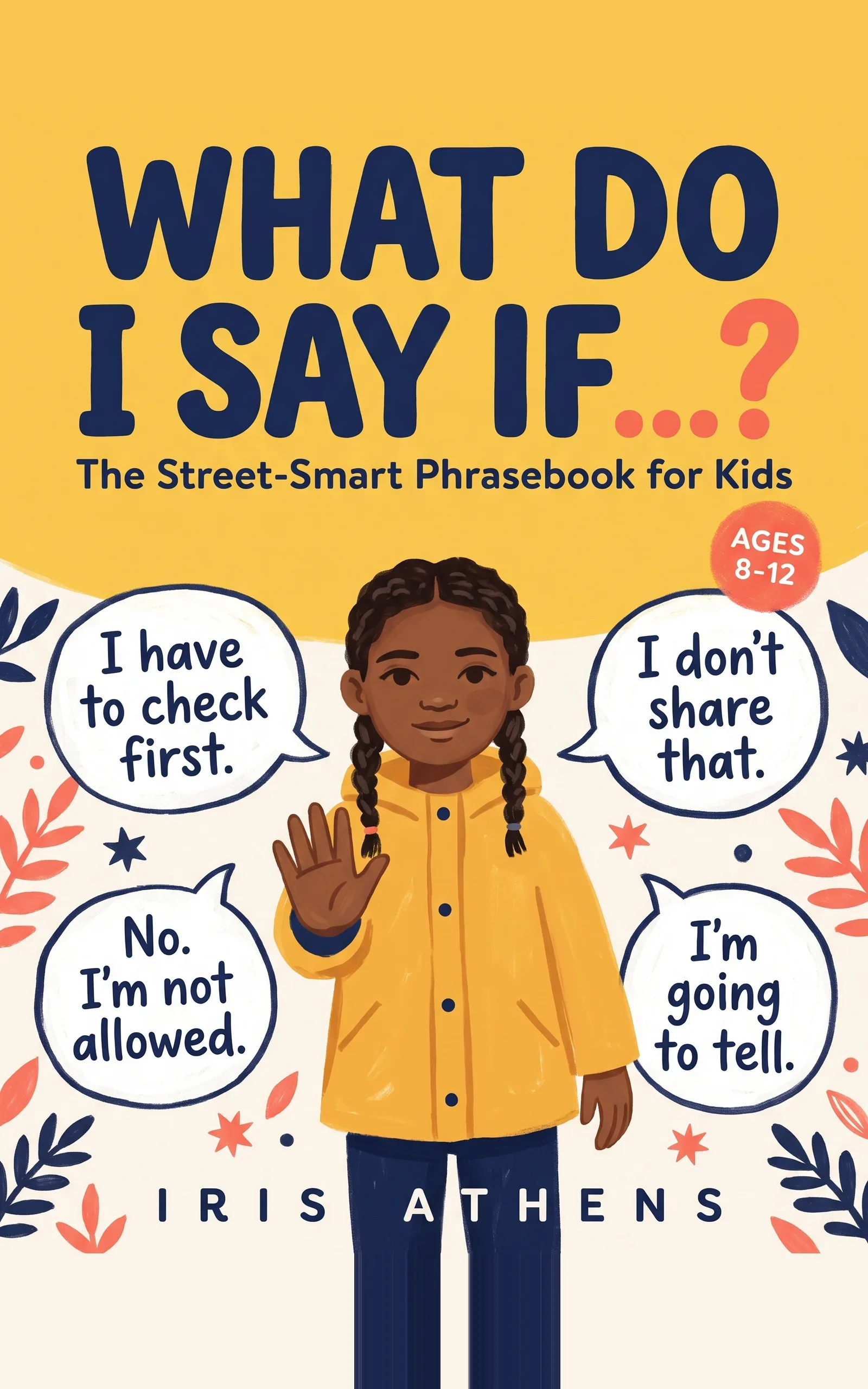
The book for this problem
What Do I Say If...?
The Street-Smart Phrasebook for Kids 8-12: The Exact Words to Say No, Get Help, and Stay Safe With Strangers, Friends, Bullies, and People Online. By Iris Athens, 159 pages.
Where this problem is in the book:
- Your Strong Voice
- Bullies and Mean Words
- At School
Links go to Amazon. ToolGenX publishes this book under a pen name and earns from every sale. Amazon sets the price and handles delivery and returns.
The plan for tomorrow morning
You have one evening. Here is what to practice tonight, in this order.
- Say "Stop" in a calm, clear voice.
- If that does not feel safe, walk away and stay away.
- Do not fight back.
- Tell a grown-up you trust.
That is the plan StopBullying.gov gives kids, and the book uses it in almost every bullying situation. It works because it is small enough to remember when your child's heart is pounding.
Now practice the first line. You play the bully. Say something like "Hey, four-eyes. Nice glasses, nerd." Your child stands tall and answers:
Stop. That's not my name.
Then they walk away, toward other kids or a lunch helper. Do it twice. Then swap, so your child plays the bully and you answer. Kids often laugh at this part. That is fine. Laughing at home is how the line stops feeling scary.

Add a list to the plan
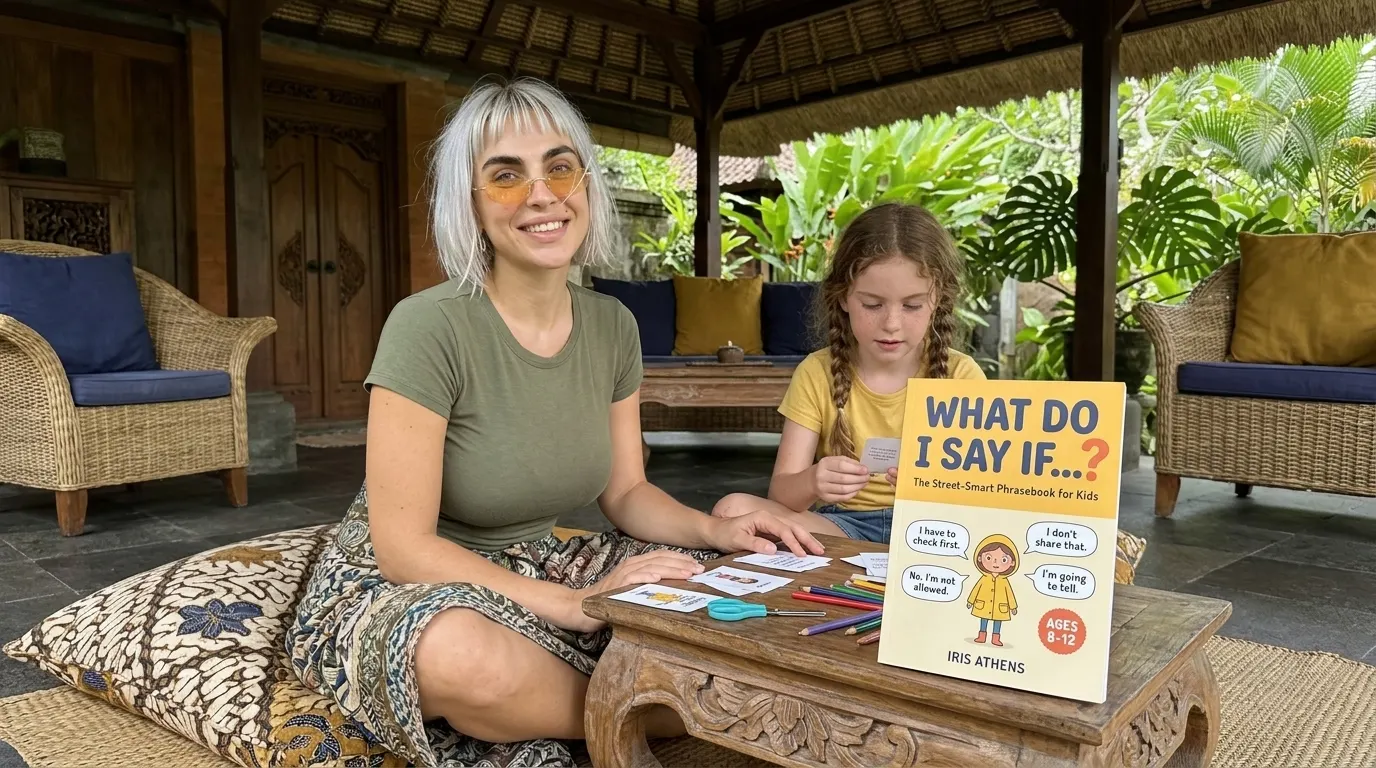
If the same group teases your child every day, it is bullying, and grown-ups need to help fix it. The book gives kids one job beyond the four steps: keep a simple list. What happened, when, and who was there.
You can start it tonight together. A list turns "they're always mean to me" into something a teacher can act on.
If telling once did not work
This is the part that breaks parents' hearts. Your child was brave, told a teacher, and nothing changed. The book has a line just for that:
I told before, and it's still happening.
Then they tell a different grown-up: you, a school counselor, the principal. And they bring the list.
On your side, StopBullying.gov suggests going step by step. Teacher, then school counselor, then principal, then superintendent, then your state Department of Education. Call 911 if there is a crime or someone is in immediate danger.

The evening it all came out
Maybe it went like this. Dinner was quiet. Later, brushing her teeth, your daughter said the girls at lunch call her "baby" and ask if she brought her blankie. Every day. She did not want to tell you because she thought you would call the school and make it worse.
That fear is common. So say the line the book calls the most important one in it, the one that is for you, not your child:
You will never be in trouble for telling me.
Then make the plan together, so she has a say in what happens next. That alone can make tomorrow feel smaller.
Chapters for bullies and mean words
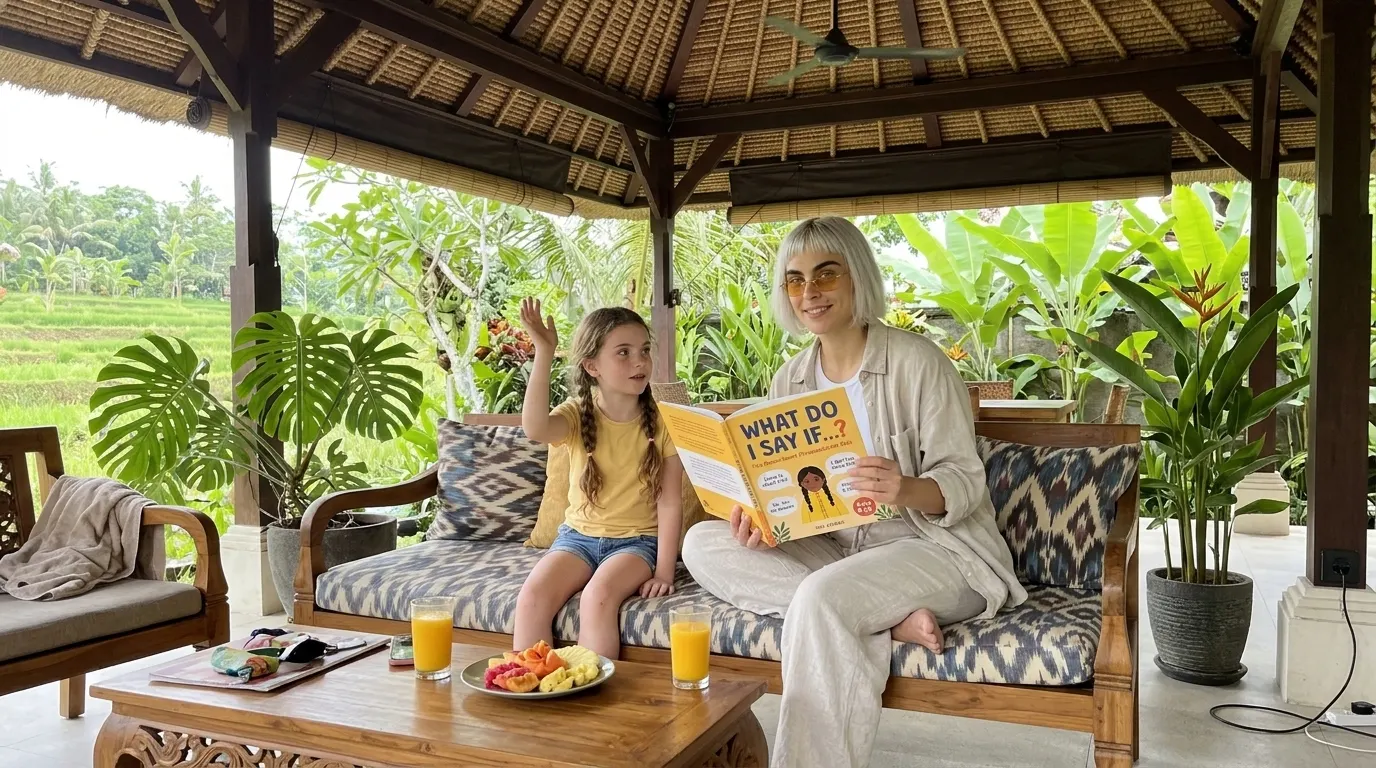
Iris Athens wrote What Do I Say If...? for exactly this problem.
Bullies and Mean Words has ten situations: mean names, pushing, daily teasing, rumors, stolen stuff, group chats, threats, seeing someone else bullied, telling when it did not stop, and even what to say when your child was the one who was mean.
Your Strong Voice teaches the calm, serious voice the plan needs, and how it differs from a scream.
At School covers the smaller moments, like "you can't sit here," and what your child can do when kids are laughing at someone else.
If the pressure is coming from friends rather than bullies, see our page on teaching kids to say no to friends.

Is What Do I Say If...? the right book for you?
Yes, if
- Your child came home upset and goes back tomorrow
- The same kids are teasing them again and again
- Your child told a teacher once and it did not stop
Skip it if
- Your child has been threatened with violence or is in danger now. Call 911 or the police
- Your child talks about hurting themselves. Call or text 988 now
Fair doubts before you buy
Should my child not stand up for themselves and hit back?
The book follows StopBullying.gov here: do not fight back. Hitting back can get your child hurt or in trouble, and it gives the bully what they want. Standing up looks like a calm "Stop," walking away and telling. The book saves loud, physical action for one case only, when a stranger grabs a child.
Telling the teacher made it worse last time.
That happens, and the book says it is not your child's fault. Its answer is to keep telling: a different grown-up, a counselor, the principal. Bring the written list of what happened and when. A list helps grown-ups take it seriously.
Get What Do I Say If...?
Rules are easy to remember at the kitchen table; this book gives kids 8 to 12 the exact words to say in the moment, with strangers, friends, bullies and people online.
Links go to Amazon. ToolGenX publishes this book under a pen name and earns from every sale. Amazon sets the price and handles delivery and returns.
This book is not a substitute for supervision or professional help. If a child may be in danger, call 911 or the Childhelp National Child Abuse Hotline at 1-800-422-4453.

Questions people ask about this
- What should a child say to a bully?
- Something short, in a calm, clear voice. The book uses "Stop." For a mean name, it adds a line that the name is not theirs. Then the child walks away toward other kids or a grown-up. No name-calling back, because that gives the bully what they want.
- Should I tell my child to ignore the bully?
- Not on its own. Walking away is part of the plan, but so is telling. The book has a line for a kid who already told: say that you told before and it is still happening. Ignoring alone leaves your child to handle it by themselves.
- What do I do if the school does not stop the bullying?
- StopBullying.gov suggests going step by step: teacher, then school counselor, then principal, then superintendent, then your state Department of Education. Call 911 if there is a crime or someone is in immediate danger. Threats of violence, sexual photos and stalking should be reported to police.
- What should my child do about mean messages in a group chat?
- Do not reply and do not send anything mean back. Do not forward it. Save the proof, like a screenshot, then block the sender or leave the chat, and show a grown-up. Mean messages online are still bullying, and a grown-up can help report them.
- What if the bully says tell anyone and you will be sorry?
- That is exactly when to tell. The book says threats are meant to keep a child quiet, so the child gets away, stays near grown-ups, and tells a parent and a teacher the same day. Threats are serious.
Related problems
- Your child can't say no to friends. Is that normal, and how do you teach them to?
Your child goes along with friends even when they know better. Why that is normal at 8 to 12, and the short lines that help them say no.
- A stranger in an online game is asking your child where they live. What do you do right now?
Someone in a game chat asked your child for their school, address or a photo. What to do in the next ten minutes, and the words for next time.
- Looking for a safety book to give a child aged 8 to 12? What to look for, and how to read it together
Buying a safety book for a grandchild, niece or student aged 8 to 12? What makes one useful instead of scary, and how to read it together.
- Everything inside What Do I Say If...?
Every chapter, who the book is for, and every problem it helps with.
// Also on this topic
- guideTurned 18 and forgot to register for Selective Service? What to do now
Missed the 30-day Selective Service window after turning 18? You can still register online until 26. What it costs you to wait and what it does not mean.
- guideWhat changes legally when you turn 18, and what to do in that first week
At 18 your contracts count, your medical records become yours and men must register with Selective Service. See each rule with its proof grade.
- bookThe 18 Manual
What to Do Before and After You Turn 18: Money, Work, Rent, Health, and Your Legal Rights, Graded by What It Costs and How Well It Works