Last updated
Is a family code word enough to keep your child safe from a stranger pickup?
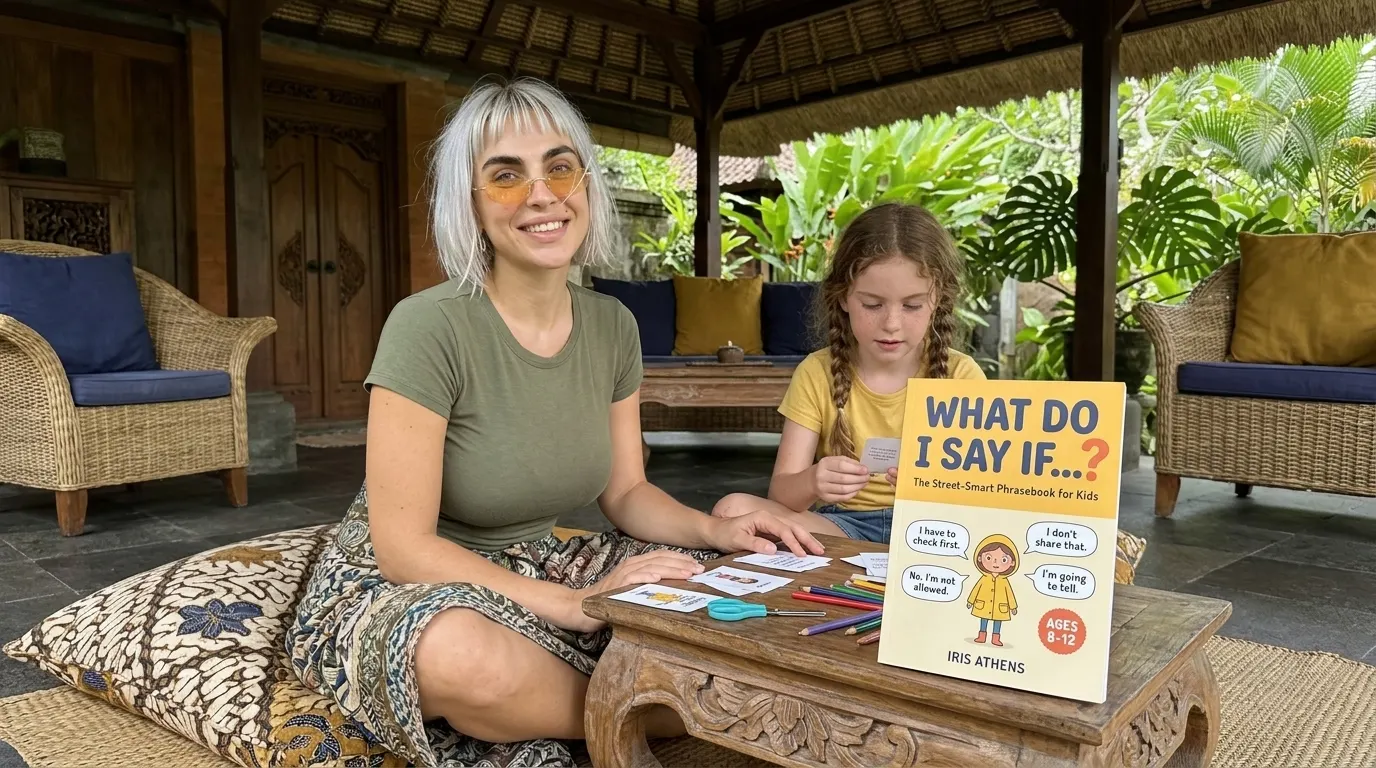
The text you got at work
You are in a meeting when you see a message from another parent. Someone tried to pick up a child at the school gate today, a person the child did not know. It turned out fine. The teacher stepped in.
Your heart is still racing on the drive home. That night you sit your daughter down and pick a secret word. "Pineapple." If anyone ever says they came to get her, they have to know the word.
She nods. You feel better. And then, at 2am, a thought: what if someone just asks her the word?

Why a code word feels safer than it is
A code word makes sense. It gives a child a test to run, and it gives you something to do when you feel helpless. Many local police and state pages suggest one, and the book has a space for it.
But the book is careful here, and we think rightly. The risk is that a child treats the word as proof, so anyone who knows it gets waved through.
That is why the book puts it this way: someone who knows the code word still has to be checked with your grown-up or the school. A code word is extra, not a free pass.

The rule that does the real work
The National Center for Missing & Exploited Children (NCMEC) does not build its advice on a pickup code word. Its rule, taught through the KidSmartz program, is to check first. Before your child goes anywhere with anyone, gets in a car, takes a gift or changes plans, they check with the grown-up in charge. That includes people they know.
At school, it looks like this. A grown-up your child does not know says their dad is stuck at work and sent them. The book's line is simple, and it works even if the person knows the code word:
I have to check with my teacher first.
If they push, the answer does not change. Your child walks back inside, goes to the teacher or the office, and lets them call you.
On your side, NCMEC's advice is to tell your child's school, in writing, who is allowed to pick them up. NCMEC also publishes a KidSmartz Going Out Checklist, which the book lists in its sources. Now the check does not depend on your child spotting a lie. It depends on the school's list.

Keep the word, change what it means
You do not have to drop the code word. Just change its job. It is one more layer on top of check first, not a way to skip it.
The book also suggests a second kind of family signal that does a lot of good: a "come get me" message. It is a text or phrase that means please come get me, no questions right now. Your child can use it from a sleepover or a friend's house when something feels wrong and they do not want to explain in front of others. Promise a ride, any time, with no questions asked in the moment.

Chapters for pickups and the family plan
Iris Athens wrote What Do I Say If...? for exactly this problem.
At School includes the surprise pickup situation, with the line to say, what to do if the person pushes, and a practice line for you to read: "Your dad's stuck at work, so he asked me to grab you."
Out in Public covers the related tricks, like "Your mom is hurt, come with me," a ride offered in the rain, and a stranger asking for help with a lost pet. Our page on what to teach kids about strangers walks through them.
Our Family Safety Plan has spaces for who can pick your child up, your come get me message, an optional code word, and the numbers your child should know by heart.
The book for this problem
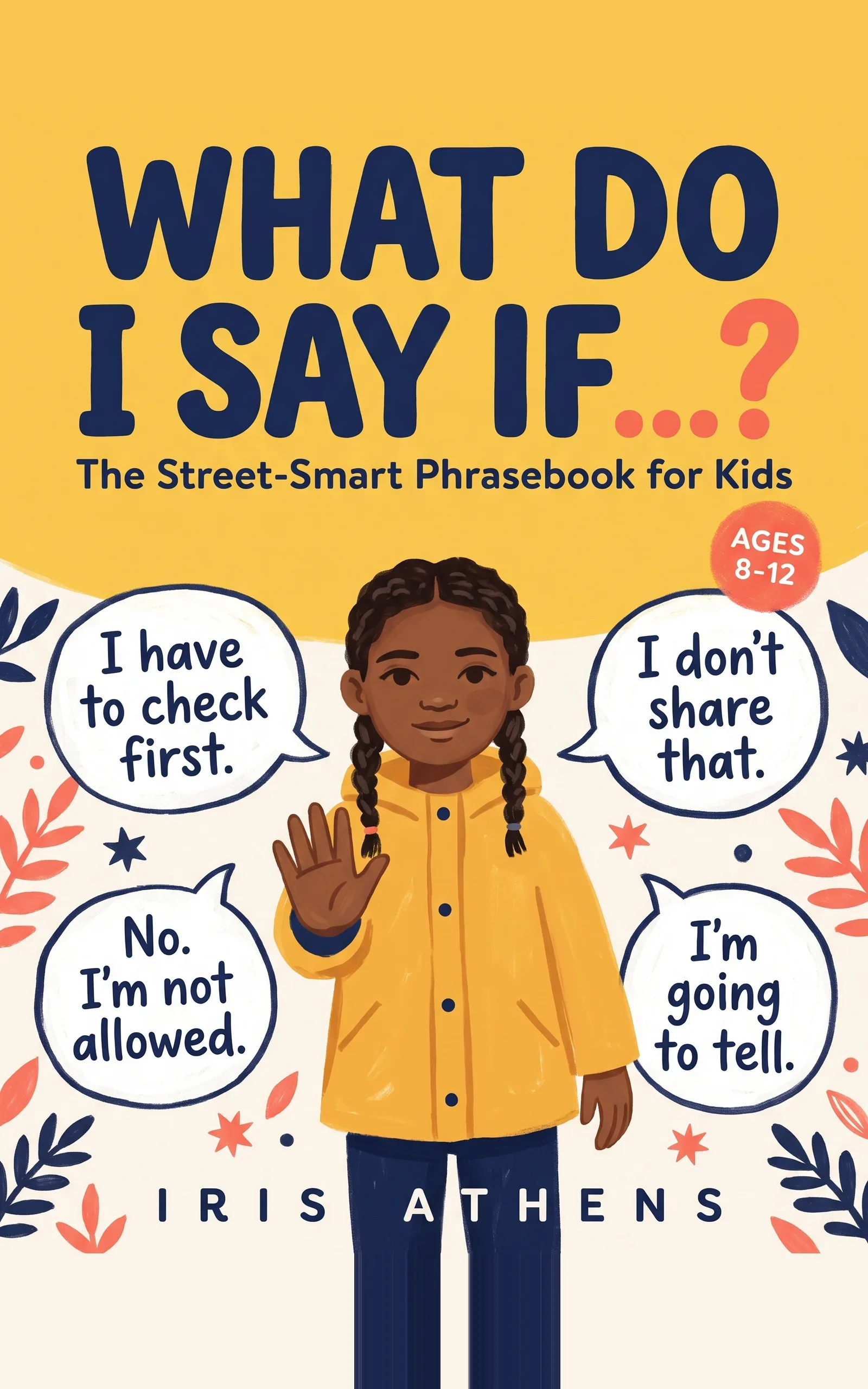
What Do I Say If...?
The Street-Smart Phrasebook for Kids 8-12: The Exact Words to Say No, Get Help, and Stay Safe With Strangers, Friends, Bullies, and People Online. By Iris Athens, 159 pages.
Where this problem is in the book:
- At School
- Out in Public
- Our Family Safety Plan
Links go to Amazon. ToolGenX publishes this book under a pen name and earns from every sale. Amazon sets the price and handles delivery and returns.

Is What Do I Say If...? the right book for you?
Yes, if
- You are thinking about picking a family code word
- You already have one and wonder if it is enough
- Your child is starting to be picked up by different people, like a carpool or a relative
Skip it if
- Your child is missing right now. Call 911
- You want a full custody or school-release legal guide
Fair doubts before you buy
Everyone online says to use a code word. Why not trust it?
Many local police and state pages do suggest one, and the book includes a space for it. But a word is not proof of anything. NCMEC's current advice does not rest on a pickup code word. It rests on checking first and on the school knowing, in writing, who may pick up.
My child will feel silly checking with a teacher about Grandma.
The book makes the rule cover people kids know, too, so it never feels like an accusation. It is just what your family does. If Grandma really was sent, the check takes a minute and everyone goes home.
Get What Do I Say If...?
Rules are easy to remember at the kitchen table; this book gives kids 8 to 12 the exact words to say in the moment, with strangers, friends, bullies and people online.
Links go to Amazon. ToolGenX publishes this book under a pen name and earns from every sale. Amazon sets the price and handles delivery and returns.
This book is not a substitute for supervision or professional help. If a child may be in danger, call 911 or the Childhelp National Child Abuse Hotline at 1-800-422-4453.

Questions people ask about this
- Should my family have a code word?
- It is optional. Some families pick one, and the book has a space for it in the family safety plan. The book is clear that it is extra, not a free pass: someone who knows the code word still has to be checked with the grown-up or the school.
- Does NCMEC recommend a code word?
- Code words are suggested by some state and local agencies, but they are not NCMEC's main rule. NCMEC teaches kids to check first with the adult in charge, and tells parents to let the school know in writing who is allowed to pick their child up.
- What should my child say if someone says their parent sent them?
- That they have to check with their teacher first, then walk back inside to the teacher or the office and let them call the parent. If the person pushes, the answer stays no until the check is done. Your child tells you about it later, even if the person turned out to be okay.
- What else goes in a family safety plan?
- The book's plan has numbers your child knows by heart, a safe grown-up team, who can pick them up from school, a come get me message, an optional code word, a fire escape plan, home alone rules and online rules. You fill it in together and put a copy on the fridge.
- What is a come get me message?
- A text or phrase your child can use that means please come get me, no questions right now. It is useful at sleepovers or anywhere your child feels stuck. The book suggests deciding it ahead of time, and promising your child a ride anytime, no questions asked in the moment.
Related problems
- What to teach kids about strangers, now that "stranger danger" is out
Stranger danger is out. What to teach kids 8 to 12 instead: watch what people do, check first, and know who to ask for help.
- Home alone rules for kids the first time: what to say at the door, the phone and the smoke alarm
First time leaving your child home alone? The house rules and the exact words for the door, the phone, a burn and the smoke alarm.
- Secrets vs. surprises: how to explain the difference to your child without scaring them
A calm way to teach kids 8 to 12 the difference between a surprise and a secret, which secrets they always tell, and the words to say.
- Everything inside What Do I Say If...?
Every chapter, who the book is for, and every problem it helps with.
// Also on this topic
- guideWhy is my first paycheck so much smaller than I expected?
Your first paycheck is smaller because of FICA, income tax and your W-4. See what each line takes in 2026 and how to get back tax you did not owe.
- guideCan I stay on my parents' health insurance until 26? The rule and the end date
You can stay on a parent's health plan until 26, even if you marry or move out. See when coverage ends, the 60-day window and your options after.
- bookThe 18 Manual
What to Do Before and After You Turn 18: Money, Work, Rent, Health, and Your Legal Rights, Graded by What It Costs and How Well It Works