// book · by Iris Athens (pen name)
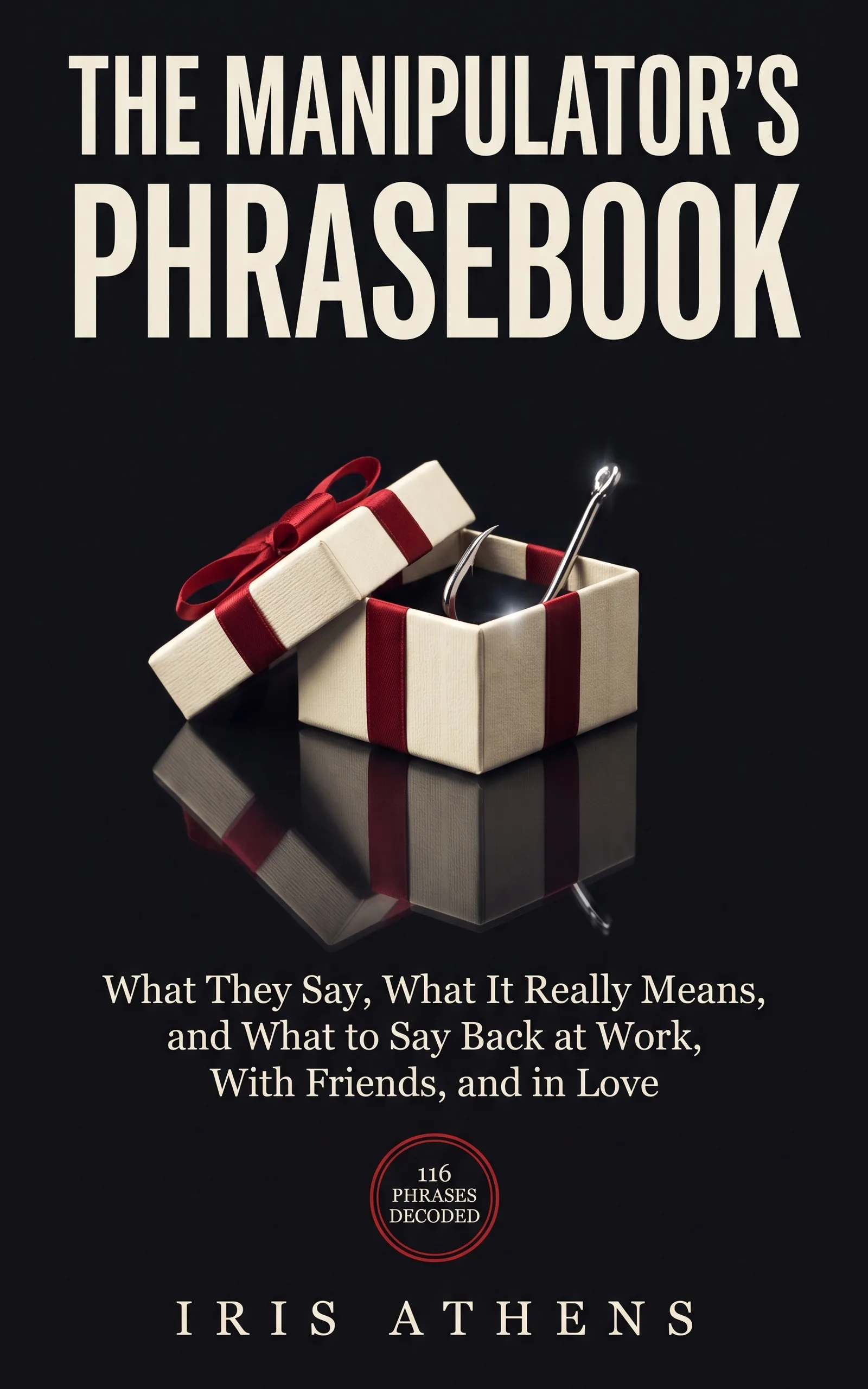
The Manipulator's Phrasebook
What They Say, What It Really Means, and What to Say Back at Work, With Friends, and in Love
Manipulation rarely sounds like manipulation. It sounds like care. This phrasebook decodes 116 of those sentences and gives you a calm reply for each one.
Links go to Amazon. ToolGenX publishes this book under a pen name and earns from every sale. Amazon sets the price and handles delivery and returns.
If you are afraid of someone, call the National Domestic Violence Hotline at 800-799-7233 or text START to 88788.
- author
- Iris Athens
- length
- 214 pages (paperback)
- formats
- Kindle, paperback
- sold by
- Amazon
This book is for you if
- Your boss says "I am protecting you" and keeps moving the line
- Someone you date swings between charm and silence and you want to know if it is a pattern
- You freeze when a relative rewrites what happened
- A client keeps using urgency and guilt to get free work
Skip it if
- You want a diagnosis of a specific person
- You want to manipulate back
- You are in physical danger (go to real help first; the book lists where)
// problems this book helps with
Start from your problem
Each page below answers one real question in plain words, then shows where The Manipulator's Phrasebook goes further.
- A client uses urgency and guilt to get free work. Here are the rules and the words.
Tiny changes, pay me after, decide today. Seven client lines decoded with a calm reply for each, plus the simple rules that stop free work.
- A coworker keeps taking credit for my work. Is it petty to say something?
Speaking up feels petty and staying quiet hands over your week. Calm lines for the meeting, the follow-up, and the habit that makes credit hard to take.
- DARVO explained simply: why you raise a problem and end up apologizing
You bring up one thing and leave saying sorry. What DARVO means in plain words, how to spot it, and the one calm sentence that keeps you on topic.
- Guilt-tripping family at the holidays: what they say, what it does, and what to say back
Last Thanksgiving, all or nothing, everyone else made it. Six holiday guilt lines decoded, a calm reply for each, and rules to set before you arrive.
- "I'm only saying this because I care": what that phrase and others like it really mean
Some kind words carry a heavy message. Learn to strip the wrapper, read what is left, and answer phrases like just being honest without a fight.
- Is my boss manipulating me, or am I reading too much into it?
Warm words, no raise, a heavier load. Learn the boss phrases that keep you waiting, a calm reply for each, and the one habit that protects you.
- Love bombing or real interest? How to tell the difference in the first few weeks
Fast, intense attention can be a great start or a pattern. A side-by-side table, one simple test to run, and what the reaction to it tells you.
- What to say when someone gaslights you, right now, in the middle of it
They say it never happened and you start to doubt yourself. Short lines to say back, what to do tonight, and when to call for help instead.
A phrasebook for sentences that sound kind
Most manipulation doesn't sound like manipulation. It sounds like concern, loyalty, honesty or a joke. That is why it works, and why it is so hard to answer in the moment.
Iris Athens built this book like a phrasebook for a foreign language. It collects the sentences people repeat in offices, group chats and kitchens, and gives each one four parts. The phrase, as you'll actually hear it. The payload, which is the job the sentence is doing under the kind words. What it would sound like if it were honest. And a calm reply you can use without starting a fight.
There are 116 phrases in all, sorted by where you will hear them: friends, coworkers, bosses, dating, family, money and deals, and texts and DMs.
The one rule and the one tool
The book opens with a rule we think every reader should keep: one sentence is data, three sentences are a pattern. Any phrase in it can come from a good person on a bad day. What you watch for is the same kind of line, from the same person, always leaving you smaller or in debt.
Then it gives you the first tool. Strip the wrapper, read the payload. Take a sentence that felt wrong, remove the soft words like "for your own good" or "just being honest," and read what's left. Now you can decide if it is true. Part I builds on that with seven building blocks and twelve moves with names, so you can take apart sentences that are not in the book at all.
Calm, boring answers on purpose
The replies in this book are short and plain. That is the point. Pressure depends on drama, and a calm, boring answer gives it nothing to hold.
The Calm Toolkit explains why. Most manipulation needs secrecy, speed, emotion or blur. Each has an opposite: visibility, slowness, facts and clarity. A two-line recap email, one day to decide, a question like "Who, specifically?" These move the talk onto your ground without an argument. The First Thirty Days turns the same idea into a private scored card for anyone new, so you can match how much you commit to what you have actually seen.
What it will not do
It will not teach you to diagnose people. The chapter on dark traits explains the research, including a 2021 study of 991 people, and then says plainly why labels hurt you more than they help. It will not teach you to manipulate back. And it can't replace real help.
If you are afraid of someone, the book says to go to its last chapter first, When It's More Than Words. It lists the signs that a problem has moved past phrasing and the people who can help today, including the National Domestic Violence Hotline at 1-800-799-7233. We built the problem pages for this book around the same rule: help first, then the book.
What is inside
- 116 phrases decoded in four parts each: the phrase, the payload, how an honest person would say it, and a calm line to say back
- Seven building blocks, like the empathy wrapper and the faceless crowd, that let you take apart sentences not in the book
- Twelve named moves, from love bombing and gaslighting to DARVO and future faking, each with an antidote
- Separate chapters for friends, coworkers, bosses, dating, family, money deals, and texts and DMs
- A Calm Toolkit of twelve tools, from the broken record to gray rock, plus a pocket card of twelve lines
- A scored red flag card for the first thirty days with anyone new, with five gentle tests and a promise log
- A short chapter on when it is more than words, with the National Domestic Violence Hotline and other help
Chapters
- 01How to Use This Book
- 02The Wrapper and the Payload
- 03Who Talks Like This
- 04Twelve Moves With Names
- 05Friends
- 06Coworkers
- 07Bosses
- 08Dating and Love
- 09Family
- 10Money, Deals, and Partners
- 11Texts, DMs, and Strangers Online
- 12The Calm Toolkit
- 13Your Mind Is the Target
- 14The First Thirty Days
- 15When It's More Than Words
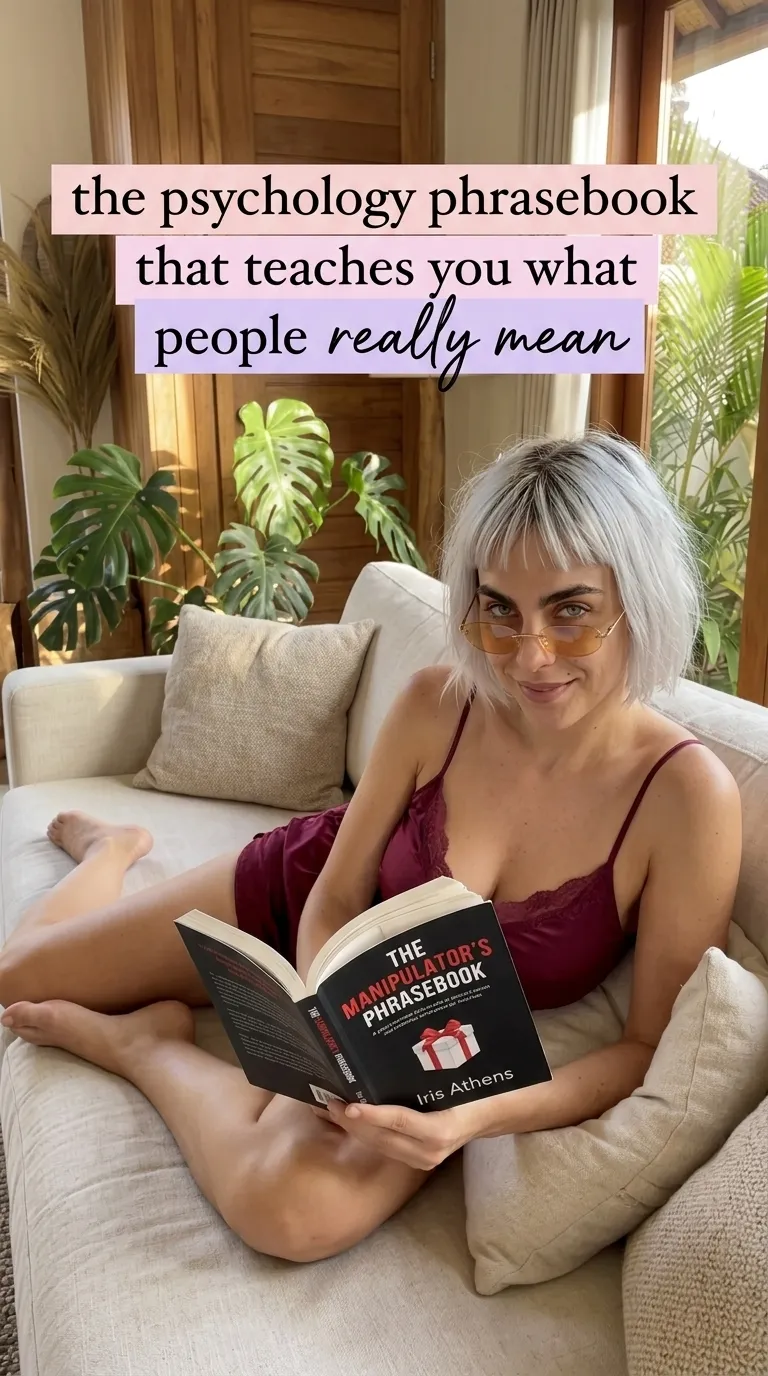
The paperback, up close







Questions about The Manipulator's Phrasebook
- Will this book tell me if someone is a narcissist?
- No, and on purpose. The book explains the research on dark traits, then says why we don't diagnose: you will probably get the label wrong, a label stops you looking, and saying it out loud hands the other person a weapon. You only need to see what a sentence does and count how often.
- Does it teach you how to manipulate people?
- No. You learn the moves only so you can name them. The book says people who try to beat manipulators at their own game usually lose, because it is their first language and your second. The replies are calm, plain and boring on purpose.
- Do I have to read it in order?
- No. If one sentence has bothered you for weeks, look it up in Part II and start there. Part I is worth reading when you can, because it teaches the grammar behind the phrases, and that helps with sentences that are not in the book.
- What if I am afraid of someone in my life?
- Then skip the scripts and go to the last chapter first. Some tools in the book can make things worse with someone who is controlling or dangerous. Call the National Domestic Violence Hotline at 1-800-799-7233 or text START to 88788. If you are in danger, call 911.
- Is this book therapy or legal advice?
- No. It is general education. Iris Athens is a pen name, and the author is not a clinician. For work problems that turn into harassment, the book points you to HR and an employment lawyer, and for big money decisions, to a lawyer or an accountant.
Get The Manipulator's Phrasebook
Manipulation hides in kind-sounding sentences; 116 of them are decoded with a calm reply for each, so you can answer or walk away with a clear head.
Links go to Amazon. ToolGenX publishes this book under a pen name and earns from every sale. Amazon sets the price and handles delivery and returns.