Last updated
A stranger in an online game is asking your child where they live. What do you do right now?

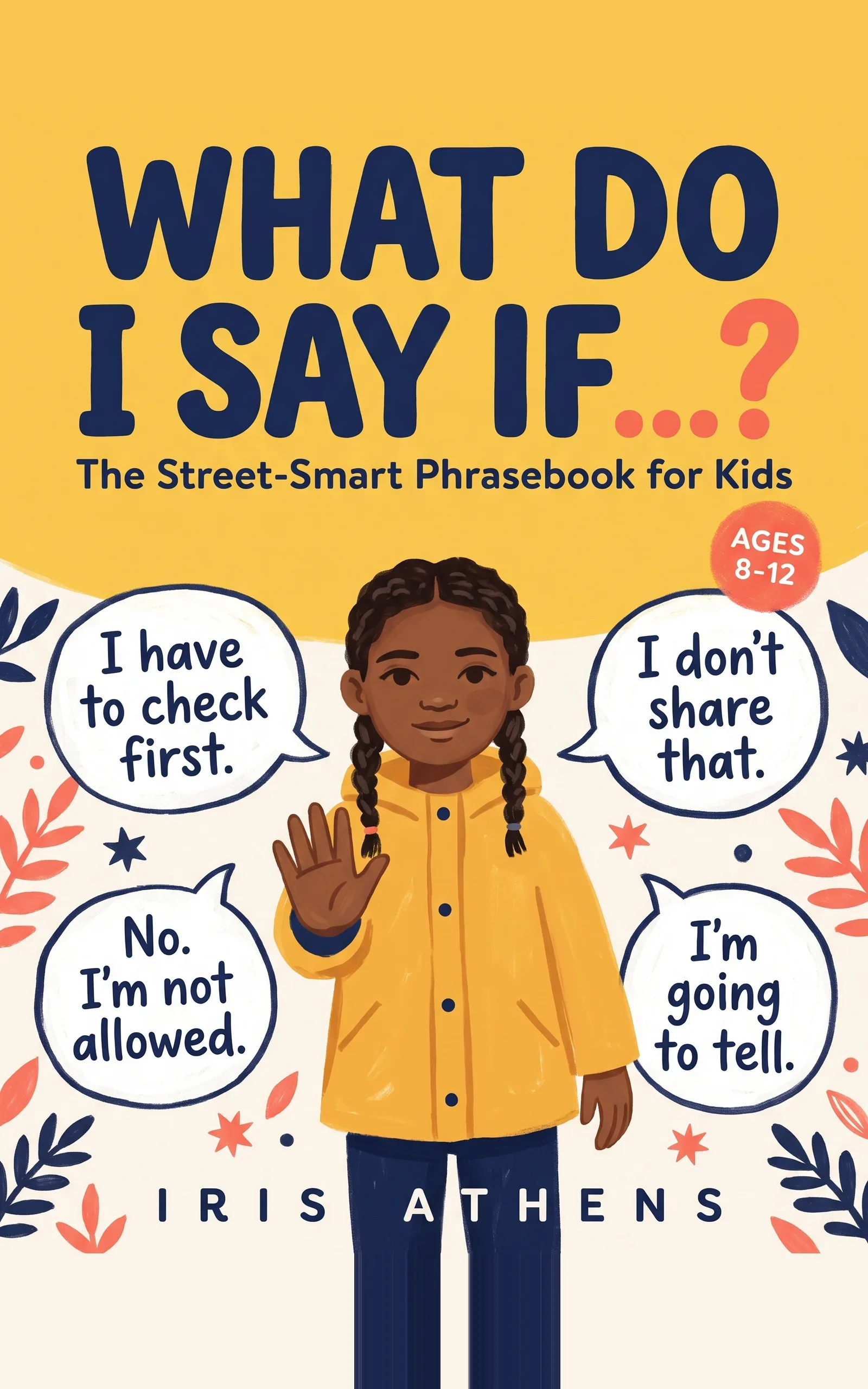
The book for this problem
What Do I Say If...?
The Street-Smart Phrasebook for Kids 8-12: The Exact Words to Say No, Get Help, and Stay Safe With Strangers, Friends, Bullies, and People Online. By Iris Athens, 159 pages.
Where this problem is in the book:
- Online and Gaming
- Secrets vs. Surprises
- Our Family Safety Plan
Links go to Amazon. ToolGenX publishes this book under a pen name and earns from every sale. Amazon sets the price and handles delivery and returns.
The next ten minutes
Your child just turned the screen toward you. Someone they play with asked what school they go to. Maybe they asked for a selfie, or wanted to move the chat to another app.
Breathe first. Your child did the right thing by telling you. Here is what to do.
- Thank them for showing you. Say it out loud.
- Do not reply to the person, and do not let your child reply.
- Save the chat. Take screenshots of the messages and the profile name.
- Block and report the account using the game's own tools.
- Ask your child to show you the whole chat, not just the last message.
If the chat has a sexual picture in it, do not forward it or screenshot that picture. The book is clear that saving or sharing it can count as sharing abuse material. Keep the device as it is and report it to NCMEC's CyberTipline at report.cybertip.org.

The words for next time
Once things are calm, practice the line. The book keeps it short so your child can type it or just leave:
I don't share that.
If the person keeps pushing, your child does not argue. They leave the chat or block, and come get you.
Three habits cover almost everything in the online chapter. Keep your info private: full name, address, school and plans stay offline. Friends are people you know in real life. And when something feels off, stop and tell. Close it, block it, report it, show a grown-up.
In our view, the FTC's advice on kids and video games follows the same shape. Privacy settings, block and report, and a trusted adult to tell.

The warning signs to name out loud
Kids spot what they have been told to look for. These are the signs the book teaches, each with its own situation.
Someone asks to move to a private app. Someone asks for a photo, or to turn on the camera. Someone sends a gift card and wants something back. Someone offers free game coins if you log in on their site. And the biggest one: someone says not to tell your parents about them.
That last one gets its own line for your child to remember. Safe people don't ask kids to hide them.

If it turns into a threat
Sometimes the person has a picture and says they will share it unless your child does something. The book calls this blackmail. It is a crime, and it is not your child's fault.
The FBI and NCMEC's NetSmartz program agree on the first moves. Don't pay. Don't send anything more, because doing what they say almost never makes them stop. Don't delete the messages or the account. Block, save, and report to the FBI at tips.fbi.gov or to NCMEC at report.cybertip.org. NCMEC's free Take It Down service can help remove images taken when your child was under 18.
The practice line the book gives you for this one is not a role-play. It is a promise you read to your child: if anyone ever threatened you online, would you come to me? Say it before anything ever happens.

Chapters for gaming and group chats
Iris Athens wrote What Do I Say If...? for exactly this problem.
Online and Gaming has sixteen situations, from a gamer asking about school and someone asking for a password "to help" to a fake prize message and an online friend who wants to meet. Each has the line, what to do and a practice line for you to read.
Secrets vs. Surprises gives your child the idea underneath: if someone says "don't tell," that is a sign it is time to tell.
Our Family Safety Plan has a page of online rules your child can sign up to, like no photos, video chats or meetups without your okay.

Is What Do I Say If...? the right book for you?
Yes, if
- Your child just showed you a chat that made your stomach drop
- Someone your child plays with keeps asking personal questions
- You want your child to keep playing, safely, and keep telling you
Skip it if
- Your child is in danger right now or has agreed to meet someone. Call 911
- You want a guide to parental control settings for a specific console
Fair doubts before you buy
Should I just take the tablet away?
The book takes a different view. Kids are far more likely to tell you about a problem if they do not expect to lose their device for it. None of the groups the book follows, like the FTC and the FBI, say "never go online." They teach privacy, block and report, and telling a trusted adult.
They have played together for weeks. It is probably just another kid.
Maybe. But online, people can pretend to be anyone, and you cannot see who is really typing. The book draws one clean line for kids: friends are people you know in real life. Everyone else is a stranger, even after weeks of playing together.
Get What Do I Say If...?
Rules are easy to remember at the kitchen table; this book gives kids 8 to 12 the exact words to say in the moment, with strangers, friends, bullies and people online.
Links go to Amazon. ToolGenX publishes this book under a pen name and earns from every sale. Amazon sets the price and handles delivery and returns.
This book is not a substitute for supervision or professional help. If a child may be in danger, call 911 or the Childhelp National Child Abuse Hotline at 1-800-422-4453.

Questions people ask about this
- What should my child do if someone in a game asks where they live?
- Not answer, or say they do not share that. Then leave the chat or block the person, and tell a grown-up, especially if the person keeps asking. Real friends already know where you live. Strangers do not need to.
- Is it a red flag if someone asks my child to move to a different app?
- Yes. The book calls asking to go somewhere more private a warning sign. Your child can say no thanks, stop chatting and show you who asked. The rule to teach is simple: stay in apps your grown-up knows about.
- What if someone online says do not tell your parents?
- The book calls that the biggest warning sign of all, because safe people do not ask kids to hide them. Your child does not reply. They get you, show you the whole chat, and then block. Tell them ahead of time that they will not be in trouble for this.
- What do I do if someone is threatening to share a picture of my child?
- Do not pay and do not send more images. The FBI and NCMEC say cooperating rarely stops it. Save the messages and the profile, report the account, and report to the FBI at tips.fbi.gov or 1-800-CALL-FBI, or to NCMEC at report.cybertip.org. Real help is free.
- Can images of my child be taken down?
- NCMEC runs a free service called Take It Down, at takeitdown.ncmec.org, that can help remove images taken when your child was under 18. The FBI also warns about companies that charge victims for sextortion help. You should not have to pay anyone.
Related problems
- Home alone rules for kids the first time: what to say at the door, the phone and the smoke alarm
First time leaving your child home alone? The house rules and the exact words for the door, the phone, a burn and the smoke alarm.
- Secrets vs. surprises: how to explain the difference to your child without scaring them
A calm way to teach kids 8 to 12 the difference between a surprise and a secret, which secrets they always tell, and the words to say.
- Your child can't say no to friends. Is that normal, and how do you teach them to?
Your child goes along with friends even when they know better. Why that is normal at 8 to 12, and the short lines that help them say no.
- Your child is being bullied and goes back to school tomorrow. What should they say to the bully?
Your child is being bullied and school is tomorrow. The calm words to say, what to do next, and how to report it if telling once did not work.
- Everything inside What Do I Say If...?
Every chapter, who the book is for, and every problem it helps with.
// Also on this topic
- guideSent money to a scammer? What to do right now, step by step
Just sent money to a scammer? Call the payment company today, then report it. The steps for gift cards, fake checks, stolen IDs and photo threats.
- guideTurned 18 and forgot to register for Selective Service? What to do now
Missed the 30-day Selective Service window after turning 18? You can still register online until 26. What it costs you to wait and what it does not mean.
- bookThe 18 Manual
What to Do Before and After You Turn 18: Money, Work, Rent, Health, and Your Legal Rights, Graded by What It Costs and How Well It Works