Last updated
First apartment at 18: what to know before you sign the lease

The lease is on the counter with a pen on top
You found a place. The rent works if you skip a few takeout nights. The landlord seems nice.
There is a lease on the counter, and a pen sitting right on top of it. You want the keys today. Your friend is waiting in the car.
Somewhere in your head a voice says, read it first. Another voice says, it's fine, everybody signs these.
Both voices are a little right. Most leases are fine. The point of reading is the one that isn't.

Why "just read the fine print" does not help
Everyone tells you to read the fine print. Nobody tells you what you are looking for.
So you skim twelve pages, nod, and sign. Then the deposit doesn't come back, and you learn your state had a rule about that all along. You just never knew where to find it.
The fix is not reading harder. It is knowing which few things to check, and where your state writes down the rest.

Your state writes the rules, so find its page
Renting rules are mostly state law, and they differ a lot. This is the one idea that makes the rest easy.
HUD keeps a page for each state. The address is hud.gov/states/ then your state's name, then /renting/tenantrights. Here is Connecticut's, for example. Swap in your state and bookmark it. It links your local housing agency and fair housing contacts.
Then read the lease with three questions in mind. What is the deposit, and when does it come back? Who fixes what? Is every promise the landlord made written down? The USAGov tenant rights page says reading your lease is the first step when anything goes wrong.
Here is how much the state matters. In California, the landlord has 21 days after you move out to return your deposit with an itemized list. Deductions over $125 need receipts. The California courts guide has the details. Your state may be different.

Photos, insurance and the deposit you want back
Take dated photos and video of every room on move-in day. Do it again on move-out day. It takes about twenty minutes each time. The book grades the photo habit a C, common sense more than an official rule, but it is the evidence you will want if a deposit is held back.
Then think about your stuff. A common belief is that the landlord's insurance covers it. It doesn't. A renters policy usually covers your belongings, your liability if a guest gets hurt, and living costs if you have to leave during repairs. When you compare, ask if it pays actual cash value or replacement cost. A three-year-old laptop is not worth much on paper.

Credit checks, cosigners and the fake listing
Landlords often check credit. If you froze your credit, you can lift the freeze online or by phone, and it lifts within an hour. Apply, then freeze it again. It costs nothing.
If a friend asks you to cosign their lease, be careful. The cosigner can end up owing it. Our page on building credit at 18 explains why the book puts not cosigning on its list of Cheap A's.
And never pay for a place you haven't seen. The FTC warns about fake listings: a rush to decide, rent far below the area, no way to see inside, and a demand for wire, gift card or crypto. If you already sent money, our page on what to do after sending money to a scammer has the steps.

How the book handles your first place
This is the problem The 18 Manual was written for. Iris Athens wrote it for the twenty minutes between wanting the place and signing for it.
Renting Your First Place has seven moves: reading the whole lease, your state's tenant rights page, move-in and move-out photos, reporting housing discrimination within one year, renters insurance, replacement cost, and never paying for a place you haven't seen.
Credit Without the Trap explains what cosigning really means, with the federal cosigner notice in its own words.
When Things Go Wrong covers small claims court for a deposit that never comes back, and free legal aid through LawHelp.org.
The book explains rules. It is not legal advice. For your own lease, your state attorney general, state housing agency or a legal aid office can help.
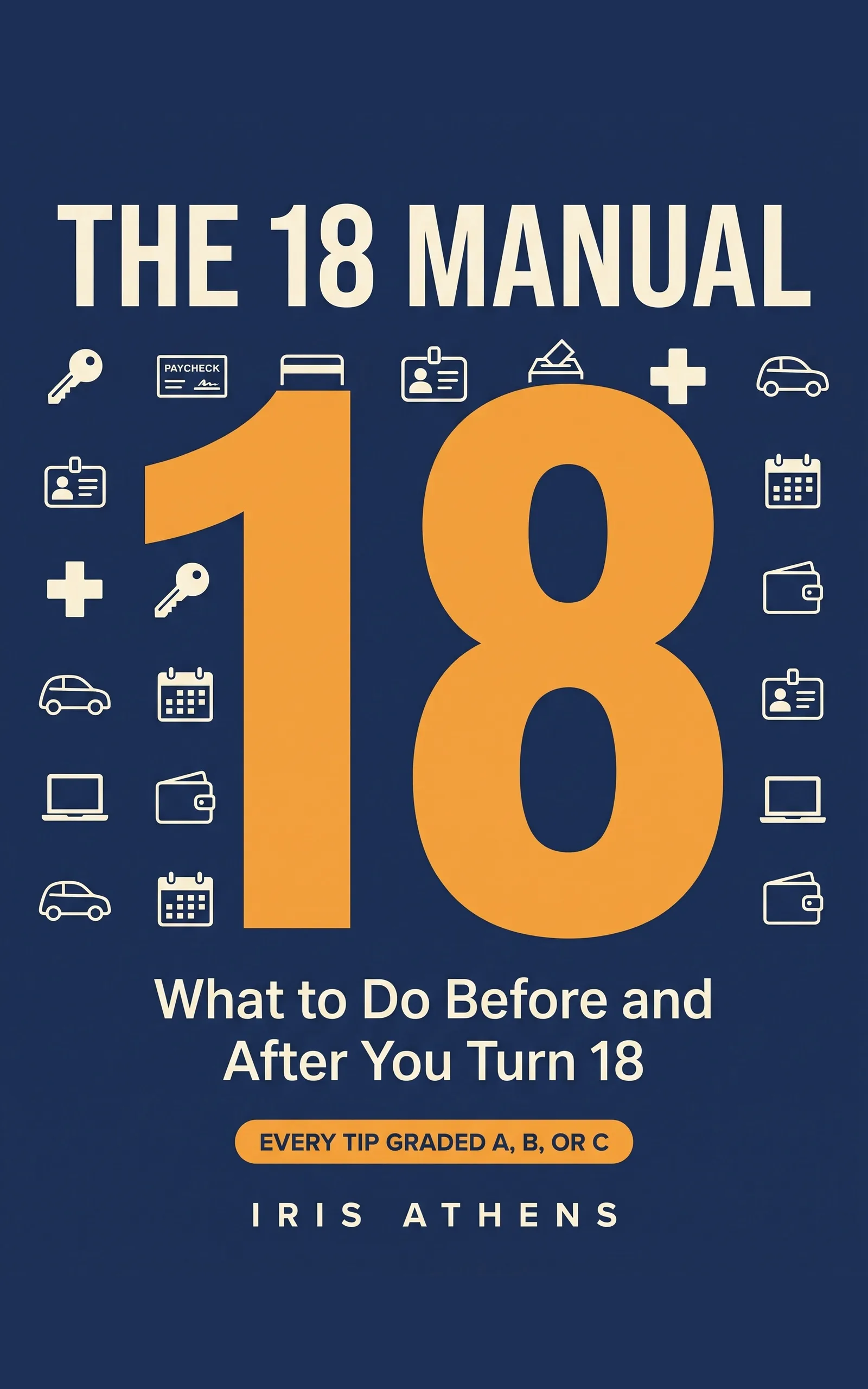
The book for this problem
The 18 Manual
What to Do Before and After You Turn 18: Money, Work, Rent, Health, and Your Legal Rights, Graded by What It Costs and How Well It Works. By Iris Athens, 142 pages.
Where this problem is in the book:
- Renting Your First Place
- Credit Without the Trap
- When Things Go Wrong
Links go to Amazon. ToolGenX publishes this book under a pen name and earns from every sale. Amazon sets the price and handles delivery and returns.

Is The 18 Manual the right book for you?
Yes, if
- You are 18 or 19 and about to sign your first lease
- A friend wants you to cosign or share a lease
- You want your deposit back when you move out
Skip it if
- You need a lawyer to read your own lease
- You are a landlord looking for rules on your side
Fair doubts before you buy
The landlord seems nice. Do I really need all this?
A nice landlord is good news. It is still a contract, and a friendly promise at the showing is hard to prove later. A sentence in the lease is easy to prove. The checks take about an hour in total, once.
Can't my parents just look it over?
They can, and that helps. But the rules for deposits and repairs depend on your state, and they may not know yours. The book gives you the state page to check and the steps that protect you no matter where you live.
Get The 18 Manual
About 130 grown-up moves, from a first bank account to a first lease, each graded by what it costs and how well it works, so a new 18-year-old knows which ones are worth the time.
Links go to Amazon. ToolGenX publishes this book under a pen name and earns from every sale. Amazon sets the price and handles delivery and returns.
This book explains published US rules and where to check them. It is not legal, tax, medical or financial advice.

Questions people ask about this
- What should I look for in a lease before signing?
- Read every page and ask about anything unclear. Get any promise, like new carpet, a parking spot or a pet, written into the lease. Check the deposit, who fixes what, and any fees. The lease is the rulebook for your tenancy, next to your state's law.
- How do I make sure I get my security deposit back?
- Take dated photos and video of every room, wall, floor and appliance on move-in day and again on move-out day. Rules depend on your state. In California, for example, the landlord has 21 days to return the deposit with an itemized list, and deductions over $125 need receipts.
- Do I need renters insurance for my first apartment?
- No law requires it, but some leases do. The landlord's policy does not cover your belongings or give you liability protection. A renters policy usually covers your things, your liability if a guest gets hurt, and extra living costs if you have to move out during repairs.
- How can you tell if a rental listing is a scam?
- The FTC lists the signs: pressure to decide fast, rent far below the area, no way to see inside, the same address listed under another name, and payment by wire, gift card or crypto. A real landlord does not need your Social Security number before you agree to rent.
- Should I cosign a lease for a friend?
- Only if you are ready to pay the whole thing yourself. For a lease, the terms come from the lease and state law, and a cosigner can end up owing it. Getting released from a cosigned debt usually takes both sides agreeing.
Related problems
- How to build credit at 18 without falling into a credit card trap
Secured card, credit-builder loan or authorized user? Compare the ways to build credit at 18, the under-21 rule, and the moves that do not count.
- Sent money to a scammer? What to do right now, step by step
Just sent money to a scammer? Call the payment company today, then report it. The steps for gift cards, fake checks, stolen IDs and photo threats.
- Can I stay on my parents' health insurance until 26? The rule and the end date
You can stay on a parent's health plan until 26, even if you marry or move out. See when coverage ends, the 60-day window and your options after.
- A useful 18th birthday or graduation gift that won't end up in a drawer
Looking for a useful 18th birthday or graduation gift? Here is one that teaches the money, rent and health rules, plus an hour of your time to go with it.
- Everything inside The 18 Manual
Every chapter, who the book is for, and every problem it helps with.
// Also on this topic
- guideHome alone rules for kids the first time: what to say at the door, the phone and the smoke alarm
First time leaving your child home alone? The house rules and the exact words for the door, the phone, a burn and the smoke alarm.
- guideYour child can't say no to friends. Is that normal, and how do you teach them to?
Your child goes along with friends even when they know better. Why that is normal at 8 to 12, and the short lines that help them say no.
- bookWhat Do I Say If...?
The Street-Smart Phrasebook for Kids 8-12: The Exact Words to Say No, Get Help, and Stay Safe With Strangers, Friends, Bullies, and People Online