Last updated
Small decisions take you forever? How to make everyday choices faster

It is 1 a.m. and you have fourteen tabs open for one laptop
You just finished a double shift. Your laptop died yesterday, and you need a new one by the weekend. Nothing fancy: email, bills, a show now and then.
You have three review sites open, two comparison tables and a forum thread where strangers argue about keyboard flex. You are down to four models that cost within $80 of each other.
The voice in your head says that if you pick wrong, you are stuck with it for five years. And the better one will go on sale next week.
Here is the part nobody likes to admit. Any of the four would do the job. This is a small decision wearing a big decision's coat.

First, check the size of the coat
The book starts every choice with a two-minute sort. Can you undo it? Will it matter in a year? When is it really due?
For the laptop: undo, maybe, if the store takes returns. Matters, a little, since any of the four would work. Due, the weekend. That is small. Small gets ten minutes, not an evening.
The sort carries a STORY ONLY badge. Nobody has tested it as a method. What it does well is move your effort to where the stakes are. In the book, a bakery owner spends three evenings on a menu board and twenty minutes on a five-year lease. One sort moves the evenings to the lease.

Write the good-enough bar before you look
In the 1950s, the economist Herbert Simon argued that real people rarely pick the very best. They set a bar for what would be fine and take the first option that clears it. He called it satisficing.
The catch is timing. If you set the bar after you start looking, every shinier option nudges it up. So the book's card, Write the Good-Enough Bar First (PROMISING), has you do it before you open a tab.
- Write what the thing is for, in one line. "Email, bills, streaming."
- Write two or three must-haves. Not nice-to-haves. Things that rule an option out.
- Write a price ceiling. For a choice that is not a purchase, write a time ceiling.
- Write a search limit. "Three stores, one hour."
- Now look. Take the first option that clears every line.
- Stop. Close the tabs. A better deal next week does not reopen it.
The badge is honest. No experiment has tested writing the bar first. It rests on Simon's idea and on studies linking a "find the best" style with more regret.
Turn the choices that come back into rules
Some small decisions are not one-time. Dinner on Monday. Yes or no to another weekend plan. How much to spend on a coworker's birthday. Each one is minor. Together they keep reopening.
Defaults shape what people do, and strongly. In a 2003 study by Eric Johnson and Daniel Goldstein, 42 percent agreed to be organ donors when they had to opt in. When they had to opt out, 82 percent stayed donors. Those defaults were set by others. A personal rule is a default you set for yourself, and the book says plainly that homemade rules have not been tested.
What has been tested is the if-then form. A 2006 review by Peter Gollwitzer and Paschal Sheeran pooled 94 tests of plans written as "if this happens, then do that" and found a medium-to-large effect on reaching goals.
So the Personal Rules card (PROMISING) works like this. List five small choices you made more than once last week. Circle the two that ate the most time. Write each as an if-then rule specific enough that you do not have to think: "If it's Monday, dinner is pasta." Add one allowed exception, so the rule does not snap. Check the rules once a month.
What we know about decision fatigue
You may have read that every choice drains a willpower tank, so you should save it for the big ones. The book's myth check on this is worth reading in full.
The famous evidence is a 2011 study of judges, where favorable parole rulings fell from about 65 percent to nearly zero within each session. Critics noted that prisoners without lawyers tended to go last. Then came two large, preregistered tests of the "willpower tank" idea, across 23 labs in 2016 and 36 labs in 2021. Both found close to nothing.
Neither used choice tasks, so choices are not proven harmless. But the fuel-tank model has not held up. That is why the book promises fewer reopened decisions from its rules, not saved willpower. We find that the more useful promise anyway.
Practice on lunch before the lease
Deciding is partly a skill. The book's last chapter has a 20-rung ladder of small reps: choose a dish in 60 seconds, pick tonight's show in two minutes, answer a low-stakes invite within an hour. You move up a rung when one feels easy and repeat it when one goes badly.
Where Done Deciding takes the small stuff
This is the problem Done Deciding was written for.
Small Decisions, Fast: Three Ways to Stop Giving Little Choices Big-Decision Energy has the good-enough bar, Personal Rules and a coin flip for true ties, plus the willpower and "35,000 decisions a day" myth checks.
How Big Is This, Really? Give Each Decision the Time It Actually Deserves has the Two-Minute Triage and a card for setting a decision date.
Becoming Someone Who Decides: Small Reps That Make Big Choices Easier has the 20-rep ladder and a tracker for logging each rep.
If a small choice has turned into a deadline tonight, our page on having to make a decision by tomorrow is faster.
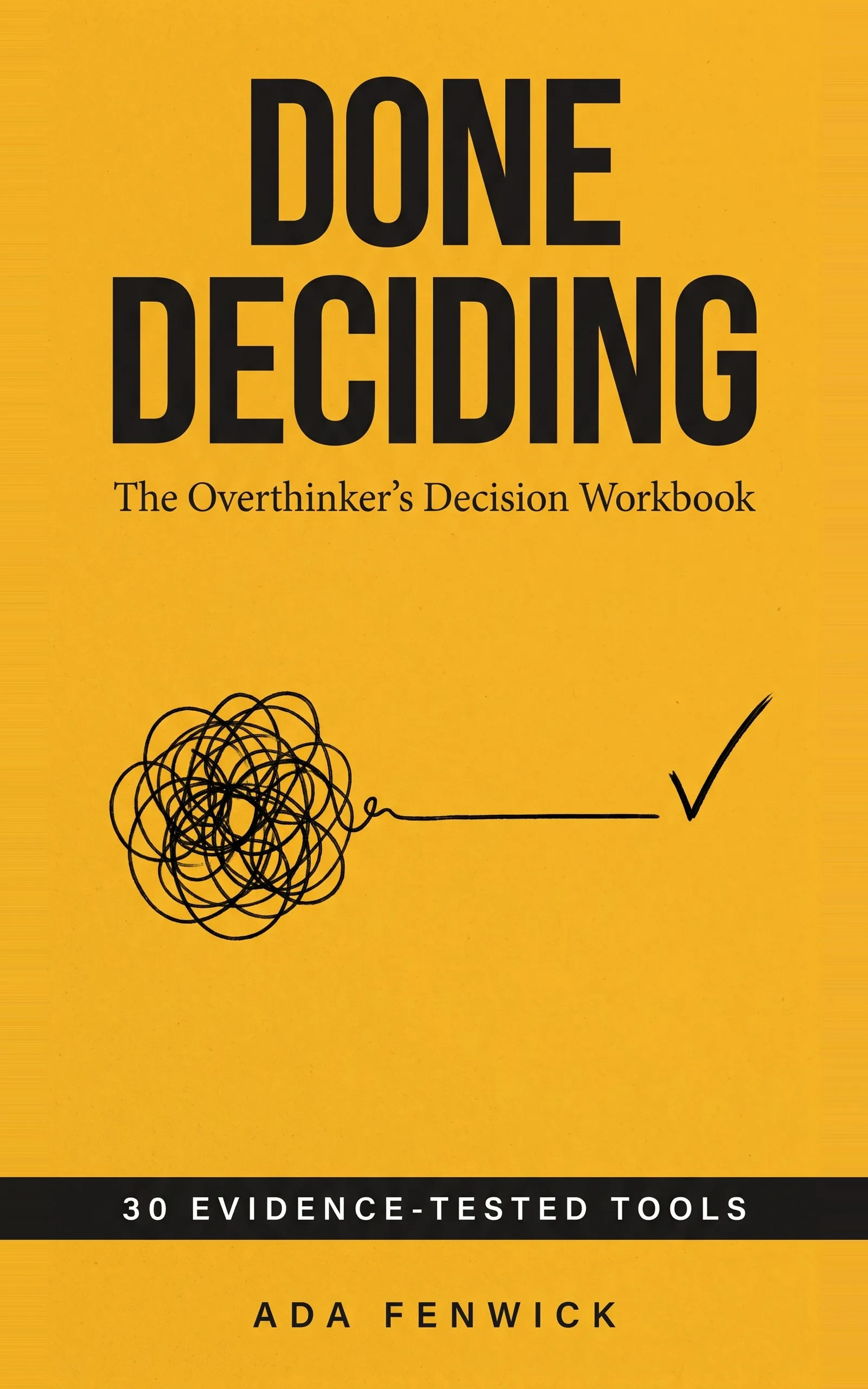
The book for this problem
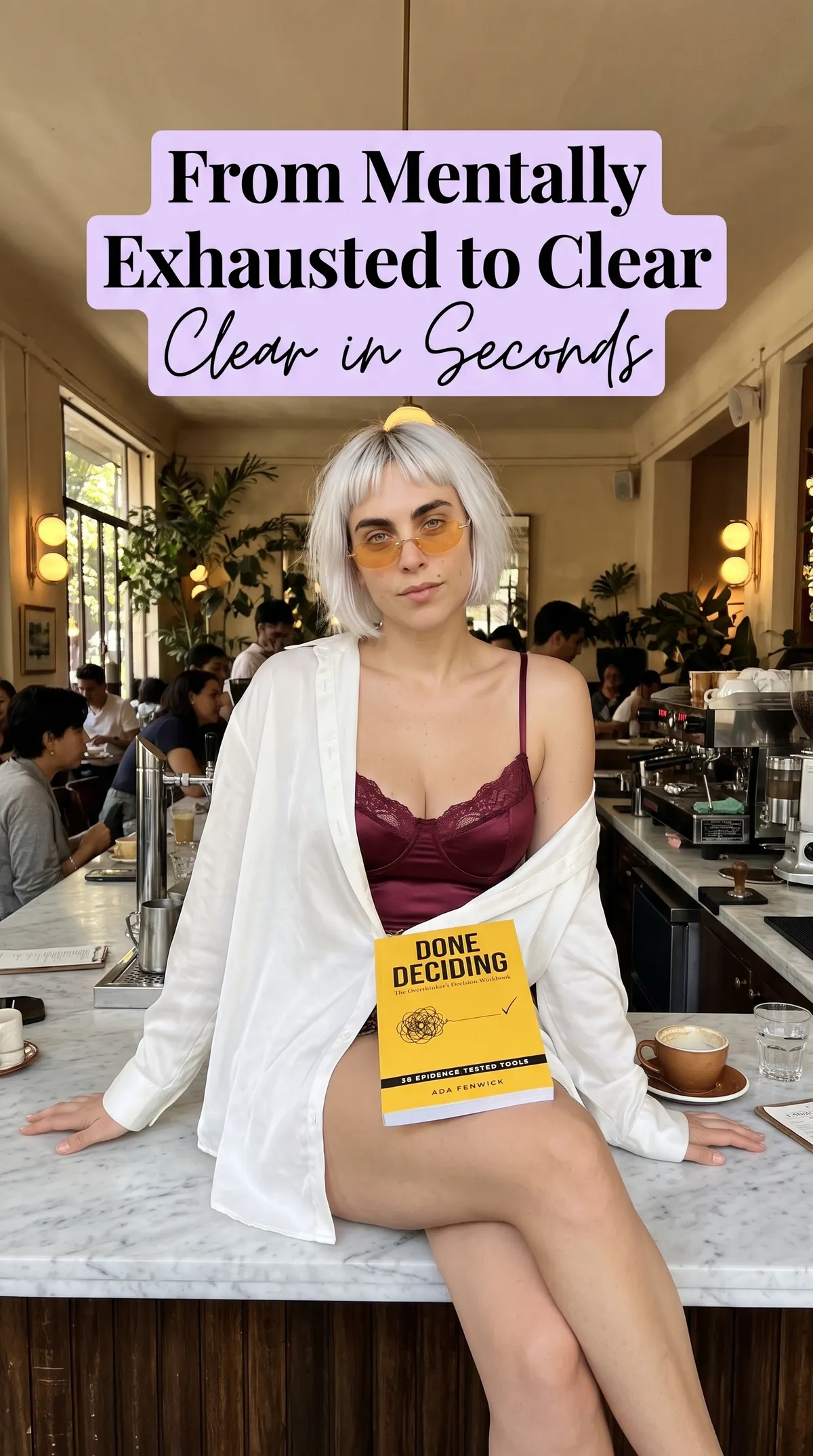
Done Deciding
The Overthinker's Decision Workbook. 30 Evidence-Tested Tools to Make Hard Choices Faster, Quiet the What-Ifs, and Stop Second-Guessing. By Ada Fenwick, 207 pages.
Where this problem is in the book:
- Small Decisions, Fast: Three Ways to Stop Giving Little Choices Big-Decision Energy
- How Big Is This, Really? Give Each Decision the Time It Actually Deserves
- Becoming Someone Who Decides: Small Reps That Make Big Choices Easier
Links go to Amazon. ToolGenX publishes this book under a pen name and earns from every sale. Amazon sets the price and handles delivery and returns.

Is Done Deciding the right book for you?
Yes, if
- You spend an evening comparing four products that cost within a few dollars of each other
- The same small choices, like dinner or weekend plans, reopen every week
- You give a menu board the same care as a lease
Skip it if
- You want a list of which products to buy
- You want a promise that fewer choices will give you more willpower
Fair doubts before you buy
Is this not just "stop being so picky"?
No. The book treats good enough as a standard you set on purpose, not a surrender. The economist Herbert Simon described it in the 1950s: set a bar for what is acceptable, then take the first option that clears it. The trick is writing the bar while you are calm, before the options start moving it.
Do I need a whole book for small choices?
For small choices alone, maybe not. One chapter covers them, and this page gives you its two main tools. The rest of the book is for the big decisions that small ones keep stealing time from, and for closing a choice once it is made.
Get Done Deciding
Thirty small decision tools for overthinkers, each traced to its research and badged SOLID, PROMISING or STORY ONLY, from the first loop test to closing the door after you choose.
Links go to Amazon. ToolGenX publishes this book under a pen name and earns from every sale. Amazon sets the price and handles delivery and returns.
Questions people ask about this
- Why do small decisions take me so long?
- Often because small choices feel safe to think about, so they soak up the hours, while big scary ones get put off. Another reason is setting the bar after you look. Then every shinier option nudges it, and the search never ends. Sizing the choice first and writing the bar first fix most of it.
- Is decision fatigue real?
- The strong version is shaky. A famous 2011 study of judges found favorable parole rulings fell through each session, but critics showed the order of cases explained part of the drop. Two large tests of the willpower-tank idea, run across 23 and 36 labs, found close to nothing. Those tests did not use choice tasks, so tiredness is not ruled out, but the fuel-tank model has not held up.
- Do we really make 35,000 decisions a day?
- Nobody has traced that number to a study. You will see it everywhere, but there is no source behind it. Your day has plenty of decisions in it. Nobody knows how many.
- How do I stop overthinking what to buy?
- Before you open a single tab, write what the item is for, two or three must-haves, a price ceiling and a search limit. Take the first option that clears every line. Then stop and close the tabs. If something better turns up later, it does not reopen the decision.
- How can I get better at making quick decisions?
- Practice on choices that do not matter. The book has a 20-step ladder that starts with choosing a dish in 60 seconds and climbs slowly toward one real step on a big decision. Early wins matter most, so you repeat a step if it goes badly and move up when it feels easy.
Related problems
- You have to make a decision by tomorrow and you still can't choose
A decision is due tomorrow and you are stuck. Size it in two minutes, set a default, make one call, and break a true tie with a coin.
- Stuck in analysis paralysis? Check whether you are thinking or just spinning
Stuck in analysis paralysis? A five-minute test shows whether you are still learning or just looping, and what to do next in each case.
- A gift for an overthinker that helps, without telling them to just relax
Shopping for someone who overthinks every choice? Give small tools they can use at 11 p.m., plus one offer from you that beats any pep talk.
- Everything inside Done Deciding
Every chapter, who the book is for, and every problem it helps with.
// Also on this topic
- guideHow to make better decisions when you keep making the same kind of bad call
Want to make better decisions? Start with two tested questions, then keep a short written log so you can see your own patterns.
- guideOne-way vs two-way door decisions: which kind is the choice in front of you?
One-way vs two-way door decisions compared: what each means, how much care each deserves, and the catch about keeping doors open.
- bookMental Models That Actually Work
40 Thinking Tools from Munger, Bezos, Feynman, and Kahneman, Tested Against the Evidence, for Clearer Thinking and Better Decisions