// book · by Nancy Whitaker (pen name)
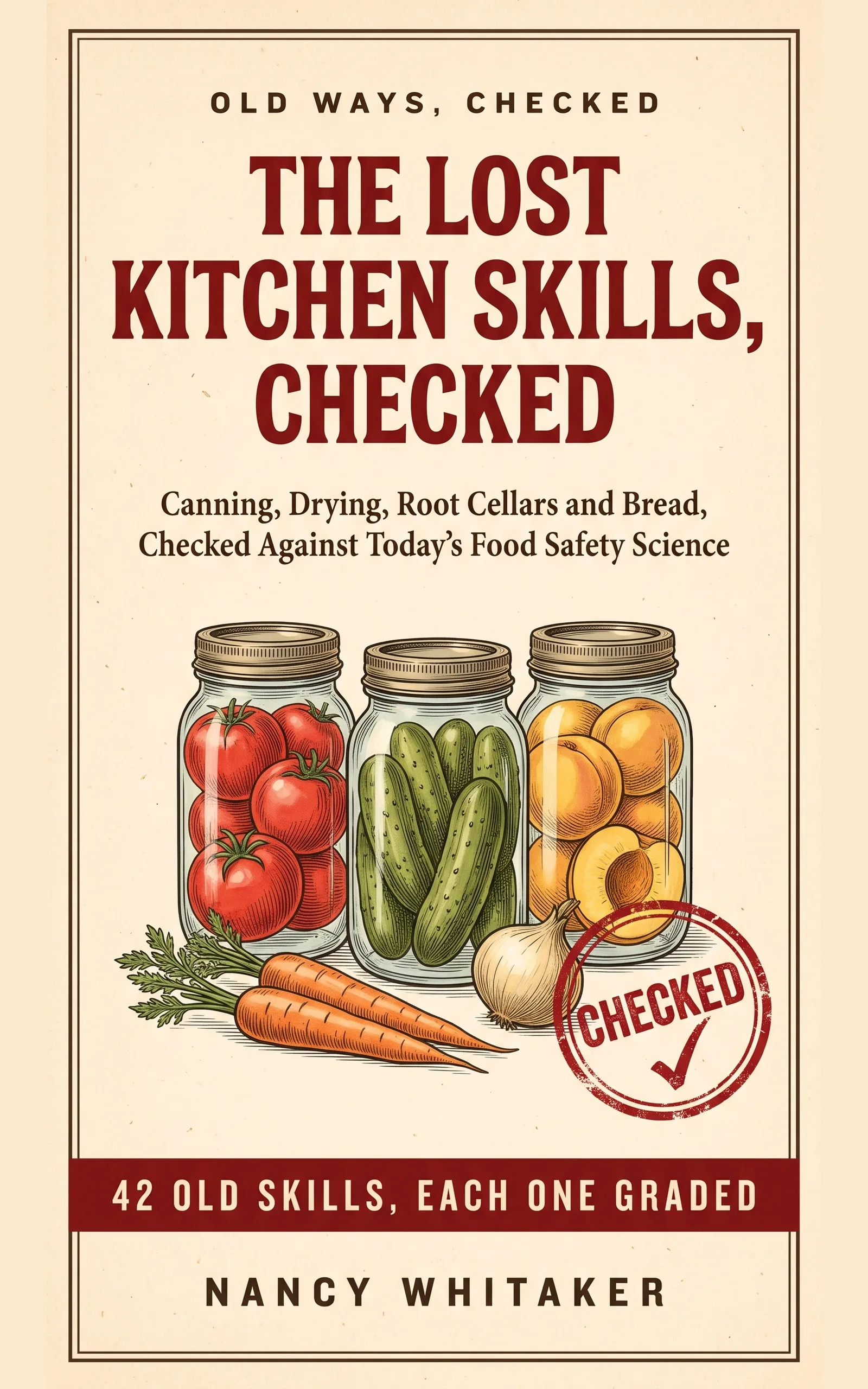
The Lost Kitchen Skills, Checked
Canning, Drying, Root Cellars, Bread, and Scratch Cooking from Our Grandparents' Kitchens, Checked Against Today's Food Safety Science
Canning, drying, root cellars, bread and scratch cooking the way our grandparents did it, each skill checked against today's food safety science.
Links go to Amazon. ToolGenX publishes this book under a pen name and earns from every sale. Amazon sets the price and handles delivery and returns.
This book explains published US food safety guidance and points to tested recipes. It is not medical advice. Use a tested recipe and current processing times for anything you can.
- author
- Nancy Whitaker
- length
- 214 pages (paperback)
- formats
- Kindle, paperback
- sold by
- Amazon
This book is for you if
- You want to can, dry and bake from scratch the way your grandmother did
- You inherited a recipe box and are not sure which methods are still safe
- You are new to preserving and want to know why the rules changed
- You want a pantry that lasts, with records and a preserving calendar
Skip it if
- You want a recipe book with processing times for every food (it points you to the tested ones)
- You live outside the United States (the agencies and guidance are American)
// problems this book helps with
Start from your problem
Each page below answers one real question in plain words, then shows where The Lost Kitchen Skills, Checked goes further.
- Can you water-bath green beans? Grandma did it for years, so why won't anyone say yes
Green beans are a low-acid food, and NCHFP says there is no safe way to can them in a boiling-water canner. Here is why, and what to use instead.
- Do you need lemon juice to can tomatoes? Yes, in every jar. Here is how much
USDA now says to add acid to every jar of canned tomatoes. See how much lemon juice or citric acid per pint and quart, and why the rule changed.
- A gift for someone who wants to learn canning and the old kitchen skills, the safe way
Shopping for someone who wants to learn canning? A book that checks old kitchen methods against food safety science, plus what to give with it.
- How to make jerky safely at home: the heat step most videos skip
A dehydrator alone may not kill germs in raw meat. Here is the heat step for safe homemade jerky, before or after drying, and what to do with venison.
- Is open-kettle canning safe? How it compares with oven, water-bath and pressure canning
Open-kettle and oven canning are no longer recommended. See how each old method compares with water-bath and pressure canning, and what to use now.
- Is the egg float test accurate? What a floating egg really tells you
The egg float test shows how old an egg is, not whether it is safe. Here is what USDA says a floating egg means, and the check that actually works.
- Left a pot of stock out overnight to cool? What to do with it this morning
Stock left on the stove overnight is past the 2-hour rule and should be thrown out. Here is why, and how to cool a big pot fast next time.
- Pressure canner altitude chart: what pressure to use, and when to get your dial gauge tested
What pressure to use at your altitude for weighted and dial gauge canners, and why a dial gauge needs a yearly accuracy test before canning season.
Keep the skill, update the method
The whole book rests on one sentence. Keep the skill. Update the method.
Our grandparents were not careless. They worked without tested recipes or the lab research we have now. So each chapter takes a skill they knew by heart and shows how it was done, often in the words of an old USDA bulletin. Then it shows what food scientists say today, and gives the steps for the safe version.
We like how kind the book is about this. A RETIRED badge, Nancy Whitaker writes, is not a judgment on anyone's grandmother. It means the research moved on.
An honest count, and good news for Grandma
Every one of the 42 skills carries a badge. Here is how they came out: 17 SAFE TODAY, 21 UPDATE IT and 4 RETIRED.
That means most of what our grandparents did was right already, or close. The root cellar, sauerkraut, blanching before freezing and a well-kept cast-iron skillet all hold up. Only four old methods are off the table: paraffin on jam, open-kettle and oven canning, tasting raw dough, and water-glassing eggs.
The book also checks the claims people still repeat. Every chapter ends with a Kitchen Myth Check. Does an aspirin in the jar preserve it? Does turning jars upside down seal them? Does the float test tell you an egg is safe? The answers come with the agency or extension service named.
Where every rule comes from
The sources are the people who study this for a living: the USDA, the National Center for Home Food Preservation, the FDA, the CDC and university extension services. Their guidance is free, and the book sends you to it again and again.
The Sources section at the back lists every page the book relies on, chapter by chapter. Period bulletins are listed with the year printed on them, and most can be read free online. Guidance changes, and when an agency updates its advice, the agency is right.
For canning, the book has one rule above all others: follow a tested recipe. Botulism has no smell, no taste and no warning.
Cards you can work from
Every skill sits on the same card, so you can find what you need fast. Each card has the badge, the time and what you need, Grandma's way, what we know now, four to eight numbered steps, what to watch for, and a Log it line for your notes.
At the back, the Pantry Workbook has canning records, pantry and freezer logs, a four-season preserving calendar and a worksheet for checking an old family recipe card. In the paperback, you write in the book. On a Kindle, keep a notebook nearby and copy the fields.
If you want to try one rule first, our free pages on open-kettle canning and lemon juice in canned tomatoes walk through two of the book's cards in plain words.
What is inside
- The root cellar and cool pantry in three zones, and why apples and potatoes should not share a shelf
- Water-bath canning start to finish, the added acid every jar of tomatoes needs, and jam sealed with a lid instead of wax
- Pressure canning for beans, meat and soup, with the altitude bands and the yearly dial gauge test
- Drying fruit and vegetables, and jerky made with a heat step before or after drying
- Sauerkraut, quick refrigerator pickles, freezing, salt and sugar cures, and smoking
- Bread, a sourdough starter, stock from bones with the two-stage cool, butter, yogurt, farmer's cheese and eggs
- Beans, sprouts, leftovers, one roast stretched into three meals, and cast iron that lasts
- A Pantry Workbook with canning records, pantry and freezer logs, a four-season preserving calendar and a Grandma's Recipe Card, Checked worksheet
Chapters
- 01How to Use This Book
- 02The Root Cellar and the Cool Pantry
- 03Water-Bath Canning for High-Acid Food
- 04Pressure Canning for Beans, Meat and Soup
- 05Drying Fruit, Vegetables and Jerky
- 06Fermenting and Pickling
- 07Freezing, Old Way and New
- 08Salt, Sugar and Smoke
- 09Bread from Flour, Water and Time
- 10Stock, Broth and the Whole Bird
- 11Butter, Yogurt and Simple Cheese
- 12Eggs: Keeping, Testing and Preserving
- 13Beans, Grains and Sprouts
- 14The Leftover Kitchen
- 15Stretching Meat and Planning the Week
- 16Kitchen Tools That Last
- 17The Pantry Workbook
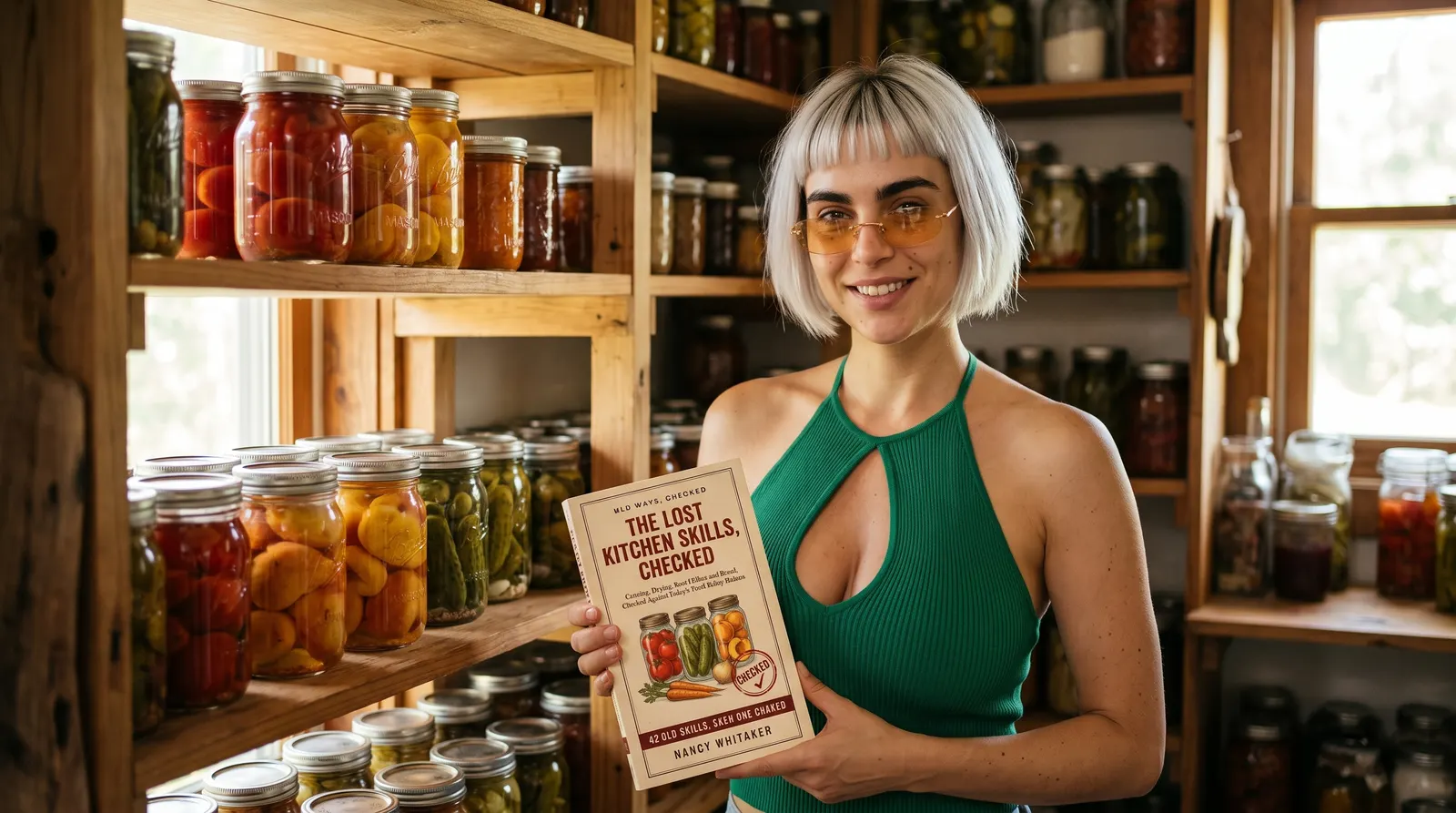
The paperback, up close



Questions about The Lost Kitchen Skills, Checked
- Is this a canning recipe book?
- No. It explains how each old skill was done and what current guidance says, then gives the steps for the safe version today. For canning, it prints processing times only from the USDA Complete Guide to Home Canning or NCHFP, and otherwise sends you to the tested recipe for your jar size and altitude, with a line to write it on.
- What do the badges mean?
- SAFE TODAY means the old method still matches current guidance. UPDATE IT means the idea is sound but the method changed. RETIRED means current guidance says not to do it this way, and the card gives the safe replacement. Of the 42 skills, 17 are SAFE TODAY, 21 are UPDATE IT and 4 are RETIRED.
- Which old methods are retired?
- Four: sealing jam with paraffin wax, open-kettle and oven canning, tasting raw dough, and water-glassing eggs. Each card explains why and shows what to do instead, such as a two-piece lid and a short water bath for jam, or freezing extra eggs.
- Is the book medical advice?
- No. It is general education about home food skills and explains published US food safety guidance. The agencies named in the book publish the current tested recipes and rules, and their guidance wins over anything printed in it. It is not affiliated with or endorsed by any of them.
- Who is the book for?
- Anyone who wants to can, dry and bake from scratch the way a grandparent did, people who inherited a recipe box and want to know which methods are still safe, and beginners who want to understand why the rules changed. It is written for the United States.
Get The Lost Kitchen Skills, Checked
Forty-two skills from our grandparents' kitchens, each checked against current USDA, FDA, CDC and extension guidance and badged SAFE TODAY, UPDATE IT or RETIRED, with the safe way to do it now.
Links go to Amazon. ToolGenX publishes this book under a pen name and earns from every sale. Amazon sets the price and handles delivery and returns.