Last updated
Left a pot of stock out overnight to cool? What to do with it this morning

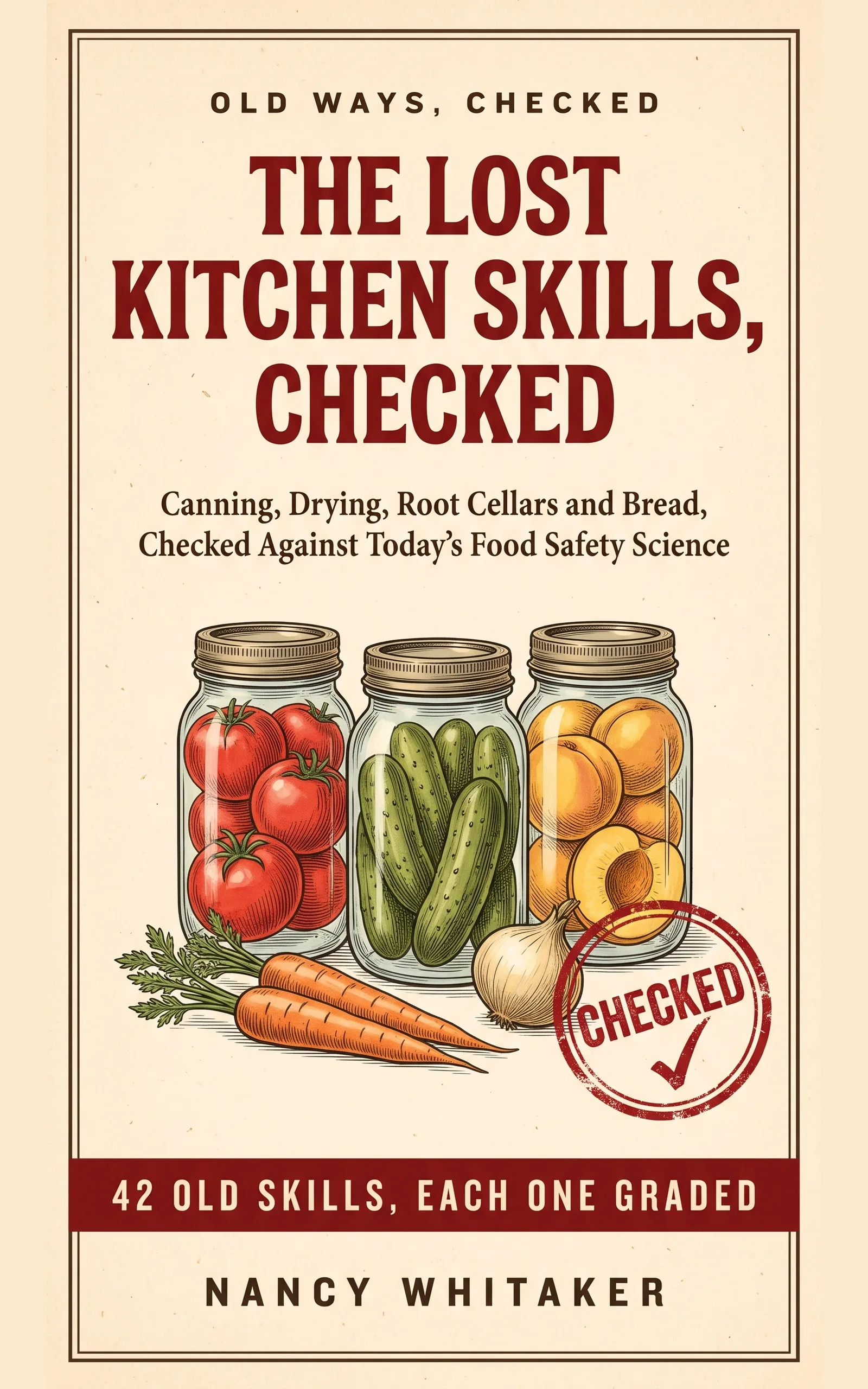
The book for this problem
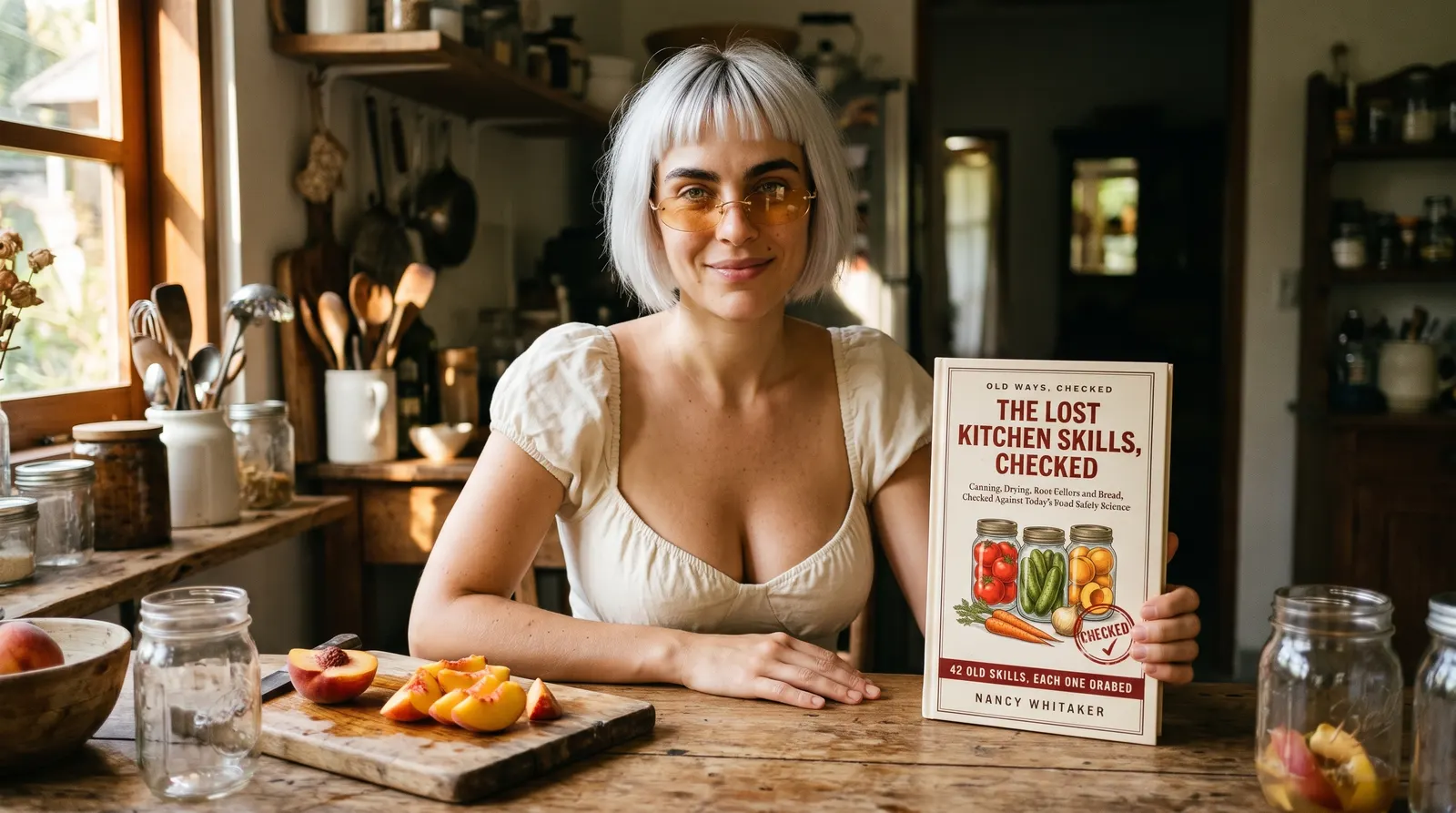
The Lost Kitchen Skills, Checked
Canning, Drying, Root Cellars, Bread, and Scratch Cooking from Our Grandparents' Kitchens, Checked Against Today's Food Safety Science. By Nancy Whitaker, 214 pages.
Where this problem is in the book:
- Stock, Broth and the Whole Bird
- The Leftover Kitchen
- Pressure Canning for Beans, Meat and Soup
Links go to Amazon. ToolGenX publishes this book under a pen name and earns from every sale. Amazon sets the price and handles delivery and returns.
What to do right now
- Throw it out. Stock left out of the refrigerator more than 2 hours should go, per USDA food safety guidance. Overnight is far past that.
- Don't taste it to check. FSIS says the germs that make people sick "do not generally affect the taste, smell, or appearance of a food." A good smell tells you nothing.
- Don't count on reboiling. Some germs make spores that survive cooking. That is why the cooling rule exists even after a long simmer.
- Wash the pot well, and save the next set of bones. The bones were never the problem.
If someone already ate from the pot and feels sick, call a doctor.
It hurts, we know, to pour out hours of work. It is still the right call.
Why a big pot is the problem
Here is the part almost nobody says out loud. A big pot of stock feels safe because it stays hot so long. That long, slow cool is the danger.
The FDA Food Code explains that cooking kills most germs. But it names the exceptions: spore-forming germs such as Clostridium perfringens or Bacillus cereus. Those survive. And they like warmth. The Food Code warns against food spending a long time between 70°F and 125°F, where they grow best.
A tall pot on a stove sits in that range for hours. FSIS says a big pot of soup "will take a long time to cool, inviting bacteria to multiply."
How to cool stock fast next time
The FDA Food Code sets two deadlines. Get the stock from 135°F to 70°F within 2 hours. Then get it from 135°F to 41°F within 6 hours total. In the Food Code's own words, "The initial 2-hour cool is a critical element of this cooling process."
That sounds hard. It isn't. The book's card takes a few minutes of work.
- Strain the stock and take the pot off the heat.
- Set the pot in a sink of ice water and stir.
- Divide the stock into small, shallow containers.
- Put them in the fridge while still warm. You don't have to wait.
- Check one container with a food thermometer. Aim for 70°F within 2 hours.
- Once cold, cover it and lift off the hardened fat.
Use it within 3 to 4 days, or freeze it. Reheat it to a rolling boil before you use it.
Want to keep stock on the shelf in jars? Meat stock is a low-acid food. The only USDA process for canning it is pressure canning, using the USDA Complete Guide, Guide 5.

The pot that cooled on the back burner
Maybe you grew up with a soup pot on the back burner all winter. The house smelled of onions and thyme. The pot cooled on the stove overnight, and in the morning it went in the icebox.
That was normal. A 1910 USDA bulletin even suggested pouring extra stock, while hot, into fruit jars and sealing it. Nobody knew then what the cooling studies would show.
So keep the habit of saving bones. Keep the long simmer. Change only what happens after the burner goes off.
The chapter that covers the whole pot
This is the problem The Lost Kitchen Skills, Checked was written for. Nancy Whitaker checks 42 old kitchen skills against current guidance and badges each one SAFE TODAY, UPDATE IT or RETIRED.
Stock, Broth and the Whole Bird has the card Make Stock from Bones, badged SAFE TODAY, with simmer times for beef and chicken. Its next card, Cool Stock Fast, is badged UPDATE IT. It gives the two-stage cooling plan with a drawing of the timeline.
The Leftover Kitchen covers the 2-hour rule for every dish, how to reheat leftovers to 165°F and the 3-to-4-day limit in the fridge.
Pressure Canning for Beans, Meat and Soup is the place to go if you want stock on the pantry shelf.
Making jerky or soup for a crowd? Our page on the heat step for homemade jerky covers another step the old ways skipped.
Is The Lost Kitchen Skills, Checked the right book for you?
Yes, if
- You just found last night's pot of stock still on the stove
- Your family always let the soup pot cool overnight
- You want a simple way to cool a big batch next time
Skip it if
- You want to be told it is fine to keep it
- You need medical advice about food you already ate (call your doctor)
Fair doubts before you buy
Can I just boil it hard and use it anyway?
The book does not offer that as a fix. The Food Code explains that some spore-forming germs survive cooking, and they grow while food sits warm. The FSIS rule is to throw out food left out more than 2 hours. Reboiling is not listed as a way around that rule.
My grandmother left the pot out every night. Was she wrong?
She did what cooks did then. The book calls the overnight cool the one piece of the old stock routine that food scientists retired. Her simmer, her bones and her thrift all still stand.
Get The Lost Kitchen Skills, Checked
Forty-two skills from our grandparents' kitchens, each checked against current USDA, FDA, CDC and extension guidance and badged SAFE TODAY, UPDATE IT or RETIRED, with the safe way to do it now.
Links go to Amazon. ToolGenX publishes this book under a pen name and earns from every sale. Amazon sets the price and handles delivery and returns.
This book explains published US food safety guidance and points to tested recipes. It is not medical advice. Use a tested recipe and current processing times for anything you can.

Questions people ask about this
- Is chicken stock left out overnight safe to eat?
- No, by USDA guidance. FSIS says never to leave food out of refrigeration over 2 hours, or over 1 hour if the temperature is above 90°F. A pot left out overnight is well past that. Throw it out.
- Can you reboil soup left out overnight?
- Reboiling is not a fix in the guidance the book follows. The Food Code notes that spore-forming germs like Clostridium perfringens and Bacillus cereus can survive cooking. The FSIS rule is to throw out food that sat out more than 2 hours.
- Can I put hot stock straight in the fridge?
- Yes. FSIS says "Hot food can be placed directly in the refrigerator." Divide a big pot into small, shallow containers first, so it cools faster.
- How fast does stock need to cool?
- The FDA Food Code sets two limits. Cool from 135°F to 70°F within 2 hours, and from 135°F to 41°F within a total of 6 hours. The first 2 hours matter most.
- How long does homemade stock last in the fridge?
- Use it within 3 to 4 days, or freeze it. FoodSafety.gov lists 2 to 3 months in the freezer for soups and stews, for best quality. Reheat stock to a rolling boil before using it.
Related problems
- How to make jerky safely at home: the heat step most videos skip
A dehydrator alone may not kill germs in raw meat. Here is the heat step for safe homemade jerky, before or after drying, and what to do with venison.
- Is the egg float test accurate? What a floating egg really tells you
The egg float test shows how old an egg is, not whether it is safe. Here is what USDA says a floating egg means, and the check that actually works.
- Can you water-bath green beans? Grandma did it for years, so why won't anyone say yes
Green beans are a low-acid food, and NCHFP says there is no safe way to can them in a boiling-water canner. Here is why, and what to use instead.
- Everything inside The Lost Kitchen Skills, Checked
Every chapter, who the book is for, and every problem it helps with.