Last updated
Can you water-bath green beans? Grandma did it for years, so why won't anyone say yes

A box of beans in the fridge and a canner still in its box
It's late August. The garden has gone wild, and the fridge is full of green beans. In the corner of the kitchen sits a pressure canner you bought in July. The tape on the box is still unbroken.
You remember your mother's big kettle rolling on the stove, jars of beans inside. No pressure, no gauge, no rattling weight. Just boiling water.
So you wonder if that way would really be so bad. It would be easier. It would feel like home.
And everyone online seems to answer with a warning instead of a reason. That is frustrating when you just want to know why.

Why "boil it longer" does not work
Most people assume boiling is boiling. If you boil long enough, surely everything dies.
Here is the reason it doesn't. Water in an open pot can't get hotter than 212°F at sea level. Botulism spores can survive that heat. The USDA says low-acid foods must reach 240°F to 250°F. The only home tool that gets there is a pressure canner, because trapped steam raises the temperature.
NCHFP explains it simply: "Pressure does not destroy microorganisms, but high temperatures applied for an adequate period of time do kill microorganisms." Pressure is just the way to get the heat.
To match that safety with boiling water, the USDA Guide says it would take "7 to 11 hours." Nobody does that, and no tested recipe asks you to.
The vinegar trick fails too. Even the 1942 USDA bulletin said a little vinegar or lemon juice "does not change the acidity of the food enough to permit processing in the boiling-water bath."
The one fact that settles it: pH 4.6
Every canning choice comes down to one line. The CDC calls low-acid foods those with "a pH higher than 4.6." Green beans, like almost all fresh vegetables, sit above that line.
The CDC also says "Home-canned vegetables, which are low-acid foods, are the most common cause of botulism outbreaks in the United States." And the toxin gives no warning. You can't see it, smell it or taste it.
So the rule is short. Acid foods, like fruit, jam and tomatoes with added acid, go in a boiling-water canner. Low-acid foods, like green beans, go in a pressure canner. NCHFP's snap bean page says it plainly: "There is no safe option for processing green beans in a boiling water canner."
The book prints the USDA times for snap beans in a weighted-gauge pressure canner as an example. Pints take 20 minutes and quarts 25 minutes. That is at 10 pounds of pressure up to 1,000 feet, and 15 pounds above. Use the tested recipe for your own canner and altitude.
Not ready to pressure can yet? Freezing is a fine way to keep beans in the meantime.
The rule is older than you think
This part surprises many readers. Pressure canning beans is not a modern fuss.
The 1942 USDA bulletin already said "A steam pressure canner is required for processing meats, practically all vegetables except tomatoes, and other nonacid foods." If your grandmother owned a pressure canner, she was following the best advice of her day. Water-bathed beans never had the USDA's blessing, even then.
That takes some of the sting out of it. You are not throwing away her ways. You are going back to the part she was taught.
The chapter for green beans, meat and soup
This is the problem The Lost Kitchen Skills, Checked was written for. Nancy Whitaker starts the whole book with a woman holding her mother's green bean card, which says "seal hot" and nothing more.
How to Use This Book sets out the one rule the book rests on: for canning, follow a tested recipe, because botulism has no smell, no taste and no warning.
Pressure Canning for Beans, Meat and Soup takes the fear out of the canner. It explains why boiling water isn't enough, what changed since 1942, the three tested times above and a step-by-step card for pressure canning low-acid food. It also checks myths like the Instant Pot canning button and cooling the canner under cold water.
The Pantry Workbook gives you a canning record for each load, so you know what is on the shelf and how it was made.
Before your first batch, read our page on pressure canner altitude and dial gauge testing. It covers the one setting that changes where you live.
The book for this problem
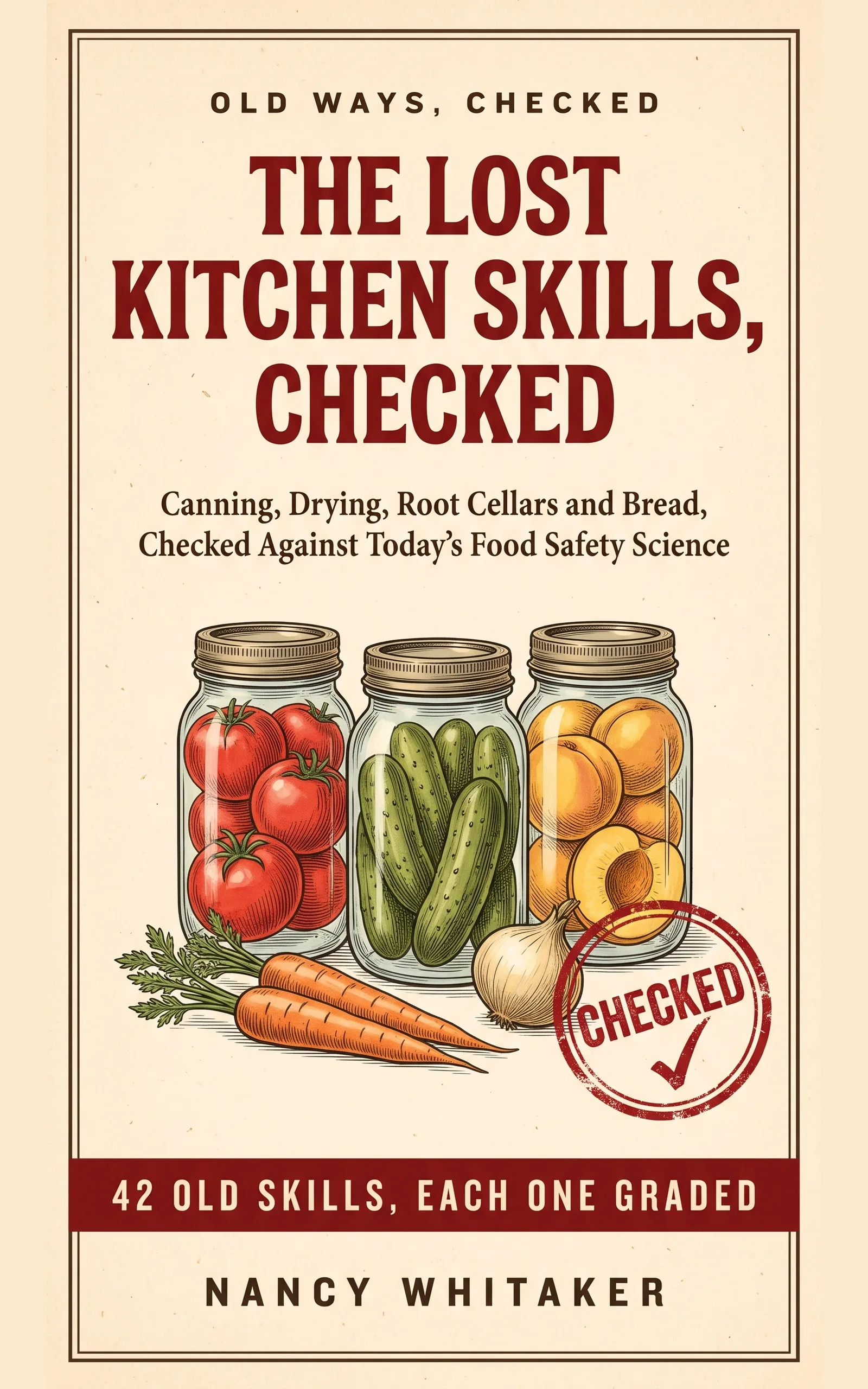
The Lost Kitchen Skills, Checked
Canning, Drying, Root Cellars, Bread, and Scratch Cooking from Our Grandparents' Kitchens, Checked Against Today's Food Safety Science. By Nancy Whitaker, 214 pages.
Where this problem is in the book:
- Pressure Canning for Beans, Meat and Soup
- How to Use This Book
- The Pantry Workbook
Links go to Amazon. ToolGenX publishes this book under a pen name and earns from every sale. Amazon sets the price and handles delivery and returns.
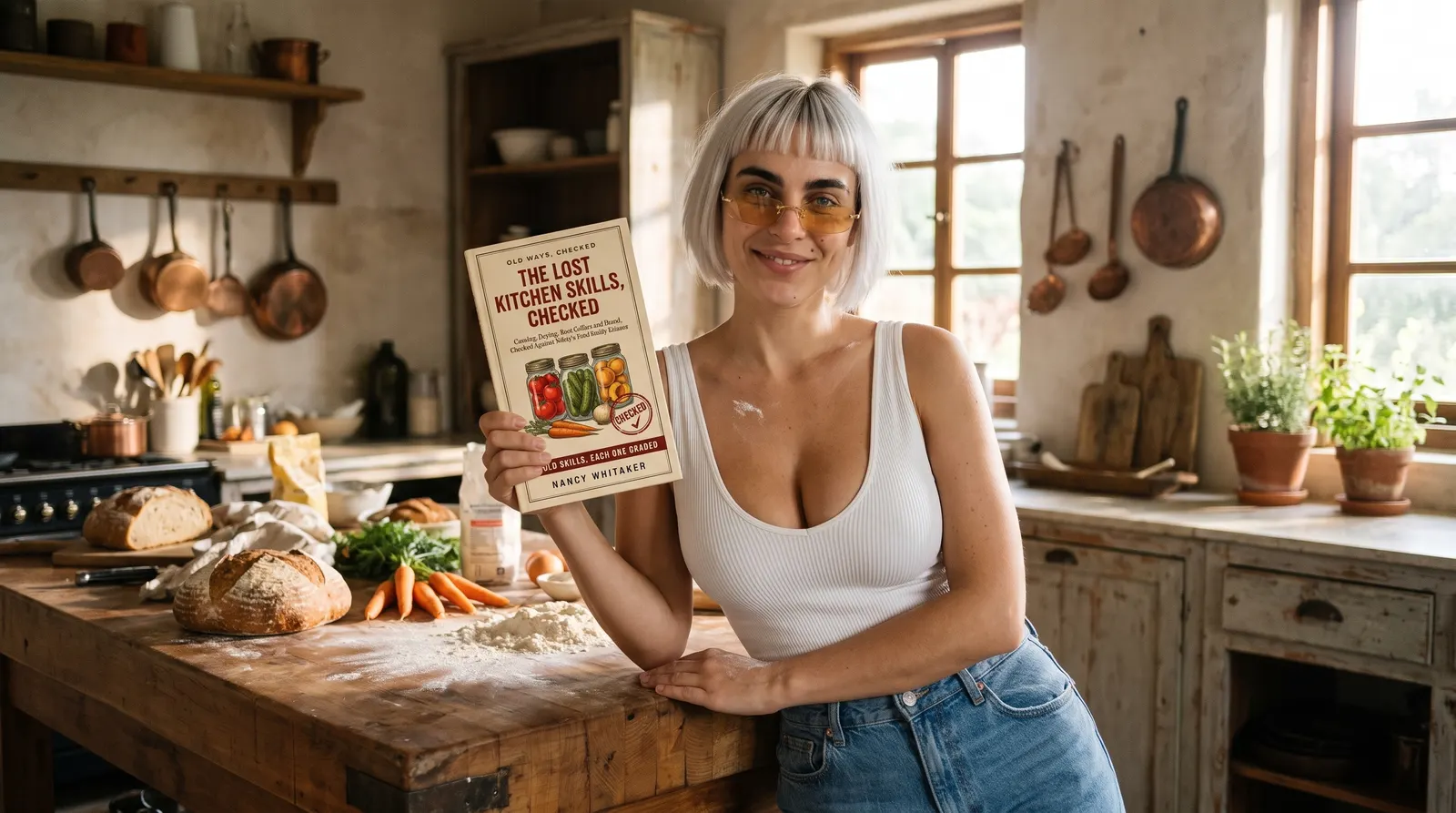
Is The Lost Kitchen Skills, Checked the right book for you?
Yes, if
- Your family canned green beans in a water bath and you want to know if that was safe
- You bought a pressure canner and are afraid to use it
- Someone told you a splash of vinegar makes water-bath beans fine
Skip it if
- You want permission to keep water-bathing plain beans
- You are looking for pickled bean recipes (follow a tested pickle recipe for those)
Fair doubts before you buy
My family water-bathed beans for decades. Nobody got sick.
We are glad of that, and the book is kind about it. But it also notes that water-bathed beans never had the USDA blessing, even in 1942. The CDC says home-canned vegetables are the most common cause of botulism outbreaks in the US. A lucky record is not a safe method.
A pressure canner scares me. Is there a book that makes it less frightening?
That is a large part of what Chapter 3 does. It follows a nervous beginner with an unopened canner box, explains each part with a drawing, and suggests one practice run with the canner cold on the stove, saying each step out loud.
Is the Kindle version enough?
For reading, yes. The paperback is made for writing in, with Log it lines and a Pantry Workbook. On Kindle, the book suggests keeping a notebook nearby and copying the fields.
Get The Lost Kitchen Skills, Checked
Forty-two skills from our grandparents' kitchens, each checked against current USDA, FDA, CDC and extension guidance and badged SAFE TODAY, UPDATE IT or RETIRED, with the safe way to do it now.
Links go to Amazon. ToolGenX publishes this book under a pen name and earns from every sale. Amazon sets the price and handles delivery and returns.
This book explains published US food safety guidance and points to tested recipes. It is not medical advice. Use a tested recipe and current processing times for anything you can.
Questions people ask about this
- Why can you not water bath green beans?
- Because green beans are low-acid, with a pH above 4.6. Botulism spores can survive boiling water. NCHFP explains that a canner at 10.5 pounds of pressure at sea level reaches 240°F, and that heat, held for the tested time, is what makes the food safe.
- How long would you have to water bath green beans to make them safe?
- There is no tested water-bath time for green beans. The USDA Guide says that to get the same safety from boiling water, it would take "7 to 11 hours." That is why no agency gives a water-bath option.
- Can I add vinegar and water bath green beans?
- Not for plain canned beans. NCHFP says "Recommended processing times cannot be shortened if vinegar is used in canning fresh vegetables." Tested pickled bean recipes are a separate thing. Follow one of those exactly if you want pickles.
- Can I can green beans in an Instant Pot?
- No. NCHFP does "not support the use of the USDA canning processes in the electric, multi-cooker appliances." Penn State Extension agrees. Use a stovetop pressure canner that holds at least 4 quart jars upright.
- How do I know if home canned green beans have gone bad?
- You may not be able to tell. NCHFP warns that spoiled low-acid food can show "very little evidence." The CDC lists warning signs like a leaking, bulging or swollen jar, liquid spurting when opened, mold or a bad smell. Never taste a doubtful jar.
- What should I do with old water-bathed green beans?
- Do not eat them. The CDC says "Do not eat food if you do not know whether safe canning guidelines were followed." Put a suspect jar that is still sealed in a heavy garbage bag and into the trash. For a leaking or open jar, follow the NCHFP cleanup steps first.
Related problems
- Pressure canner altitude chart: what pressure to use, and when to get your dial gauge tested
What pressure to use at your altitude for weighted and dial gauge canners, and why a dial gauge needs a yearly accuracy test before canning season.
- Is open-kettle canning safe? How it compares with oven, water-bath and pressure canning
Open-kettle and oven canning are no longer recommended. See how each old method compares with water-bath and pressure canning, and what to use now.
- Do you need lemon juice to can tomatoes? Yes, in every jar. Here is how much
USDA now says to add acid to every jar of canned tomatoes. See how much lemon juice or citric acid per pint and quart, and why the rule changed.
- Everything inside The Lost Kitchen Skills, Checked
Every chapter, who the book is for, and every problem it helps with.