Last updated
Is open-kettle canning safe? How it compares with oven, water-bath and pressure canning
| Method | What it is | Status today |
|---|---|---|
| Open kettle | Cook food in an open pot, pour into jars, seal with no more heat | RETIRED. Not recommended by NCHFP. |
| Oven canning | Jars heated in an oven, at 250° to 275° F in the 1942 bulletin | RETIRED. Not recommended, and jars can break. |
| Microwave or dishwasher | Jars heated in a kitchen appliance | Not recommended by NCHFP |
| Dry canning | Dry goods heated in jars | Not a recommended science-based method (NCHFP) |
| Paraffin on jam | Hot wax poured over jelly in the glass | RETIRED. Use a lid and a short water bath. |
| Boiling-water canner | Jars on a rack, covered by boiling water, timed by a tested recipe | In use today for acid foods: fruit, jam, pickles, tomatoes with added acid |
| Pressure canner | Trapped steam raises the heat to 240° F or more | The only recommended method for vegetables, meat, poultry and seafood |
Reading the table: one question sorts every method
Look down the last column and a pattern shows up. Every method that is still in use adds heat to the sealed jar, for a set time, by a tested recipe. Every method that was dropped skips that step or uses heat nobody can control.
Open-kettle canning is the clearest case. The food is boiling hot in the pot. Then it is poured, and the jar is sealed. That pour is the weak point. West Virginia University Extension says germs "can enter the food when it is transferred from the kettle to jar."
Oven canning feels like it should work, since an oven is hot. But the 1942 USDA bulletin itself said the food inside the jars reached "only about 212° F." That is boiling, not the 240° F a low-acid food needs. West Virginia University Extension adds a second problem: "jars explode easily in the oven."
The National Center for Home Food Preservation puts open kettle, ovens, microwaves and dishwashers on one list. These practices "do not prevent all risks of spoilage."
The card in the recipe box that says "seal hot"
Picture a soft, grease-spotted card in your mother's handwriting. It lists the fruit and the sugar. Then it says "pour hot and seal." Nothing about a water bath, a time or altitude.
You remember those jars on the shelf. You remember eating from them all winter. So the card feels like proof.
Here is what everyone thinks and few say out loud: if it worked for forty years, how bad can it be? The honest answer is that our grandparents did not have tested recipes. Many old cards were written before the research existed. That is not a failing. It just means the card is a good recipe for flavor, and not a canning method.
You keep the card. You keep the fruit and the sugar. You change only what happens after the jar is filled.

How to update an old open-kettle recipe
The book gives a short path for this, and it works for most family cards.
- Find a tested recipe for the same food. Good places are the USDA Complete Guide to Home Canning, NCHFP or your state extension service.
- Decide which canner the food needs. Acid foods go in a boiling-water canner. Low-acid foods go in a pressure canner.
- Never "process" jars in an oven, microwave or dishwasher.
- If you can't find a tested match, don't can it. Freeze it or keep it in the fridge. NCHFP says refrigerator fruit spreads should be eaten within 1 month.
Old jars from an unknown batch are a different question. The CDC says "Do not eat food if you do not know whether safe canning guidelines were followed." Keep the jars, buy new lids, and let the food go.
If the card is for tomatoes, there is one more update, the added acid. Our page on lemon juice in canned tomatoes covers it.
The book that checks each old method
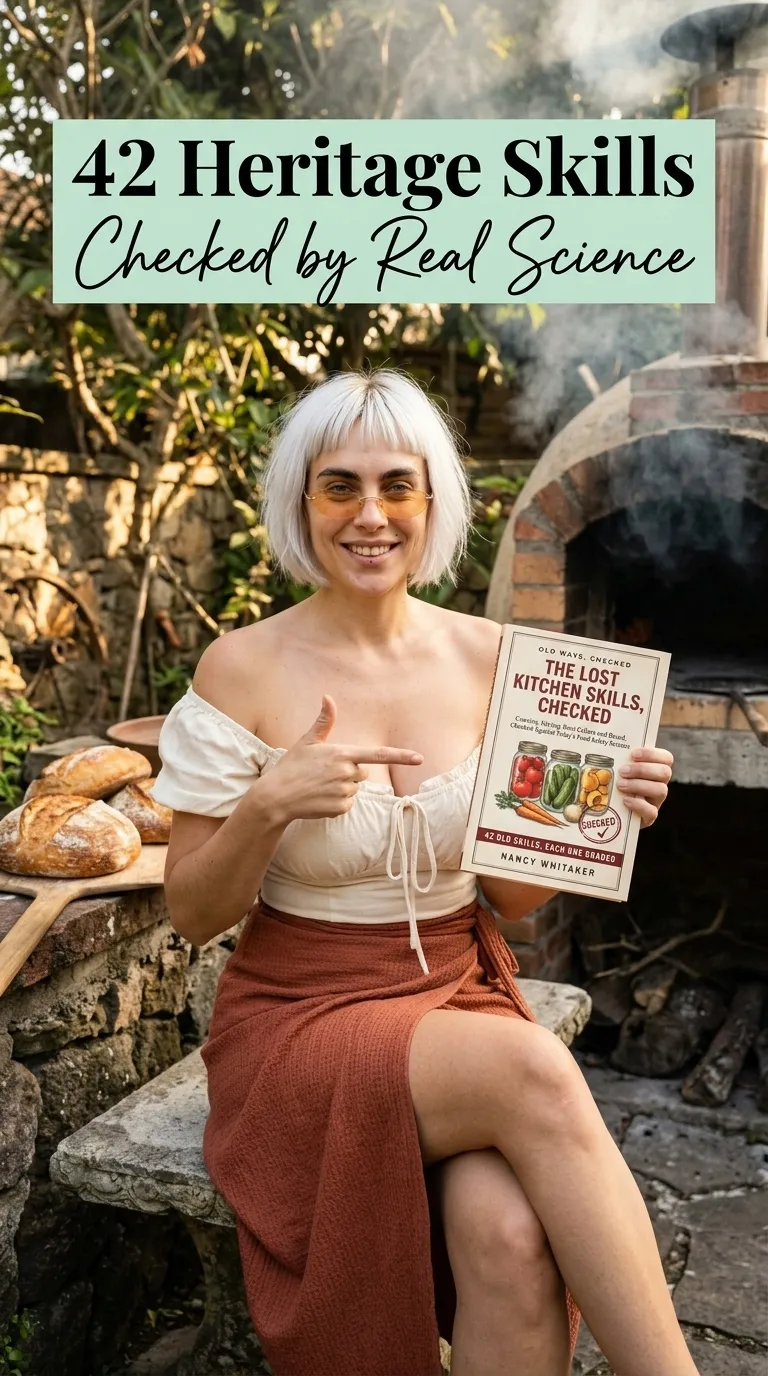
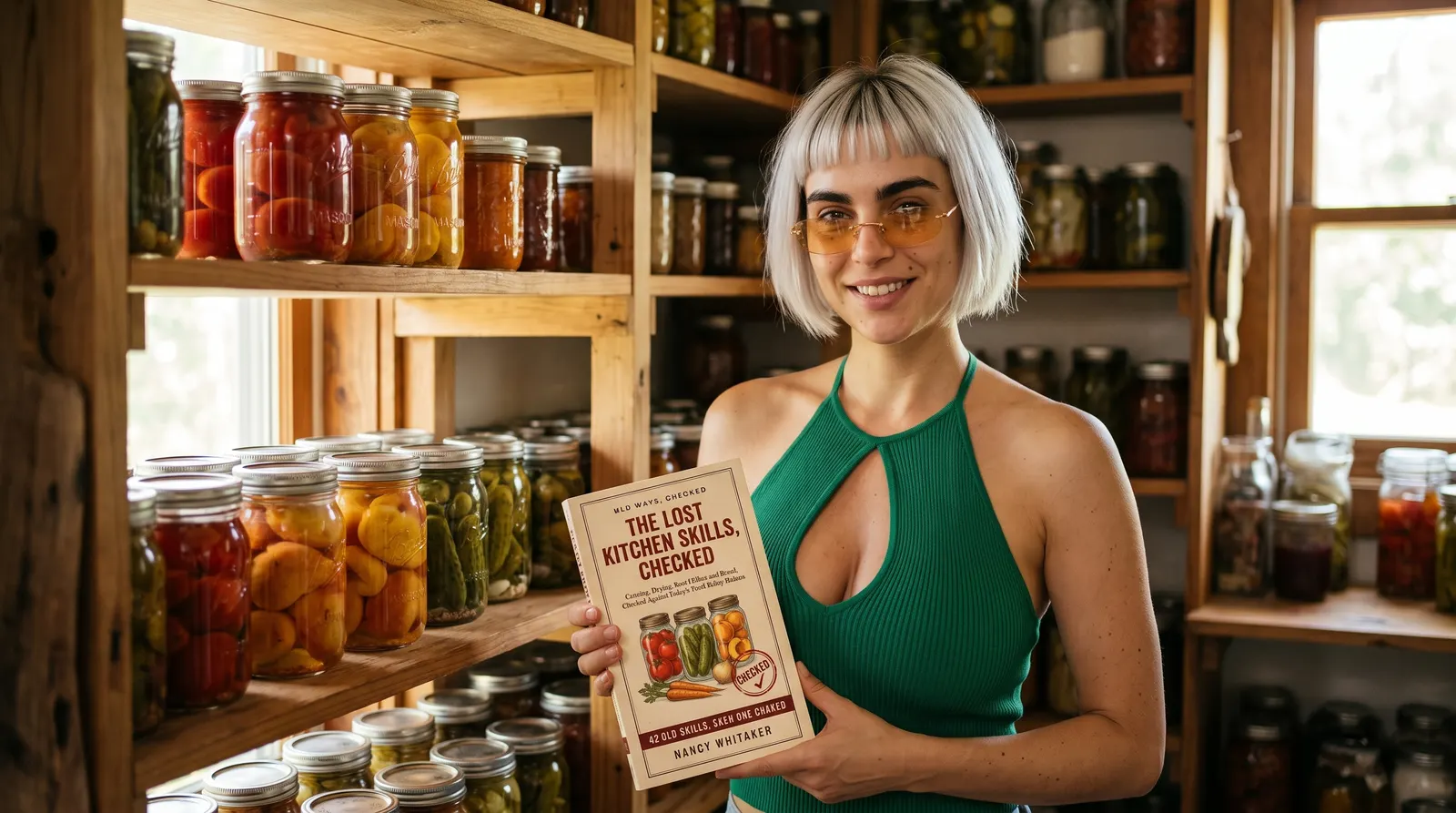
This is the problem The Lost Kitchen Skills, Checked was written for. Nancy Whitaker's book takes 42 skills from our grandparents' kitchens and gives each one a badge: SAFE TODAY, UPDATE IT or RETIRED. Open-kettle and oven canning is one of only four RETIRED skills.
Water-Bath Canning for High-Acid Food has the full card for skipping open-kettle and oven canning, plus the card for sealing jam with a lid instead of wax. It also walks through water-bath canning start to finish.
Pressure Canning for Beans, Meat and Soup explains why low-acid food needs more heat than boiling water can give, and how to use a pressure canner without fear.
The Pantry Workbook has a worksheet called Grandma's Recipe Card, Checked. You answer a few questions about the old card, find the tested recipe and write down the new method. Then you tape the page to the back of the card, so it stays in her handwriting.
The book is not medical advice, and it prints no processing times of its own. It points you to the tested recipe every time.
The book for this problem
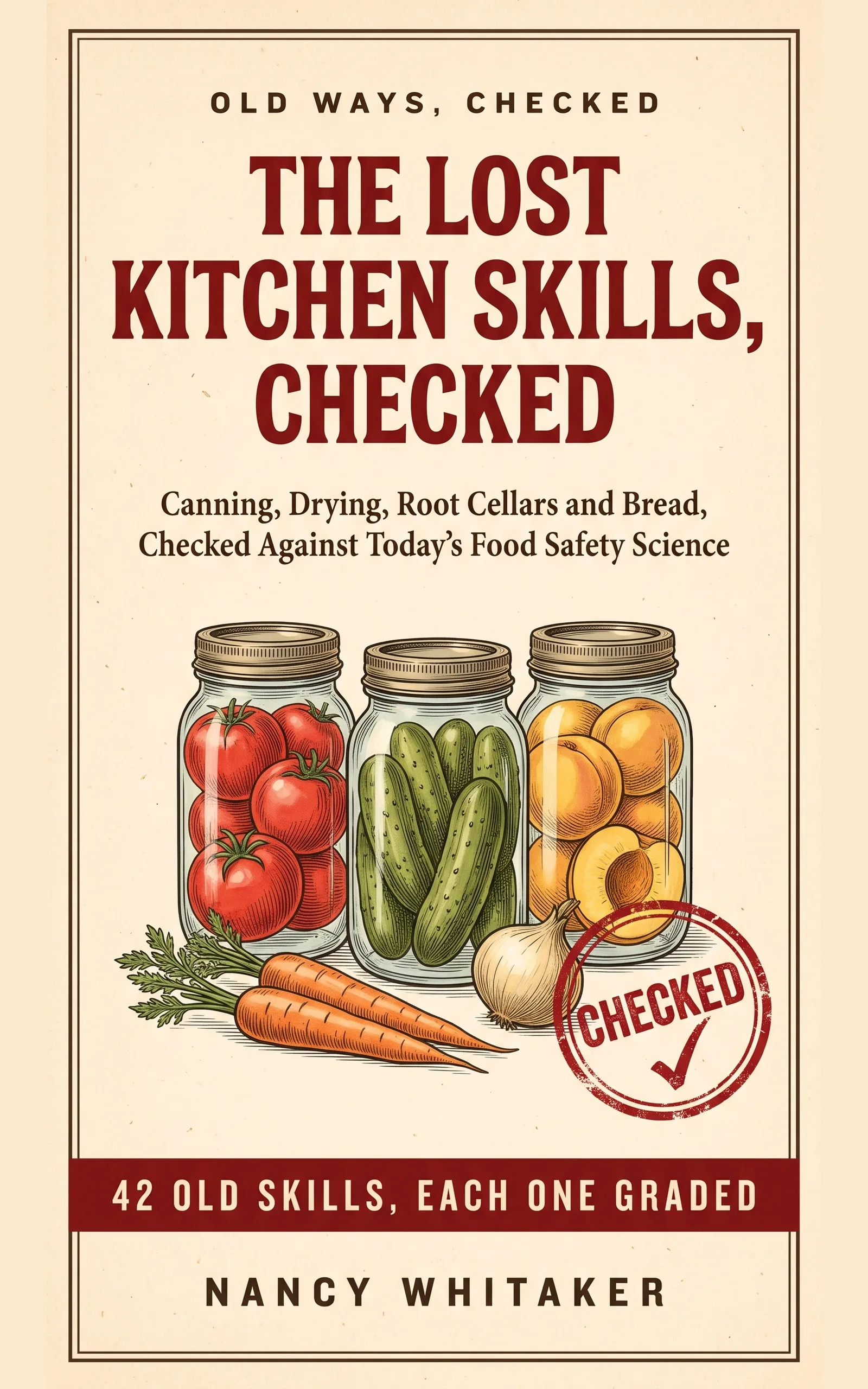
The Lost Kitchen Skills, Checked
Canning, Drying, Root Cellars, Bread, and Scratch Cooking from Our Grandparents' Kitchens, Checked Against Today's Food Safety Science. By Nancy Whitaker, 214 pages.
Where this problem is in the book:
- Water-Bath Canning for High-Acid Food
- Pressure Canning for Beans, Meat and Soup
- The Pantry Workbook
Links go to Amazon. ToolGenX publishes this book under a pen name and earns from every sale. Amazon sets the price and handles delivery and returns.
Is The Lost Kitchen Skills, Checked the right book for you?
Yes, if
- You have a family recipe card that says "pour into hot jars and seal"
- Someone told you open-kettle jam has always worked fine
- You want to know which canning methods are still in use and which are not
Skip it if
- You want a book of processing times for every food (it points you to the tested ones)
- You live outside the United States and follow other agencies
Fair doubts before you buy
Our family did open-kettle jam for decades and nobody got sick. Why stop now?
Nobody is saying your family was careless. They used the best advice of their day, and the 1942 USDA bulletin even described oven canning. The research moved on. Tested methods now exist, and a short water bath for jam takes only a few extra minutes.
Why not just look up the methods online?
You can, and the free agency pages are the best place to check. The trouble is that old methods still float around on blogs and in old cookbooks. The book puts the old way and the current rule side by side for each skill, with the source named, so you can tell them apart fast.
Get The Lost Kitchen Skills, Checked
Forty-two skills from our grandparents' kitchens, each checked against current USDA, FDA, CDC and extension guidance and badged SAFE TODAY, UPDATE IT or RETIRED, with the safe way to do it now.
Links go to Amazon. ToolGenX publishes this book under a pen name and earns from every sale. Amazon sets the price and handles delivery and returns.
This book explains published US food safety guidance and points to tested recipes. It is not medical advice. Use a tested recipe and current processing times for anything you can.
Questions people ask about this
- Is open kettle canning safe for jam?
- No. Current guidance does not recommend open-kettle canning for any food, jam included. Paraffin wax seals on jam are also retired. Make jam by a tested recipe, put on two-piece lids and process it in a boiling-water canner, as NCHFP describes.
- Why is open kettle canning not recommended?
- Because the jars get no heat after they are filled. West Virginia University Extension explains that germs "can enter the food when it is transferred from the kettle to jar." NCHFP says the method does not prevent all risks of spoilage.
- Is oven canning safe?
- No. NCHFP does not recommend processing jars in an oven. The 1942 USDA bulletin itself said oven heat brought the food inside to "only about 212° F." West Virginia University Extension adds that "jars explode easily in the oven."
- Can I seal jars in the dishwasher or microwave?
- No. NCHFP lists ovens, microwaves and dishwashers together as methods that are not recommended for processing jars. Use a boiling-water canner or a pressure canner with a tested recipe.
- If the lid sealed, is the food safe?
- Not always. Penn State Extension calls that idea "a common misconception." A seal matters, but safety comes from a tested recipe and the right processing time for your jar size and altitude.
- What about old jars that were canned open kettle?
- The CDC says "Do not eat food if you do not know whether safe canning guidelines were followed." Its short rule is "If in doubt, throw it out!" You can keep and reuse sound Mason jars with new lids.
Related problems
- Do you need lemon juice to can tomatoes? Yes, in every jar. Here is how much
USDA now says to add acid to every jar of canned tomatoes. See how much lemon juice or citric acid per pint and quart, and why the rule changed.
- Can you water-bath green beans? Grandma did it for years, so why won't anyone say yes
Green beans are a low-acid food, and NCHFP says there is no safe way to can them in a boiling-water canner. Here is why, and what to use instead.
- Pressure canner altitude chart: what pressure to use, and when to get your dial gauge tested
What pressure to use at your altitude for weighted and dial gauge canners, and why a dial gauge needs a yearly accuracy test before canning season.
- Everything inside The Lost Kitchen Skills, Checked
Every chapter, who the book is for, and every problem it helps with.