Last updated
How to make jerky safely at home: the heat step most videos skip

Three pounds of venison and a trip on Friday
You have promised to bring the jerky. The hunting trip is on Friday. There are three pounds of last fall's venison in the freezer, a borrowed dehydrator on the counter and a marinade from a video.
The video looks easy. Slice, soak, dry overnight. Done.
Then someone at the table says his father hung strips of meat on a wire in the sun, and nobody died. And you start to wonder whether all this fuss is for nothing.
It isn't much fuss, as it turns out. But the video skipped the one step that matters most.

Why a dehydrator alone is not enough
Most people think drying is the safety step. Take out the water and the germs can't grow. That part is true. It just isn't the whole story.
Drying stops germs from growing. It does not reliably kill the ones that came on the raw meat. A dehydrator runs at about 140°F. Ohio State Extension says dehydrator and oven temperatures "are not high enough to destroy harmful microorganisms that are typically present in raw meat."
So a strip can look done and still not be safe. Ohio State is direct: "Even though fully dried jerky may appear done, it is not safe to eat unless it goes through an additional heat treatment."
The sun is worse. Ohio State points to the risk of contamination and an unsteady heat source. NCHFP says meats are not recommended for outdoor drying.

The heat step, in two tested ways
The goal is simple. According to Kansas State University's summary of USDA hotline advice, meat should reach 160°F, and poultry 165°F. "A dehydrator may not reach these temperatures," Kansas State adds. So you add the heat yourself, once, either before drying or after.
Option A, before drying. Bring the strips and the marinade to a boil and boil for 5 minutes. Then drain and dry them. Check several strips with a food thermometer for 160°F, or 165°F for poultry.
Option B, after drying. If you skipped option A, heat the dried strips in the oven. NCHFP says: "For strips originally cut 1/4 inch thick or less, heat 10 minutes in an oven preheated to 275ºF."
Pick one before you start and write it down. The rest of the job is the same either way. NCHFP's jerky page has the full directions.

The steps around the heat step
A few habits make the heat step work.
Keep the meat cold, at 40°F or below. Marinate it in the refrigerator for 1 to 2 hours or overnight, and never reuse the marinade. Partly freeze the meat so it slices easily, trim off all the fat, and cut strips no thicker than 1/4 inch. Fat left on goes rancid fast.
Dry at 140°F until a test piece cracks but does not break when you bend it. NCHFP says that takes 10 to 24 hours for strips not heated in marinade.
Don't turn the dehydrator up to hurry it. Kansas State warns that too much heat causes "case hardening." The outside dries hard and traps moisture inside, which can lead to spoilage.

Venison, pork and wild game
Wild game and pork need one more step, for a parasite called trichinella. NCHFP says to freeze pieces 6 inches thick or less at 0°F or below for at least 30 days before you make jerky.
Freezing deals with the parasite. It does not remove bacteria. So frozen venison still gets the heat step.
One more rule from NCHFP. If the animal was gut-shot and gut contents touched the meat, "It is best to avoid making jerky from this meat."
Once your jerky is done, NCHFP says it keeps about two weeks in a sealed container at room temperature. After that, move it to the fridge or freezer.

Where the book covers jerky
This is the problem The Lost Kitchen Skills, Checked was written for. Nancy Whitaker checks 42 old kitchen skills against current guidance from the USDA, NCHFP and university extension services, and badges each one.
Drying Fruit, Vegetables and Jerky opens with a young hunter, a borrowed dehydrator and a grandfather who remembers meat drying on a wire. The chapter's Make Jerky with a Heat Step card has an UPDATE IT badge. It gives both heat-step options, the trichinella freeze for game, the case-hardening warning and a Log it line for the strip temperature.
The same chapter covers drying fruit with an acid dip, blanching vegetables before drying, and how long dried food really keeps. Its myth check tests two claims you will hear: that sun-dried jerky is the safe old way, and that if the dehydrator dried it, the germs are dead.
If you keep game in the freezer, the freezing chapter has a card on thawing food safely. And if you are planning a big cook-up for the trip, our page on cooling a big pot of stock or soup covers the other step people skip.
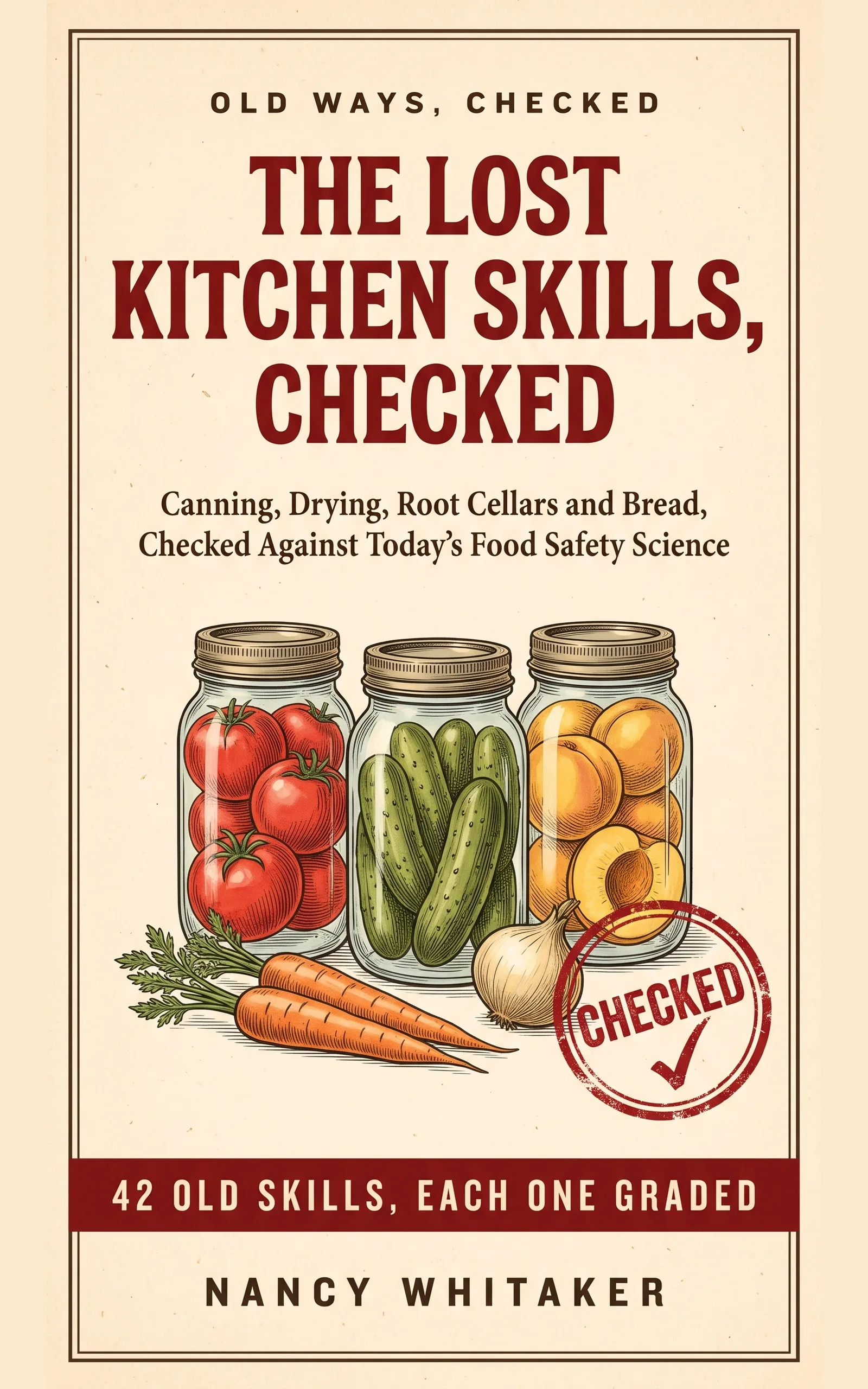
The book for this problem
The Lost Kitchen Skills, Checked
Canning, Drying, Root Cellars, Bread, and Scratch Cooking from Our Grandparents' Kitchens, Checked Against Today's Food Safety Science. By Nancy Whitaker, 214 pages.
Where this problem is in the book:
- Drying Fruit, Vegetables and Jerky
Links go to Amazon. ToolGenX publishes this book under a pen name and earns from every sale. Amazon sets the price and handles delivery and returns.

Is The Lost Kitchen Skills, Checked the right book for you?
Yes, if
- You just got a dehydrator and want to make jerky the safe way
- You hunt and want to turn venison into jerky
- Someone in the family says sun-dried meat was good enough for Grandpa
Skip it if
- You want flavor and marinade recipes (the book is about the safety steps)
- You want to make jerky from meat that was gut-shot (the book says not to)
Fair doubts before you buy
People have dried meat for thousands of years. Why add a step now?
Because the research caught up. Kansas State University says illnesses linked to homemade jerky "raise questions about the safety of traditional dehydration methods." Drying keeps the meat. The heat step is what kills the germs that were on it raw.
Can I just watch a jerky video instead?
You can, and many show good slicing and marinades. The catch is that a lot of them go straight from marinade to dehydrator. The book is built around the one step that matters most for safety, with both tested ways to do it.
Get The Lost Kitchen Skills, Checked
Forty-two skills from our grandparents' kitchens, each checked against current USDA, FDA, CDC and extension guidance and badged SAFE TODAY, UPDATE IT or RETIRED, with the safe way to do it now.
Links go to Amazon. ToolGenX publishes this book under a pen name and earns from every sale. Amazon sets the price and handles delivery and returns.
This book explains published US food safety guidance and points to tested recipes. It is not medical advice. Use a tested recipe and current processing times for anything you can.

Questions people ask about this
- What temperature does jerky need to reach to be safe?
- Meat should reach 160°F and poultry 165°F, according to Kansas State University summary of USDA hotline advice. For ground-meat jerky, NCHFP also says an internal temperature of 160°F is necessary. A dehydrator may not reach these temperatures on its own.
- Is dehydrated jerky cooked?
- Not by drying alone. Ohio State Extension says dehydrator and oven drying temperatures "are not high enough to destroy harmful microorganisms that are typically present in raw meat." That is why a separate heat step is added before or after drying.
- Should I cook jerky before or after dehydrating?
- Either works. Before drying, bring the strips and marinade to a boil and boil for 5 minutes, then drain and dry. After drying, heat strips cut 1/4 inch thick or less for 10 minutes in an oven preheated to 275°F. Pick one before you start.
- How do I make venison jerky safe?
- Treat it for the trichinella parasite first. NCHFP says to freeze pieces 6 inches thick or less at 0°F or below for at least 30 days. Freezing does not remove bacteria, so still do the heat step. Avoid jerky from gut-shot game.
- Is sun-dried jerky safe?
- No. Ohio State Extension does not recommend sun-drying jerky, because of the risk of contamination and an unsteady heat source. NCHFP agrees that meats should not be dried outdoors.
- How long does homemade jerky last?
- NCHFP says properly dried jerky keeps about two weeks in a sealed container at room temperature. After that, refrigerate or freeze it.
Related problems
- Left a pot of stock out overnight to cool? What to do with it this morning
Stock left on the stove overnight is past the 2-hour rule and should be thrown out. Here is why, and how to cool a big pot fast next time.
- Is the egg float test accurate? What a floating egg really tells you
The egg float test shows how old an egg is, not whether it is safe. Here is what USDA says a floating egg means, and the check that actually works.
- A gift for someone who wants to learn canning and the old kitchen skills, the safe way
Shopping for someone who wants to learn canning? A book that checks old kitchen methods against food safety science, plus what to give with it.
- Everything inside The Lost Kitchen Skills, Checked
Every chapter, who the book is for, and every problem it helps with.