Last updated
A gift for someone who wants to learn canning and the old kitchen skills, the safe way

The book for this problem
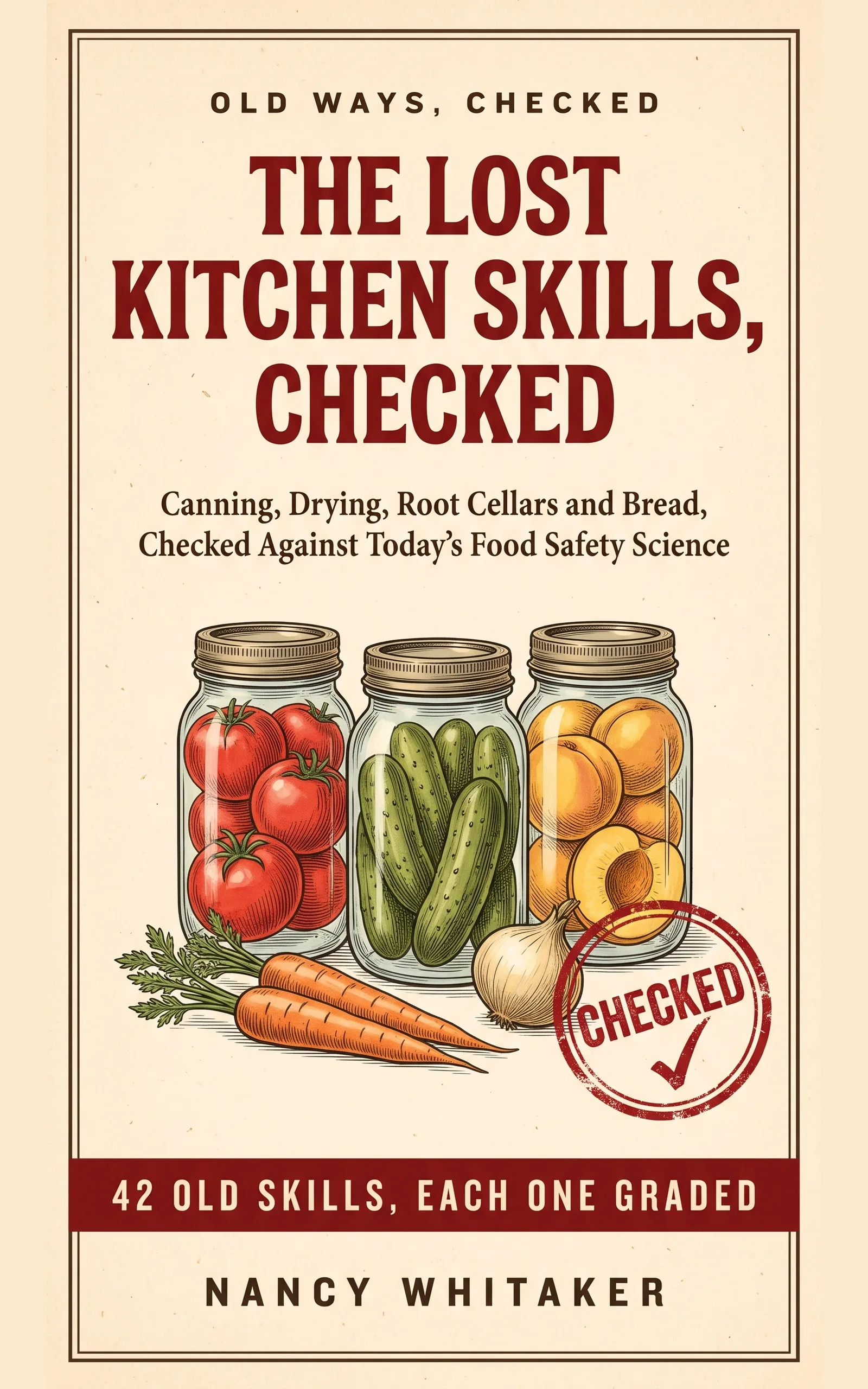
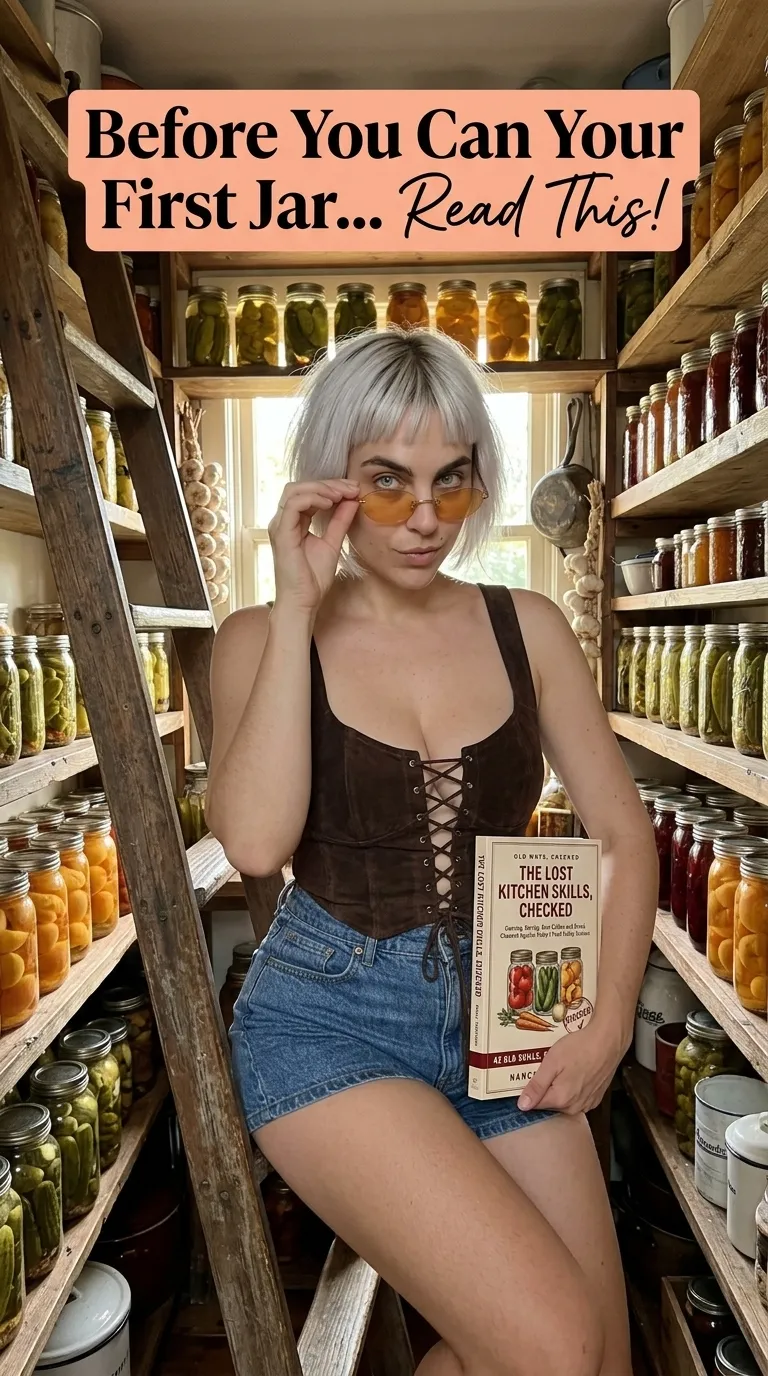
The Lost Kitchen Skills, Checked
Canning, Drying, Root Cellars, Bread, and Scratch Cooking from Our Grandparents' Kitchens, Checked Against Today's Food Safety Science. By Nancy Whitaker, 214 pages.
Where this problem is in the book:
- How to Use This Book
- Water-Bath Canning for High-Acid Food
- Bread from Flour, Water and Time
- The Pantry Workbook
Links go to Amazon. ToolGenX publishes this book under a pen name and earns from every sale. Amazon sets the price and handles delivery and returns.
Wrapping it so the first batch actually happens
- Give the paperback. The book is made for writing in. Each skill has a Log it line, and the Pantry Workbook at the back has canning records, pantry and freezer logs and a preserving calendar.
- Mark one easy first project. The book suggests one easy acid food, like applesauce or jam, in a water-bath canner. Put a slip of paper at that chapter.
- Add the family card. If there is an old recipe card in the family, tuck a copy inside. The book has a worksheet called Grandma's Recipe Card, Checked, made for exactly that card.
- Plan the first batch together. Canning goes better with two people the first time. One reads the steps, one does them.
A starter basket from the book supply list
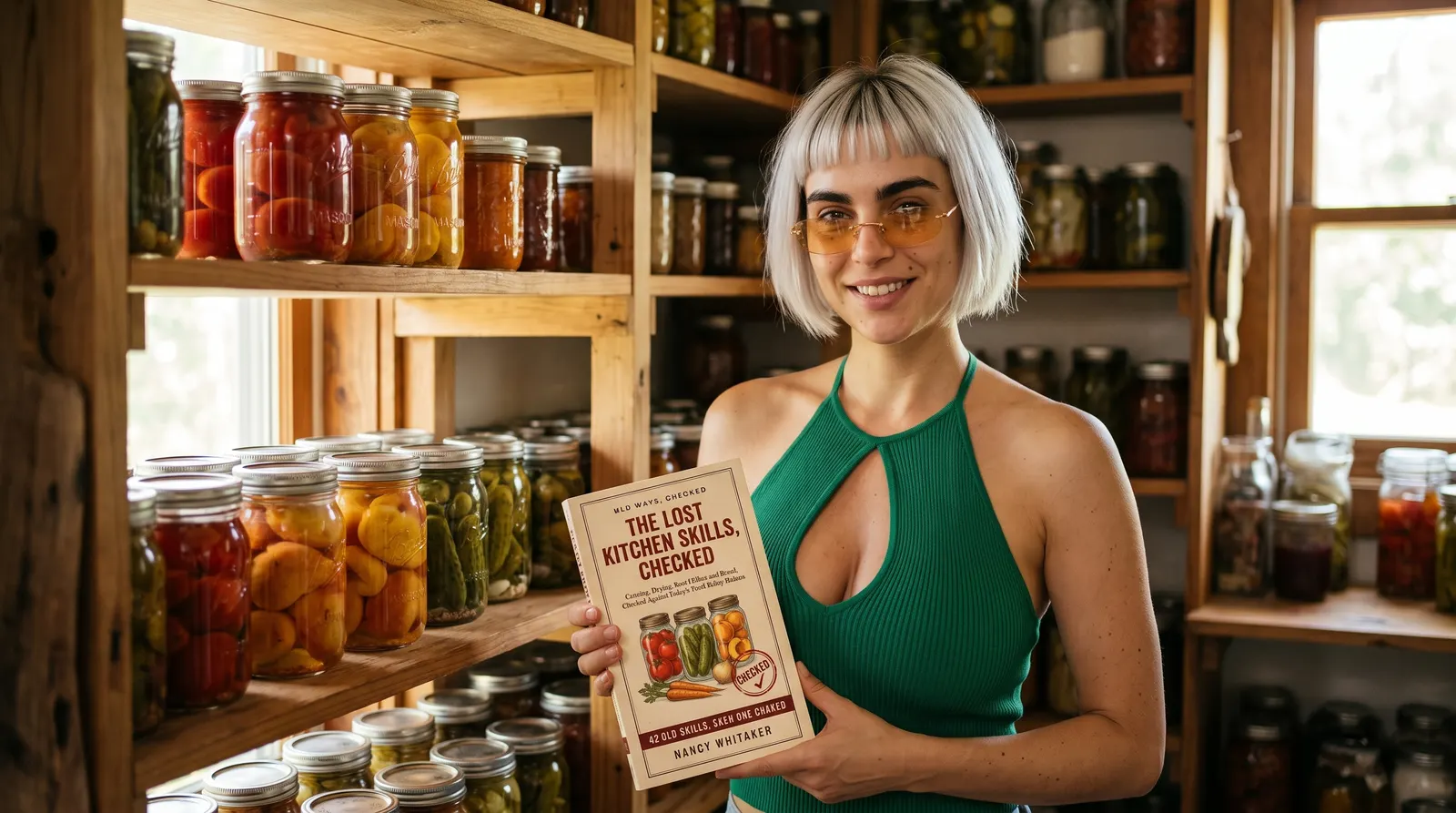
The book has a short jar and kitchen supply list, drawn from the USDA Complete Guide and NCHFP. A few of those items make a good starter basket.
- Mason-type canning jars. NCHFP calls them "the best choice."
- New two-piece lids. Jars can be reused, but lids are new each time. NCHFP says to buy only the lids you will use in a year.
- A jar lifter, for lifting hot jars out upright.
- A flat plastic spatula, for letting air bubbles out of filled jars.
- Bottled lemon juice, for canned tomatoes.
- A notebook and a pencil, for the logs.
Skip mayonnaise jars. NCHFP says they break too often in a pressure canner. And skip any electric multicooker with a "canning" button. NCHFP does not support those for canning.

The person who wants the jars back on the shelf
Maybe it's your daughter. Maybe it's a friend who just bought a house with a garden. Maybe it's you, and you are dropping hints.
They remember the jars cooling on a towel. The soft ping of a lid. A basement shelf full of peaches and beans. They want that back.
What they may not say out loud is that they're nervous. They've heard the word botulism. They have a recipe card with no times on it. They don't know which old habits still hold up.
A gift that answers that quietly is better than one more pretty jar.
Why we picked a book that badges every skill
We like this book as a gift because it respects both sides. It loves the old skills, and it is honest about the ones that changed.
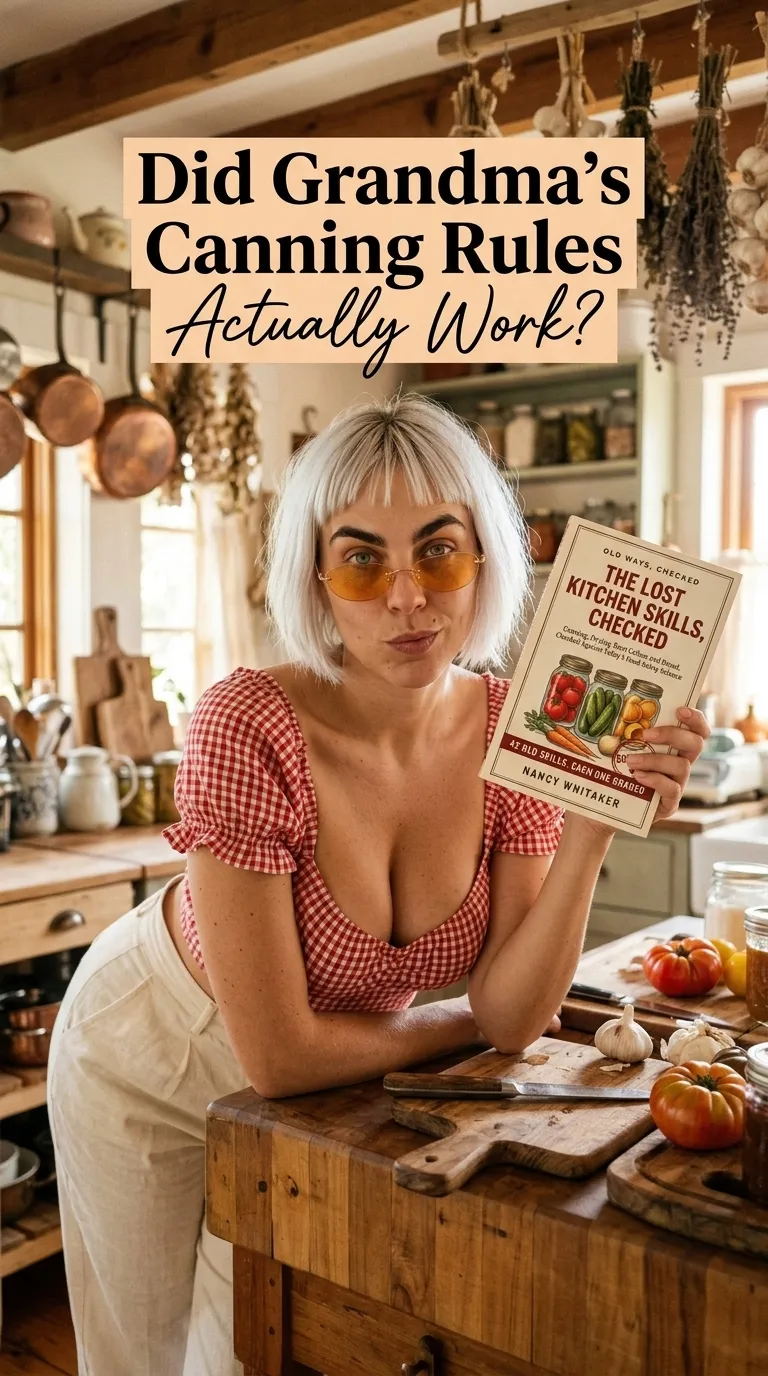
Every one of its 42 skills carries a badge. SAFE TODAY means Grandma's way still matches current guidance. UPDATE IT means the idea is sound but the method changed. RETIRED means don't do it this way, and the card gives the safe replacement. Most skills came out SAFE TODAY or UPDATE IT. Only 4 are RETIRED.
It also does not pretend to be what it isn't. It prints no new processing times of its own. It points to the USDA Complete Guide to Home Canning and the National Center for Home Food Preservation, which publish the tested recipes for free. Every source is listed, chapter by chapter, so a careful reader can check it all.
The gift is The Lost Kitchen Skills, Checked
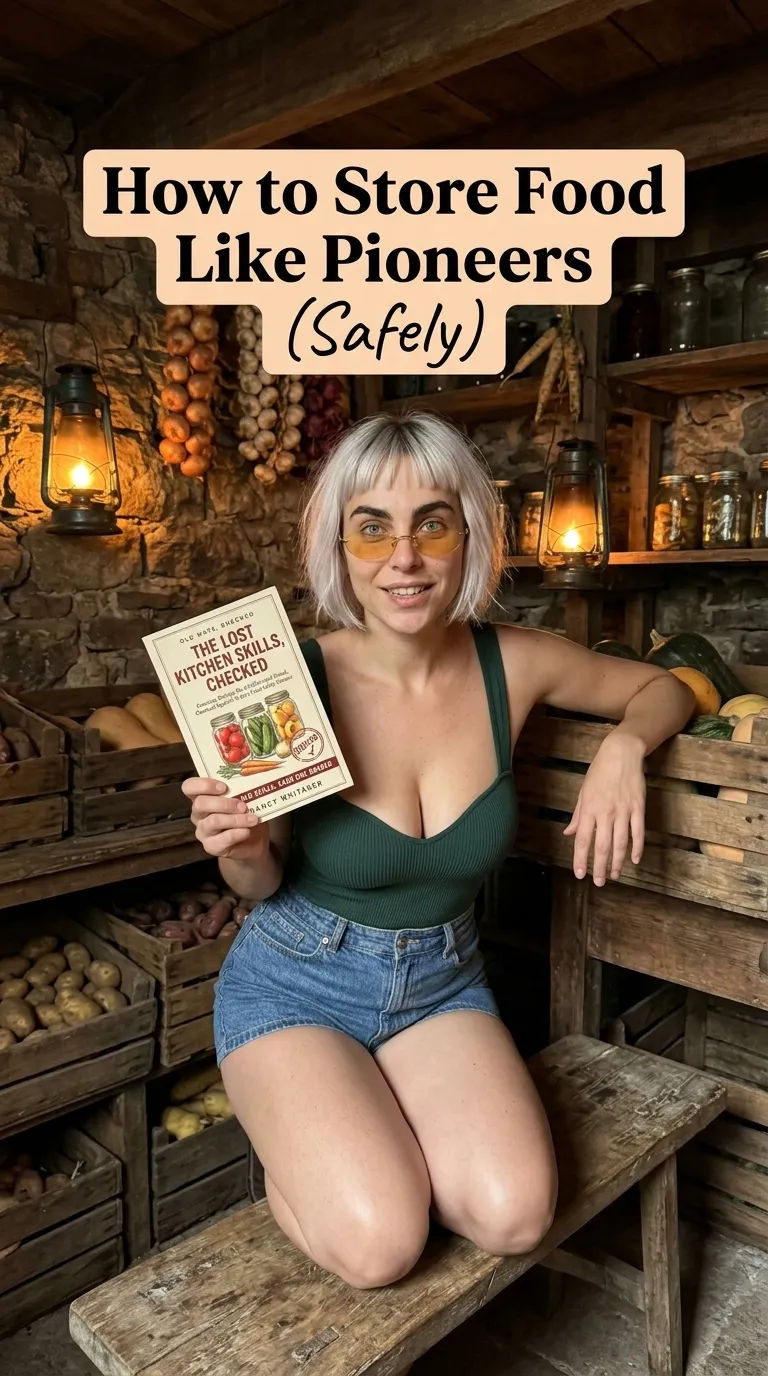
This is the problem The Lost Kitchen Skills, Checked was written for. Nancy Whitaker's book covers canning, drying, root cellars, bread and scratch cooking, each checked against today's food safety science.
How to Use This Book explains the badges and the one rule: for canning, follow a tested recipe.
Water-Bath Canning for High-Acid Food is the friendly place to start, with water-bath canning start to finish, tomatoes, jam and the two old methods that are off the table.
Bread from Flour, Water and Time covers a basic loaf and keeping a sourdough starter, both badged SAFE TODAY.
The Pantry Workbook turns the book into a record of their own pantry, one batch at a time.
If their family card says "seal hot," our page on open-kettle canning explains what to change.

Is The Lost Kitchen Skills, Checked the right book for you?
Yes, if
- Someone you love wants to can, dry and bake from scratch like a grandparent did
- They inherited a recipe box or a canning kettle and want to use it
- You want a gift that respects the old ways and keeps them safe
Skip it if
- They want a cookbook full of new recipes and processing times (the book points to the tested ones)
- They live outside the United States and follow other food agencies
Fair doubts before you buy
Will a safety book feel like a lecture?
The book is warm about the old ways. Most of its 42 skills came out SAFE TODAY or UPDATE IT, and only 4 are RETIRED. It says plainly that a RETIRED badge is not a judgment on anyone's grandmother. The research moved on.
Is the Kindle version enough, or should I give the paperback?
For a gift, the paperback works best. Each skill card has a Log it line, and the Pantry Workbook at the back is made to be written in with a pencil. On Kindle, the book suggests keeping a notebook nearby and copying the fields.
Why not just send them to free websites?
The free agency pages are excellent, and the book sends readers to them on purpose. What it adds is order: one skill at a time, the old way beside the new, with a badge so a beginner can see what changed and why.
Get The Lost Kitchen Skills, Checked
Forty-two skills from our grandparents' kitchens, each checked against current USDA, FDA, CDC and extension guidance and badged SAFE TODAY, UPDATE IT or RETIRED, with the safe way to do it now.
Links go to Amazon. ToolGenX publishes this book under a pen name and earns from every sale. Amazon sets the price and handles delivery and returns.
This book explains published US food safety guidance and points to tested recipes. It is not medical advice. Use a tested recipe and current processing times for anything you can.
Questions people ask about this
- What do you need to start canning at home?
- For water-bath canning, the book lists Mason-type jars, new two-piece lids, a lidded canner with a rack, a jar lifter, a flat plastic spatula for air bubbles and a tested recipe. Low-acid foods like beans and meat also need a stovetop pressure canner that holds at least 4 quart jars.
- What is the easiest thing to can for a beginner?
- The book suggests starting with one easy acid food, like applesauce or jam, in a boiling-water canner. Find its tested recipe on the NCHFP website before you buy the fruit.
- Is it safe to use my grandmother's canning recipes?
- Keep the recipe and check the method. West Virginia University Extension says many old recipes "do not include instructions for processing." Match the card to the closest tested recipe from the USDA Complete Guide, NCHFP or your state extension service.
- What is a good gift for a beginner homesteader?
- Something that covers the whole pantry, not only canning. This book also covers the root cellar, drying, fermenting, freezing, bread, stock, butter, yogurt, eggs and cast iron, each checked against current guidance.
- Can old Mason jars be reused?
- Yes, if they have no chips or cracks. NCHFP says "Mason jars may be reused many times, requiring only new lids each time." Wire-bail jars with glass lids and zinc caps are no longer recommended for canning.
Related problems
- Is open-kettle canning safe? How it compares with oven, water-bath and pressure canning
Open-kettle and oven canning are no longer recommended. See how each old method compares with water-bath and pressure canning, and what to use now.
- Can you water-bath green beans? Grandma did it for years, so why won't anyone say yes
Green beans are a low-acid food, and NCHFP says there is no safe way to can them in a boiling-water canner. Here is why, and what to use instead.
- How to make jerky safely at home: the heat step most videos skip
A dehydrator alone may not kill germs in raw meat. Here is the heat step for safe homemade jerky, before or after drying, and what to do with venison.
- Everything inside The Lost Kitchen Skills, Checked
Every chapter, who the book is for, and every problem it helps with.