Last updated
Should you quit after investing so much? The sunk cost question, asked plainly

It has been two years, and it is still almost working
You started it with real hope. A business, a course, a renovation, a book. You put in weekends. You put in savings. You told people about it.
It is not dead. That is the hard part. Every few months there is a small sign that it could still turn.
And under all of it is one heavy thought. If you stop now, it was all for nothing. You are not weak for feeling that. Almost everyone does.
Why the money you spent keeps pulling on you
The pull has a name: the sunk cost effect. It means the past, which you cannot change, gets a say in a choice about the future.
In a 1985 study, a theater sold season tickets at three random prices. Over the first five plays, people who paid full price used an average of 4.11 tickets. People with discounts used 3.32 and 3.29. Same plays. Same seats. The only difference was money that was already gone.
The same paper asked people about a plane project. When $10 million was already spent and the work was 90 percent done, 85 percent said finish it. When nothing was spent yet, only about 17 percent said yes. The future was the same both times. Only the past had changed.
And it gets stronger when the choice was yours. A 1976 study found that people who made a failed bet themselves put more money back into it than anyone else.
Why reading about sunk costs has not fixed it
Here is the part nobody tells you. Knowing the idea is not enough. Economics students who had been taught about sunk costs did no better than anyone else in that 1985 study.
What helped was narrow and short. In a 1990 study, about 30 minutes of focused training on this exact mistake raised good answers from 28.6 percent to 44 percent. A month later, the trained students still did better.
So you do not need more theory. You need a question you can run on this exact choice.
The fresh-start question
Get a page. Name the thing in one line. List what you have put in: money, months, effort, the times you told people. Draw a line under that list and write "gone either way."
Now write this: if you were starting from zero today, knowing what you know now, would you choose this?
Answer it the way a capable stranger would. Someone who took over this morning and owes nothing to the past.
If the honest answer is no, list what going on will still cost from here. Then list what else that time or money could do. Make the other things concrete, like Thursday nights with your kids or two months of a class.
Then decide, and set a check date. If you keep going, write the sign that would make you stop.
A 1990 study had a smaller version you can try on anything. Would you still go to the game if someone called today and offered you a free ticket? If not, suspect the past is voting.
To be fair, we should be honest about the badge. The book rates the fresh-start question PROMISING. The effect it fights is well tested. The question itself has not been tested on its own.

Ask what a newcomer would do
A lot of advice on quitting says to get an outside view from someone with no stake in the past. The book tells a well-known version of this from Intel.
In his 1996 book Only the Paranoid Survive, Andy Grove described a 1985 talk with Gordon Moore about Intel's memory chip business. Grove asked: if the board threw them out and brought in a new CEO, what would that person do? Moore answered that the new boss would get out of memories. Grove then asked why they should not walk out the door, come back in, and do it themselves. Intel did leave the memory business in the years that followed.
You can run the same test on your own project. Picture someone capable taking it over tomorrow. They did not spend your weekends or your savings. What would they do next? It is the fresh-start question with a face on it.
Name what staying costs you
Many people forget the other side of the choice: what else this time and money could be doing. The book's highest-rated tool for that is the "Or What Else?" question. It takes five minutes and carries a SOLID badge.
- Write the choice plainly: "Keep putting $400 a month and every Saturday into this?"
- Write what it really uses up: dollars, hours a week, weekends, attention.
- List three specific other things that same amount could do. "Two months of a class." "Thursday evenings with the kids."
- Rewrite the choice as a comparison: "This project, or the class plus free Saturdays?"
- Pick the best option on the full list. It may still be the project.
A 2023 review of 39 experiments with about 14,000 people found that reminding people of other options reliably changes what they choose. The effect was smaller than early studies suggested, so expect a nudge, not a miracle.
How the book helps you decide from today
This is the problem Mental Models That Actually Work was written for.
Sunk Costs: Would You Choose This Again Today? has the full fresh-start card and a second one, the "Or What Else?" question, which carries the book's highest badge. It also tells the story of how Andy Grove and Gordon Moore asked what a new boss would do at Intel in 1985.
Regret: Choosing Now So You Can Live With It Later helps when quitting feels like something you will regret forever. It has you write both regrets, for leaving and for staying, side by side.
Decision Journals helps you log the choice with a check date, so in six months you judge the decision by what you knew, not only by how it ended.
The book for this problem
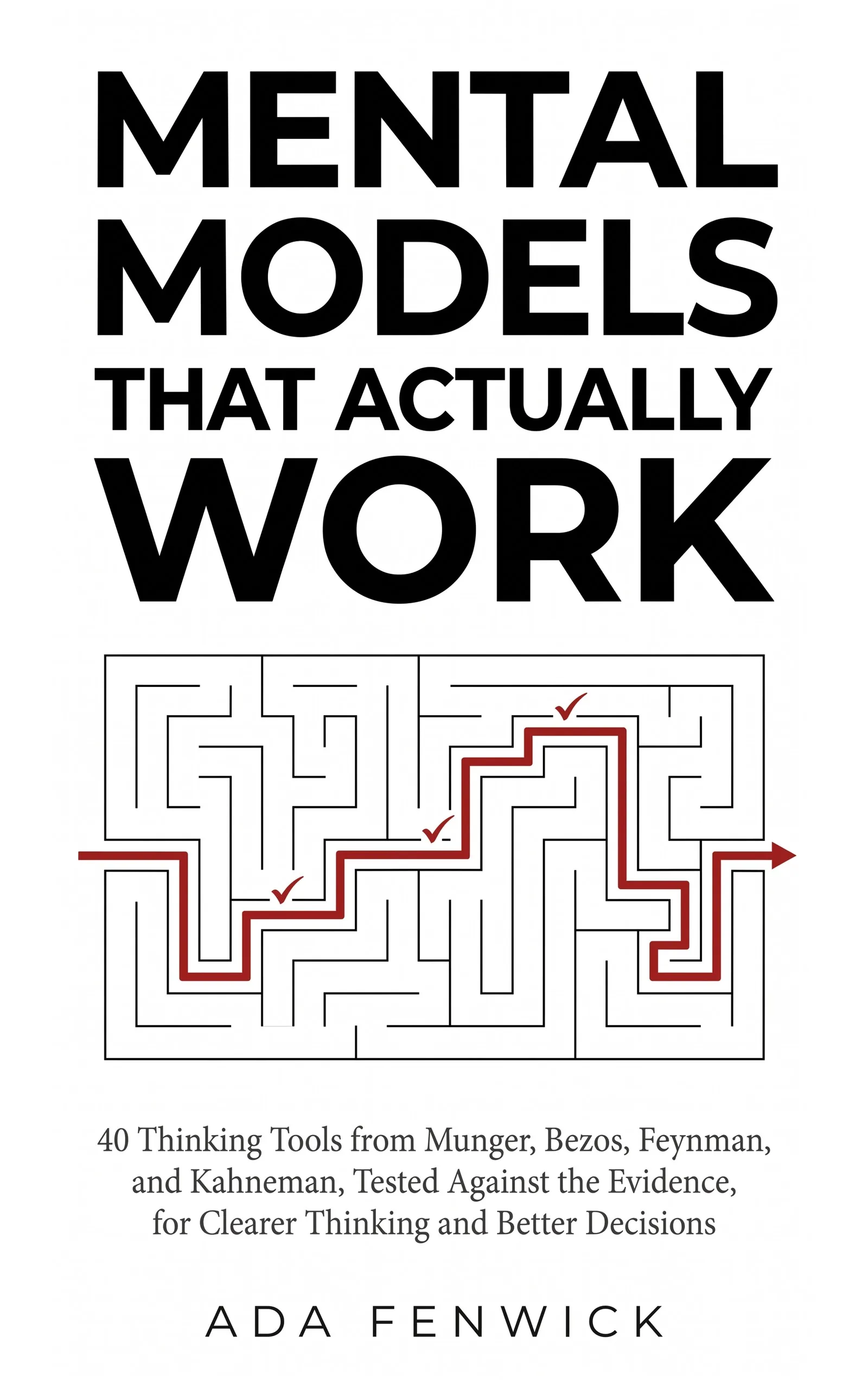
Mental Models That Actually Work
40 Thinking Tools from Munger, Bezos, Feynman, and Kahneman, Tested Against the Evidence, for Clearer Thinking and Better Decisions. By Ada Fenwick, 288 pages.
Where this problem is in the book:
- Sunk Costs: Would You Choose This Again Today?
- Regret: Choosing Now So You Can Live With It Later
- Decision Journals
Links go to Amazon. ToolGenX publishes this book under a pen name and earns from every sale. Amazon sets the price and handles delivery and returns.

Is Mental Models That Actually Work the right book for you?
Yes, if
- You have put months or years into something and it keeps not working
- You feel that quitting would mean all that effort was wasted
- You want a clear test, not a pep talk in either direction
Skip it if
- You want advice on a money, legal or medical choice (the book gives none)
- You want to be told to never give up, or to always cut your losses
Fair doubts before you buy
I already know about sunk costs. Why is it still so hard?
Because knowing the idea does not seem to help much. In one study, economics students who had been taught about sunk costs did no better than anyone else. What did help was a short drill aimed at the exact mistake. The book gives you that kind of drill, not just the theory.
Isn't quitting just giving up?
Not always, and staying is not always grit. The fresh-start question can say keep going. What it removes is one bad reason: that the past money will somehow come back if you stay. It will not. The only question left is what you want from here.
Get Mental Models That Actually Work
Forty thinking tools, each traced to its source and labeled by how well it holds up, so you know which to use and when.
Links go to Amazon. ToolGenX publishes this book under a pen name and earns from every sale. Amazon sets the price and handles delivery and returns.
Questions people ask about this
- What is the sunk cost fallacy in simple words?
- It is letting money, time or effort that is already gone push you to keep going. In a 1985 study, theater-goers who paid full price for season tickets went to more plays than people who got a discount. The seats and plays were the same. Only the past price was different.
- How do I know when to quit a project?
- Ask whether you would choose it again today if you were starting from zero. Then write what going on will still cost from here, and what you would do instead with that time. Set a check date, and write the sign that would make you stop.
- Why is it so hard to stop after investing so much?
- Part of it is that the choice feels personal. In a 1976 study, business students who had made a failed choice themselves put more money back into it than any other group. When the bad bet is yours, the pull is to add more, not less.
- Can you train yourself to ignore sunk costs?
- Somewhat. In a 1990 study, about 30 minutes of focused training on cost-benefit rules raised good answers on test problems from 28.6 percent to 44 percent. Four to six weeks later the trained students still scored higher, though the change in real behavior was small.
- What is opportunity cost and why does it matter here?
- It is what else the same time or money could have done. People often forget to picture it. A 2023 review of 39 experiments found that reminding people of other options does change their choices, though by less than early studies claimed.
Related problems
- You keep overthinking a big decision. Is something wrong with you?
Stuck overthinking a big decision? Sort it by whether you can undo it, then set a bar and a stop date so more research stops buying comfort.
- How to keep a decision journal: what to write, and when to look back
How to keep a decision journal: the six fields to write before you decide, when to review, and how to judge the choice apart from how it turned out.
- How to make better decisions when you keep making the same kind of bad call
Want to make better decisions? Start with two tested questions, then keep a short written log so you can see your own patterns.
- Everything inside Mental Models That Actually Work
Every chapter, who the book is for, and every problem it helps with.