Last updated
You keep overthinking a big decision. Is something wrong with you?
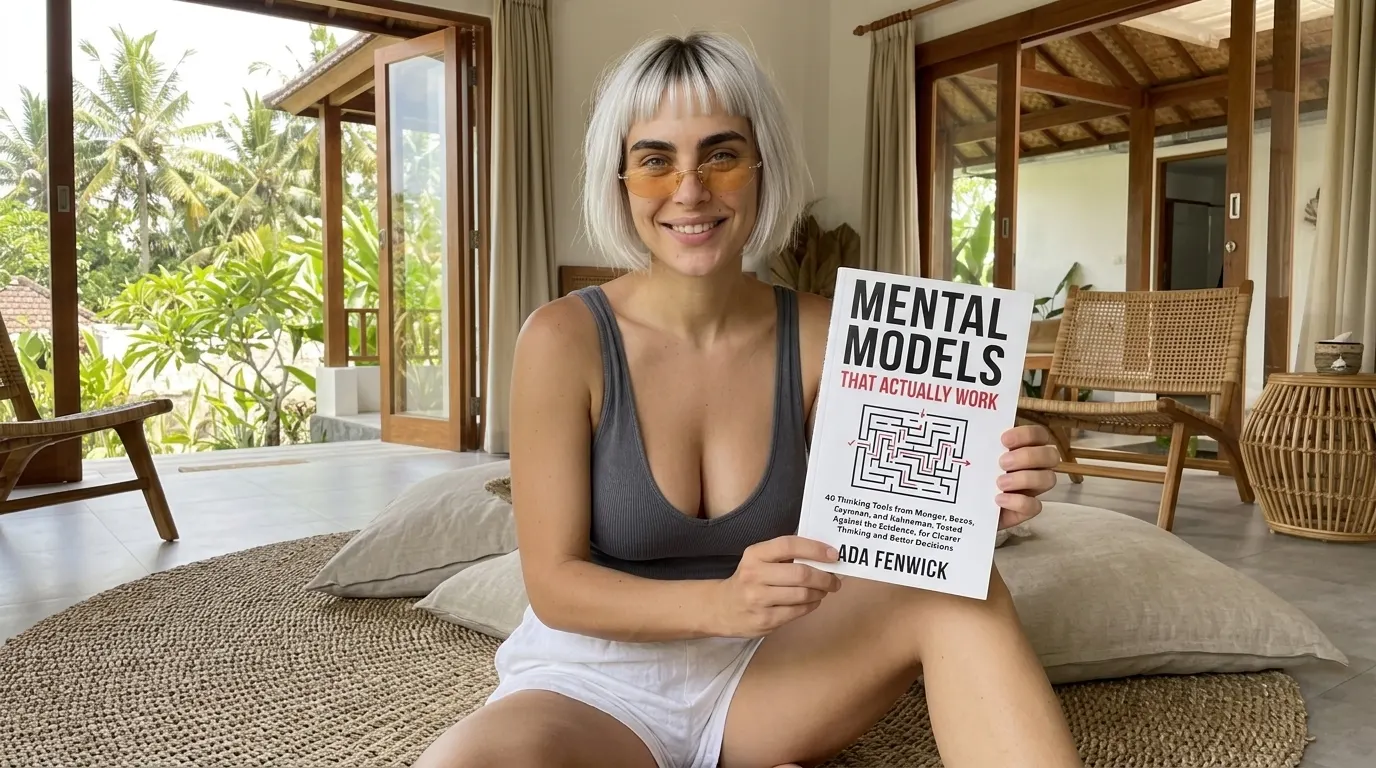
It is the third week, and the list has not changed
You have a spreadsheet. Or a note on your phone. Option A on the left, Option B on the right. You add a line most nights.
You have asked four friends. They split two and two. You read one more article. You feel a little surer, then less sure by morning.
Here is the thought you will not say out loud. Maybe you are just bad at this. You are not. You are doing exactly what feels like care. It just is not working anymore.
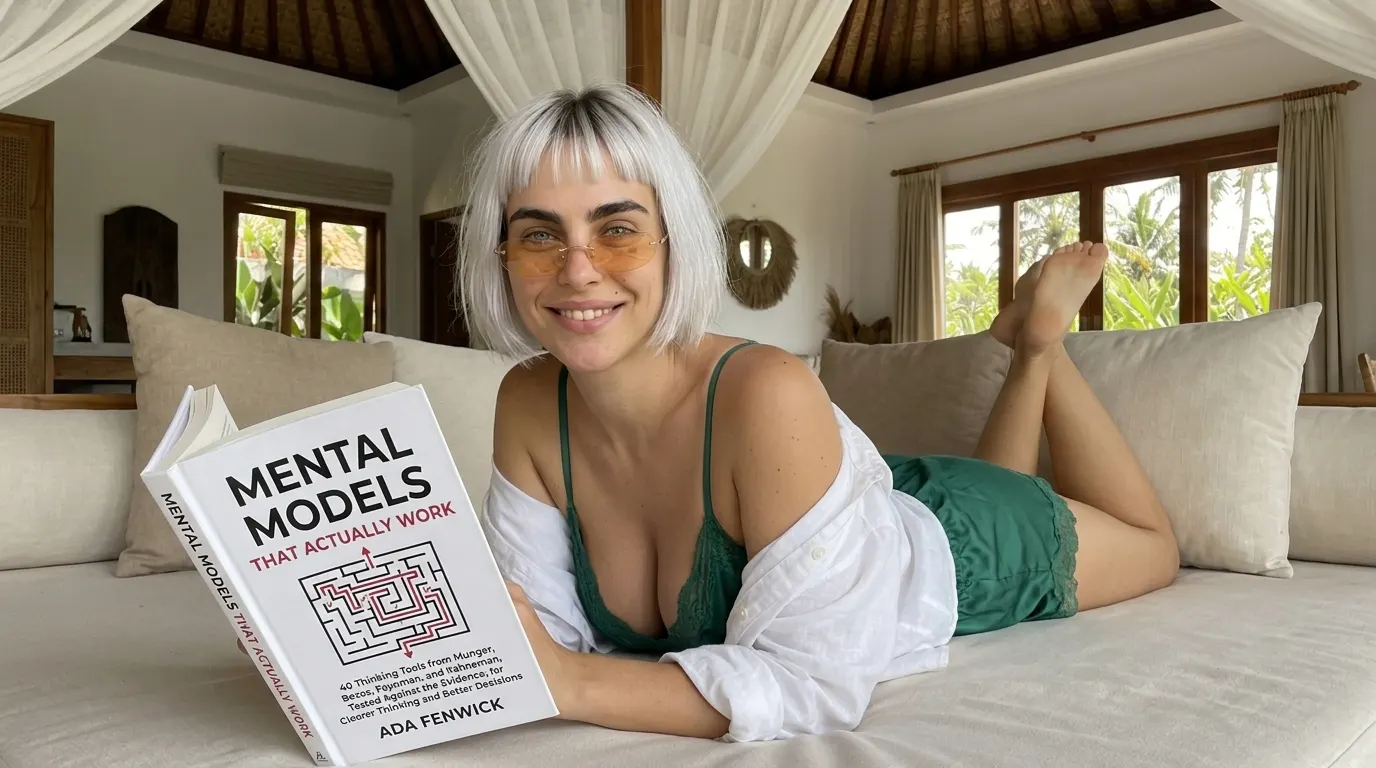
Why one more fact keeps feeling like the answer
Each new fact gives you a small hit of confidence. That is the trap. A 2008 study the book cites found that more information raised people's confidence faster than it raised how often they were right.
So the research feels useful. You feel you are closing in. But past a certain point, you are trading time for comfort.
The other trap is wanting the very best option. A 2006 study of 548 job seekers found that students who hunted hardest for the best job got higher starting pay. They were also less happy with what they took, and more stressed along the way. The paper is called "Doing better but feeling worse."
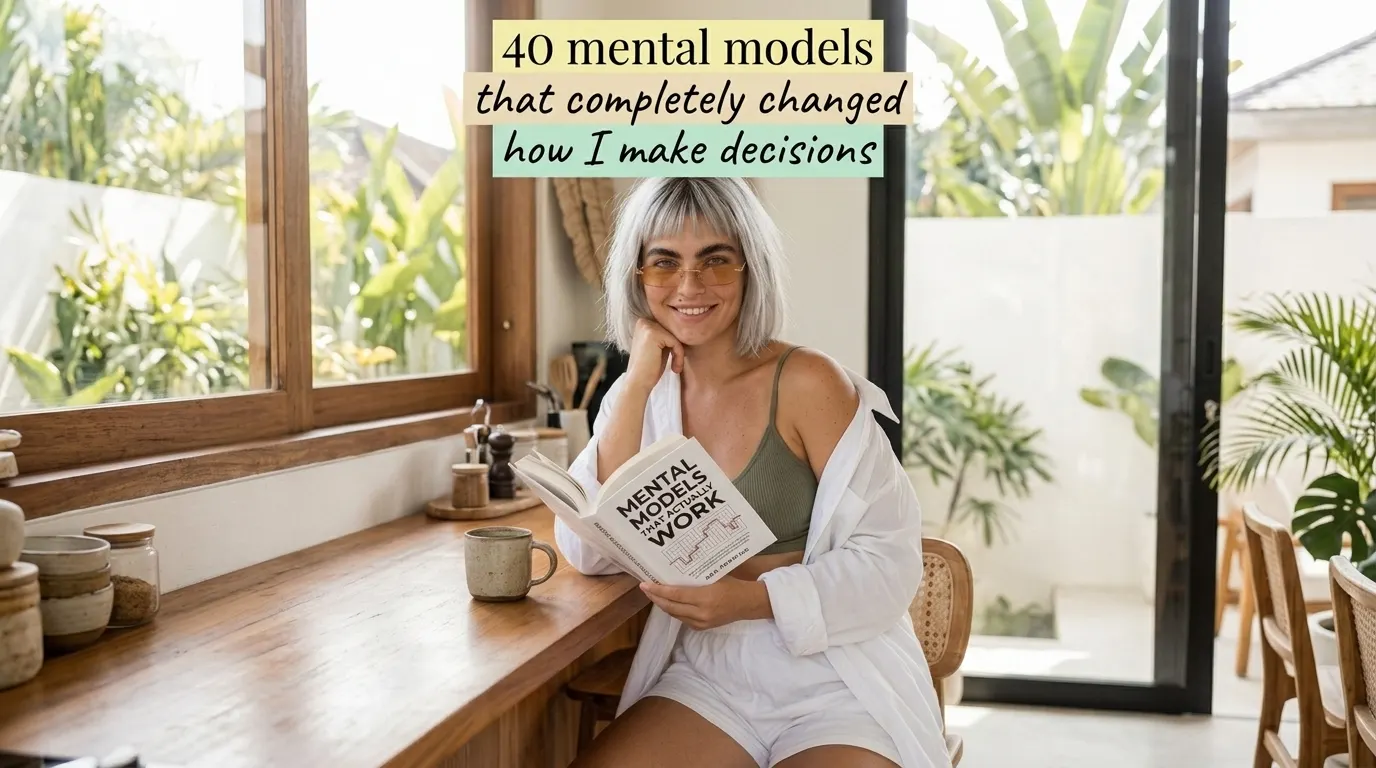
First, find out which kind of door this is
Not every big choice is a forever choice. Ask one plain question. If this goes wrong, can you undo it? Write how, how long it would take and roughly what it would cost.
If undoing it is cheap, it is a two-way door. Set a deadline this week and decide. Then write the first warning sign you would see if you were wrong, and the date you will look for it.
If undoing it is very costly, it is a one-way door. Those deserve real time. But "real time" still needs an edge. List the facts you wish you had. Mark each one: have it, can get it by Friday, or cannot get it soon. Cross out any fact that would not change your choice. What is left is your actual to-do list. The rest was worry.
We like that this sort is honest about itself. The book labels it STORY ONLY. It comes from one CEO's letter and has never been tested as a method. It is a rule of thumb, and a good one.
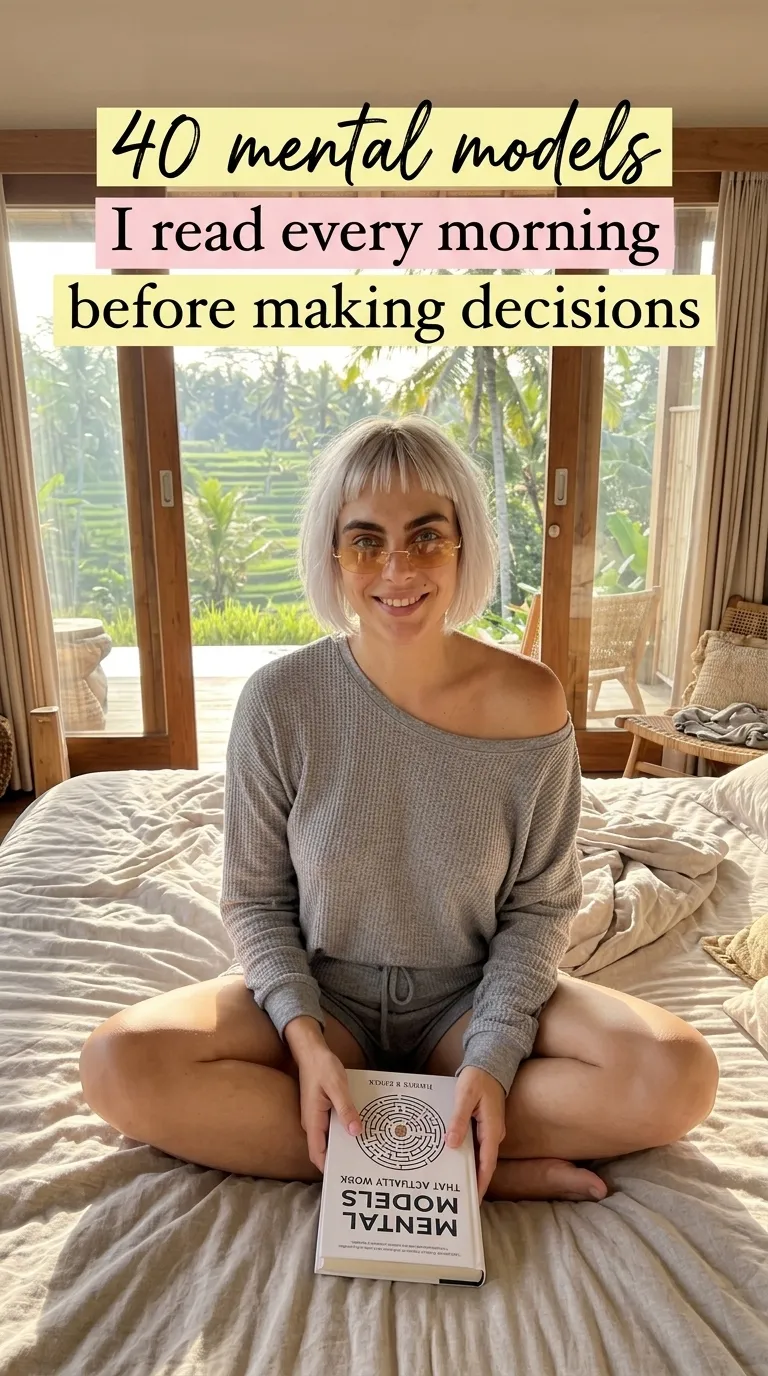
Set the bar before the options start talking
The second move works when you have too many choices, not too few. Before you look again, write three to five must-haves. A price ceiling. A distance. A feature. Then write how many options you will check, at most.
Take the first one that clears every bar. If none do, lower one bar a little and write down which one and why.
This idea is old. Herbert Simon named it "satisficing" in 1956. It does not mean settling. It means choosing a standard, then meeting it. The book is careful here too: nobody has shown in a trial that this makes people happier. But the pattern in the studies points that way.
When fear is doing most of the talking
A lot of overthinking is fear of choosing wrong. For a choice with a strong feeling attached, the book has a ten-minute card called 10/10/10. It carries a PROMISING badge.
- Write the decision and your two or three options at the top of a page.
- Draw three columns: 10 minutes, 10 months, 10 years.
- For each option, write one honest line in each column. How will you feel, and what will actually be different?
- Circle the strongest feeling on the page. Note which column it sits in.
- Ask: is that feeling still there in the 10-year column? If not, it is loud but short-lived. Weigh it, but do not let it vote alone.
- Check the 10-minute column once more for real costs, like a broken promise or a hurt friend. Those count even if they fade.
- Choose, and write one sentence on which column decided it.
No study has tested 10/10/10 itself. What has been tested is the idea under it. In seven studies published in 2015, Bruehlman-Senecal and Ayduk found that picturing the far future made a recent worry feel less upsetting. A 2014 study by Grossmann and Kross with 693 people found that stepping back from your own problem led to wiser reasoning.
After you choose, close the door
Many people find the doubt does not stop once they decide. That does not mean you chose wrong.
The book points to a 2002 study by Daniel Gilbert and Jane Ebert. Photography students picked one print to keep. Some were told the choice was final. Others could swap later. The ones who could swap liked their print less. Yet most people said they would rather keep the option open.
So for a choice you want to live with, like a home or a job, it can help to treat it as final on purpose. Stop rereading the list. Close the tabs. For a test at work that you can roll back, keep the door open and watch your warning sign instead.
The chapters that pick this up
This is the problem Mental Models That Actually Work was written for.
One-Way and Two-Way Doors gives you the door sort and a second card, Decide at "Enough," for the choice you keep putting off. It also explains what Bezos's 70 percent line does and does not say.
Good Enough: When to Stop Searching and Choose has the must-haves card and a stopping rule for options that come one at a time, like flats to rent.
Regret: Choosing Now So You Can Live With It Later has the 10/10/10 card for when a strong feeling is doing most of the talking. It helps you see which feelings fade by next month and which will still be there in ten years.
If the choice is a plan you are about to launch, our page on running a pre-mortem is the next step.
The book for this problem
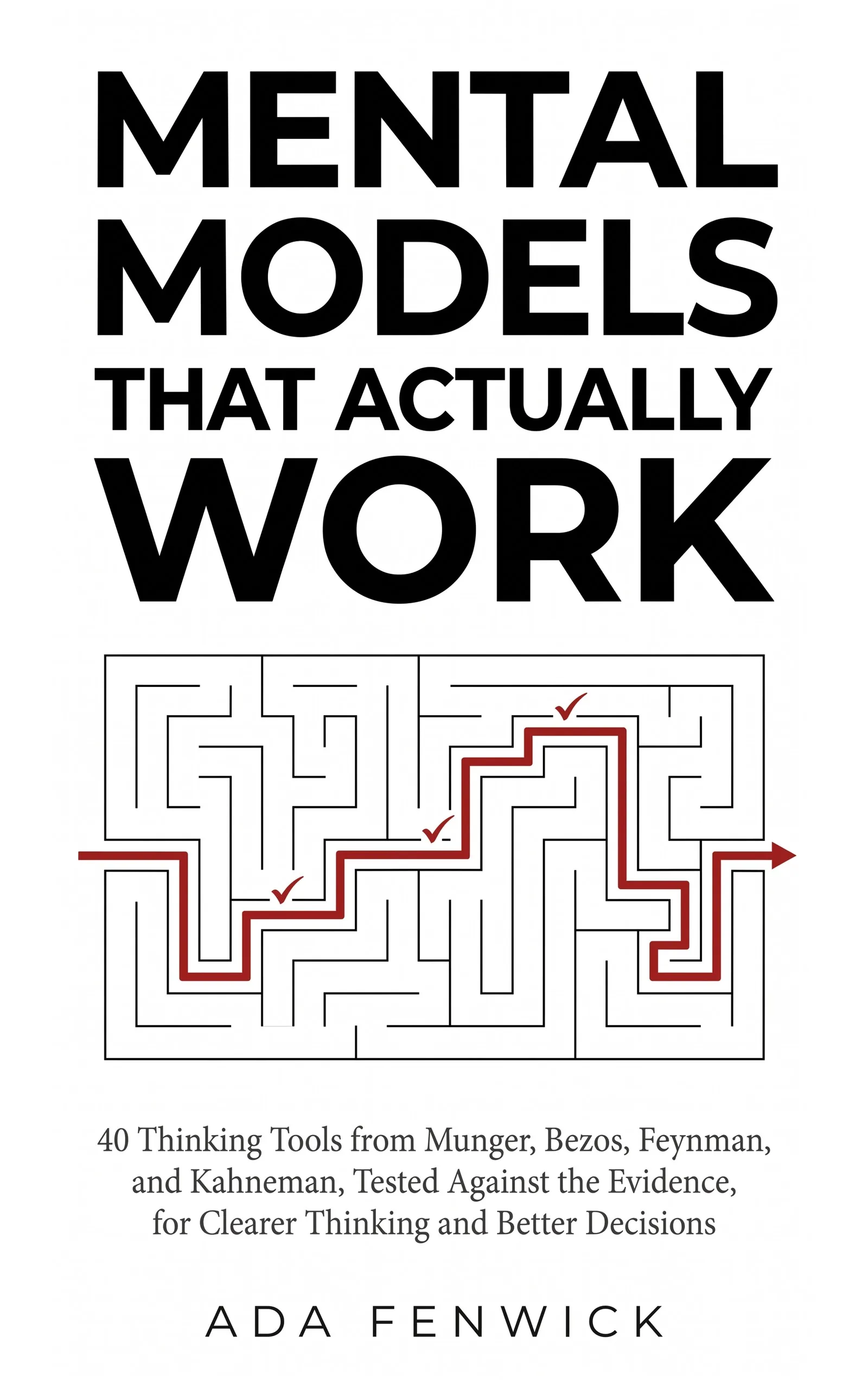
Mental Models That Actually Work
40 Thinking Tools from Munger, Bezos, Feynman, and Kahneman, Tested Against the Evidence, for Clearer Thinking and Better Decisions. By Ada Fenwick, 288 pages.
Where this problem is in the book:
- One-Way and Two-Way Doors
- Good Enough: When to Stop Searching and Choose
- Regret: Choosing Now So You Can Live With It Later
Links go to Amazon. ToolGenX publishes this book under a pen name and earns from every sale. Amazon sets the price and handles delivery and returns.
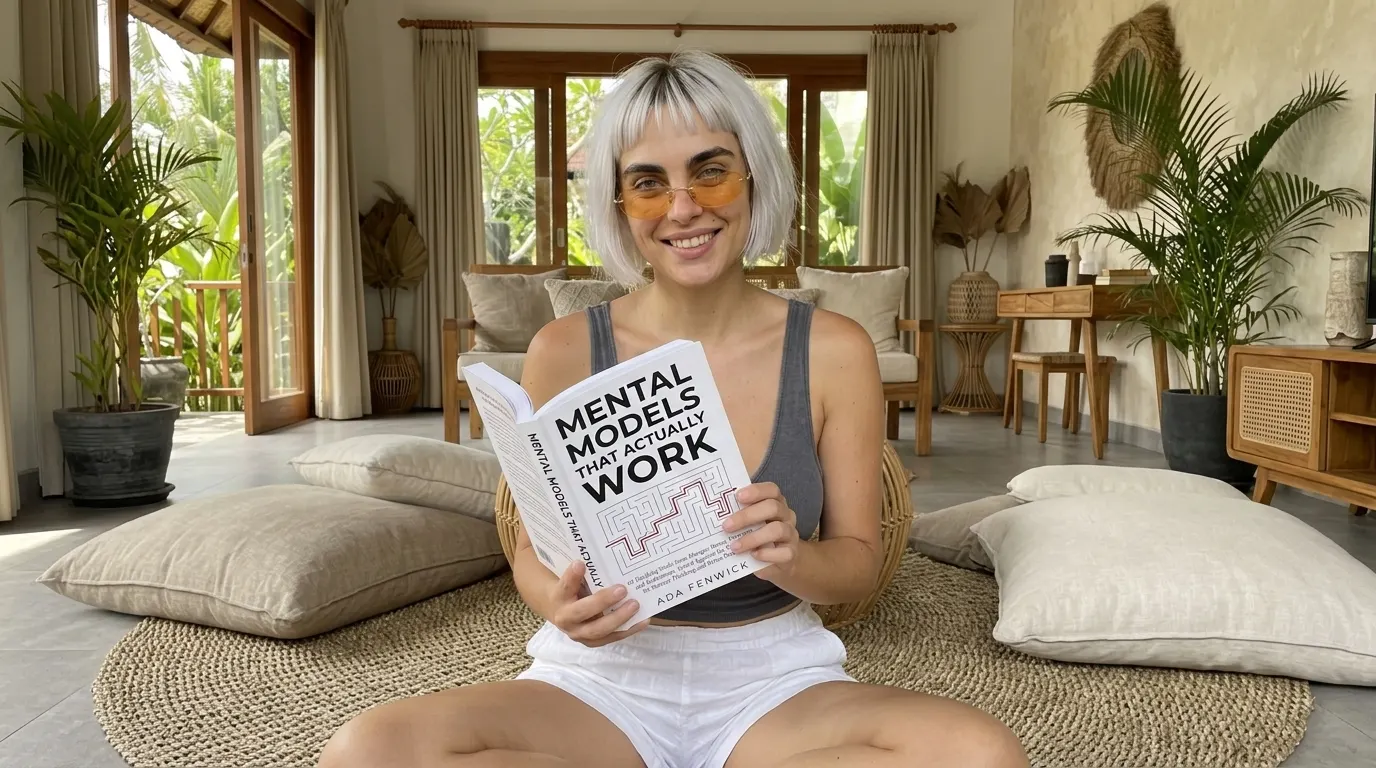
Is Mental Models That Actually Work the right book for you?
Yes, if
- You have reread the same pros and cons list for weeks
- You keep asking for one more opinion or one more report
- You want a clear point where you are allowed to stop and choose
Skip it if
- You want someone to pick the option for you
- Your choice is about money, health or law and you need a professional's view first
Fair doubts before you buy
Isn't careful thinking a good thing?
Yes, for the few choices you cannot undo. The trouble starts when the same heavy care spreads to everything. Bezos wrote that big firms fall into this trap and end up slow. The book helps you sort which choices deserve the weeks and which deserve ten minutes.
Won't I regret it if I rush?
Maybe. But the research on regret is less tidy than the slogans. In a 2023 study of about 2,600 people, long-term regrets split almost evenly between things done and things not done. The book's regret tool has you write both regrets, for jumping and for staying, and give them equal time.
Get Mental Models That Actually Work
Forty thinking tools, each traced to its source and labeled by how well it holds up, so you know which to use and when.
Links go to Amazon. ToolGenX publishes this book under a pen name and earns from every sale. Amazon sets the price and handles delivery and returns.
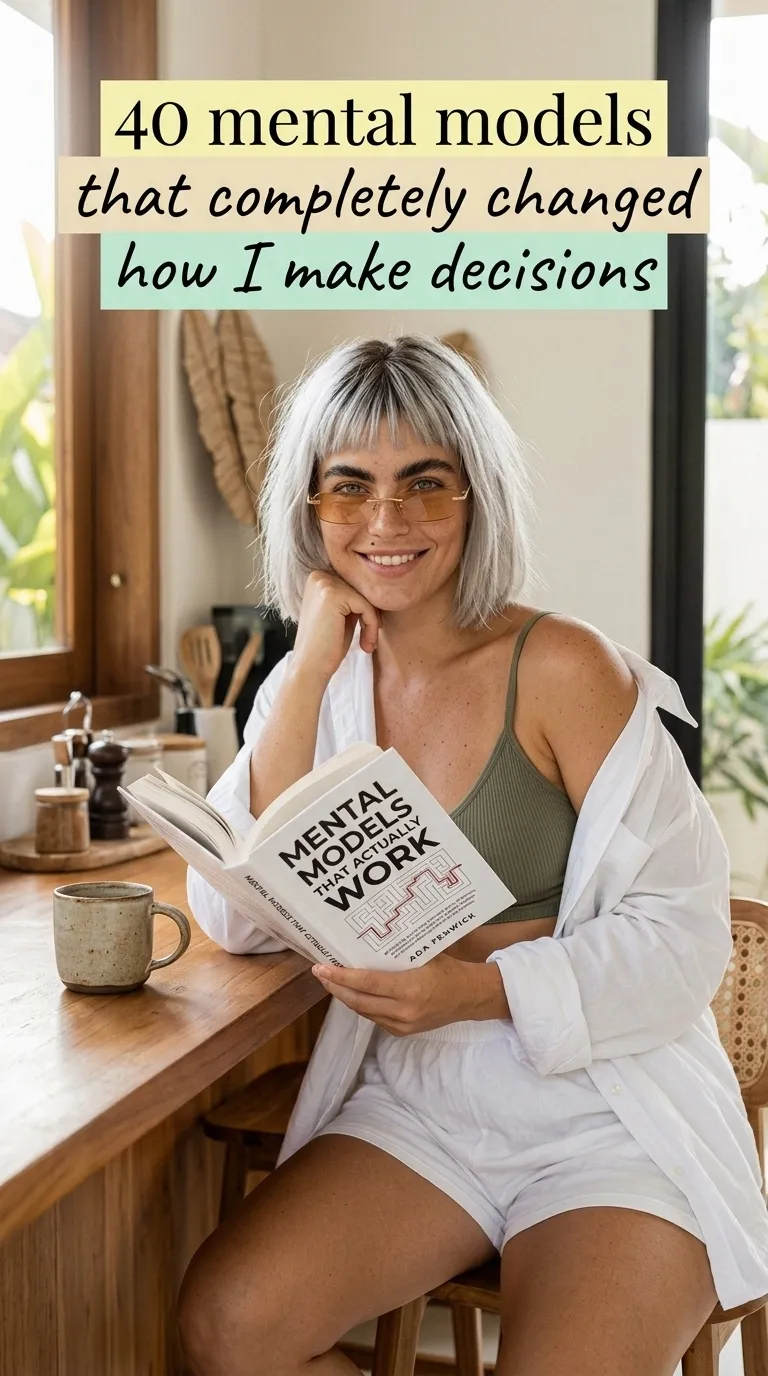
Questions people ask about this
- Why do I overthink big decisions?
- Often because every fact you gather makes you feel a bit surer, so gathering feels like progress. Research the book cites found that more information raised confidence more than it raised accuracy. The feeling of getting closer is real. The getting closer often is not.
- How much information do you need to make a decision?
- It depends on whether you can undo it. Bezos wrote that most choices should be made with around 70 percent of the facts you wish you had. The book is clear that this number was never tested. It is a way of saying sooner than feels comfortable, and it only makes sense for choices you can walk back.
- How do I stop going back and forth on a decision?
- Before you look at options again, write three to five must-haves and a limit on how many options you will check. Take the first one that meets every must-have. Then close the tabs and stop comparing after you choose.
- Is it normal to want the best option every time?
- Yes, and it has a cost. In a 2006 study of 548 job seekers, the ones who hunted hardest for the best job got about 20 percent higher starting pay but felt less happy with the jobs they took. The study shows a pattern, not proof that searching less makes you happier.
- What is a one-way door decision?
- It is a choice that is hard or very costly to undo, like a ten-year lease. A two-way door is one you can reverse cheaply. The idea comes from Jeff Bezos's 2015 letter to shareholders.
- Is it normal to keep doubting a decision after you make it?
- Yes. Leaving the choice open seems to feed the doubt. In a 2002 study by Daniel Gilbert and Jane Ebert, photography students who could swap their chosen print later liked it less than students whose choice was final. Yet most people said they would rather keep the option. For a personal choice, closing the door on purpose can help.
Related problems
- One-way vs two-way door decisions: which kind is the choice in front of you?
One-way vs two-way door decisions compared: what each means, how much care each deserves, and the catch about keeping doors open.
- How to make better decisions when you keep making the same kind of bad call
Want to make better decisions? Start with two tested questions, then keep a short written log so you can see your own patterns.
- The plan launches soon. Here is how to run a pre-mortem in 20 minutes
Launch coming up? Run a pre-mortem in 20 minutes with your team or 10 alone. Plain steps, plus the one fix most guides leave out.
- Everything inside Mental Models That Actually Work
Every chapter, who the book is for, and every problem it helps with.