Last updated
One-way vs two-way door decisions: which kind is the choice in front of you?
| Question | One-way door (Type 1) | Two-way door (Type 2) |
|---|---|---|
| What it means | Hard or nearly impossible to undo | Changeable and reversible |
| How to decide | Slowly and carefully, with time and people who disagree | Quickly, by one person or a small group |
| The test | Undoing it is impossible or very costly | Undoing it is cheap and quick |
| The usual mistake | Rushing it with a light process | Burying it under approvals and weeks of waiting |
| Bezos's warning | Firms that rush these go extinct before they get large | Too much care here brings slowness and less invention |
| Tool to pair with it | A pre-mortem before you commit | A deadline and an early warning sign |
| Example from the book | A ten-year lease on a second cafe | A new seasonal drink tested for two weeks |
What the two letters say, row by row
The table above comes from two letters. Jeff Bezos wrote the first for 2015. It was filed with the SEC on April 5, 2016. It holds the doors and the Type 1 and Type 2 labels. The second, for 2016, was filed in April 2017 and repeats the idea.
The top three rows define the doors. The rest show what goes wrong. Bezos warned about both errors, which is the part the slogan leaves out. Treat a two-way door like a one-way door, and you get slowness and less trying of new things. Treat a one-way door like a two-way door, and the damage can be permanent.
Note the "test" row. It is about cost, not importance. A two-way door can matter a lot. What makes it two-way is that a mistake is cheap to undo. A one-way door can look small, like an angry email to a client. What makes it one-way is that you cannot take it back.

Sort your week in five minutes
List every choice on your plate, big and small, one per line. For each, ask: if this goes wrong, can you undo it? Write how, how long it would take and roughly what it would cost.
Mark it 1 for one-way or 2 for two-way. If you are not sure, mark it 1 for now.
Every 2 gets a short deadline and a name: who can decide it alone. Every 1 gets real time on the calendar, the key facts and one or two people who will disagree.

For the two-way door you keep putting off
Many guides say "decide two-way doors fast" and stop there. The hard part is that you keep asking for one more report. The book has a ten-minute card for that, called Decide at "Enough." It carries a STORY ONLY badge.
- Confirm the door. Write how you would undo this choice if it went wrong. If you cannot, stop and treat it as one-way.
- List the facts you wish you had. Be specific: "last quarter's numbers," "a second quote."
- Mark each one: have, can get by Friday, or cannot get soon.
- For each missing fact, ask: would getting it likely change the choice? Cross out the ones that would not.
- If what is left is mostly "have," decide now. For anything you can get by Friday, set Friday as the deadline and decide then, no matter what.
- Write your early-warning sign: the first thing you would see if this was wrong, and the date you will look for it.
Why stop early? In a 2008 set of three experiments by Tsai, Klayman and Hastie, more information raised people's confidence faster than it raised their accuracy, according to summaries of the paper. Past a point, waiting buys comfort, not better choices. Never use this card on a one-way door.
Two cafe owners, two different doors
Picture two people who each own a small cafe. One is picking a new seasonal drink. She can test it for two weeks and drop it if nobody orders it. Waiting a month for a survey would cost her more than a bad guess.
The other is deciding whether to sign a ten-year lease on a second shop. No early sign will let him walk that back cheaply. For him, an extra month of research may be the best money he spends all year.
Same kind of business. Same urge to move fast. Two different doors.

The catch nobody mentions
Here is what we like: the book does not stop at the slogan. There is no experiment that tests this sort as a way to decide, so it carries a STORY ONLY badge. It is a sensible rule from one CEO.
There is one study that adds a twist. In 2002, photography students chose a print to keep. Some were told the choice was final. Others could swap later. The ones who could swap liked their print less. Yet most people said they would rather keep the door open.
For a pricing test at work, speed still wins. But for things you want to enjoy, a home or a gift or a promise to a person, leaving the door open can quietly cost you. Sometimes the wise move is to close a two-way door on purpose and stop looking back.
Where the book takes the doors
This is the problem Mental Models That Actually Work was written for.
One-Way and Two-Way Doors has the Sort the Door card and a second one, Decide at "Enough," for the reversible choice you keep putting off. It also reads the 70 percent line closely: "around 70%," for "most decisions," of the facts "you wish you had." No study has tested that number.
The Pre-Mortem: Imagine It Failed, Then Ask Why is the tool to pair with a one-way door before you walk through it. Our page on running a pre-mortem has the steps.
Good Enough: When to Stop Searching and Choose helps when a two-way door has too many options and you cannot stop comparing.
The book for this problem
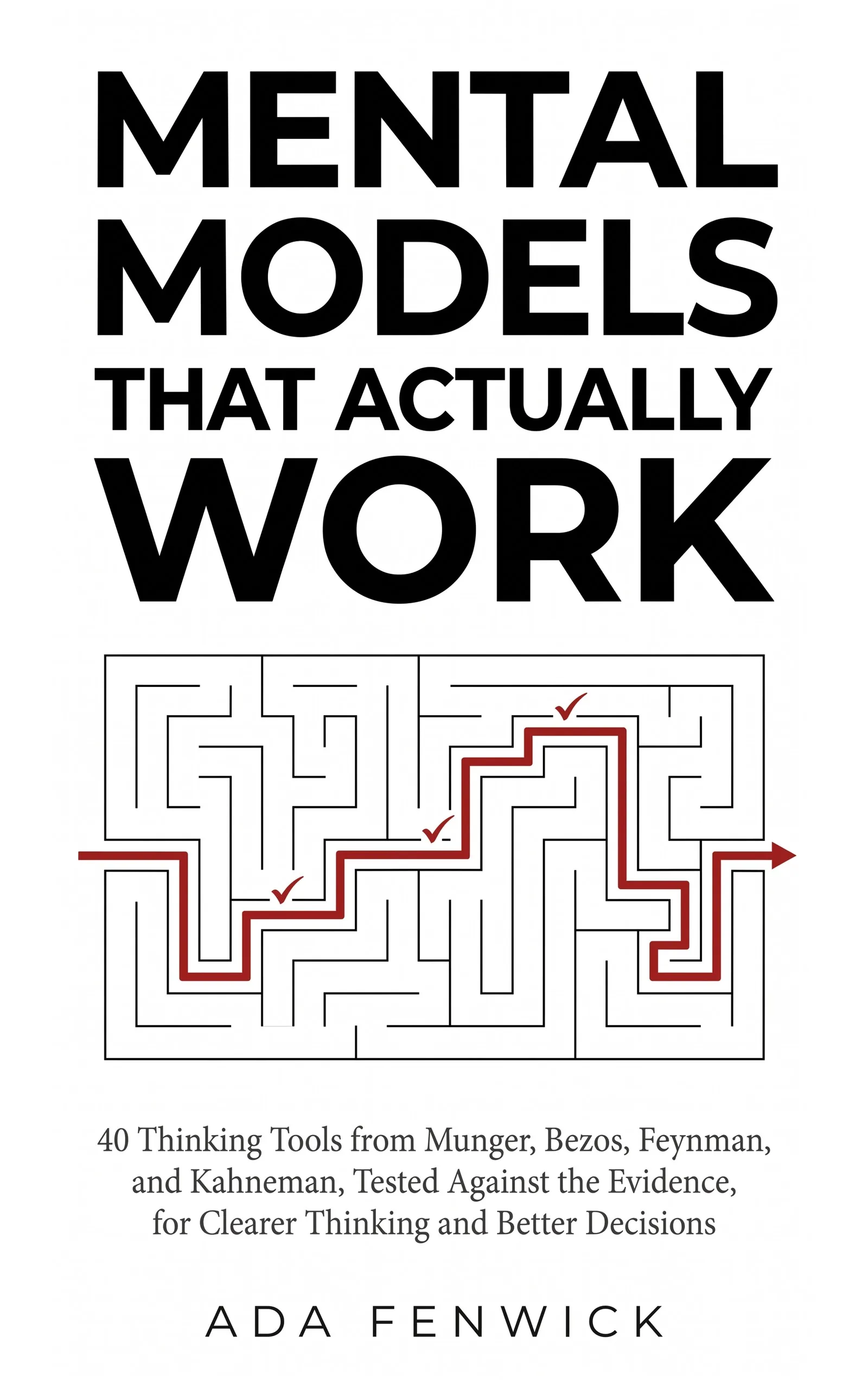
Mental Models That Actually Work
40 Thinking Tools from Munger, Bezos, Feynman, and Kahneman, Tested Against the Evidence, for Clearer Thinking and Better Decisions. By Ada Fenwick, 288 pages.
Where this problem is in the book:
- One-Way and Two-Way Doors
- The Pre-Mortem: Imagine It Failed, Then Ask Why
- Good Enough: When to Stop Searching and Choose
Links go to Amazon. ToolGenX publishes this book under a pen name and earns from every sale. Amazon sets the price and handles delivery and returns.
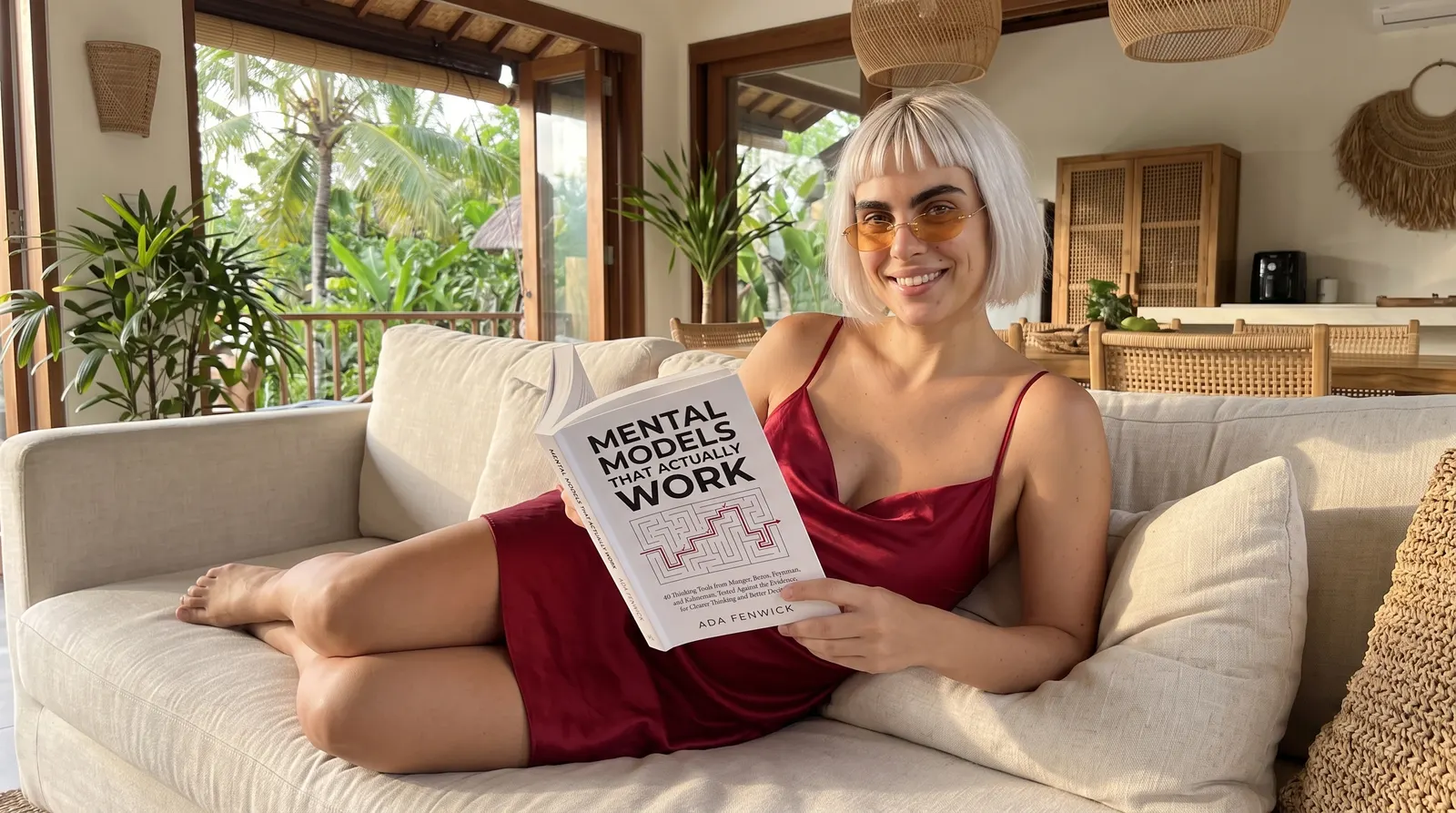
Is Mental Models That Actually Work the right book for you?
Yes, if
- You treat every choice with the same heavy care and it slows you down
- Your team waits weeks for approvals on small, reversible changes
- You want to know what Bezos actually wrote, not the slide version
Skip it if
- You want proof the method works (it has never been tested as one)
- You need help with a legal or money choice that a professional should look at
Fair doubts before you buy
Isn't this just common sense?
Mostly, and that is why it is easy to skip. The book adds what the letter really says, a caution from research on choices you can change, and a five-minute card that sorts your whole week of decisions.
Bezos ran a giant company. Does this apply to me?
The letter was written for a company, but the sort works on any list of choices. The book shows it on a cafe owner, a small team and personal choices like a home or a gift, where the advice changes a little.
Get Mental Models That Actually Work
Forty thinking tools, each traced to its source and labeled by how well it holds up, so you know which to use and when.
Links go to Amazon. ToolGenX publishes this book under a pen name and earns from every sale. Amazon sets the price and handles delivery and returns.
Questions people ask about this
- What is a one-way door decision?
- It is a choice you cannot easily walk back. Bezos wrote that if you walk through and do not like what you see, you cannot get back to where you were. He said these must be made slowly and with care, and called them Type 1.
- What is a two-way door decision?
- It is a choice that is cheap and quick to reverse. Bezos wrote that most decisions are like this, and that they should be made fast by people with good judgment or small groups. He called them Type 2.
- Which letter did Bezos write about one-way and two-way doors?
- His 2015 letter to shareholders, filed with the SEC on April 5, 2016. The 2016 letter, filed in April 2017, repeats the idea and adds the line about deciding with about 70 percent of the facts you wish you had.
- Is Type 1 the one-way door or the two-way door?
- Type 1 is the one-way door, the choice that is hard to undo. Type 2 is the two-way door. Writers often swap them by mistake.
- Should I always keep my options open?
- Not always. In a 2002 study, photography students who could swap their chosen print later liked it less than students whose choice was final. For things you want to enjoy, like a home or a gift, closing the door on purpose can help.
- What is the Bezos 70 percent rule?
- In his 2016 letter, Bezos wrote that most decisions should probably be made with somewhere around 70 percent of the information you wish you had. No study has tested that number. It is often mixed up with a separate 40 to 70 rule credited to Colin Powell, whose exact original wording is unconfirmed. Neither number has been tested.
Related problems
- You keep overthinking a big decision. Is something wrong with you?
Stuck overthinking a big decision? Sort it by whether you can undo it, then set a bar and a stop date so more research stops buying comfort.
- The plan launches soon. Here is how to run a pre-mortem in 20 minutes
Launch coming up? Run a pre-mortem in 20 minutes with your team or 10 alone. Plain steps, plus the one fix most guides leave out.
- How to make better decisions when you keep making the same kind of bad call
Want to make better decisions? Start with two tested questions, then keep a short written log so you can see your own patterns.
- Which mental models actually work, and which are just famous quotes?
Which mental models actually work? See which tools have real studies behind them, and which famous quotes, like Munger's incentive line, have no source.
- Everything inside Mental Models That Actually Work
Every chapter, who the book is for, and every problem it helps with.