// book · by İsmail Günaydın
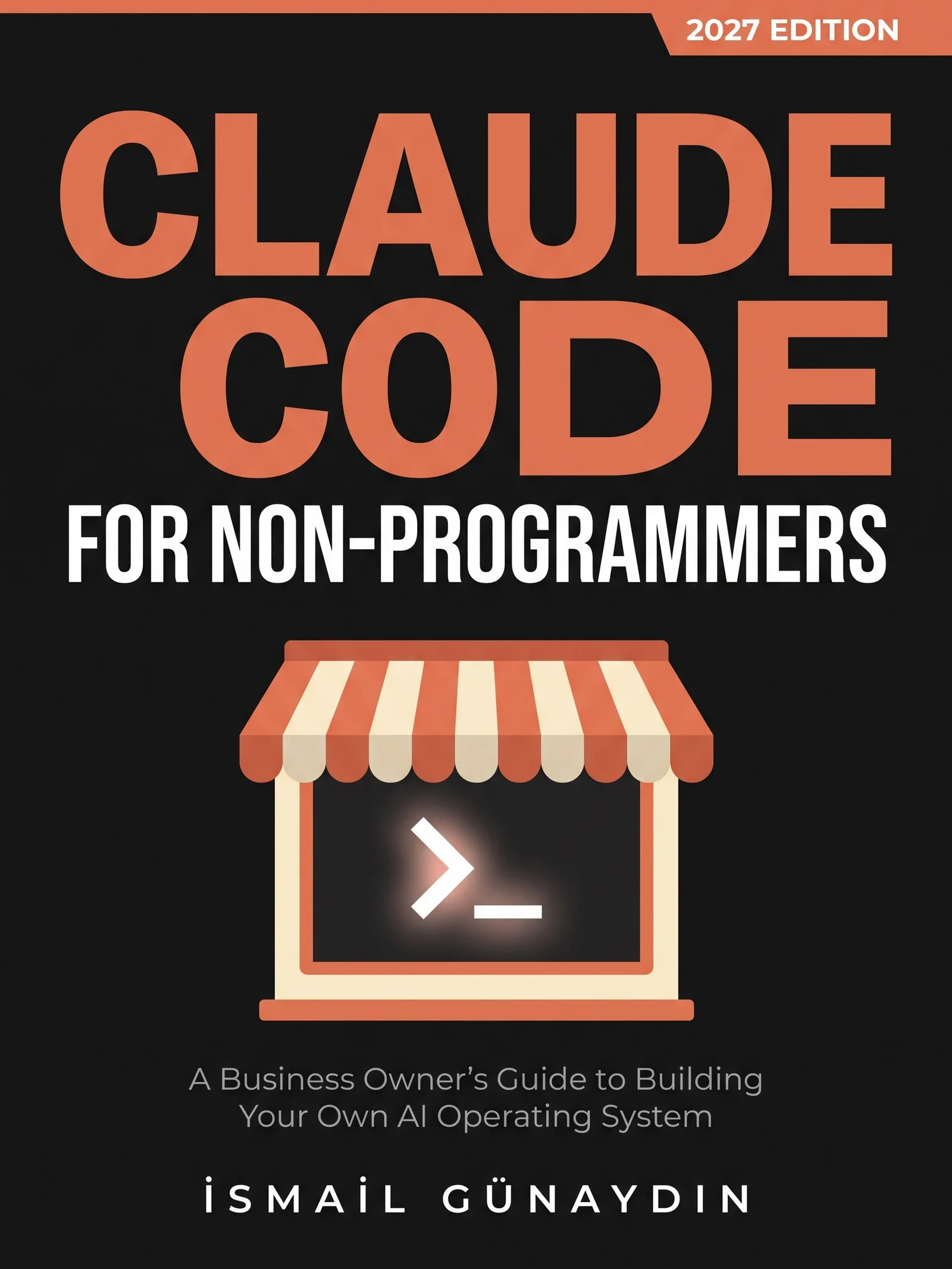
Claude Code for Non-Programmers
A Business Owner's Guide to Building Your Own AI Operating System (2027 Edition)
A business owner who has never opened a terminal learns to give Claude Code real jobs on real files, safely, from one working system and the parts of it that broke.
Links go to Amazon. I wrote this book and earn a royalty on every sale. Amazon sets the price and handles delivery and returns.
This book is independent and is not affiliated with or endorsed by Anthropic.
- author
- İsmail Günaydın
- length
- 355 pages (paperback)
- formats
- Kindle, paperback
- sold by
- Amazon
This book is for you if
- You pay for Claude, use the chat window, and want it to work on your files instead of only talking
- You run a few websites or a shop from spreadsheets and want weekly jobs to run on their own
- The terminal scares you, and so does the idea of an AI deleting something
- You want a repeatable weekly report or quote without hiring a developer
Skip it if
- You are a software developer (the official documentation serves you better)
- You want to become a programmer
// problems this book helps with
Start from your problem
Each page below answers one real question in plain words, then shows where Claude Code for Non-Programmers goes further.
- The AI agent's report looks perfect. Should you trust it before you act?
Agent reports sound sure and are often wrong both ways. Why it happens, where invented facts hide, and a three-step check before you fix anything.
- Claude Code changed files it shouldn't have. What to do right now
Files changed that you never approved. Stop it, rewind this session, restore from git, and what no undo button can bring back. Plain steps first.
- Claude Code forgets everything each session. How do you make it remember?
You told it about the new supplier last week and today it uses the old one. Why each session starts fresh, how memory notes work, and the traps to avoid.
- Claude Code vs the Claude chat window: which one should you use for your business?
The chat window talks. Claude Code works on your files. A side-by-side table, which jobs suit each one, and how to choose for a small business.
- How to write a CLAUDE.md file for a small business, even if you don't code
Stop explaining the same rules every Monday. What a CLAUDE.md file is, what goes in it for a small shop, how long it should be and how to check it loaded.
- Can you paste an API key or client data into Claude Code? Where secrets go instead
A pasted key is saved in a plain text file. Where keys and client records go instead, the deny rules that lock them, and what to do after a leak.
- How to make Claude Code ask before it changes your files
New Claude Code sessions start in auto mode and don't ask. The six modes in one table, how to make Manual your default, and the locks no mode can skip.
- How to run Claude Code on a schedule, and know the job actually ran
Four ways to schedule Claude Code compared, what each needs to stay on, and the watcher that catches jobs that die without a word.
- Scared of the terminal? Here is why one wrong key won't break your computer
The black window looks like one typo could break things. It can't. What the terminal is, the four errors most people hit, and a safe first session.
- What is Claude Code, and can you use it if you don't write code?
Claude Code is Claude with hands: it works on the files in a folder. What it can reach, what it can't, and a safe first job for a non-coder.
A book about the harness, not the brain
Most guides to Claude Code are written for developers. This one is written for the person who runs a shop, a service business or a handful of websites, pays for Claude, and has the feeling it could do far more than answer questions.
The chat window and Claude Code share the same brain. What changes is everything around it: the tools, the rules about what it may touch, and what it gets to see. The documentation calls that the harness. It is the part you control, so it is what most of this book covers.
The book is independent and is not affiliated with Anthropic. Every feature claim was checked against the official documentation in October 2026, and when a detail is likely to change, the page says so.
Six parts in every chapter
You don't have to read it in order. You do have to read it with Claude Code open next to it.
Every chapter has the same six parts. It opens with the idea explained the way you would explain it to a smart ten-year-old, then says where that simple picture stops being true. Then comes how it really works, a Build It section with every file printed in full, a real event from my own business, a When It Breaks table and a one-page cheat sheet to tape by your screen.
The real events are the part I would not cut. A review agent told in capital letters not to edit anything still moved my files. Eight of nine IDs on one of my sites turned out to be invented. A scheduled briefing crashed for 44 days without a word. Each story ends with the fix I now use.
What you build in 30 days
The last part of the book puts it together in a set order, like building a snowman. Week 1 is the base: install, set the mode, write the instruction sheet, add the first lock and run your first job on copies. Week 2 is the middle: memory, an identity for your assistant and a backup.
Week 3 is the head: your first skill, one button you press yourself, a helper agent and the habit of checking its reports. Week 4 is the arms and the hat: a scheduled job, the job that watches the jobs, one connector to another app and a safety pass.
Every day ends with a check you can see. If a day fails, you redo it before moving on, because a broken base under a clever skill gives you a broken skill.
What this book will not do
It won't teach you to program, and it won't replace the official documentation. Claude Code changes almost every week, and the docs change with it.
It won't tell you a tool is safe because it is clever. Auto mode reduces prompts, and the docs say it does not promise safety. So the book puts a hard lock in place in the first week, before anything else.
And it won't give you numbers it can't back. There is no official hallucination rate in the Claude Code docs, so the book doesn't print one. What it can show you is one person running a real business on these tools for months, and what happened, including the parts that went wrong.
What is inside
- A first session in about 30 minutes, run on copies of your files in a practice folder
- The six permission modes in plain words, and how to make Claude ask before it changes anything
- A CLAUDE.md template for a small shop, plus a three-line check that it describes the right business
- Memory notes, skills and helper agents, each with a template you can copy
- Scheduled jobs that run while you sleep, and a watcher that catches the ones that die quietly
- Where keys and client data go instead of a prompt, and what to do the day one leaks
- A 30-day build plan, one layer at a time, with a check at the end of every day
Chapters
- 01How to Read This Book
- 02The Ten-Year-Old Rule
- 03A Note on Safety
- 04What Claude Code Actually Is
- 05The Terminal Without Fear
- 06Permissions and Modes
- 07The Context Window
- 08CLAUDE.md: The Instruction Sheet
- 09Memory That Survives
- 10Giving Your AI a Personality and a Conscience
- 11Skills: Teaching It a Job Once
- 12Slash Commands and Plugins
- 13A Team of Agents
- 14Automation
- 15Connecting the World
- 16Real Business Systems
- 17Safety and Failure
- 18Your Operating System
- 19Master Cheat Sheet
- 20Glossary for Humans
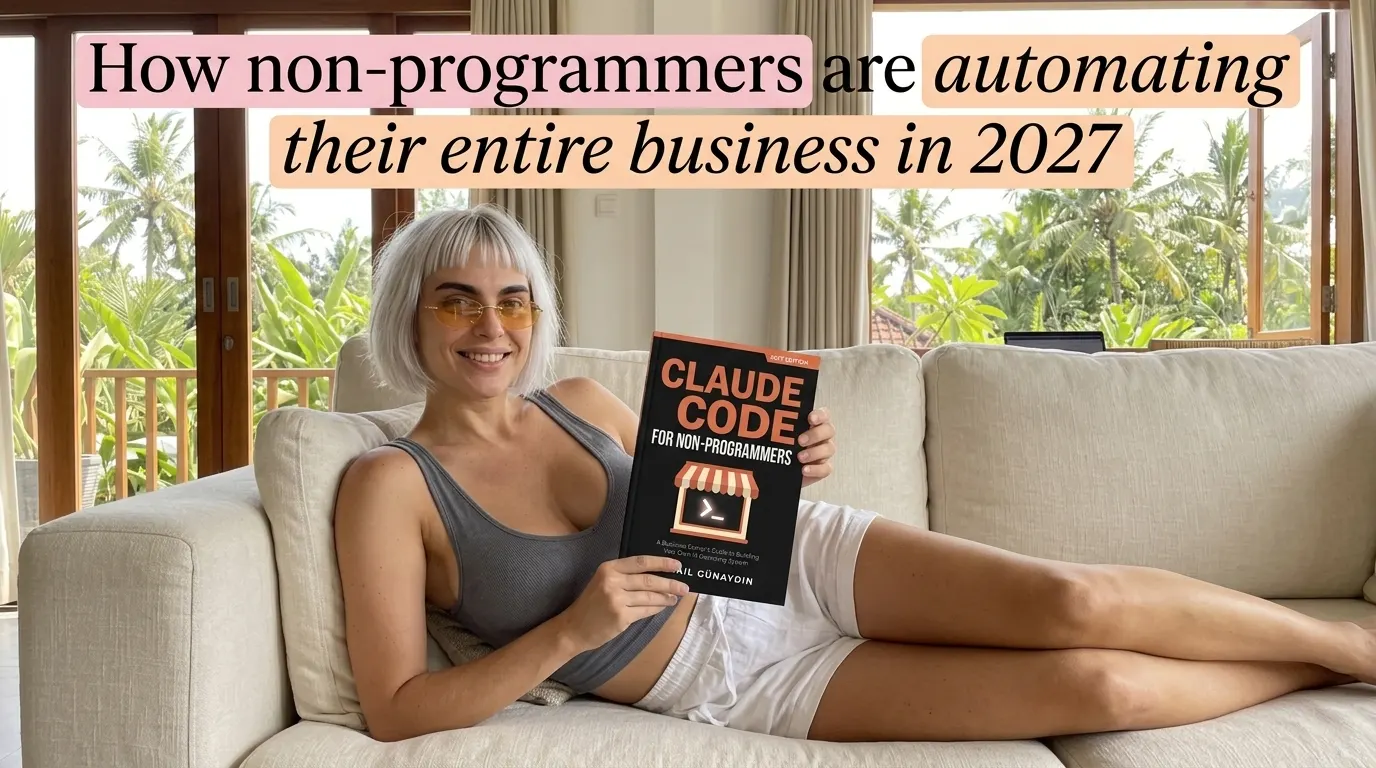
The paperback, up close








Questions about Claude Code for Non-Programmers
- Do I need to know how to code to read this book?
- No. The book is written for someone who has never opened a terminal on purpose. You type a few exact commands to install and start Claude Code. After that you give it jobs in plain English.
- Is this book affiliated with Anthropic?
- No. The book is independent and is not affiliated with or endorsed by Anthropic. Claude is a trademark of Anthropic. Every feature claim was checked against Anthropic's official documentation in October 2026.
- Will the book go out of date as Claude Code changes?
- Some details will. This is the 2027 Edition, checked against the official docs and changelog in October 2026. When a menu name, default or model name is likely to change, the book says so, and a page at the back lists what changed in this edition.
- Are the templates in the book available as files?
- Yes. Every file printed in the book is also in a free online folder on GitHub, with no email sign-up and no paywall. The folders follow the parts of the book.
- Who is this book not for?
- Software developers, who are better served by the official documentation, and anyone who wants to become a programmer. The pace is set for a business owner, not a coder.
Get Claude Code for Non-Programmers
A business owner who has never opened a terminal can give Claude real jobs on real files, safely, using one working system including the parts that broke.
Links go to Amazon. I wrote this book and earn a royalty on every sale. Amazon sets the price and handles delivery and returns.