Last updated
Stuck on a problem and your brain has stopped working? Do this in the next hour.
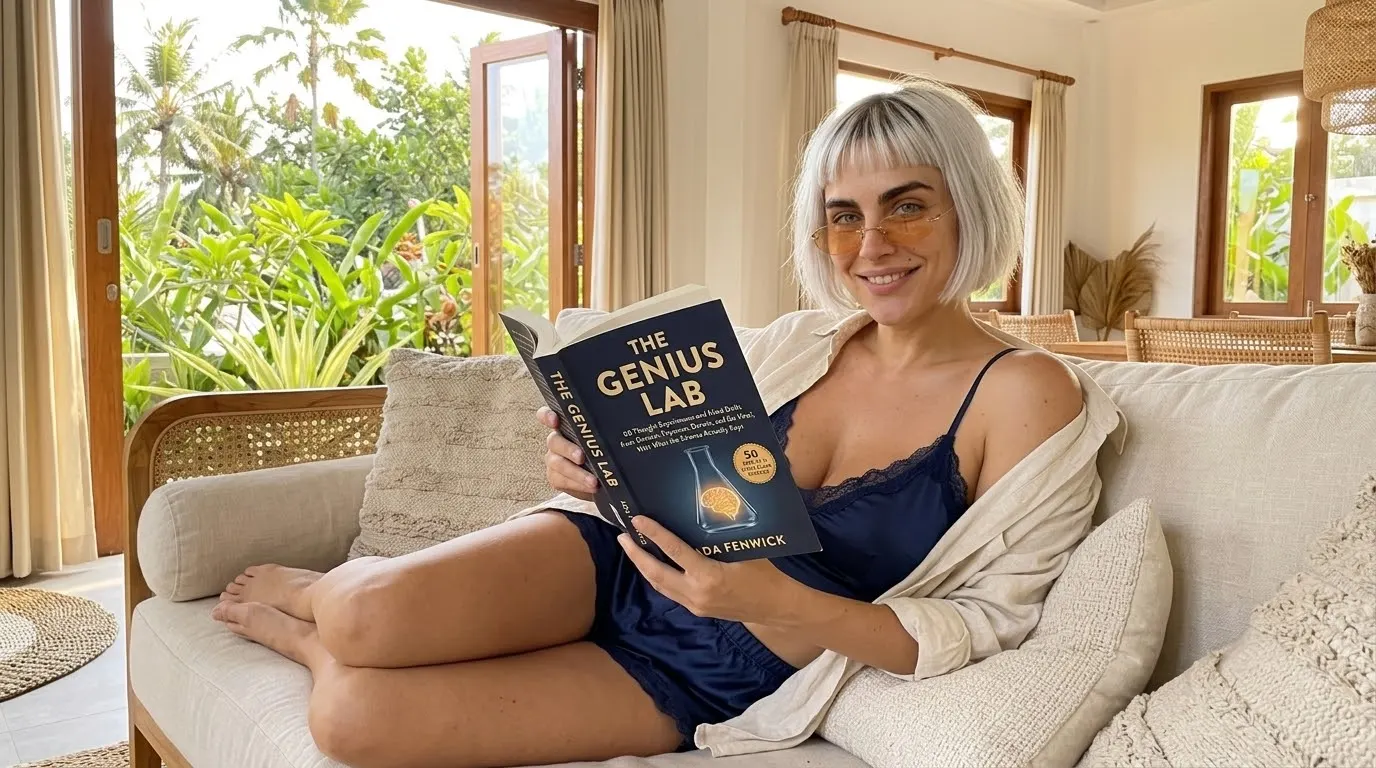
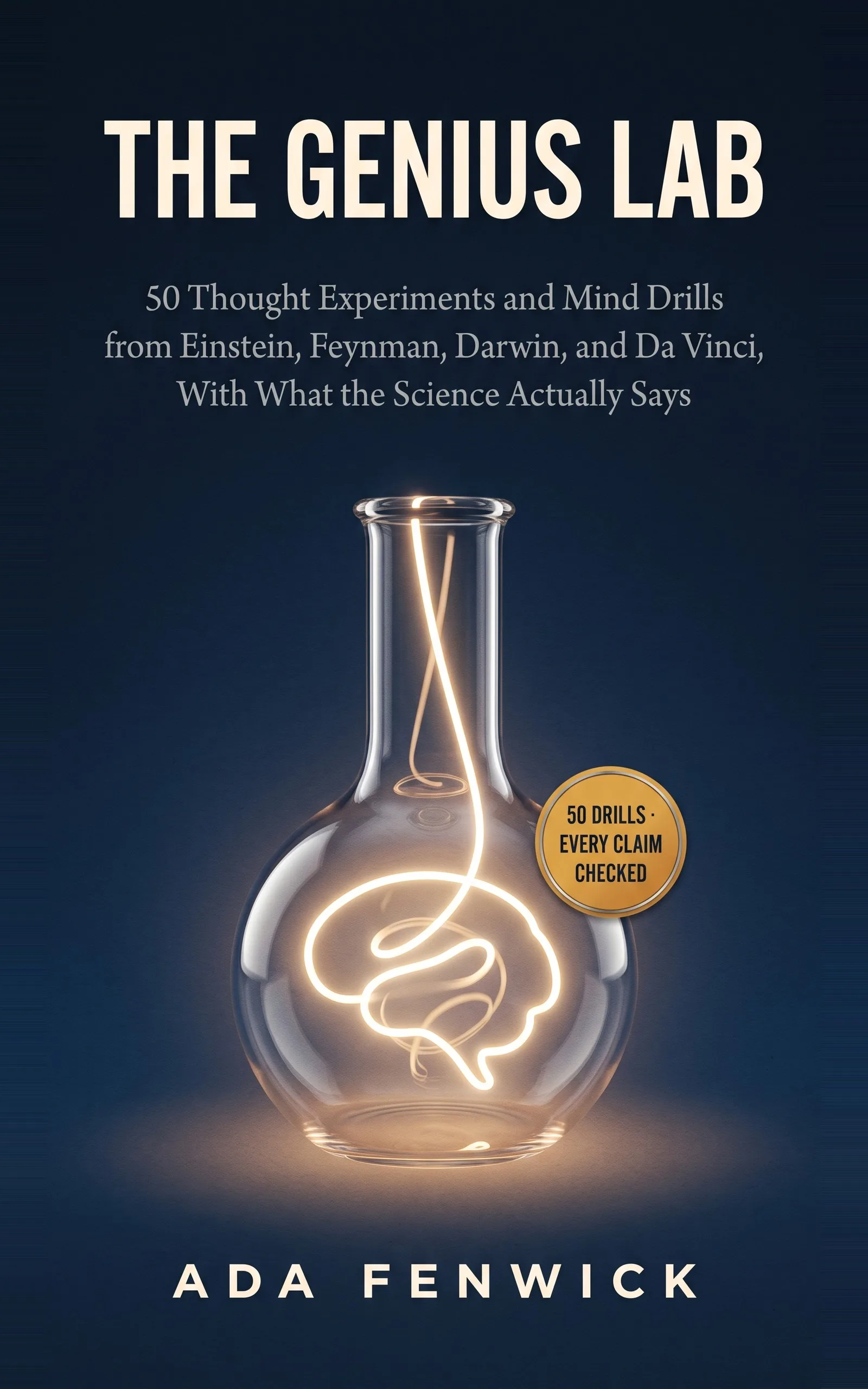
The book for this problem
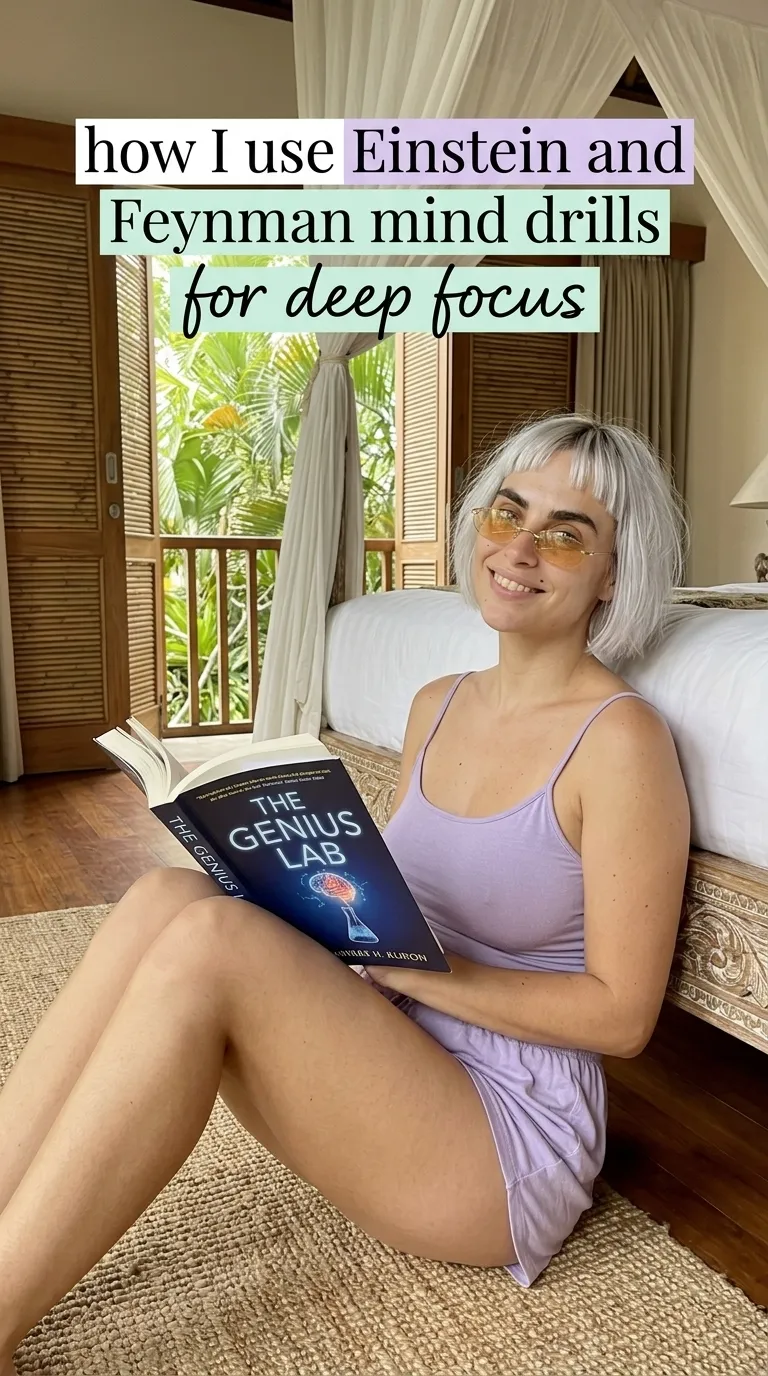
The Genius Lab
50 Thought Experiments and Mind Drills from Einstein, Feynman, Darwin, and Da Vinci, With What the Science Actually Says. By Ada Fenwick, 233 pages.
Where this problem is in the book:
- Poincaré: The Answer on the Bus Step
- Dalí's Key and Edison's Legend
- Einstein: Chasing the Light
Links go to Amazon. ToolGenX publishes this book under a pen name and earns from every sale. Amazon sets the price and handles delivery and returns.
The next 50 minutes, step by step
Stop staring. Staring is not working. Here is what to do instead.
- Load (25 minutes). Set a timer. Work on the problem with full effort. Write down what you tried, what failed and what you still do not know. You are not trying to solve it yet. You are filling your head with it.
- Write the question (1 minute). On a fresh page, write the one question you most need answered. Keep it to one line. "How can three projects fit into one week?"
- Walk away (15 to 20 minutes). Do something easy and physical. Walk around the block. Wash the dishes. Water the plants. No phone, no podcast, no TV. Let your mind go where it likes, even away from the problem.
- Return (10 minutes). Sit down. Read your one question. Work again, with the timer on.
- Check. Did anything change? A new idea, a new angle, or just less stress? Write one line.
If an idea shows up on the walk, write it down in two words and keep walking.

Why the phone break made it worse
You did take a break. You opened your phone, scrolled for twenty minutes and came back blank. So now you think breaks are a myth.
They are not. That break just was not a break. Your mind spent it chasing new things. The research behind this routine points to a light task, one that keeps your hands busy and leaves your thinking free.
This idea has a name: incubation. It just means you set a problem down for a while and then come back to it. In 2009, two researchers pooled the results of 117 studies on incubation with 3,606 people. In 85 of those studies, the break helped people solve the problem. That is why the book gives this drill its SOLID badge.
Two details matter. The break worked better when people had spent longer on the problem first. And it helped most with open problems, the kind with many good answers.
The answer on the bus step
In 1908 the mathematician Henri Poincaré wrote down how one of his big ideas arrived. He had worked on a hard problem for a long time. Then he went on a field trip and forgot about it. As he stepped onto a bus, the answer came.
He did not treat it as magic. He went home and checked it. Later, stuck on a new problem, he went to the seaside for a few days. The answer came again, on a walk.
Work, break, check. Most of us skip the first step or the last one. Then we wonder why breaks do not help.
Einstein had his own version. His son said that when his father hit a hard spot, he would turn to music. Stepping into something you enjoy is the same move.

Does a walk really help you get unstuck?
Most advice for creative block says go for a walk. There is a study behind that one.
In 2014, two Stanford researchers, Marily Oppezzo and Daniel Schwartz, ran four experiments on walking and ideas. In the first, 48 people thought up new uses for an everyday object, once sitting and once walking on a treadmill facing a blank wall. When walking, 81 percent of them came up with more ideas. Walking barely helped on tasks with one right answer.
The book gives this its own drill, the Thinking Walk, with a PROMISING badge. It is promising rather than solid because all four experiments come from one lab and mostly used college students.
- Write your problem in one line, then add: "What are all the ways to approach this?"
- Walk at an easy pace, slow enough to hold a chat. Not a workout.
- Do not try to solve it. Each time an idea shows up, say it into your phone's voice recorder or jot two words down. More ideas beat better ideas here.
- After fifteen minutes, stop and look at the list.
- Back at your desk, sitting down, pick the best one.
Notice the split. You walk to come up with ideas and sit to choose. If a health condition limits your walking, ask your doctor what kind of movement is right for you.

What about sleeping on it?
People often say to sleep on a problem. The book is careful here. The strongest sleep finding is about memory: many lab studies show that sleep after learning helps you keep facts and words. That is not the same as solving a stuck problem overnight.
So if your deadline is tomorrow, a night's sleep will not hurt and may help you remember what you worked on. Just do the hard load first, the same as with the break. For ideas that come right at the edge of sleep, see the next section.

If the break makes you sleepy
Some people drift off when they rest. That can help too, if you stay in the lightest stage of sleep. A 2021 study at the Paris Brain Institute found that people who spent at least 15 seconds in that light stage were about three times as likely to spot a hidden shortcut in a task. People who slid into deeper sleep lost the benefit. There are rules for trying this safely, and we put them on the nap page.
More drills for the next time you get stuck
This is the problem The Genius Lab was written for. The routine above is one of fifty drills in the book, and one of the few with a SOLID badge.
Poincaré: The Answer on the Bus Step gives you the full Loaded Break, plus a second drill called Catch, Then Check. That one helps you catch ideas before they fade and test them before you trust them.
Dalí's Key and Edison's Legend covers the edge-of-sleep nap, the study behind it and the stop rules.
Einstein: Chasing the Light gives you ways to push a stuck problem to its limit, so you can find the spot where your thinking breaks.
Every drill tells you how strong the evidence is, so you know which ones to lean on when the clock is running.

Is The Genius Lab the right book for you?
Yes, if
- You have been staring at the same problem for hours and it is getting worse
- Your break is usually your phone, and you come back more tired
- You want a method with a study behind it, not a pep talk
Skip it if
- You need the one right answer to a math sum, where breaks help less
- You want a trick that works without doing the hard part first
Fair doubts before you buy
I don't have time for a break. The deadline is today.
The whole routine takes about 50 minutes, and the break is only 15 to 20 of them. You are already losing time by staring. The research found the break worked better after longer effort, so the hours you already spent are not wasted. They are the load.
Can't I just watch a video or scroll while I rest?
That is the fake break. A phone pulls your mind hard in new directions, and you come back full of other people's problems. The studies point to something easy that keeps your hands busy and leaves your mind free, like walking or folding laundry.
Get The Genius Lab
Fifty short drills taken from what famous thinkers actually did, each labeled by whether it works for ordinary people, with sixty myths corrected.
Links go to Amazon. ToolGenX publishes this book under a pen name and earns from every sale. Amazon sets the price and handles delivery and returns.
Questions people ask about this
- What to do when you are stuck on a problem
- Work on it with full effort for about 25 minutes, then write the one question you most need answered. Walk away and do something easy for 15 to 20 minutes, without a screen. Come back, read the question, and work for 10 more minutes. Note if anything changed.
- Does taking a break help with creative block?
- Yes, on the whole. A 2009 review pooled 117 studies with 3,606 people, and breaks helped in 85 of them. The effect was largest on open problems with many possible answers, like a product idea or a story, and when people had worked hard before the break.
- Why do good ideas come in the shower?
- The shower is an easy task that keeps you busy without using your whole mind. That fits what the break studies found useful. It also usually comes after you have been thinking about the problem, which is the other half of the pattern.
- Is it bad to scroll on your phone when you are stuck?
- It is rarely a light break for your mind. The useful breaks in the research were low effort, like walking or washing dishes. Scrolling fills your head with new things, so many people come back no closer and decide breaks do not work.
- Should I trust an idea that suddenly feels right?
- Treat it as a lead, not a result. The mathematician Henri Poincaré felt sure about his famous idea on a bus step, and he still went home and checked it. A strong feeling of being right is a reason to test an idea, not to skip the test.
Related problems
- How to think like Einstein: what he really did, and the parts the internet made up
Einstein did not ride a light beam or picture an elevator. Here is the method he described in his own words, and a 15-minute drill to try it.
- The Edison nap: how to catch ideas at the edge of sleep, and when to stop
The steel-ball story has no source, but a 2021 study tested the nap. Here are the steps, the stop rules, and what the evidence really shows.
- Thought experiments for adults: how to start using them on real problems
Thought experiments are not just for physicists. Here is what one is, how Einstein ran them, and three you can try on your own work this week.
- Everything inside The Genius Lab
Every chapter, who the book is for, and every problem it helps with.