Last updated
You bought something to work on your relationship. How to ask a skeptical partner to try it.

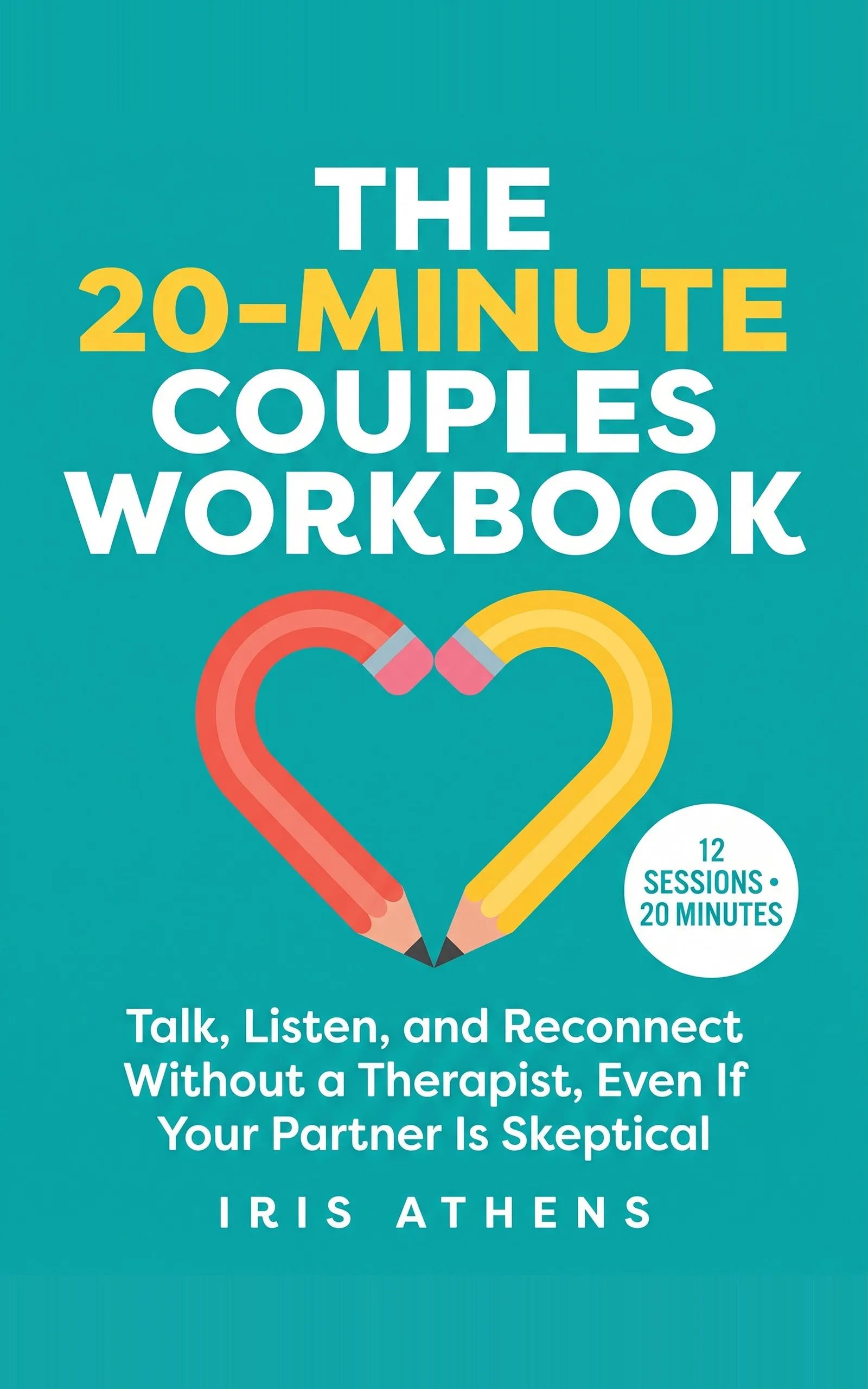
The book for this problem
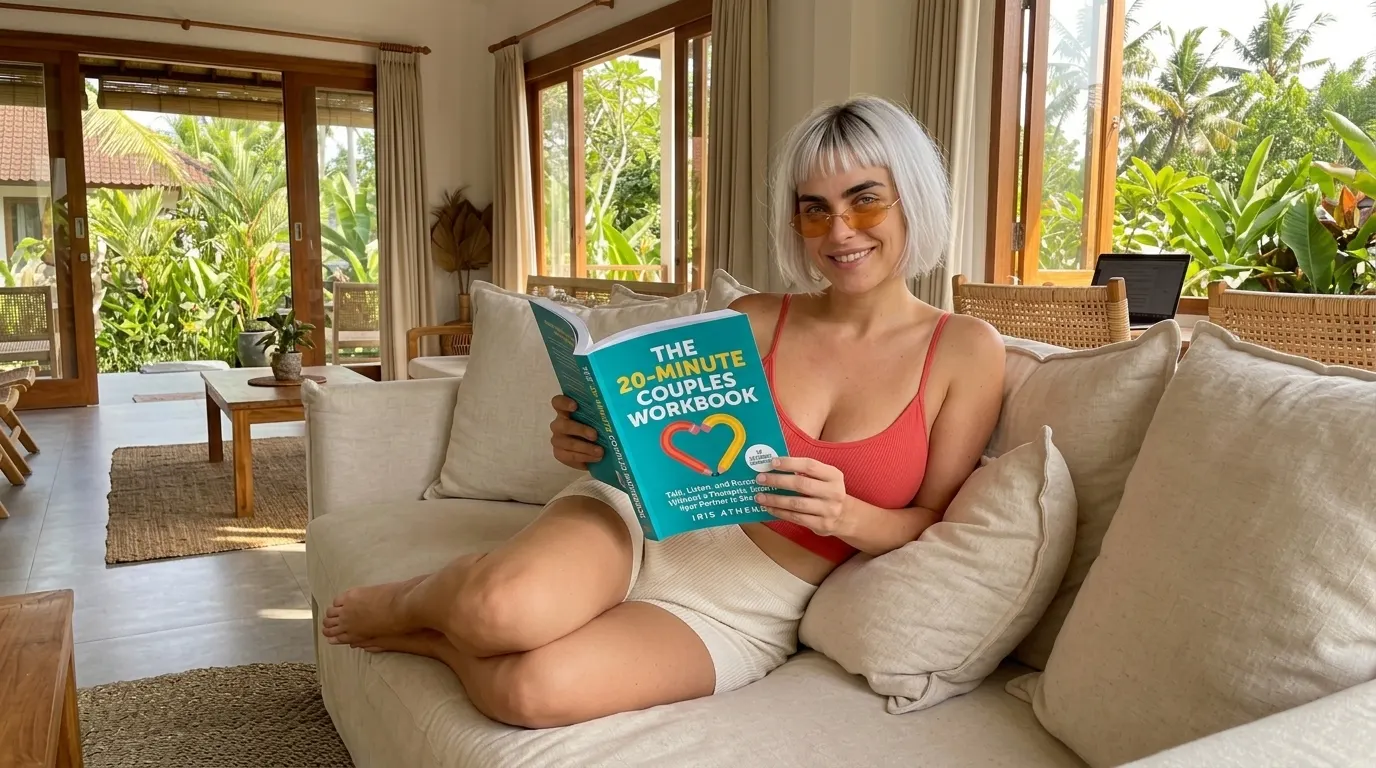
The 20-Minute Couples Workbook
Talk, Listen, and Reconnect Without a Therapist, Even If Your Partner Is Skeptical. By Iris Athens, 154 pages.
Where this problem is in the book:
- For the One Who Bought This Book
- How This Book Works
- The State of Us
Links go to Amazon. ToolGenX publishes this book under a pen name and earns from every sale. Amazon sets the price and handles delivery and returns.
Four things to do before you hand it over
1. Pick the moment. Not on a bad day. Not in the middle of an argument. Not in front of anyone. A quiet weeknight is fine.
2. Make the ask small. One session, twenty minutes, and then you stop. Here are lines from the book you can borrow, or say in your own words:
I found a short thing we could try. It's twenty minutes, once a week, just us. Want to try one and see?
The first few sessions are actually about what's going well. Can we try one this weekend?
Twenty minutes, and then we order pizza?
Nobody has tested which exact words work best. Treat these as starting points.
3. Leave three things out. Don't say "we need help." Don't list what's wrong. Don't promise it will fix anything.
4. Start at the beginning. Do not skip ahead to the hard sessions, even if the hard stuff is why you bought it.

Why the easy start matters so much
A skeptical partner who finishes the first session and thinks "that was fine, actually" will probably come back. A skeptical partner who gets ambushed with complaints will not.
There is research behind the soft approach. In a large randomized study, couples offered a brief, low-pressure relationship checkup became closer and less distressed than couples who waited. A checkup is something you do because you care about a thing, not because it is broken.
You bought it on a Tuesday and haven't said anything yet
It's in your bag, or on your Kindle, or hidden behind the cookbooks. You keep rehearsing how to bring it up. Every version sounds like an accusation in your head.
That feeling makes sense. Research on couples finds that one partner usually notices first and reaches for help first. You are not being unreasonable. Your partner is not being difficult. You just got here a little sooner.
Think of it less as a book about problems and more as a standing date with a script. Same day, same time, phones face down. A small gift of attention, for both of you.
Why a partner says no, and what that means for your wording
It helps to know what the no is usually about. In one study of men in unhappy relationships, the biggest reasons they gave for avoiding couples therapy had little to do with how unhappy they were. They came down to two things: feeling they didn't really need it, and a private sense of shame about asking for help.
You can't argue anyone out of either one. Telling a partner they do need it tends to make the shame worse. What you can do is shrink the ask, so there is less to be ashamed of and less to refuse. That is why the lines above say "short," "just us" and "we can skip anything," and why they never mention a problem.
Many guides also suggest framing it as something for both of you, not a fix for them. The book's own framing is a checkup, the kind you do because you care about a thing. If the word "work" makes your partner tense, you don't have to use it. "Twenty minutes, then pizza" is an invitation, not a project.

A few honest limits
The book is not therapy, and it says so on the first page. If either of you is afraid of the other, it says not to do the exercises together at all. The National Domestic Violence Hotline is free and confidential at 800-799-7233.
And if your partner still says no, give it a few weeks. Ask once more, kindly. People change their minds more often than they admit. Our page on what to do when your partner won't go to couples therapy covers that road.
What your partner is actually saying yes to
This is the moment The 20-Minute Couples Workbook was built around. You need one copy, two pens, and a pad of sticky notes.
For the One Who Bought This Book is a short chapter written to you, the buyer, before your partner ever sees a page. It covers why people say no and how to ask.
How This Book Works is the part to show your partner. Twelve sessions, about twenty minutes each, the same steps every time, and a firm stop at the end. Either of you can say "pass" to any question.
Session 1, The State of Us, is the first evening. No complaints. Each of you writes down three things that are working between you right now, and you read them to each other. It is a gentle place to begin, and that is on purpose.
Is The 20-Minute Couples Workbook the right book for you?
Yes, if
- You already bought the workbook, or you are about to, and your partner doesn't know yet
- Your partner rolls their eyes at anything that sounds like therapy
- You want this to feel like a gift to both of you, not a verdict
Skip it if
- Your partner frightens you or controls you. Then call the National Domestic Violence Hotline at 800-799-7233 instead
- You are hoping the book will prove your partner is the problem
Fair doubts before you buy
Won't buying a couples workbook make my partner think I'm unhappy?
It can, if you hand it over with a list of complaints. That is why the wording matters. Call it a short thing to try, twenty minutes, just the two of you. And the first three sessions have no conflict in them at all, so the first evening backs up what you said.
Do we need two copies?
No. Every exercise has a space for Partner A and a space for Partner B, side by side. When a step asks you both to write without looking, one of you writes in the book and the other uses a sticky note or a phone.
Get The 20-Minute Couples Workbook
One book, two pens, twenty minutes a week: twelve guided sessions give "can we talk" a shape, starting with what already works.
Links go to Amazon. ToolGenX publishes this book under a pen name and earns from every sale. Amazon sets the price and handles delivery and returns.
This workbook is not therapy. If either of you feels unsafe, call the National Domestic Violence Hotline at 800-799-7233.

Questions people ask about this
- How do I ask my partner to work on our relationship?
- Pick a calm moment, not a bad day, and not in front of anyone. Keep it small and specific: one short session, at home, with a clear end time. Say what it is not, too. Not therapy, nobody else sees it, and either of you can skip anything.
- What do you say to a partner who thinks you don't need help?
- Don't argue the point. Call it a checkup instead of a repair. In a large randomized study, couples offered a brief, low-pressure relationship checkup became closer and less distressed than couples who waited. Healthy couples do checkups too.
- Is a couples workbook a good gift for a partner?
- It can be, if it is framed as time together and not a fix for them. A workbook that starts with what is going well, and asks only twenty minutes a week, is easier to say yes to. If one of you is afraid of the other, it is the wrong gift, and the hotline at 800-799-7233 is the right first call.
- What if my partner says no to doing a couples workbook?
- Give it a few weeks and ask again, once, kindly. In the meantime you can read it alone to understand your own side. Just know the exercises are built for two, so reading alone is a start, not a substitute.
- Why won't my partner work on the relationship with me?
- Often it is not about how unhappy they are. In one study of men in unhappy relationships, the main reasons for avoiding couples therapy were feeling they didn't really need it and a private sense of shame about asking for help. You can't argue someone out of either. You can make the ask smaller, so there is less to feel ashamed of and less to say no to.
Related problems
- Your partner won't go to couples therapy. What you can do instead.
Your partner said no to couples therapy. Why people refuse, what research says about smaller first steps, and what helps if you have to start alone.
- Questions to ask your partner to reconnect, and how to ask them so they work
Good questions to ask your partner when you feel distant, from easy to a little deeper, plus the simple listening rules that make them work.
- Couples workbook or couples therapy: which one fits where you are right now?
A side-by-side look at doing a couples workbook at home versus seeing a couples therapist, with the clear signs that a book is not enough.
- Everything inside The 20-Minute Couples Workbook
Every chapter, who the book is for, and every problem it helps with.