Last updated
The fight is getting too heated right now. How to take a break that actually helps.

The book for this problem
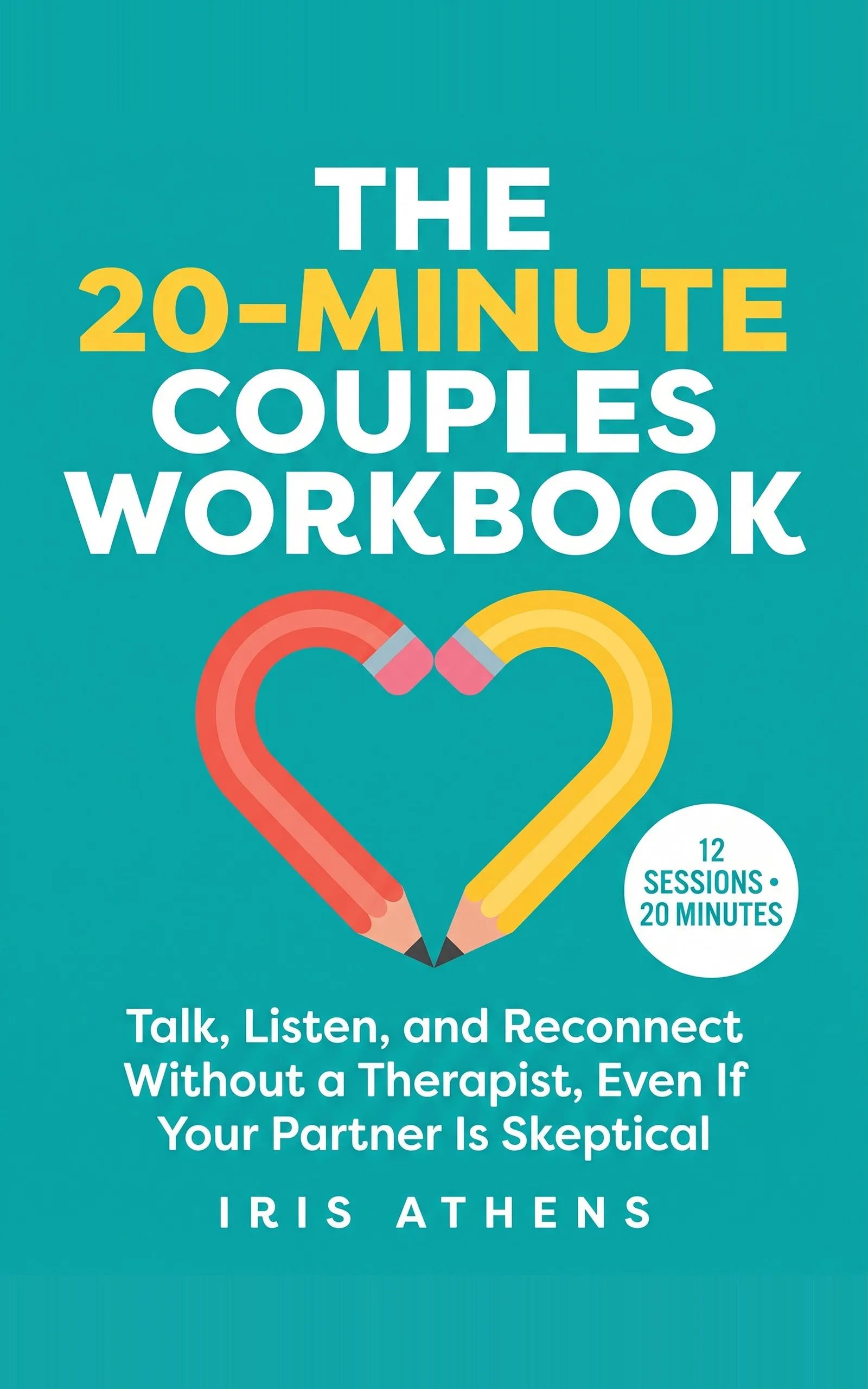
The 20-Minute Couples Workbook
Talk, Listen, and Reconnect Without a Therapist, Even If Your Partner Is Skeptical. By Iris Athens, 154 pages.
Where this problem is in the book:
- When You're Flooded
- The Flooding Page
- Repair Phrases You Can Point To
Links go to Amazon. ToolGenX publishes this book under a pen name and earns from every sale. Amazon sets the price and handles delivery and returns.
Do these four things in the next five minutes
1. Say the pause sentence. Out loud, once, as calmly as you can:
I'm flooded. I need a break. I'll be back at 8:30.
Name a real time. A break with a return time is a pause. A break without one feels like you are leaving, and that can make things worse.
2. Go to a different room. The porch, the bedroom, a walk around the block. Your partner agrees to the break, even mid-sentence. Nobody "wins" by calling it.
3. Do something boring for at least twenty minutes. A shower. Dishes. A puzzle. Slow breathing, where you breathe out longer than you breathe in. Use your hands or your feet.
4. Do not rehearse. No replaying the fight. No writing the perfect comeback. No texting a friend every detail.
That last one surprises people. In a classic experiment by Brad Bushman, angry people who hit a punching bag while thinking about the person who angered them ended up angrier than people who did nothing at all. Doing nothing beat venting.

Signs you are already past the point of talking
You may not feel "flooded." You may just feel right. Check for any one of these:
- Your heart is pounding, or your face feels hot.
- You can't really hear what your partner is saying anymore.
- The same angry sentence keeps looping in your head.
- You've gone quiet and numb, and you're waiting for it to end.
If either of you sees even one, it's time for the break. It doesn't matter who is right.
Researchers Robert Levenson and John Gottman once measured couples' heart rates and sweat while they talked. Couples whose bodies were more stirred up became less happy with each other three years later. It was a small study of 30 couples, so we don't lean on it too hard. You may also have seen a heart-rate number online that marks a danger zone. No study backs a single cutoff. Your own body's signs are a better guide.

How to come back without starting round two
Come back at the time you said. If you are the one who called the break, you restart. Open with a short repair, not your best point:
That came out wrong. Can we try again?
We're okay. Can we stick to one thing?
Talk about one topic only. If it heats up again, take a second break. If one topic floods you twice, save it for another day. And if it's late, it's fine to say you love them and finish tomorrow at seven. Tired 1 a.m. talks rarely fix anything.

It's 11 at night and it started with one charge on the card
It began as a quick question. Now a voice is rising and the words have stopped making sense. You hear yourself say "Fine. Whatever you want," and you don't mean a word of it. You just want it to stop.
That is Andre and Sofia, married eight months, in the book. It is also most couples at some point. Andre is not weak, and Sofia is not cruel. Two bodies are in alarm mode, and nobody thinks well in alarm mode.

When a break is not safe
A break only works if it's respected. If one of you follows the other, blocks a door, or won't let the other leave, that is more than a fight. The same goes if anyone feels afraid. Stop doing couples exercises together. The National Domestic Violence Hotline is free and confidential: call 800-799-7233 or text START to 88788. In immediate danger, call 911.

If you are the one who didn't call the break
This is the hard seat. Your partner says the pause sentence and walks out, and you still have three things to say. It can feel like being shut out.
The book has a short note for you. You may feel dismissed. Hold on to the time your partner named, and use the break to settle yourself too. The same don't list applies to you: no replaying, no comeback, no texting a friend.
Notice that the pause sentence is about the person saying it. It says you are flooded. It does not say your partner needs to calm down. Telling your partner they need a break tends to land as one more attack. Call it for yourself.

How long is too long?
The book's floor is twenty minutes, and longer if one of you needs it. A University of Oklahoma student wellness article gives a ceiling too: at least 10 minutes, but no more than 24 hours. It also says to set the return time before you leave, so the other person doesn't feel abandoned.
Past a day, a break starts to look like dropping the topic. If one subject floods you twice, the book's advice is to save it for your next weekly session, when you are both calm and the clock is set.

Make the plan once, while you are both calm
This is the problem The 20-Minute Couples Workbook handles in Session 9, When You're Flooded. You build a break plan together on a calm night: your signs, a signal word, where each of you goes, how long, and who restarts. Nobody makes good plans while flooded, so we make them first.
The Flooding Page at the back is the one page to open mid-fight. It holds the signs, the pause sentence, the do and don't lists, and a line for your own plan.
Repair Phrases You Can Point To is a page of short lines, sorted by what you need to say. When the words won't come, you point at one. Pointing is enough.
If this fight is the same one you keep having, read our page on the fight that never ends next.
Is The 20-Minute Couples Workbook the right book for you?
Yes, if
- Your arguments go from a small question to raised voices in minutes
- One of you goes silent and the other follows them from room to room
- You want a plan you can make once, while calm, and use later
Skip it if
- Breaks are not respected in your home, someone blocks a door, or anyone feels afraid
- You want a way to win the argument faster
Fair doubts before you buy
Isn't walking away just avoiding the problem?
Only if you never come back. A break with a return time is a pause. A break without one feels like leaving. That is why the plan in the book includes who restarts the talk and what they say.
Aren't you supposed to never go to bed angry?
No study has tested that rule. Research on sleep leans the other way: couples argued more after poor sleep and solved problems best when both were rested. A better rule is to not go to bed disconnected. Say you love them, and set a time to finish tomorrow.
Get The 20-Minute Couples Workbook
One book, two pens, twenty minutes a week: twelve guided sessions give "can we talk" a shape, starting with what already works.
Links go to Amazon. ToolGenX publishes this book under a pen name and earns from every sale. Amazon sets the price and handles delivery and returns.
This workbook is not therapy. If either of you feels unsafe, call the National Domestic Violence Hotline at 800-799-7233.

Questions people ask about this
- How long should a break be during an argument?
- At least twenty minutes is the usual rule of thumb. It comes from clinical work, not a published lab result, so adjust it. If one of you needs an hour, that is the number. What matters most is coming back when you said you would.
- What does flooding mean in a relationship?
- Flooding is a name for the moment your body is so stirred up that you can't take in what your partner is saying. Your heart pounds, your face gets hot, and you want to win, run or go silent. It is a theory built on small studies, but most people know the feeling right away.
- Should I vent to a friend after a fight with my partner?
- Not during the break. In a classic experiment, people who hit a punching bag while thinking about the person who angered them ended up angrier than people who did nothing. Replaying what the other person did keeps the anger going. Do something calm with your hands or feet.
- What do you say when you come back after a break in a fight?
- Start with a short repair, not your best argument. Lines like 'that came out wrong, let me try again' or 'we're okay' tend to work better than a careful list of facts. Then pick one topic. If it heats up again, take a second break or set a time for tomorrow.
- What if my partner won't let me take a break?
- Then this is more than a communication problem. If your partner follows you, blocks a door, won't let you leave, or you feel afraid, stop doing couples exercises together. Call the National Domestic Violence Hotline at 800-799-7233, text START to 88788, or call 911 if you are in danger.
- What if my partner calls a break and I want to keep talking?
- Let them go, even mid-sentence. In the workbook's plan, the other person always agrees to the break, and a break means a pause, not that anyone is leaving or winning. It is normal to feel dismissed. Hold on to the return time they named, and use the break to settle yourself too. Following them from room to room usually makes the next round worse.
Related problems
- You keep having the same fight with your partner. Here is why it never ends.
Having the same argument for years is common. Learn why some fights never get solved, and a 12-minute way to talk about what sits under yours.
- How to bring up a hard conversation with your partner without starting a fight
Every time you bring something up, it turns into a fight. A soft start-up in three plain parts, with a before and after example you can copy tonight.
- Couples workbook or couples therapy: which one fits where you are right now?
A side-by-side look at doing a couples workbook at home versus seeing a couples therapist, with the clear signs that a book is not enough.
- Everything inside The 20-Minute Couples Workbook
Every chapter, who the book is for, and every problem it helps with.