Last updated
Small business vs big company: who has the advantage, and where?
| Edge | Big company | Small business |
|---|---|---|
| Price and budget | Wins. Can outspend you on ads and cut prices you cannot match | Loses. Do not pick this fight |
| Reach | Wins. Can buy attention from millions | Loses on raw reach, but can reach a few hundred people in a personal way it cannot |
| Speed | A new launch can take months of panels, reviews and sign-off | The person who sees the chance decides in minutes and ships this week |
| Trust | Every sentence passes through legal and brand review, so it sounds like no one | A real name, a real face and an answer from the person who made the thing |
| Focus | A small, specific market is too little money to be worth a meeting | Can own a slice that is too small for a giant and big enough for one person |
| Knowing customers | Sorts millions into groups and guesses | Remembers each person, their taste and why they buy |
| Output | Teams of specialists working at the same time | AI drafts a usable version of each team's work; the owner keeps the final call |
Reading the small vs big table
The table above is not a scorecard where the bigger column wins. Read it row by row and ask one question: where does each answer come from?
Every win on the left is bought with size. Every loss on the left is also caused by size. The same meetings that let a big company reach millions are why it cannot launch a product in a week. The same legal review that keeps it safe is why its emails sound like nobody wrote them.
That is why the book calls these edges structural. A big company cannot fix its weak rows without stopping being big. You cannot fix your weak rows either, at least not the price and budget ones. So the plan is simple. Stop competing on the top rows. Press hard on the rows below them.
The rows where you lose, said plainly
You will not win a price war with a chain. You will not outspend a national brand on ads. If your whole plan is "a bit cheaper, a bit louder," you are standing on the one patch of ground built for them.
Most small owners know this. They fight there anyway, because it feels like what a real business does. They copy the giant's look, its "we," its broad offer for everyone. The book's coffee roaster did it for two years and lost slowly the whole time.
The rows where size works against them
Now look at the bottom five. When McKinsey asked executives about their decisions, only about 37% said their company decides both well and fast (McKinsey, 2019). You do not have that trade at all. The person who spots the chance and the person allowed to act are the same person.
Knowing customers is the row people forget. A big brand emails millions and calls each one "Valued Customer." In the book, the roaster writes one subscriber by name about a new light roast, because she remembers he cut back to one cup a day and wants it to count. He replies in four minutes.
The last row is the new one. In real support work, AI help lifted beginners by about 34% while experts barely moved (NBER, 2023). The giant's trained specialist gains a little. You, untrained at most jobs and doing all of them, gain the most. That is what finally lets the other four rows reach customers.
Two more edges most lists include
Most "small vs big" lists you will find add two points the table above only touches. Both hold up.
Cheap tests. A big company launches big, because getting any launch approved costs it so much that it might as well be worth the meeting. You have the opposite math. In the book, the roaster tests a limited blend with her own list: a small launch she can run this week, watch over a weekend, and change on Monday. If it flops, it flops small. That is a test a giant cannot run at the same speed or cost.
Local ties. People feel attached to the small businesses near them. Constant Contact's 2025 survey of over 8,000 consumers in four countries found 82% agree that small businesses have a good effect on their lives, and 40% said they would be "devastated" if their favorite local business closed (Constant Contact, April 2025). A national brand can buy ads near you. It cannot be your neighbor.
Both edges come from the same place as the others in the table: being small enough to decide alone and to be known by name.
A Tuesday with two inboxes
Picture it. The giant's email lands in your inbox. Clean design, a discount code, a line about how much they care. It went to several million people that morning.
The same hour, you could send a note to one customer. Use their name. Mention the thing they told you last spring. Suggest the one product that fits.
Theirs is reach. Yours is a relationship. One of those costs a fortune and still feels like a stranger. The other costs you four minutes.
One chapter for each row you can win
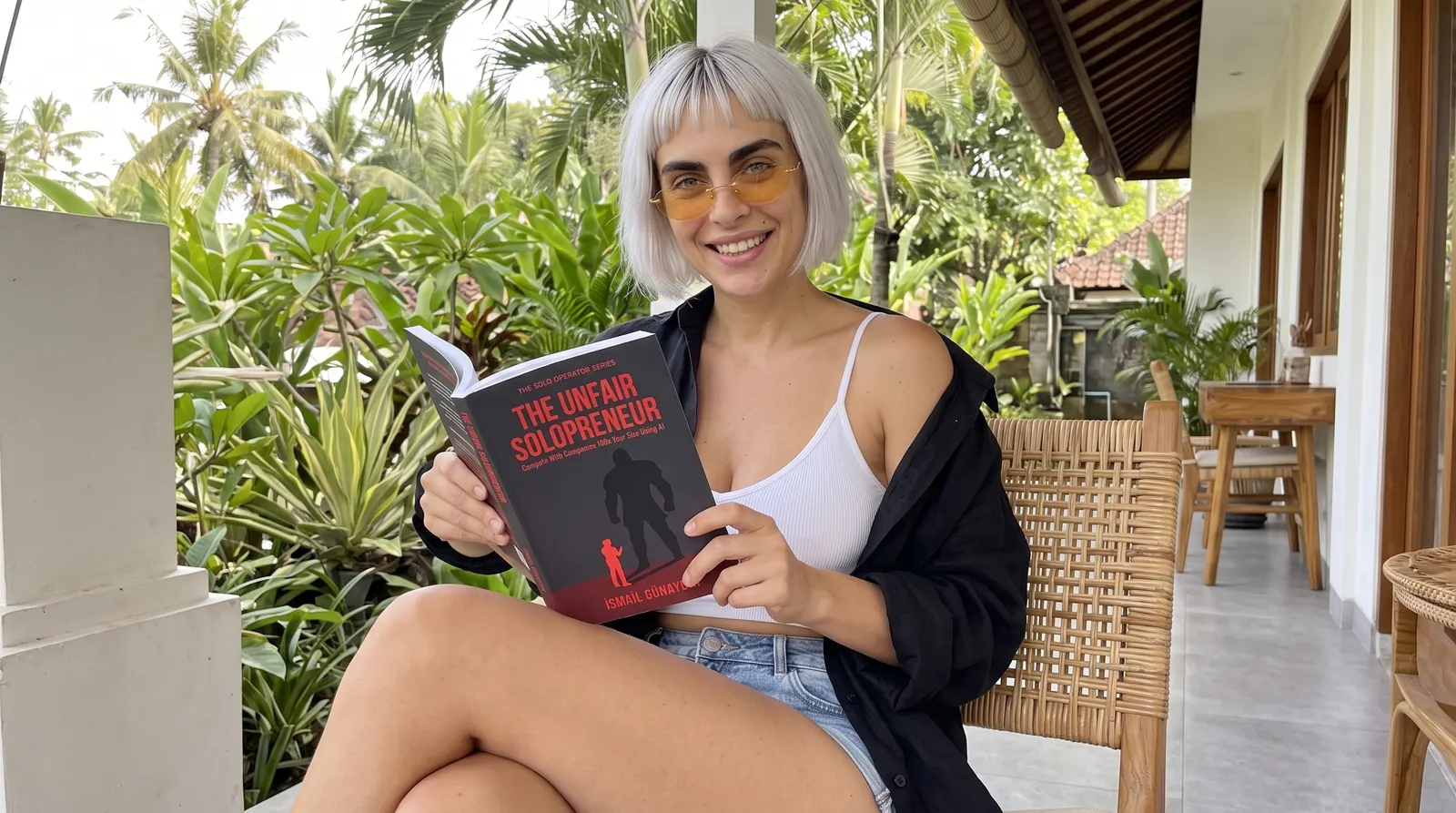
This is the problem The Unfair Solopreneur was written for. I built the book around the bottom five rows of this table, one chapter each.
Introduction: The 100x Myth explains why size is a cost and lays out all five edges. Intimacy: Know the Customers They Can Only Segment shows how to keep knowing people by name as your list grows, with AI holding the memory and you writing the notes. Firepower: One of You, the Output of a Whole Department shows which parts of a department's work AI can draft and which must stay yours.
Every chapter tool is in the free workbook. If you are still deciding whether to compete at all, start with can a small business compete with big companies.
The book for this problem
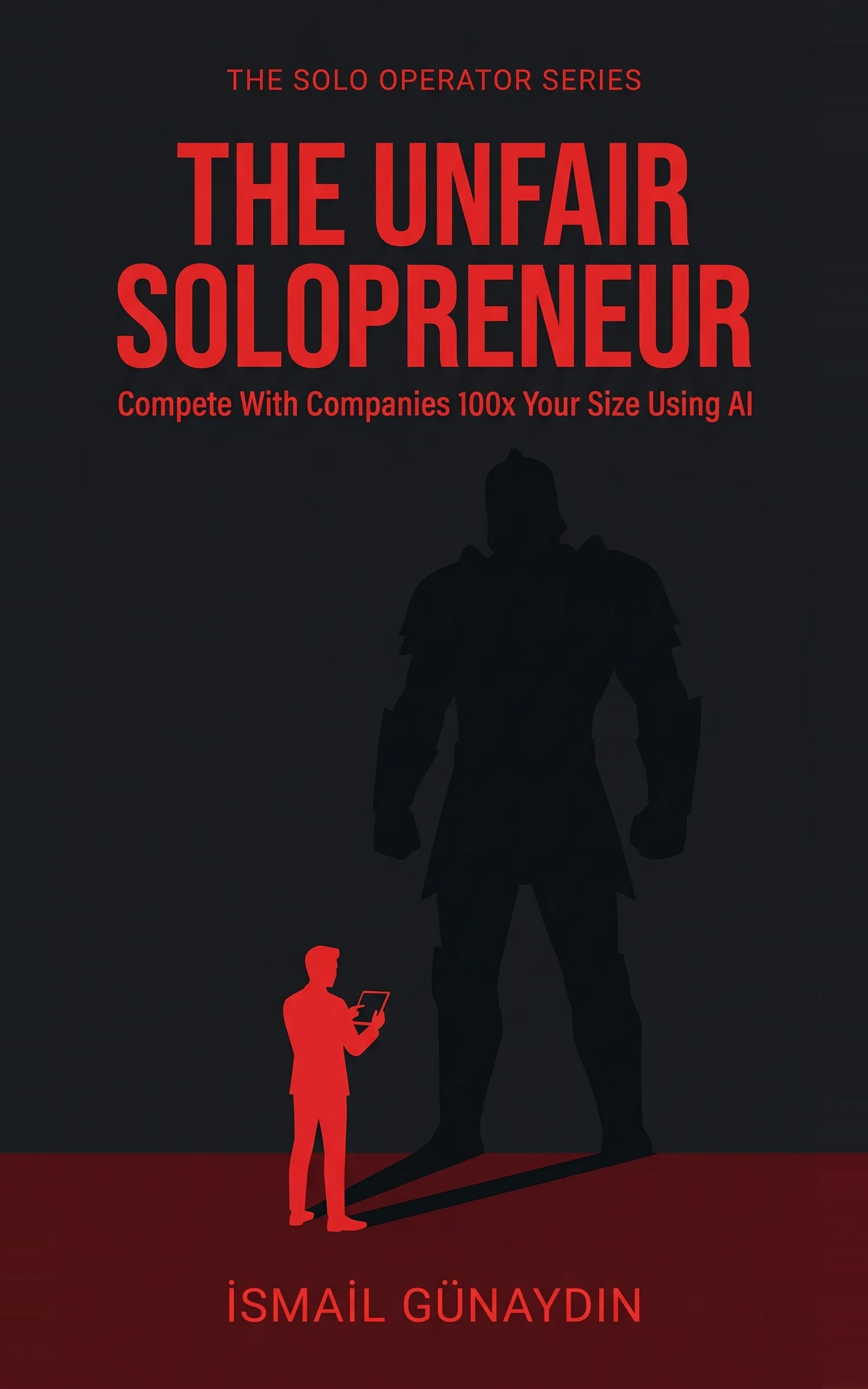
The Unfair Solopreneur
Compete With Companies 100x Your Size Using AI. By İsmail Günaydın, 60 pages.
Where this problem is in the book:
- Introduction: The 100x Myth
- Intimacy: Know the Customers They Can Only Segment
- Firepower: One of You, the Output of a Whole Department
Links go to Amazon. I wrote this book and earn a royalty on every sale. Amazon sets the price and handles delivery and returns.

Is The Unfair Solopreneur the right book for you?
Yes, if
- You are weighing whether being small is a weakness or a strength
- You compete with a chain or a big brand in your own market
- You want a clear picture before you change your plan
Skip it if
- You want proof that small always wins (it does not)
- You run a large company and want to fight small rivals
Fair doubts before you buy
A table is nice, but how do I use it in my own business?
Each row in the book becomes a one-page tool. The Speed Map, the Trust Edge Checklist, the Niche Wedge, the Intimacy Map and the AI Department Map each take one row and turn it into a short list for your business.
Is the Kindle version enough, or do I need the paperback?
Either works. The tools are printed in the chapters, and the full set is in the free printable workbook on this site, so you can fill them in by hand whichever version you read.
Get The Unfair Solopreneur
Small is not the underdog: speed, trust, focus, closeness to customers and AI are edges a big company cannot copy without stopping being big.
Links go to Amazon. I wrote this book and earn a royalty on every sale. Amazon sets the price and handles delivery and returns.
Part of The Solo Operator Series, five short books that can be read in any order.
Questions people ask about this
- What are the advantages of a small business over a large company?
- Speed, because the person who spots a chance is the person who decides. Trust, because customers can see a real person. Focus, because you can own a slice too small for a big firm. And knowing customers by name, because you have few enough to know. AI adds the fifth: a usable version of a department's output.
- What are the disadvantages of a small business compared to a big one?
- Price, reach and budget. A big company can outspend you on ads, cut prices you cannot match and produce more at once because it has people doing each job in parallel. The book is honest that these do not go away. AI narrows the output gap. It does not give you their budget.
- Why are big companies slow to make decisions?
- Because each layer of approval was added for a reason, usually after something went wrong. Inside a big firm, few people are rewarded for a fast win and many can be blamed for a fast loss. McKinsey found only about 37% of companies make decisions that are both good and fast.
- Do customers trust small businesses more than big companies?
- Yes. In Gallup's 2025 survey, about 70% of Americans had a great deal or quite a lot of confidence in small business, against about 15% for big business. A big firm's words pass through legal and brand review that strip out the personal claims customers trust.
- Does AI help small businesses more than big ones?
- In controlled studies, AI helped the least experienced workers most. Support agents gained 14% on average, beginners about 34%, experts barely anything. A solo owner is a beginner at most jobs around the core skill, so the lift is bigger than it is for a big firm's trained specialist.
- Can a small business test new ideas faster than a big company?
- Usually, yes. A small owner can launch a small test to their own customers this week, see what happens over a few days, and change it the next. A big company often needs months of reviews before a launch. The book's advice is to keep tests small, so a fast mistake stays cheap and easy to fix.
Related problems
- Can a small business compete with big companies? Here is where to start.
Yes, but not on price or reach. Learn the five edges a big company cannot copy, and a first step you can take in one sitting.
- Should a small business sound bigger, or say it's just you?
Writing 'we' and 'our team' when it is just you feels professional. Compare it with showing the real person, and see which one customers trust.
- How a small business can use speed to beat bigger competitors
Big companies need months to approve what you can decide in minutes. Here is how to map that gap and spend it on small, fast launches.
- Can one person really do a marketing department's work alone with AI?
AI can draft what a marketing team produces, but not decide what is you. See where the line falls, and why to start with one department, not four.
- Everything inside The Unfair Solopreneur
Every chapter, who the book is for, and every problem it helps with.