Last updated
How a small business can use speed to beat bigger competitors
The idea you have been sitting on
It's 6:40 on a Wednesday. You have a good idea in your hand. A small, seasonal offer. Your best customers would love it.
And then the old reflex shows up. The long list of reasons it is too late, too risky, too small to bother with. So you put it in a note. That was three weeks ago.
In my book, a one-person coffee roaster has this exact morning. She is holding a sample bag of a rare lot from a small farm. The flavor only makes sense for about six weeks a year. She almost talks herself out of it, the way she had a dozen times before.
Then she remembers who she is up against.

Why "work faster" is not the same as using speed
Most advice about speed is about you. Wake earlier. Use shortcuts. Work in focused blocks. That makes you a quicker version of yourself, which helps for about a week.
Your real speed edge is not about you at all. It is about the gap between you and them. A big company cannot launch that seasonal coffee, and not because it lacks the money. By the time it finishes deciding, the season is gone.
Inside a big firm, almost nobody is rewarded for a fast win, but anyone can be blamed for a fast loss. So each person in the chain adds a check and asks for cover. When McKinsey asked executives, only about 37% said their companies decide both well and fast (McKinsey, 2019). You do not have to pick between good and quick. That is the edge.
Map the gap before you spend it
Here is the tool from the book, in short. Take the one decision you have been sitting on longest. Write each step of it on its own line. Then add three columns:
- How long this step takes you.
- How long it would take a big company.
- How you use the gap.
For the roaster, deciding to launch took two minutes on taste. A big brand would need three to six months of tasting panels and sign-off. Setting the price took her ten minutes. A giant would need weeks with a pricing committee. Changing the offer after launch took her until Monday. A giant would wait for the next planning cycle, if ever.
Once she saw it written down, she stopped guessing she was faster. She could see exactly where.

Ship small, learn on real buyers, then stop
The rule is not "do everything quickly." That is how you ship mistakes at speed. The rule is to spend your speed where the gap is widest, on things small enough to ship before they could even meet about it.
So keep launches small and frequent. A limited offer for your current list is a test you can run this week. Then watch what real buyers do. The roaster shipped on Friday. Over the weekend she saw the larger bag sell faster than the small one. On Monday she made the larger bag the default.
Taste to changed offer took her five days.
AI is what lets the work keep up with the decision. The writing used to eat most of her speed. Now she gives AI three of her old emails, gets a first draft of the description, the launch email and the social posts in under an hour, and edits them into her own voice. On writing tasks, AI cut time by about 40% (Science, 2023). It is a faster pen, not a faster palate. Hand it the typing. Keep the taste.
When the season ends, end the offer. Do not fall in love with the thing you shipped fast. Fall in love with the loop.
The other speed: how fast you answer
Launches are one kind of speed. The other kind is quieter, and many guides on this question put it first: how fast you reply to a customer, a lead or a quote request. A slow reply is an opening for someone else.
The book shows both sides of it. When a subscriber writes to the roaster asking which coffee is lighter, the reply comes the same day, from the person who roasted it, in four lines. He upgrades to the larger bag that afternoon. No ticket queue, no handoff.
But the book also shows her losing on reply speed. A café owner picks a national brand partly because it answers every question inside an hour, while she promises to "get back to him on the rest." The big firm was faster there, because it had people whose only job was answers.
So close that gap on purpose:
- Answer the easy, repeating questions fast. Shipping, prices, how it works. The book's roaster has AI draft these from her own past answers, in her voice, so nobody waits a day.
- Answer the hard ones yourself. The unhappy customer, the unusual request. A fast, correct, generic reply is not what they came to a small business for.
- Don't say "I'll get back to you on the rest" in a pitch. In the book, that line is what lost the room. Bring the answer, even a rough one.

Inside the book: the Speed Map and the four speed mistakes
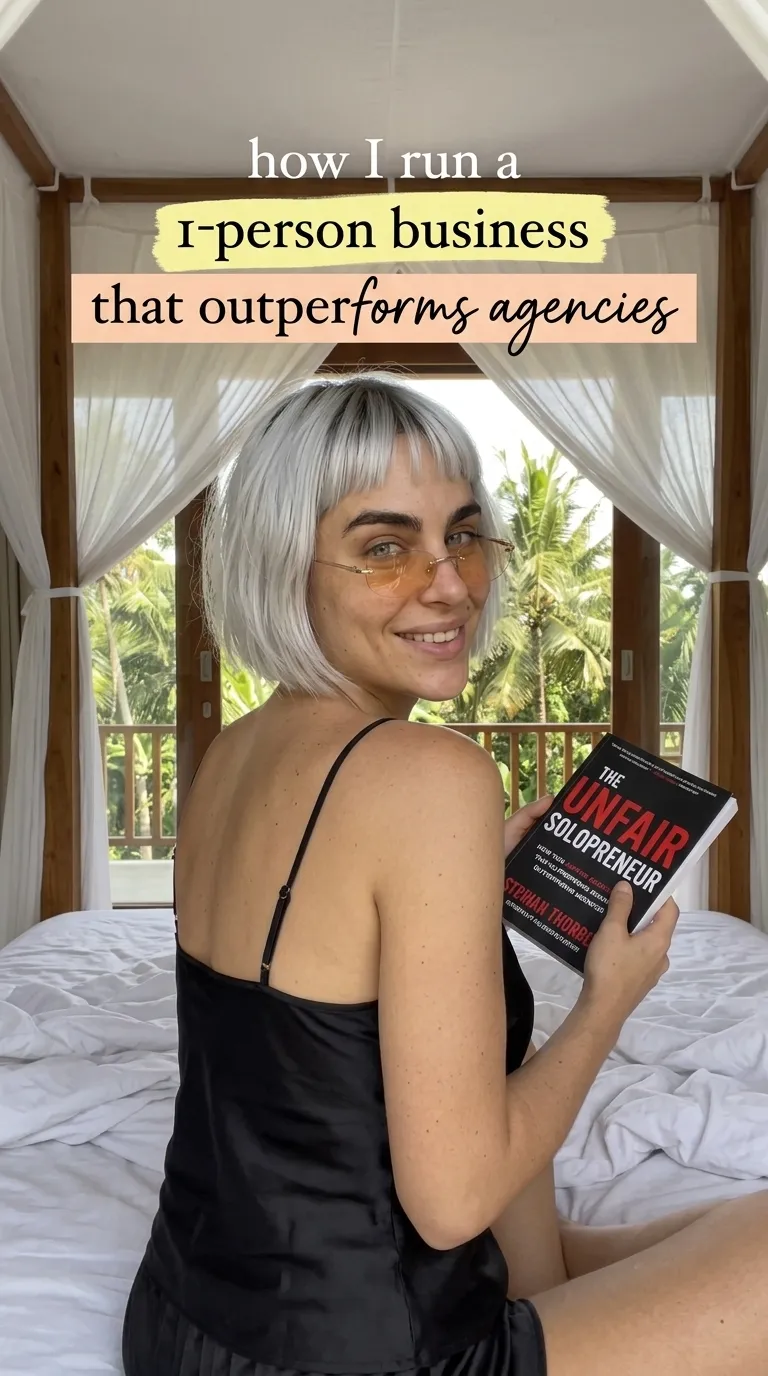
This is the problem The Unfair Solopreneur was written for.
Speed: You Move While They Meet has the full Speed Map with the roaster's six filled-in rows, and the four ways owners waste speed. The most common is confusing speed with recklessness. The quietest is keeping last week's fast win forever until you are just small with inventory. Firepower: One of You, the Output of a Whole Department goes further on the drafting side, so the copy and design work stop slowing your launches.
The Speed Map is in the free workbook. If drafting is where you lose the most days, read doing a marketing department's work alone with AI.
The book for this problem
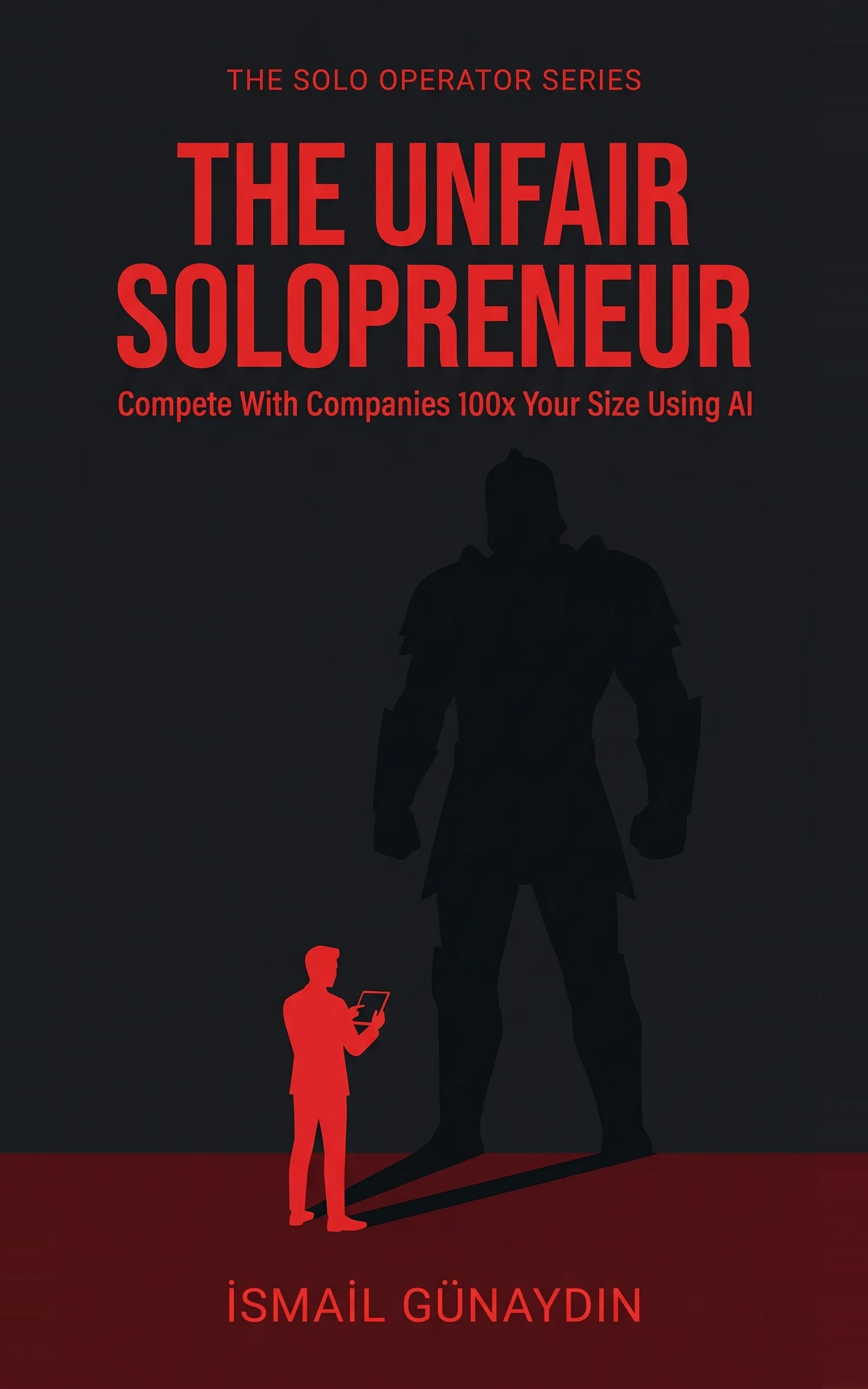
The Unfair Solopreneur
Compete With Companies 100x Your Size Using AI. By İsmail Günaydın, 60 pages.
Where this problem is in the book:
- Speed: You Move While They Meet
- Firepower: One of You, the Output of a Whole Department
Links go to Amazon. I wrote this book and earn a royalty on every sale. Amazon sets the price and handles delivery and returns.

Is The Unfair Solopreneur the right book for you?
Yes, if
- You have an idea you have been sitting on for weeks
- You decide fast but the work after the decision takes you days
- You compete with a company that needs approval for everything
Skip it if
- You want to ship big, polished launches a few times a year
- You think fast means skipping the quality check
Fair doubts before you buy
Isn't 'move fast' just advice for tech startups?
The book's main example is a one-person coffee roaster launching a seasonal blend, not an app. The point is not speed for its own sake. It is that a small owner can finish a whole loop of deciding, shipping, learning and changing while a big rival is still scheduling its first meeting.
Can't I just get faster with a better to-do app?
An app speeds up your typing. It does not show you where your speed beats theirs. The Speed Map in the book puts each step of one decision next to how long a giant would take, so you spend your speed on the steps where the gap is months wide.
Get The Unfair Solopreneur
Small is not the underdog: speed, trust, focus, closeness to customers and AI are edges a big company cannot copy without stopping being big.
Links go to Amazon. I wrote this book and earn a royalty on every sale. Amazon sets the price and handles delivery and returns.
Part of The Solo Operator Series, five short books that can be read in any order.
Questions people ask about this
- Why are small businesses faster than big companies?
- Because there is no one to ask. In a big firm, an idea is written up, sent for approval, checked, discussed in a meeting and signed off. Each layer was added after something went wrong once. In a small business, the person who sees the chance is the person who decides.
- How do I use speed as a competitive advantage?
- Ship small and often. Launch something small enough to test this week, watch what real customers do over the weekend, and adjust the price or offer on Monday. Then end it when its moment passes and start the next one. The edge is the loop, not any single launch.
- Is moving fast risky for a small business?
- It is if you confuse speed with carelessness. A wrong price in an email or a product you did not check hurts trust. The book pairs speed with smallness: keep each launch small enough that a fast mistake can be fixed on Monday instead of sinking you.
- How does AI help a small business move faster?
- It speeds up the parts after the decision. In the book, the roaster has AI draft the product description, launch email and social posts in about an hour, in her voice after she showed it three old emails, then edits them herself. On writing tasks, studies found AI cut time by about 40%.
- How slow are big companies at making decisions?
- Slow enough to leave a gap. When McKinsey surveyed executives, only about 37% said their companies make decisions that are both high quality and fast. Most big firms, by their own account, choose between good and quick.
- How fast should a small business reply to customers?
- Fast enough that a bigger rival never looks quicker. In the book, the roaster answers subscribers the same day herself, and loses a cafe deal partly because a national brand answered every question within the hour. Use AI drafts for the repeating questions so they go out quickly, and answer the hard or upset messages yourself.
Related problems
- Can a small business compete with big companies? Here is where to start.
Yes, but not on price or reach. Learn the five edges a big company cannot copy, and a first step you can take in one sitting.
- Small business vs big company: who has the advantage, and where?
A side-by-side look at where a big company wins, where a small business wins, and why each edge comes from size itself.
- Can one person really do a marketing department's work alone with AI?
AI can draft what a marketing team produces, but not decide what is you. See where the line falls, and why to start with one department, not four.
- Everything inside The Unfair Solopreneur
Every chapter, who the book is for, and every problem it helps with.