Last updated
Taking Social Security while still working? They do not take it right back.

| Where you are in 2026 | Earnings limit | What is held back |
|---|---|---|
| Under full retirement age all year | $24,480 for the year | $1 for every $2 over the limit |
| The year you reach full retirement age | $65,160, counting only months before that month | $1 for every $3 over the limit |
| From the month you reach full retirement age | No limit | Nothing |
| First year retired, under full retirement age all year | $2,040 in a month | None for that month, if you meet the test |
| First year retired, reaching full retirement age in 2026 | $5,430 in a month | None for that month, if you meet the test |
Reading the 2026 limits row by row
This page is not legal, tax, medical or financial advice. It sets out the rule with this year's numbers.
The table above is the whole earnings test. Find the row that fits you this year.
If you are under full retirement age for all of 2026, the first row applies. Earn up to $24,480 from work and nothing is held back. Above that, Social Security holds back $1 for every $2 you earn.
In the year you reach full retirement age, the limit is much higher, and it only counts the months before your birthday month. From that month on, the limit is gone.
The dollar limits change each January. The one-for-two and one-for-three ratios do not. The current figures are on Social Security's earnings test page.

How much would they hold back? Two quick sums
The ratios make it easy to work out a rough figure. These use round, made-up earnings, only to show the steps.
| Your 2026 situation | You earn | Over the limit by | Held back for the year |
|---|---|---|---|
| Under full retirement age all year | $30,480 | $6,000 | $3,000 ($1 for every $2) |
| Reach full retirement age in 2026, counting months before it | $71,160 | $6,000 | $2,000 ($1 for every $3) |
So going $6,000 over the limit does not cost you $6,000. In the first case, $3,000 of benefits is held back for the year. That money is not lost either. It is made up later in a higher monthly check, as the next section shows.
For your own case, give Social Security an estimate of what you expect to earn. They work out the holdback against your own benefit for free.

Not lost, in their own quotation marks
Here is the line that changes the picture. Social Security's page on working while you get benefits says benefits withheld while you continue to work are not "lost."
They put "lost" in quotes themselves. They have heard the myth enough to argue with it in print.
What happens is this. At full retirement age, Social Security works out your benefit again. Your monthly amount goes up for good, to make up for the months they held back.
So it is not a fine. It is a delay, with a lasting raise at the end. Whether that trade suits you depends on your health, your savings and your own record. That part is yours.

Work counts, a pension does not
The test is about work, and only work.
Social Security counts wages from a job, or your net profit if you work for yourself. Bonuses, commissions and vacation pay count too.
A pension does not count. Nor do annuities, interest, investment income, veterans benefits, or other government or military retirement pay. If your money comes from something other than working, the test does not touch it.

The November retirement, and the monthly rule
Say you worked into the fall and stopped in November. For the year as a whole, you went far past the limit. It looks like you will lose months of benefits.
You won't, if the first-year rule fits you. In your first year, Social Security can look month by month. In 2026, a month counts as retired if you earn $2,040 or less in it, or $5,430 if you reach full retirement age this year. The special earnings limit page has the details.
There is a catch for anyone self-employed. You also must not be doing substantial services in the business. Social Security defines that as more than 45 hours a month, or 15 to 45 hours in a highly skilled job.
That second part catches consultants. Fifteen hours of skilled work a month can mean you are not retired in their sense, even when the dollars look fine.

Why the myth hurts the small jobs most
Part-time work in your sixties sits right near these limits. Twenty hours a week at a fair rate lands in the zone where the limit starts.
So "they take it right back" does its harm at the edges. It scares people off the smallest jobs, not the largest ones.
There is another reason to look closely. Your benefit is built from your top 35 years of earnings. A missing year counts as a zero. A new working year can replace a zero, and that moves the average. Your statement at ssa.gov lists your earnings year by year, and only you can tell if 1987 looks right.

The chapters in The Year You Retire that cover this
This is the problem The Year You Retire was written for. Nancy Whitaker opens the chapter with the sentence everyone repeats, then shows where it goes wrong.
If You Keep Working has both limits, the list of what counts, the first-year monthly rule, the hours test and the 35-year math. It says plainly that it has no opinion on when you should claim.
What Changes Every January tells you where next year's limits are posted and roughly when, so the book keeps working after 2026.
What we like about this chapter is that it ends with who to call. Social Security will tell you which limit applies to you, for free.
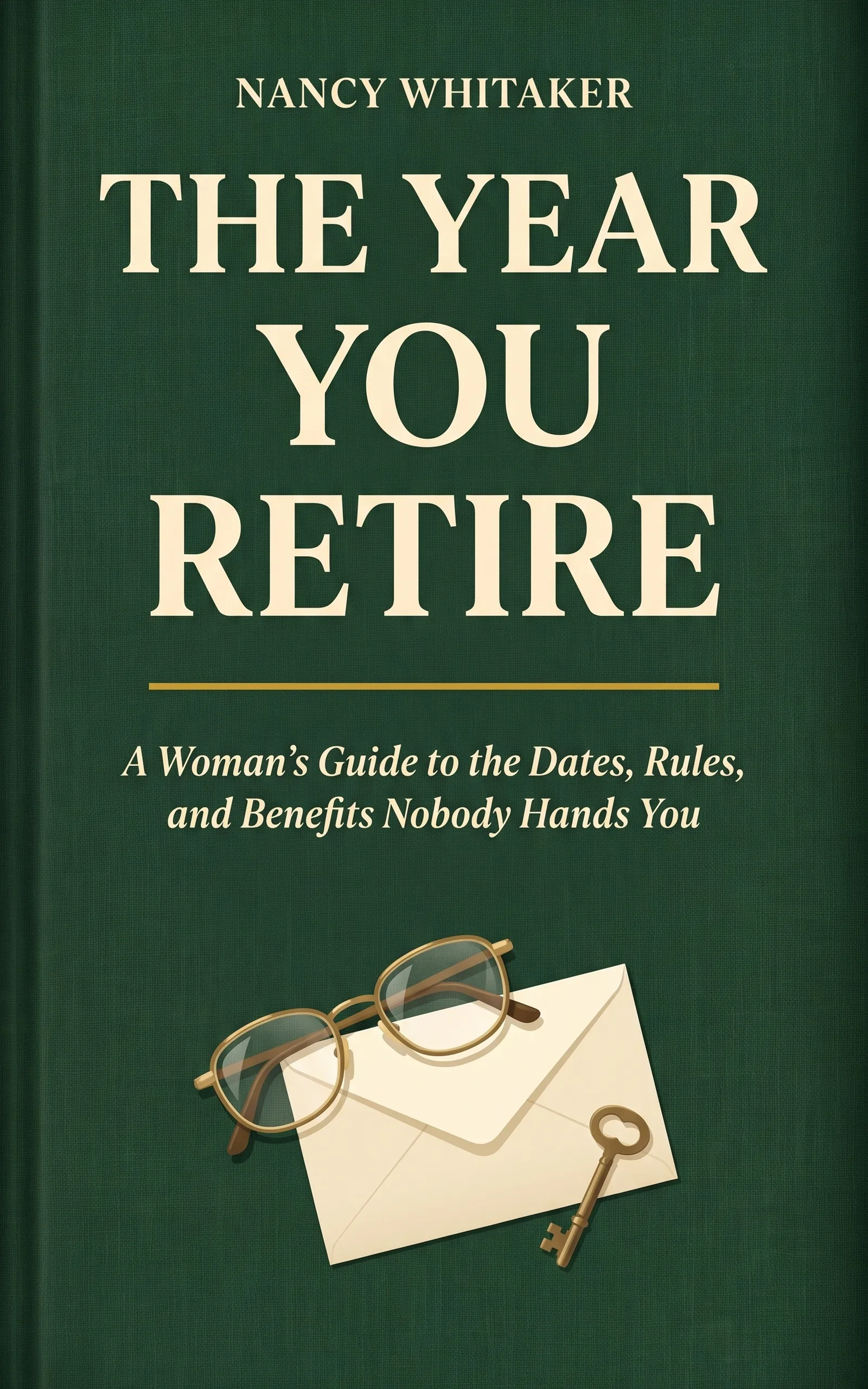
The book for this problem
The Year You Retire
A Woman's Guide to the Retirement Dates, Rules, and Benefits Nobody Hands You. By Nancy Whitaker, 169 pages.
Where this problem is in the book:
- If You Keep Working
- What Changes Every January
Links go to Amazon. ToolGenX publishes this book under a pen name and earns from every sale. Amazon sets the price and handles delivery and returns.

Is The Year You Retire the right book for you?
Yes, if
- You want to start Social Security before full retirement age and keep a part-time job
- Someone told you working while claiming means losing the money
- You retired partway through 2026 and earned a lot before you stopped
Skip it if
- You want to be told whether claiming early is a good idea
- You are already at full retirement age, where there is no limit
Fair doubts before you buy
Everyone I know says they take it back. Why would a book know better?
The book does not ask you to trust it. It quotes Social Security's own page, which puts the word lost in quotation marks to argue against the idea. The link is on this page so you can read it yourself.
Can't I just use the Social Security calculator?
You should, for your own numbers. The book explains the parts a calculator does not spell out: what counts as earnings, the first-year monthly rule, and the hours test for anyone self-employed.
Get The Year You Retire
Retirement starts deadlines nobody mails you; the book gathers them from six federal agencies and fifty states with a source on every number.
Links go to Amazon. ToolGenX publishes this book under a pen name and earns from every sale. Amazon sets the price and handles delivery and returns.
This book lays out published rules and dates. It is not legal, tax, medical or financial advice. For your own record, call your State Health Insurance Assistance Program (SHIP) or Social Security.

Questions people ask about this
- What is the Social Security earnings limit for 2026?
- $24,480 if you are under full retirement age for all of 2026, with $1 withheld for every $2 above it. In the year you reach full retirement age, it is $65,160, with $1 withheld for every $3 above it, counting only months before the month you reach that age.
- Do I lose Social Security if I earn too much?
- No. Social Security's own words are that benefits withheld while you work are not lost. Once you reach full retirement age, your monthly benefit is increased permanently to account for the months withheld.
- Does a pension count toward the Social Security earnings limit?
- No. Social Security counts wages, or net profit if you are self-employed, plus bonuses, commissions and vacation pay. Pensions, annuities, investment income, interest, veterans benefits and other government or military retirement benefits do not count.
- What is the special earnings rule for the first year of retirement?
- In the first year, Social Security can look month by month. For 2026, you count as retired in any month you earn $2,040 or less if you are under full retirement age all year, or $5,430 if you reach full retirement age in 2026.
- Is there an earnings limit after full retirement age?
- No. From the month you reach full retirement age, you can earn any amount and nothing is withheld.
Related problems
- Your job just ended and you are past 65. Here is your Medicare deadline.
Your job ended after 65? You have eight months to sign up for Part B. Here is when the clock starts, why COBRA does not stop it, and what late costs.
- Your first year of retirement feels empty, and every day looks the same. Is that normal?
Retirement feels flat by the third Monday? What went missing is the structure your job gave you. Here is how to replace it one piece at a time.
- Spousal or ex-spouse Social Security benefits: which rules apply to you?
Spousal and ex-spouse Social Security benefits side by side: marriage length, age, whether he must have filed, and the most you can get. With sources.
- Everything inside The Year You Retire
Every chapter, who the book is for, and every problem it helps with.