Last updated
Your job just ended and you are past 65. Here is your Medicare deadline.

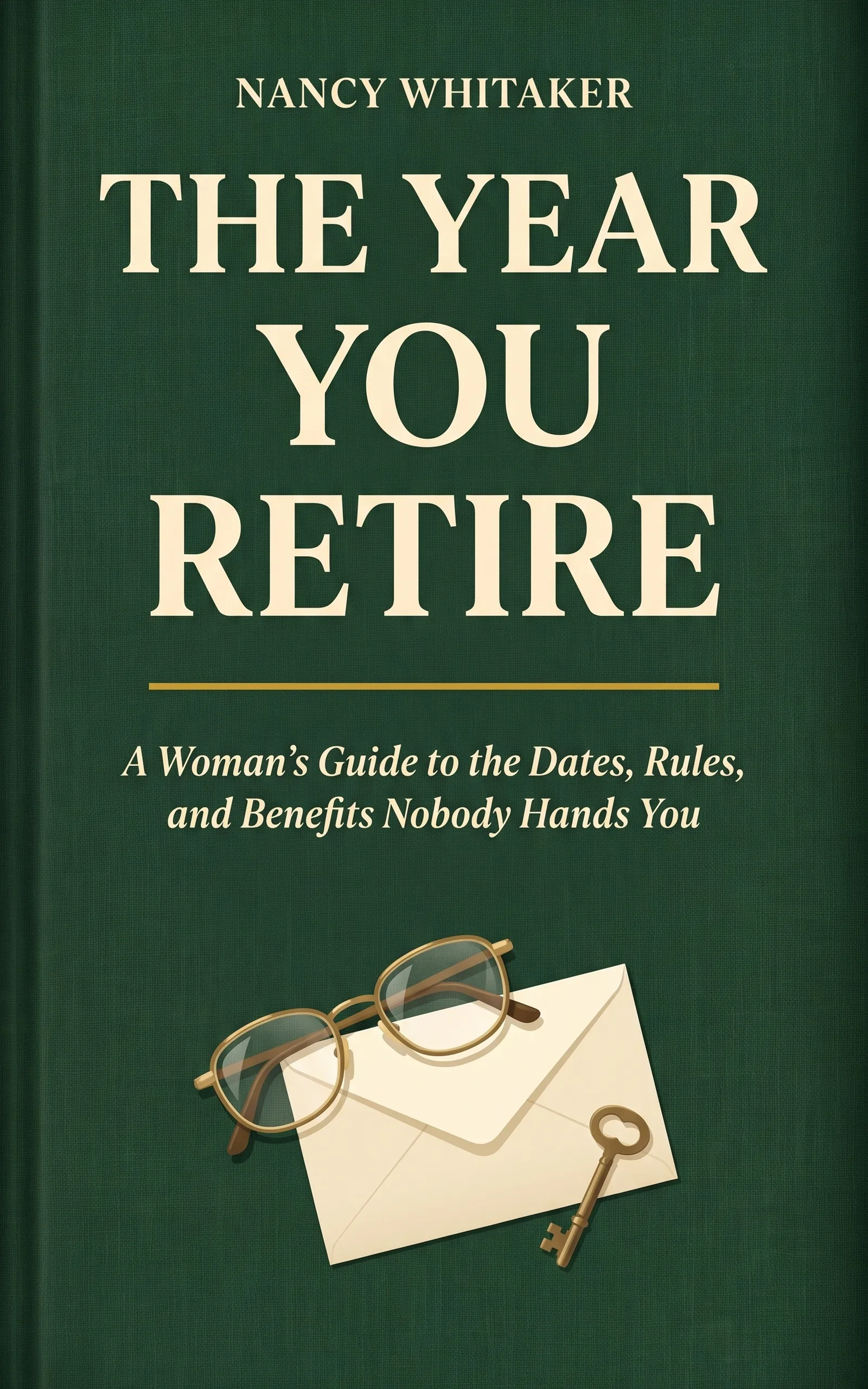
The book for this problem
The Year You Retire
A Woman's Guide to the Retirement Dates, Rules, and Benefits Nobody Hands You. By Nancy Whitaker, 169 pages.
Where this problem is in the book:
- The Window That Closes
- Your First Year Pages
Links go to Amazon. ToolGenX publishes this book under a pen name and earns from every sale. Amazon sets the price and handles delivery and returns.
Four things to do this week
This page is not legal, tax, medical or financial advice. It lays out the 2026 rules so you can check your own case fast.
- Write down the month your job ends. Then write down the month your work health plan ends. Circle the one that comes first.
- Count eight months from the circled month. That is the last month to sign up for Part B with no penalty.
- Ask HR two things. How many people does the company employ? And does the plan pay first or second once you are 65?
- Find the letter that says your drug coverage was creditable. That word means at least as good as Medicare's. Put it somewhere you can find in five years.
That is the fix. The rest of this page explains why each step matters.

COBRA looks like your old plan, and that is the trap
COBRA keeps the same card and the same doctors. So it feels like nothing changed.
Medicare sees it another way. Its working past 65 page says it plainly: COBRA coverage doesn't extend your limited time to sign up for Medicare.
Run it out. You leave your job and take eighteen months of COBRA. When it ends, you sign up for Medicare. But your eight months started back when the job ended. They closed ten months ago.
Retiree coverage from an old employer works the same way. Neither one is based on current work, and current work is what holds the window open.

If the company had fewer than 20 people
Here is a rule most people never hear. At a company with 20 or more workers, the work plan pays first. At a smaller one, Medicare pays first.
So if Medicare is meant to pay first and you never signed up, nobody pays first. Medicare's who pays first page warns that your job-based coverage might not pay if you don't have both Part A and Part B.
You can pay a premium every month and still have a hole. Write down who at HR told you the size of the company, and the date.

How to sign up for Part B when the job ends
Knowing the deadline is half of it. Here is how the signup itself works, from the current Part B form.
- Get two forms. The CMS-40B is your request for Part B. It is for people who already have Part A. The CMS-L564, Request for Employment Information, is filled in by your employer to show you had job-based coverage. The 40B tells you to have your employer complete it and send it back with your application.
- Write in the dates. The 40B asks when you, or your spouse, worked for the employer that gave you coverage, and when that coverage started and ended.
- Pick a start date. If you sign up while you still have the job-based plan, or in the first full month after it ends, you can choose when Part B starts: the first day of the month you sign up, or the first day of any of the three months after.
- Send it to Social Security. Mail or fax both forms to your local Social Security office. Medicare's sign-up page says you can also sign up online through Social Security, which it calls the easiest way.
The safest plan is to send the forms before your work plan ends. Then you can set Part B to start the day after it stops, with no gap.
If you do not have Part A yet, do not use the 40B. Contact Social Security to apply for Medicare first.

Two more deadlines that come with the job ending
Your drug coverage. You will not owe the Part D late penalty as long as you do not go more than 63 days in a row without creditable drug coverage. That clock starts when your job's drug coverage ends, so pick a drug plan in time.
A health savings account. If you have an HSA, Medicare's working past 65 page says you and your employer should stop putting money in 6 months before you retire. That helps you avoid a tax penalty. Ask a tax adviser how it fits your dates.

What late costs, in 2026 dollars
The Part B standard premium is $202.90 a month in 2026. Two full years late adds 20 percent on top. Twenty-three months late is one full twelve-month period, so 10 percent, not 20.
The drug penalty is smaller and it never stops. It starts after a gap of 63 days in a row. Two years with no creditable drug coverage is 24 months, so about $9.40 a month in 2026, worked out again each year. You can owe it even if you never had a drug plan. The Part D penalty page gives the full rule.

There was a cake, and nobody mentioned the clock
Maybe there was a card in the break room. Maybe the job ended without asking you. Either way, you went home and that was the whole ceremony.
Nobody put the deadline in the card. It is quiet and it is exact. It does not care if you feel ready.
If you want someone to look at your own dates for free, your State Health Insurance Assistance Program does that. Medicare describes SHIPs as not connected to any insurance company or health plan.

The rest of this calendar is in one book
This is the problem The Year You Retire was written for. Nancy Whitaker's book puts the Medicare clock first because it is the one with teeth.
The Window That Closes walks through the seven-month window around your 65th birthday, the eight-month window after work, the COBRA trap, the 20-worker rule and the 2023 change to start dates. It also lists what plan sellers are not allowed to do when they call you.
Your First Year Pages turns all of it into dates on one page, so the month you circled today does not live only in your head.
What we like is that every rule in the book comes with its source and its year. When a friend tells you about a gap she sat through in 2019, you can check whether that rule still exists. Since 2023, it mostly does not.

Is The Year You Retire the right book for you?
Yes, if
- You are 65 or older and your job, or your job's health plan, just ended
- You were offered COBRA and are not sure what it does to Medicare
- You want the exact rule and its year, not a friend's story from 2019
Skip it if
- You want someone to pick a Medicare plan for you
- You live outside the US
Fair doubts before you buy
Medicare.gov is free. Why would I need a book for this?
You do not need a book for one rule, and this page links the Medicare pages so you can read them. The book is for the whole first year. Medicare is one clock. Social Security, the earnings test and the records you can claim on are others, and they sit on different agency pages.
Is this book going to tell me which plan to buy?
No. It states the rules with their year and names who can look at your own file, like your State Health Insurance Assistance Program. It stays out of the choice on purpose.
Get The Year You Retire
Retirement starts deadlines nobody mails you; the book gathers them from six federal agencies and fifty states with a source on every number.
Links go to Amazon. ToolGenX publishes this book under a pen name and earns from every sale. Amazon sets the price and handles delivery and returns.
This book lays out published rules and dates. It is not legal, tax, medical or financial advice. For your own record, call your State Health Insurance Assistance Program (SHIP) or Social Security.

Questions people ask about this
- How long do I have to sign up for Medicare after my job ends?
- Eight months, if you had group health coverage based on current work, yours or your spouse's. The eight months start at the month the job ends or the month that coverage ends, whichever comes first.
- Does COBRA count as coverage for Medicare?
- Not for holding your window open. Medicare's own words are that COBRA coverage doesn't extend your limited time to sign up for Medicare. The window started when the job or its coverage ended, not when COBRA ends.
- What is the penalty for signing up for Medicare Part B late?
- Your Part B premium goes up 10 percent for each full twelve-month period you could have had Part B and did not. You pay it as long as you have Part B. The 2026 standard premium is $202.90 a month, and the penalty is added on top of that.
- Is there a Part D penalty if I never had a drug plan?
- There can be. The drug penalty is charged for a gap of 63 days or more in a row without Medicare drug coverage or coverage at least as good. In 2026 it is 1 percent of $38.99 for each full month without coverage, added to your premium.
- What if I missed the Medicare window?
- There is a General Enrollment Period from January 1 to March 31 each year. Since 2023, coverage starts the month after you enroll, not on July 1 as it used to. The late penalty can still apply.
Related problems
- Taking Social Security while still working? They do not take it right back.
The 2026 Social Security earnings limits, what counts as earnings, and why withheld benefits are not lost. The rule, its year, and who can check yours.
- What is a widow's full retirement age for survivor benefits? It is not the one you read.
A widow's full retirement age for survivor benefits uses a shifted table. Find your row, the percent at each age, and who can confirm your own date.
- Your first year of retirement feels empty, and every day looks the same. Is that normal?
Retirement feels flat by the third Monday? What went missing is the structure your job gave you. Here is how to replace it one piece at a time.
- Everything inside The Year You Retire
Every chapter, who the book is for, and every problem it helps with.