Last updated
If AI does most of my work, what is left of me? What should I never hand to AI?

The quiet evening when the work runs without you
Nothing is on fire. The replies are going out. The reminders send themselves. You did it. The work moves without you.
And then a strange feeling shows up. Not relief. Something closer to dizzy.
If the system does the work, what exactly is left of me here?
You walk through your own business like a guest. A reply goes to a client in a voice that sounds like yours, but your hands were not on the keys. You wonder if you just made yourself pointless.

Why "AI can't do real work" is the wrong comfort
The usual answer is a pat on the head. Don't worry, AI can't do what you do. That is not true, and you know it. A model can copy judgment, act warm, copy taste and suggest a plan. It can fake all of it well enough to pass a quick look.
The other usual answer is just as bad. Hand off everything, it's the future. Do that, and in a few months a client cannot tell you apart from anyone else with the same tools.
So the question is not whether AI can do the work. It is which work you will never let it own, and how short that list really is.

Four things you keep, and the test for each
Here is the line the book draws, with the test that stops each one from being faked.
Judgment. Test: if this is wrong, who pays, and how much? If the answer is a client, badly, or the business, for good, the call is yours. The machine can lay out the options. It cannot be the one who answers for the wrong one.
Relationships. Test: would this person feel betrayed to learn a machine wrote it? A shipping note, no. The note after their father died, yes. The point was never the words. It was that a person spent attention they did not have to spend.
Taste. Test: would you be proud to put your name on this exactly as it is, or are you just tired enough to let it pass? AI writes competent. Competent is the floor, not the ceiling.
Direction. Test: does this choice change what the business is, not just what it does this week? Raising prices. Taking the big, ugly client. A model works toward a goal you give it. It cannot pick the goal.

Money, prices and anything you cannot take back
Most lists of "never hand to AI" add one more group: money, and anything that cannot be undone once it goes out. The book handles this inside Judgment, with one extra rule. Set how hard you check by what a mistake would cost.
A misspelled venue name is a small embarrassment. A wrong price in writing is a number a client can hold you to. A promised date you cannot keep can lose the booking. Same draft, very different stakes.
So for the costly facts, the book goes a step further than checking. Keep them out of the AI's reach. If the price is the thing most likely to be wrong and most costly when it is, do not let the draft write the price at all. Leave a blank that only you can fill, from your own price sheet. A check catches the mistake. A blank stops it from happening.
The same goes for the final send on anything big, like a delivery or a contract. Let the system prepare it. Keep a human finger on the button.
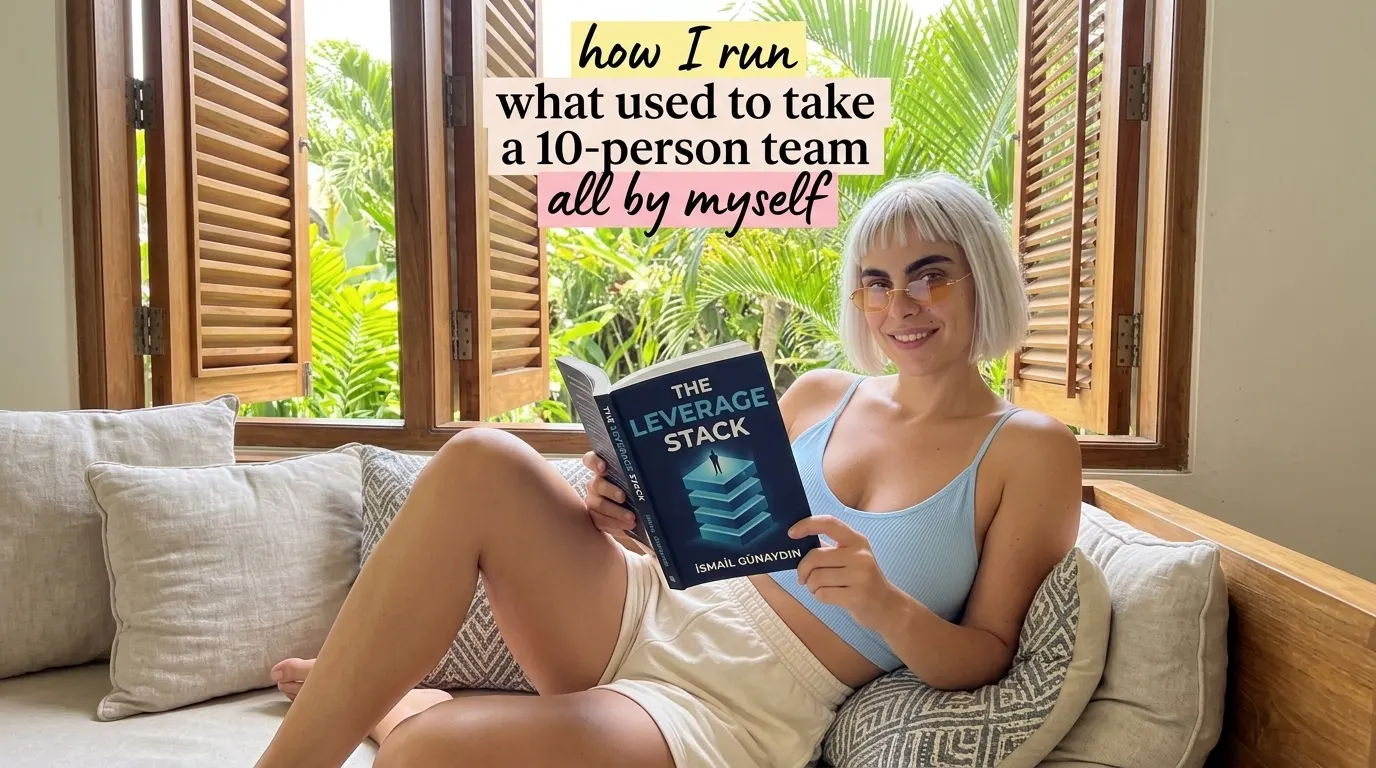
Hoarding and vanishing are both ways to fail
There are two ways to get the line wrong, and most of us fear only one.
Draw it too close to "keep," and you are back to doing everything, now with nicer words for it. Your hand on every email. Your eye on every comma. The book calls it fear dressed as craft.
Draw it too close to "hand off," and you vanish. You become fine, quick and the same as everyone.
So run two questions on every task. Am I keeping this because it needs me, or because letting go scares me? And, would a client who paid more feel cheated to learn I handed it off? The line sits where both come up clean. It is narrower than your fear wants, and wider than your tiredness wishes.
The research backs the worry about blind trust. In a Harvard and BCG study of 758 consultants, AI users were 19% less likely to get it right on a task just past the tool's edge. The edge is not marked. Your judgment is the marker.

The half-second at the altar
Nadia, the wedding photographer in the book, felt this exact dizzy moment. Her whole booking flow ran on its own. What do they even need me for?
The answer came on a Saturday. A bride glanced at her crying grandmother half a second before the kiss. Nadia caught it, not because anything told her to, but because she was in the room and cared. That frame became the one the couple framed.
So she drew her line on one page. Six things went to the machine: inquiries, contracts, reminders, delivery emails, filing, first drafts. Six stayed: the eye, the gut no on a couple, the handwritten line in the album, the shot list for an unusual day, what her work is for, and the final cull. The left side was what she did. The right side was who she was to the people who paid her.
I find that the part that stays is always smaller and better than you feared.

The chapter in The Leverage Stack that draws this line
This is the problem The Leverage Stack was written for.
Chapter 8, The Human Layer, gives you the four tests, the two checks for hoarding and vanishing, and the Keep/Delegate Line, one page with two sides that you look at again every quarter.
Chapter 2, The Inventory, is the step before it. It makes sure the list of things only you do is short because you sorted it, not because you flinched. See automate, delegate or stop doing a task.
For the research on who gains most from AI help, the NBER study of AI at work is worth a read. The line page is in the free workbook.
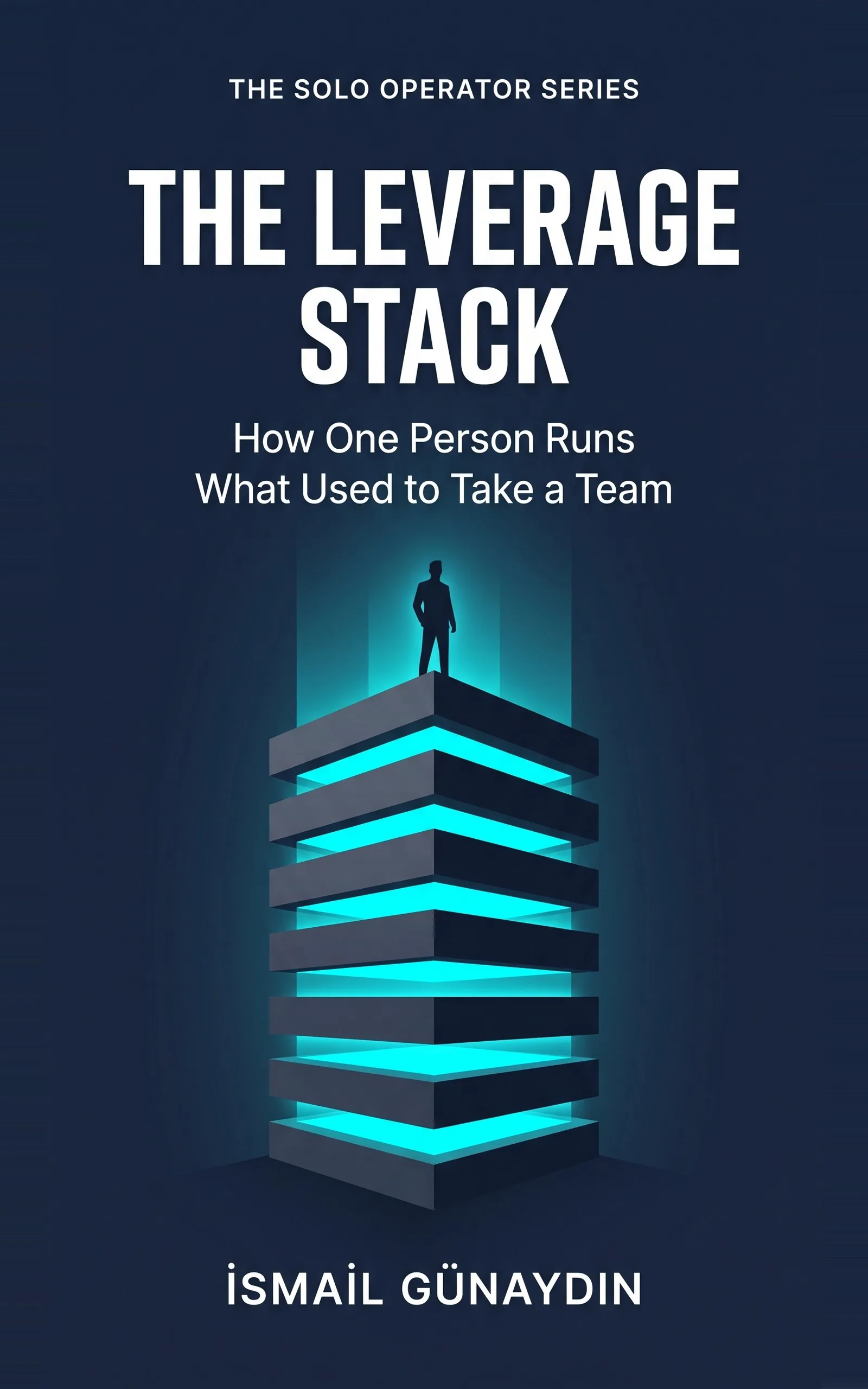
The book for this problem
The Leverage Stack
How One Person Runs What Used to Take a Team. By İsmail Günaydın, 80 pages.
Where this problem is in the book:
- The Human Layer
- The Inventory
Links go to Amazon. I wrote this book and earn a royalty on every sale. Amazon sets the price and handles delivery and returns.

Is The Leverage Stack the right book for you?
Yes, if
- You have handed a lot to AI and feel strange about what is left
- You worry your work will start to sound like everyone else's
- You hold on to tasks because letting go feels risky, and you are not sure if that is wise
Skip it if
- You have not handed anything off yet and want to start
- You want to hear that AI cannot do any real work
Fair doubts before you buy
Isn't this just telling me what I want to hear, that I'm special?
No. The chapter is just as hard on hoarding. If everything you do fits inside the four things, it says you have not honored your judgment, you have refused to test it. The list of what stays yours is meant to be short.
AI is getting better every month. Won't this line be out of date?
The book expects that. The line moves as the system earns trust, and you look at it again every quarter. What rarely changes are the four groups. What sits inside them shifts with evidence, not with fear.
Get The Leverage Stack
You are not disorganized, you are the bottleneck: eight layers catch the work that does not need your judgment, so only real decisions reach you.
Links go to Amazon. I wrote this book and earn a royalty on every sale. Amazon sets the price and handles delivery and returns.
Part of The Solo Operator Series, five short books that can be read in any order.

Questions people ask about this
- What tasks should not be done by AI?
- Judgment calls where a wrong answer costs a client or the business, the personal notes that only matter because a human wrote them, the final say on work with your name on it, and choices about what your business is for. AI can draft around all four. It should not own them.
- Will using AI make my business sound generic?
- It can, if you hand over the final say. AI writes competent work. Competent is the floor of your name, never the ceiling. Hand off the draft and keep the verdict, the 'not quite, again' on the ninth draft, and the work stays yours.
- Am I making myself replaceable by using AI?
- Usually the reverse. What AI takes is the formatting, the sorting, the reminding and the first drafts. None of that is why a client chose you. When those parts are carried, what is left is the part clients actually pay for.
- How do I know if I'm holding on to too much work?
- Ask of each task: am I keeping this because it needs me, or because letting go scares me? Fear dressed as craft is still fear. Then ask the other side: would a client who paid a premium feel cheated to learn I handed this off? The line sits where both answers are clean.
- Should I tell clients I use AI?
- The book does not set a rule for disclosure. It gives a test for each task instead: would this person feel betrayed to learn a machine wrote it? For a shipping note, no. For a note after a loss in their family, yes. Keep those in your own hands.
- Should I let AI handle prices, money or contracts?
- Let it prepare them, not finish them. The book's rule is to keep the highest-stakes facts out of the draft. Leave the price as a blank you fill from your own sheet, so a wrong number cannot be written for you. For a final send that cannot be undone, like a contract or a delivery, keep a human check on top of any automation.
Related problems
- You run a one-person business and you can't keep up. Here is what is actually broken.
Working more hours won't fix a one-person business that is behind. Find the tasks that only pass through you out of habit, then hand them off.
- Should I automate this task, delegate it to AI, or just stop doing it?
Not sure whether to automate a task, hand it to AI or keep it? Run it through four questions in a fixed order and stop at the first yes.
- How to stop checking everything AI writes: what to check, what to skip
Re-reading every AI draft saves you no time. Check the few things AI gets confidently wrong, skip the rest, and ship with a 30-second gate.
- Why do ChatGPT emails sound generic? A one-line prompt vs a real brief
ChatGPT gives you emails with the warmth of a parking ticket? Compare a one-line prompt with a four-part brief and see what is missing.
- Everything inside The Leverage Stack
Every chapter, who the book is for, and every problem it helps with.