Last updated
Is SEO dead now that people ask ChatGPT instead of Google?
You spent years learning SEO and now everyone says it's over
You read the headline again. SEO is dead. Someone on a podcast says it. A client forwards you the article. You think about all the hours you put into titles and links and page speed.
Was all of that a waste?
Then you ask ChatGPT a question in your own field, and it answers without a single link to your site. And for a second, the headline feels true.
It isn't. But something real did change, and it is worth getting exactly right.
Both camps get this wrong
One camp says nothing changed. Keep ranking, the AI will follow. The other camp says throw it all out and buy the new trick.
Both are wrong, and the numbers show why. When Ahrefs checked which pages AI engines cite in their answers, only about 12% of those pages ranked in Google's top ten. And the share of Google AI Overview citations taken from top-ten pages fell from about 76% to about 38% (Ahrefs). So ranking does not carry you into the answer. The first camp is wrong.
But the second camp sells rituals. The best known is a file called llms.txt. Google's own engineers have said on the record that they don't use it and likened it to the old keywords meta tag. A page the AI can't read gets nothing from a summary file it ignores.
The front door changed shape, not the house
Here is the real shift, in one line. Search did not die. It moved, and it changed shape on the way.
The old front door was a list. Ten blue links, and the customer chose. The new front door is an answer. The machine chooses, names a few, and the customer mostly takes its word. When an AI summary shows up on Google, people click a normal link about 8% of the time, against 15% with no summary (Pew Research Center).
So the question that ran your work, do I rank?, now has a harder twin: does the AI recommend me?
What you learned is not wasted. The first check an AI runs is plain old readability. Can its bot get in? Are your words real text, not pictures? That is the floor, and you already know how to build floors.
What still works, and what stopped working
Not every old habit carries over. Here is how the book sorts them.
| Old SEO habit | Still worth it? | Why |
|---|---|---|
| Letting crawlers into your site | Yes | An AI bot that is blocked in robots.txt reads nothing else. |
| Real text, not words inside pictures | Yes | A bot cannot read text baked into an image. |
| Clear headings and a plain line on what you do | Yes | It helps the bot tell what you are. |
| Ranking high for short category keywords | Less than before | Only about 12% of pages AI engines cite rank in Google's top ten. |
| Keyword-stuffed paragraphs | No | An AI needs a claim it can quote, not a list of nouns. |
| Long warm-ups before the answer | No | The AI reads the first sentence for an answer and moves on if it finds a throat-clear. |
| An llms.txt file as a shortcut | No | Google's engineers said they don't use it. |
The pattern is simple. Anything that helps a machine reach and read your page still counts. Anything that tried to game a ranking counts for less, or not at all.
Is AI taking over the searches that bring customers?
More and more of them. Semrush tracked Google's AI Overviews all through 2025. The share that went to plain informational questions fell from about 91% to about 57%, because AI answers spread into commercial, comparison and local searches. In plain words, AI stopped only defining things and started helping people choose who to hire.
Local search moved too. BrightLocal's 2026 research found nearly half of consumers had used AI to find a local business, up sharply from a small share the year before.
So SEO is not being switched off. But the buying questions, the ones that bring you customers, are the ones moving into AI answers fastest.

The one habit to change first
If I had to pick one change, it would be this. Stop writing the name of your aisle. Start writing the customer's sentence.
Your site says "bookkeeping services in [city]." That is a category. Your customer types a problem: "I'm a freelancer behind on my taxes. Do I even need a bookkeeper?" The two share almost no words. Google used to let the customer bridge that gap by scrolling and clicking. An AI reads her whole sentence once, and reaches for the page that already speaks it.
So the old keyword list is not enough. Go read the first lines of your last twenty inquiries, written before people learned your jargon. Those messy sentences are your real keywords now. Then answer each one in plain words, with the answer in the first sentence.
There is good news in all this. Your rivals are as lost as you. The field is new, and a small business that learns these rules early can be named ahead of firms ten times its size.
What to add on top of the SEO you already know
This is the problem Found by AI was written for. It does not tell you to burn your SEO down. It shows you the five checks to add on top.
The Introduction: The New Front Door sets out the shift from list to answer, with the numbers, and gives you a four-minute Snapshot to see where you stand.
Chapter 2, Can I Tell What You Are?, explains why the AI does not borrow your identity from your rankings. It gives you a one-page Entity Clarity Sheet: what you do, who for, where, in one sentence.
Chapter 5, Are You There When the Question Is Asked?, is the keyword chapter rewritten for AI. Its Prompt-Match Map puts the customer's real sentence next to your page and shows the gap.
If you want the side-by-side version, read GEO vs SEO. The free Found by AI workbook has every tool as a printable page.
The book for this problem
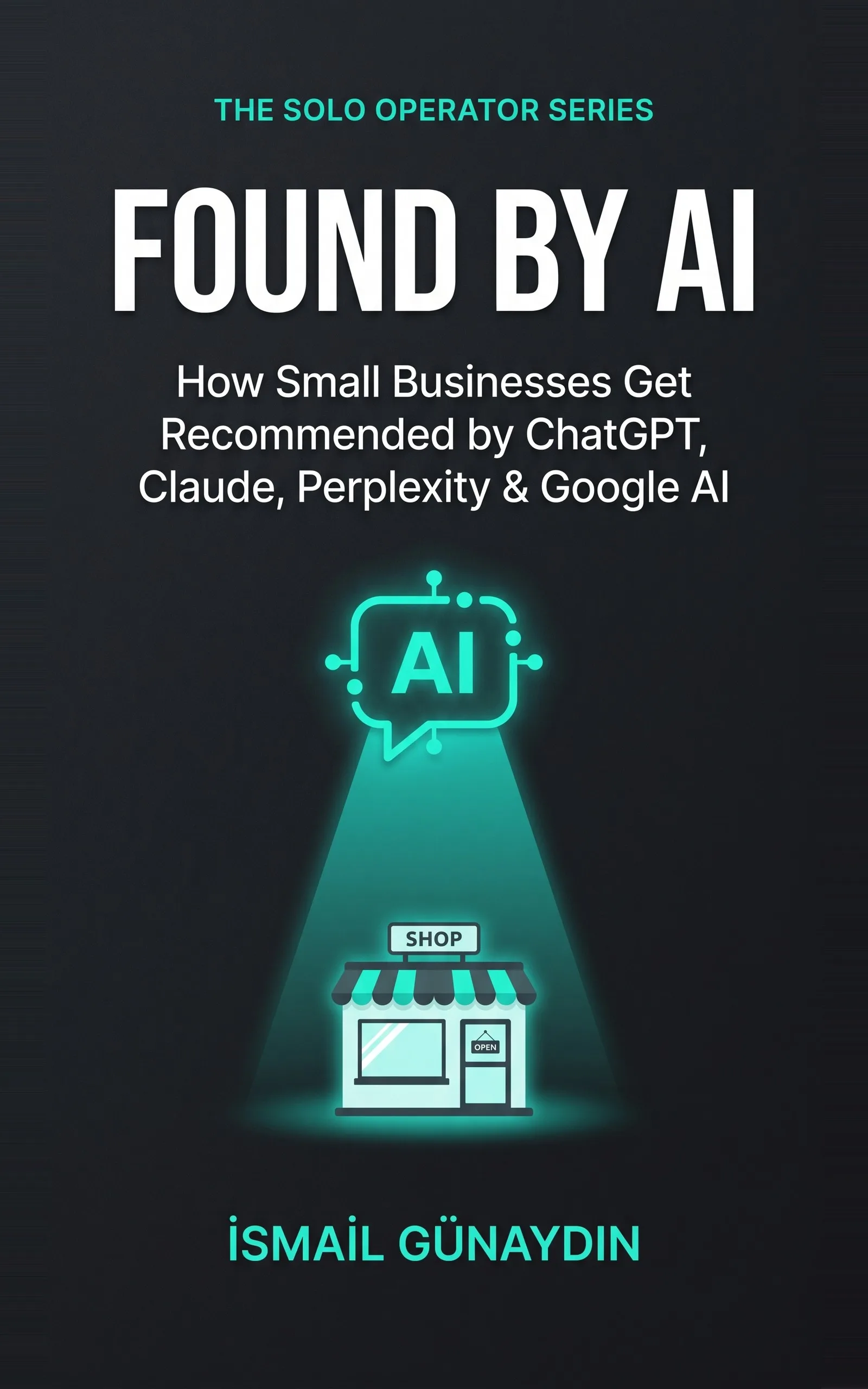
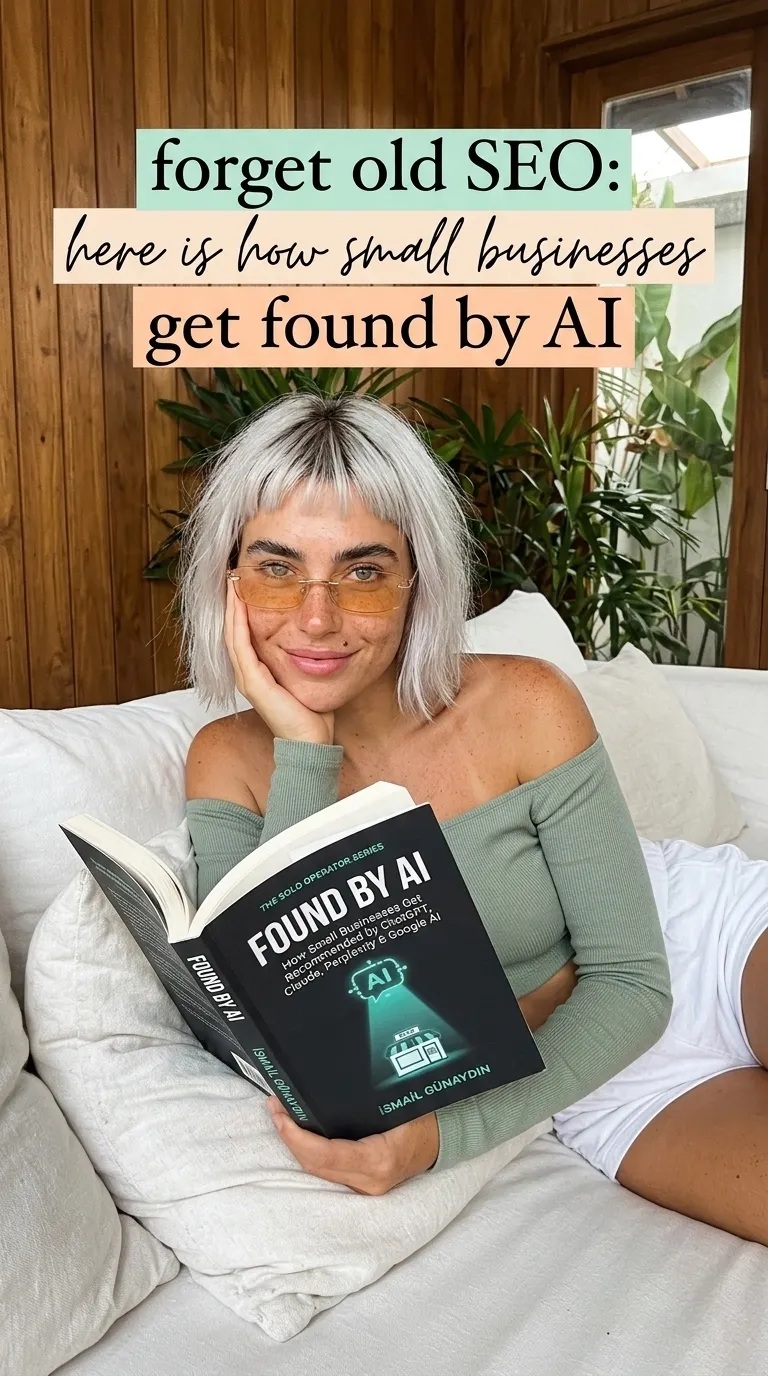
Found by AI
How Small Businesses Get Recommended by ChatGPT, Claude, Perplexity, and Google AI. By İsmail Günaydın, 70 pages.
Where this problem is in the book:
- Introduction: The New Front Door
- Can I Tell What You Are?
- Are You There When the Question Is Asked?
Links go to Amazon. I wrote this book and earn a royalty on every sale. Amazon sets the price and handles delivery and returns.
Is Found by AI the right book for you?
Yes, if
- You spent years on SEO and now wonder if it was a waste
- You keep hearing that SEO is dead and don't know what to believe
- You were asked to do AI search at a small company with no budget
Skip it if
- You want someone to tell you to drop SEO and chase a new trick
- You run enterprise SEO with a team and paid tools
Fair doubts before you buy
Every year someone says SEO is dead. Why listen now?
Fair. The book does not say it is dead. It says the front door changed shape, from a list to an answer, and shows the numbers behind that. Then it gives you five checks to run, not a prophecy.
Do I need to learn a whole new field called GEO?
No. The book skips the labels. It asks five plain questions an AI asks about your business, and each one has a one-page tool. A lot of it builds on what you already know about readable pages.
Get Found by AI
An AI names a business only after five quiet checks pass, and each check can be fixed with a one-page tool.
Links go to Amazon. I wrote this book and earn a royalty on every sale. Amazon sets the price and handles delivery and returns.
Part of The Solo Operator Series, five short books that can be read in any order.
Questions people ask about this
- Is SEO dead in 2026?
- No. Search moved and changed shape. People still search, but more of them get an answer from an AI instead of a list of links. SEO basics like readable pages still matter. What is new is that the AI has its own way of deciding who to name.
- Is SEO still worth it for a small business?
- Yes, if you add the AI layer on top. A page an AI cannot reach or read will not be named, so the basics are still the floor. But ranking alone no longer gets you into the answer, so you also need clear identity, outside trust and quotable answers.
- Does ranking on Google still help with AI answers?
- Less than you would think. When Ahrefs checked which pages AI engines cite, only about 12% ranked in Google's top ten. The share of AI Overview citations from top-ten pages fell from about 76% to about 38%.
- What is replacing SEO?
- Nothing is replacing it outright. A new question sits beside it: does the AI recommend me? Some people call that work GEO or AI SEO. The book calls it answering five questions: can it find you, tell what you are, trust you, quote you and meet the real question.
- Why are my keywords not working in ChatGPT?
- Because customers ask ChatGPT full sentences about their problem, not short category keywords. You wrote bookkeeping services. They type I'm a freelancer behind on my taxes, do I even need a bookkeeper. The AI matches their words, not yours.
- Is AI bad for SEO?
- It cuts clicks, which hurts if clicks were your only goal. Pew Research Center found people click a normal link about 8% of the time when Google shows an AI summary, against 15% when there is none. But the AI still has to read pages to write its answers. The win moves from the click to being named inside the answer.
Related problems
- GEO vs SEO: what is the difference, and which one does a small business need?
GEO vs SEO side by side: ranking in a list versus being named in an AI answer. See what each one rewards and which one a small business needs.
- My website traffic dropped after Google AI Overviews started. What do I do this week?
Your Google clicks fell after AI Overviews arrived. Here is what changed, four steps to take this week, and what to stop wasting time on.
- How does ChatGPT decide which business to recommend? The five checks, in order
How ChatGPT, Perplexity and Google's AI pick which businesses to name: the five checks, in order, and where a small business should start.
- Everything inside Found by AI
Every chapter, who the book is for, and every problem it helps with.