Last updated
When to stop HSA contributions before Medicare: the six months that reach backward

| Step | The rule | In the book's example |
|---|---|---|
| 1. Pick the month you will apply | Applying for Medicare, or for Social Security at 65 or later, both bring Part A | You apply in December |
| 2. Count back 6 months | Free Part A can start up to 6 months before you apply, always on the 1st | Part A can start June 1 |
| 3. Check the floor | It never starts before the month you turned 65 | You turned 65 before June, so June stands |
| 4. Take the month before | Money put in for a Medicare month is excess | May is the last safe month, seven months before December |
| 5. Tell payroll | Employer deposits count too | Give the benefits office the stop date in writing |
What the table counts, one step at a time
The rule itself is short. The IRS puts it in Publication 969: "Beginning with the first month you are enrolled in Medicare, your contribution limit is zero."
Enrolled in any part of Medicare. Part A alone counts. And the trigger is enrolling, not turning 65.
The hard part is that Part A can start before the day you apply. If you qualify for free Part A, CMS says it "begins 6 months back from the date they apply, but no earlier than the first month they were eligible for Medicare." For most people, that first month is the month they turned 65.
That reach-back is good news for most people. It adds months of hospital coverage. For an HSA, it turns a few deposits into excess.
So the table walks the book's example. You apply in December. Part A can reach back to June 1. June is now a Medicare month. Money put in for June would be excess. The last safe month is May, which is seven months before the month you apply.
The floor matters too. If you apply less than 6 months after your birthday month, Part A reaches back only to your birthday month.

Six months or seven? Both are right
You will see two numbers, and it looks like a mistake. It isn't.
Medicare's Working past 65 page says to stop contributing "6 months before you retire or apply for benefits from Social Security." That is the length of the reach-back.
The book counts calendar months. Six months of backdating, plus the month you apply, means the last safe month is seven months before the application month.
The IRS rule is the one that decides the tax. So the book says what we would say too: ask a tax professional to check your dates before you file.

Applying for Social Security counts as applying for Medicare here
This is the link most people miss.
Under Social Security's rules, once you are 65 and getting Social Security benefits, you are entitled to Part A. So if you keep working, skip Medicare, and later apply for retirement benefits, Part A comes with them. And it reaches back the same 6 months.
Picture it. You are 67, still working, still adding to the HSA each payday. You finally file for Social Security in December. Without meaning to, you just made June a Medicare month. And July. And every month since.
That is why the book's chapter title says "Seven Months Before You Apply." The clock is set by the day you apply, not your birthday.

The year Medicare starts
In the year your Medicare starts, you can still put money in for the months before it. The IRS counts month by month.
Publication 969 gives an example for 2025. A person with self-only coverage turned 65 in July 2025 and enrolled in Medicare. The limit was $4,300 plus the $1,000 catch-up for age 55 and older, so $5,300 for a full year. With 6 eligible months, the limit was $5,300 times 6, divided by 12. That is $2,650.
For 2026, the IRS limits are $4,400 for self-only coverage and $8,750 for family coverage, with the same $1,000 catch-up. These change each year.

Can you still spend the HSA money after Medicare starts?
Stopping contributions does not lock the account. The money you already saved stays yours.
IRS Publication 969 says you can take tax-free money out of an HSA to pay for qualified medical expenses. It also says HSA money can't pay for insurance, with a few exceptions. One of them is Medicare and other health coverage if you were 65 or older. Premiums for a Medicare supplement policy, such as Medigap, are left out.
So, in plain words:
- Medicare premiums can be paid from the HSA once you are 65 or older.
- Medigap premiums are not on the list.
- New deposits stop once you are enrolled in any part of Medicare.
Publication 969 also says there is no extra tax on money taken out after you reach 65. How the rest of a withdrawal is taxed depends on what you spend it on. A tax professional can check your own case.

Where the book does the month count with you
This is the problem The Year You Turn 65 was written for. Nancy Whitaker gives the HSA rule its own chapter, because one missed month can turn into a tax.
Seven Months Before You Apply: The Money Account That Has to Stop has the IRS and CMS wording side by side, the December example, the floor at your birthday month, the 2025 and 2026 limits and a fill-in box for your own last safe month.
Still Working at 65 shows how the same 6-month reach-back works when you sign up for free Part A while still at your job.
The book is not affiliated with Medicare or Social Security, and it is not tax advice. Social Security can tell you the exact date your Part A will start if you apply after 65. Your State Health Insurance Assistance Program (SHIP) offers free counseling on the Medicare side.
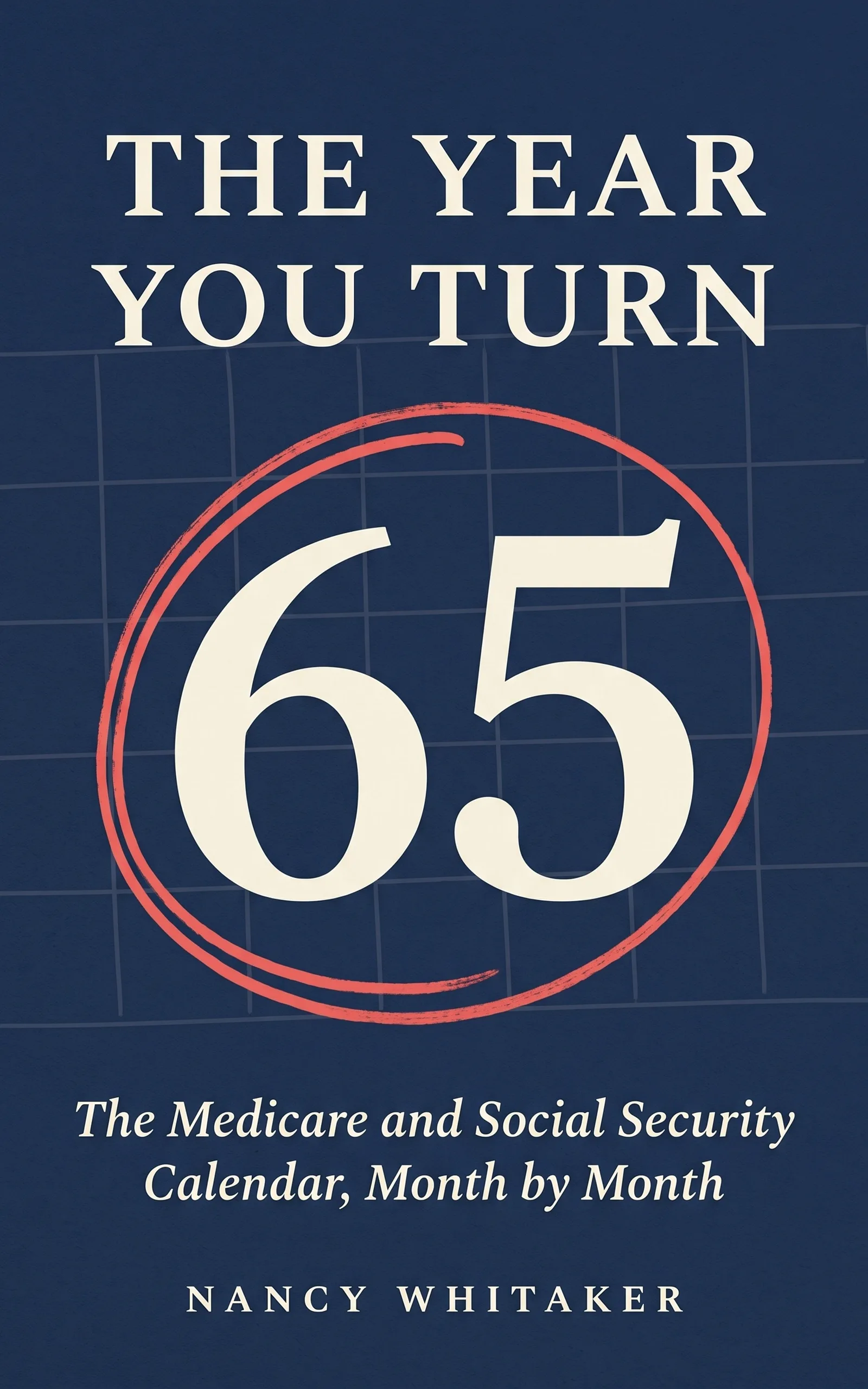
The book for this problem
The Year You Turn 65
The Medicare and Social Security Calendar, Month by Month. By Nancy Whitaker, 162 pages.
Where this problem is in the book:
- Seven Months Before You Apply: The Money Account That Has to Stop
- Still Working at 65
Links go to Amazon. ToolGenX publishes this book under a pen name and earns from every sale. Amazon sets the price and handles delivery and returns.

Is The Year You Turn 65 the right book for you?
Yes, if
- You are working past 65 and you or your employer still put money into an HSA
- You plan to apply for Social Security or Medicare in the next year
- You saw the six-month rule and the seven-month rule and want to know which is which
Skip it if
- You do not have a Health Savings Account (this rule does not touch you)
- You need to fix money that already went in (that is a question for a tax professional)
Fair doubts before you buy
Why would I buy a Medicare book for one HSA rule?
You might not. If the HSA is your only question, the IRS's Publication 969 has the rule. The book is for the larger year around it: the HSA count sits next to the Part B window, the drug coverage letter and the Medigap window, all on one calendar.
Doesn't my benefits office handle this?
They stop the deposits when you tell them to. Medicare's instruction names two people, you and your employer. If nobody tells payroll the date, the employer deposits keep coming after your Medicare starts.
Get The Year You Turn 65
Turning 65 starts several clocks nobody mails you; the book lines them up month by month from your own birthday, with every number sourced.
Links go to Amazon. ToolGenX publishes this book under a pen name and earns from every sale. Amazon sets the price and handles delivery and returns.
Not affiliated with Medicare, the Social Security Administration, or any government agency. This book lays out published rules and dates. It is not legal, tax, medical or financial advice. For your own record, call your State Health Insurance Assistance Program (SHIP) or Social Security.

Questions people ask about this
- Can I contribute to an HSA after I enroll in Medicare?
- No. IRS Publication 969 says that beginning with the first month you are enrolled in Medicare, your contribution limit is zero. Any part of Medicare counts, including Part A alone.
- Why does Medicare say to stop HSA contributions 6 months before?
- Because free Part A can start up to 6 months before the date you apply, but no earlier than the first month you were eligible. Medicare's guidance says to stop 6 months before you retire or apply for Social Security. Counting by months, the last safe month to contribute for is the one before the backdating starts, which is seven months before the month you apply.
- Does applying for Social Security at 65 sign me up for Medicare Part A?
- Yes. Under Social Security's rules, once you are 65 and getting Social Security benefits, you are entitled to Part A. So applying for retirement benefits at 65 or later also brings Part A, with the same backdating.
- What is the penalty for HSA contributions after Medicare starts?
- The IRS treats contributions made during backdated Medicare coverage as excess. It says you generally pay a 6% excise tax on excess contributions. How to fix them depends on your tax situation, so take Publication 969 to a tax professional.
- How much can I put in my HSA the year I turn 65?
- The IRS counts month by month. In its example, a person with self-only coverage turned 65 in July 2025 and enrolled in Medicare. The 2025 limit was $4,300 plus a $1,000 catch-up, so $5,300. With 6 eligible months, the limit was $2,650.
- Can I use my HSA to pay Medicare premiums?
- For most of them, yes. IRS Publication 969 lists Medicare and other health coverage as an insurance cost you can pay with HSA money if you were 65 or older. It leaves out premiums for a Medicare supplement policy, such as Medigap. Money you saved before Medicare stays in the account after your contribution limit drops to zero. Ask a tax professional about your own case.
Related problems
- Still working at 65: can you delay Medicare Part B? Start with the size of your employer
Whether you can put off Part B while working depends on one number: 20 employees. See who pays first, the 8-month window and the forms.
- When do you sign up for Medicare at 65? The seven-month window, month by month
Your Medicare sign-up window is seven months long and built around your birthday. See when it opens, when it closes and when Part B starts.
- What to do 3 months before turning 65: a month-by-month Medicare checklist
Three months before your 65th birthday month, your Medicare window opens. A month-by-month checklist of what to do, from a year out to after.
- Everything inside The Year You Turn 65
Every chapter, who the book is for, and every problem it helps with.