Last updated
Free college classes for seniors by state: what the lists leave out

You searched, and found the same list forty times
You have a little time now. You always meant to take that history class. So you type it in, and up comes a list of states where seniors go to college free.
There is a cheerful photo. There is a map. Then you open the next result, and it is the same list in a new font.
None of them tells you what you will pay, or whether you can get in. You close the tab.
This page is not legal, tax, medical or financial advice. It sets out the rules the book found, so you know what to ask your own college.

Why the free lists send you to the wrong office
The lists are written to be shared, not used. They give one fact per state and stop.
That one fact is usually the word free. It is the least useful word on the page.
In Nancy Whitaker's book, eighteen states were confirmed from the statute, the state agency or a public college's own page. Two common entries, Pennsylvania and Arizona, could not be confirmed and were left out on purpose.
What came back was four rules the lists skip. Each one can change the plan.

The first surprise is the age
You may have filed this under something for when you turn 65. In ten of the eighteen states, it starts at 60. The table above shows them.
That is five years many women give away without knowing it. Where a state names two ages, the lower one usually lets you sit in the room and the higher one lets you earn credit. Tennessee is the clear case: audit at 60, credit at 65.

Tuition is one line on the bill
Every one of these programs waives tuition. Tuition is not the whole bill.
The sharpest case is Greenfield Community College in Massachusetts. A senior without a bachelor's degree gets tuition and half of one fee waived. A senior who already has a bachelor's degree gets only half of that fee waived, and pays the tuition.
Read that twice. With a degree, there is no tuition waiver there at all.
Elsewhere the fees are smaller, but they are usually there. New York's CUNY charges a $65 semester fee plus other fees. Tennessee allows up to $70 a semester.
It runs the other way too. Georgia covers tuition and mandatory fees. Virginia Commonwealth University says senior citizens may take courses without paying tuition or mandatory fees.

Credit, a seat and your income
Florida, New York and North Carolina are audit only. You sit in, you listen, and there is no grade or transcript. That is a real thing to want. It is just not a degree.
Most other states give credit with a cap. Texas caps it at six hours a term. Washington allows two courses at a time.
The seat is not promised. Seventeen of the eighteen are space-available. Florida's statute says people paying full fees shall have priority. A popular class may never have a free seat.
Three states test your income. In Virginia, taxable income of $23,850 or less lets you take courses for credit. Above it, you may audit only. Illinois and Ohio have income tests too.
One more thing. North Carolina once let people 65 and up take credit courses free. The legislature repealed it from July 1, 2009. A benefit written in law lasts until the law changes.

Three more states, checked on the college's own page
Search results cover all fifty states. The book's table covers eighteen. Here are three more we checked in October 2026 on the public university's own page. They are not in the book, so treat them as a starting point and call the college.
- Alaska, 65. The University of Alaska's Board of Regents policy waives regular tuition for Alaska residents 65 or older on the first day of class, on a space-available basis. It is tuition only. Fees remain.
- Arkansas, 60. The University of Arkansas catalog says residents 60 or older may have tuition and fees waived for on-campus courses. Seats are space-available, and you register just before the term starts.
- Delaware, 60. The University of Delaware's over-60 program waives tuition and mandatory fees for Delaware residents 60 or older who are admitted to a degree program. You still pay course fees, books and supplies.
Notice the same four questions show up again: the age, the fees, the seat and what you must enroll in. That is the pattern in every state.

The one call that settles it
Look up your state's law first. You want to know if it says the college shall waive tuition or may waive it. That one word decides if you have a right or only a chance.
Then call the Bursar, not Admissions. Ask this: what is the total out-of-pocket cost for one three-credit course under the senior waiver, including every fee?
Get the answer in writing if you can. Note who said it and when. These rules can change each term.

What Nancy Whitaker's book adds
This is the problem The Year You Retire was written for. The book is about the benefits that become yours and the rules nobody hands you.
Sitting in a Classroom Again has the full eighteen-state picture: ages, fees, credit caps, the seat rules, the income tests and the North Carolina repeal. It also lists the branded names to search for, like Program 60 or Golden ID, which are easier to find than the generic phrase.
A Year From Now puts it in one line we keep coming back to: sixty, not sixty-five. A woman who waits for 65 to start asking has given away five years.
A weekly class is also a fixed day and a room with people in it. If the first months of retirement feel shapeless, that matters more than it sounds. There is more on that in the first year of retirement.
| Entry age | States |
|---|---|
| 60 | California, Florida, New York, Ohio, Virginia, Washington, Massachusetts, Maryland, Alabama, Tennessee (to audit) |
| 62 | Georgia, Minnesota |
| 65 | Texas, Illinois, North Carolina, New Jersey, Kentucky, Michigan (a discount, not a waiver) |
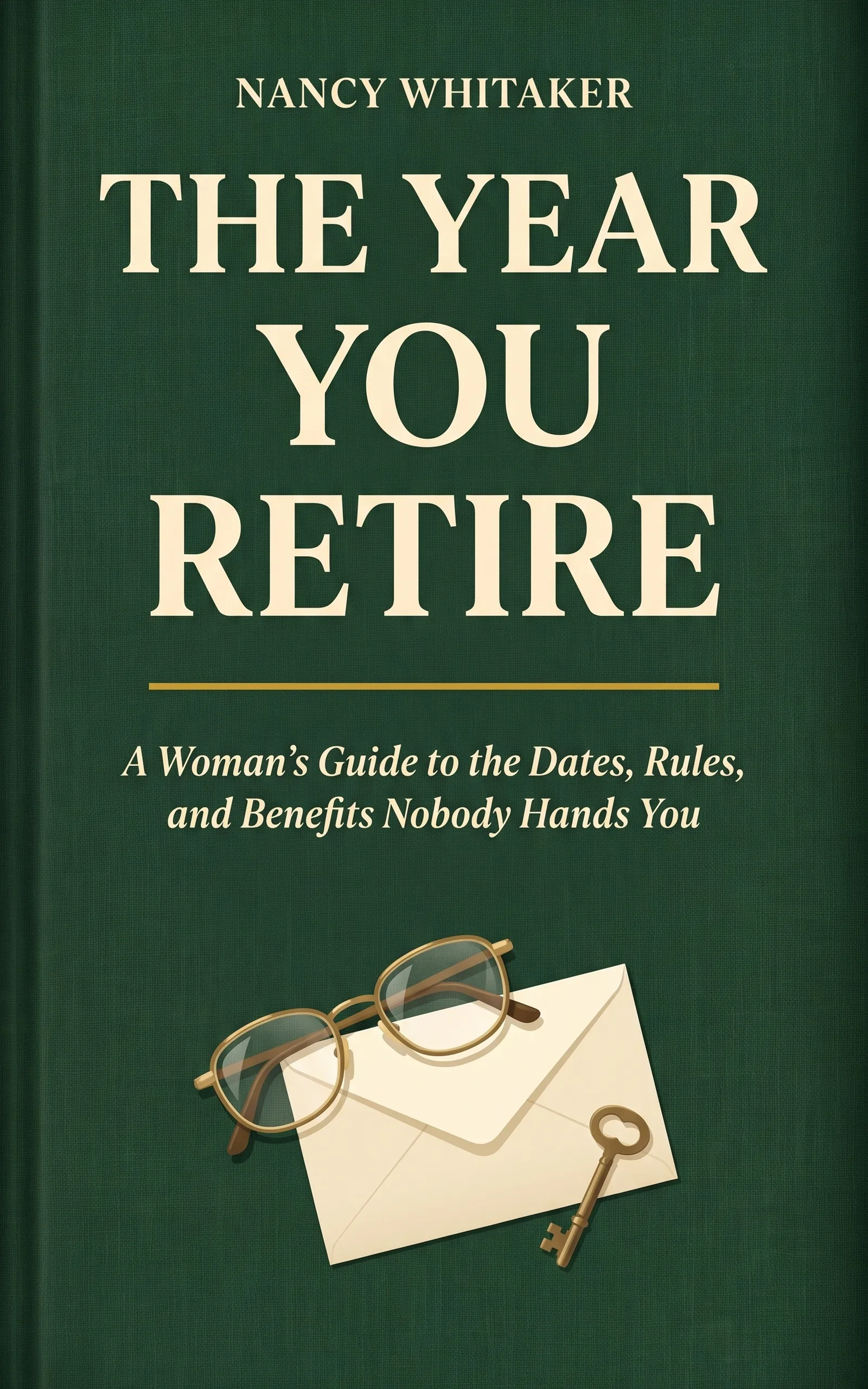
The book for this problem
The Year You Retire
A Woman's Guide to the Retirement Dates, Rules, and Benefits Nobody Hands You. By Nancy Whitaker, 169 pages.
Where this problem is in the book:
- Sitting in a Classroom Again
- A Year From Now
Links go to Amazon. ToolGenX publishes this book under a pen name and earns from every sale. Amazon sets the price and handles delivery and returns.

Is The Year You Retire the right book for you?
Yes, if
- You are near 60 and assumed college waivers start at 65
- You want a class with a fixed day and a room in your first retired year
- You read a list of free states and want the real rules
Skip it if
- You live in Pennsylvania or Arizona; the book could not confirm those rules from an official source
- You need a promised seat in a popular course
Fair doubts before you buy
There are dozens of free lists online. Why read this?
Those lists are not exactly wrong. They just leave out the four things that decide if you can do it: the fees, credit or audit, the seat and the income test. The book checked each state from its statute or a public college's own page.
Rules change. Won't a book go out of date?
Yes, and it says so. That is why the chapter ends with how to find your own state's rule and the exact question to ask, rather than a table to trust forever.
Get The Year You Retire
Retirement starts deadlines nobody mails you; the book gathers them from six federal agencies and fifty states with a source on every number.
Links go to Amazon. ToolGenX publishes this book under a pen name and earns from every sale. Amazon sets the price and handles delivery and returns.
This book lays out published rules and dates. It is not legal, tax, medical or financial advice. For your own record, call your State Health Insurance Assistance Program (SHIP) or Social Security.

Questions people ask about this
- At what age can seniors take free college classes?
- It depends on the state. In the book's confirmed states, ten use 60, including California, Florida, New York and Virginia. Georgia and Minnesota use 62. Texas, Illinois and several others use 65.
- Are free college classes for seniors really free?
- The waiver covers tuition, which is one line on the bill. Fees often remain. At Greenfield Community College in Massachusetts, a senior who already has a bachelor's degree gets only half of one fee waived. Georgia and Virginia also cover mandatory fees.
- Can seniors get college credit for free classes?
- In some states. Florida, New York and North Carolina are audit only. Ohio and Virginia give credit only below an income line. Alabama's community college program requires credit enrollment.
- Do seniors get priority for a seat in the class?
- No. Seventeen of the eighteen confirmed states make it space-available. Florida's rule says people paying full fees have priority. You often register late, in the final weeks before classes start.
- How do I find my state's senior tuition waiver?
- Start with your state legislature's website and look for whether the law says the college shall or may waive tuition. Then check the state higher education agency, then the campus page, often under the Registrar or Bursar.
Related problems
- Your first year of retirement feels empty, and every day looks the same. Is that normal?
Retirement feels flat by the third Monday? What went missing is the structure your job gave you. Here is how to replace it one piece at a time.
- Looking for a retirement gift for a woman that she will actually use?
A retirement gift for a woman that does more than sit on a shelf: a guide to the dates and benefits nobody hands her, plus a note on how to give it well.
- Your job just ended and you are past 65. Here is your Medicare deadline.
Your job ended after 65? You have eight months to sign up for Part B. Here is when the clock starts, why COBRA does not stop it, and what late costs.
- Everything inside The Year You Retire
Every chapter, who the book is for, and every problem it helps with.