Last updated
ChatGPT doesn't recommend my business. It names three others instead. Why?
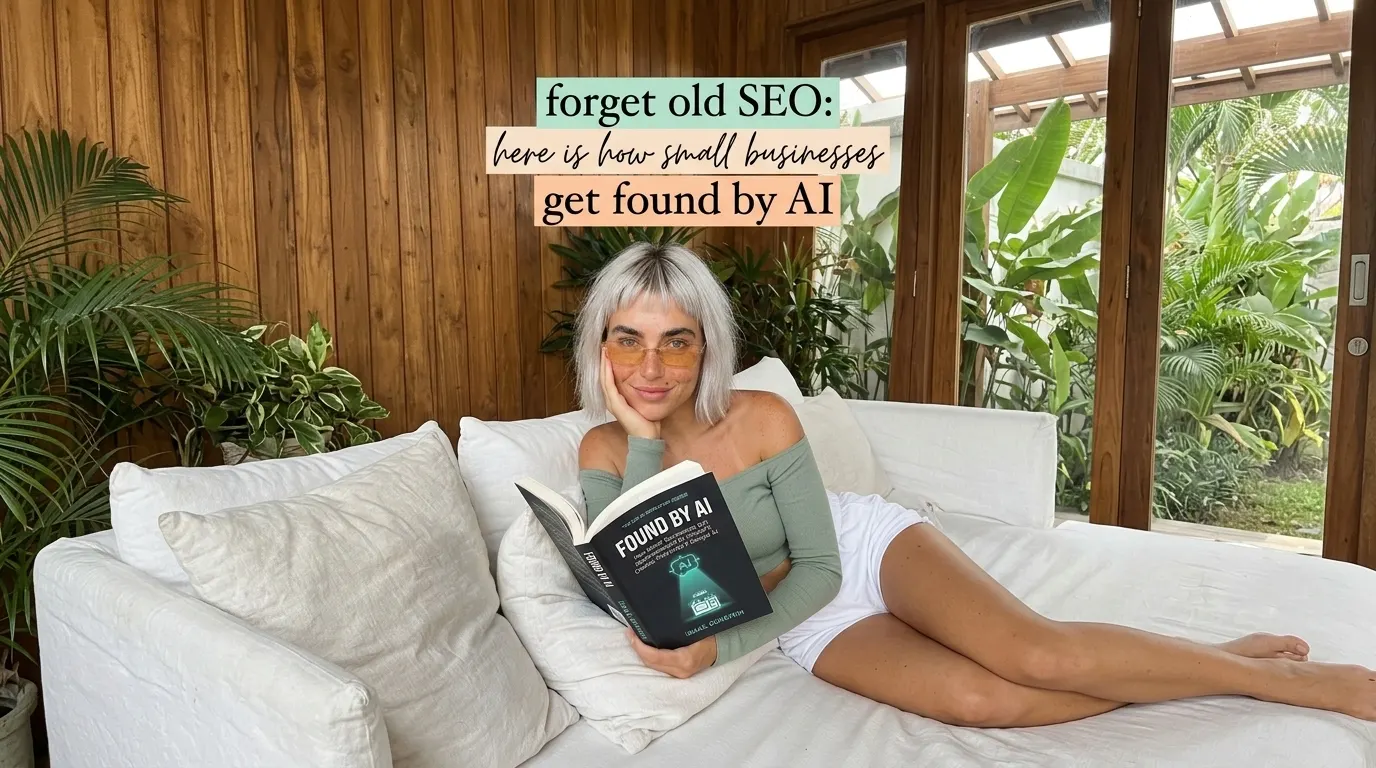
You asked the AI for someone like you and it named three strangers
It is late. You open ChatGPT and type the question your best customer would type. Something like: who is a good bookkeeper for freelancers near me?
The answer is kind and useful. It names three businesses, with a warm line about each one. You read it twice, because you are sure you missed your own name.
You didn't miss it. It is not there.
And then comes the thought you don't say out loud. I am better than all three of them. You may well be. That is just not what the machine was checking.
Posting more and climbing Google has not fixed it
The usual advice is to do more of the old thing. Post more. Get more links. Climb the Google results. So you try, and the AI answer still skips you.
Here is why that does not work. Ranking on Google and being named by an AI are two different games. When Ahrefs checked which pages AI engines cite, only about 12% of them were in Google's top ten. The share of Google AI Overview citations that come from top-ten pages fell from about 76% to about 38% (Ahrefs). The AI is not copying Google's list. It builds its own picture of you.
And the answer now matters more than the click. When an AI summary shows up on Google, people click a normal link about 8% of the time, against 15% when there is no summary. They click a link inside the summary only 1% of the time (Pew Research Center). An answer has room for about three names, not ten. If you are not one of them, you are mostly not there.
Five quiet checks happen before any AI says a name
Before an AI names a business, it has to get past five questions about it. Not in those words. But in effect, every answer is gated on them.
First, can it even find you? If its crawler, the bot that reads websites, can't get in or finds no readable words, nothing else counts. Second, can it tell what you are? A homepage that says "empowering your financial future" and never says "bookkeeper" gives it nothing to sort.
Third, does it trust you enough to name you? Putting you in an answer is the AI vouching for you. Your own site is only your own word, so it looks for a second voice. Fourth, can it quote you cleanly? It needs one plain sentence it can lift into the answer whole.
Fifth, are you there when the question is asked? Your pages have to use the words real customers type, not the name of your trade.
Miss one and you drop out, however good the work is. Priya, the bookkeeper the book follows, is excellent at her job. She was failing four of the five.
The good news hiding in a bad answer
This part is easy to miss. Your rivals are just as lost as you are. The bakery down the road has not cracked this. Neither has the inspector, or the other bookkeeper.
Size was never what the AI was looking for. A one-person business that is easy to find, sort, trust and quote can be named ahead of a firm ten times its size. That window is open now because the field is new.
So this is not a verdict on you. It is a list of five things, and each one can be checked.
Take the four-minute snapshot before you change anything
Don't fix anything yet. Look first.
Open ChatGPT, Perplexity and Google's AI. Ask each one the exact questions your best customers would ask to find someone like you, in their words. Write down whether you show up, who shows up instead, and what the AI seems to know about you.
That is the AI Visibility Snapshot, the first tool in the book. It tells you which check you fail. If it looks like the AI can't see your site at all, start with the door. The free AI crawler checker shows if your site is turning AI bots away. The page on robots.txt blocking AI crawlers walks through the fix.
One shortcut I would skip. Someone will tell you to add a file called llms.txt, as if it were a password for AI. Google's own engineers have said they don't use it. Fix the pages the AI actually reads.
Check the two doors ChatGPT uses to find businesses
When ChatGPT searches the web for an answer, it has two ways in. Both are worth a five-minute check.
OpenAI's own search bot. It is called OAI-SearchBot. OpenAI says sites that block it in robots.txt are not shown in ChatGPT search answers, and that a change can take about 24 hours to show up (OpenAI crawler docs, checked 2026-10-21). Open yoursite.com/robots.txt and make sure no line turns it away.
Other search engines. OpenAI says ChatGPT search also uses third-party search providers and content from partners (OpenAI). So it is not only about Google. If you have never checked whether Bing has your site, Bing Webmaster Tools is free and shows which of your pages it has.
Neither door gets you named on its own. They only make sure you can be considered.
Reviews are the outside voice most owners already have
Many guides on this question say the same thing: the AI trusts what other people say about you more than what you say about yourself. The book agrees. Your own site is your own word. The AI looks for a second voice before it vouches for you.
For most small businesses, the fastest second voice is reviews. The book's rules for them are strict.
- Ask on a platform you don't own. A review on your own site is still your say-so.
- Ask, then step back. Tell a happy client where to leave a review. Never tell them what to write.
- Leave the imperfect ones up. In the book, Priya kept a mildly critical review about her email response time. A wall of flawless praise reads as staged, to the machine and to people.
- Never buy or fake them. Platforms hunt fake reviews, and when staged trust is found out, it costs more than it saved.
Then put a few real reviews on your own site as plain text, with permission, not trapped inside a slider image the AI cannot read.

Found by AI walks the five checks in order
This is the problem Found by AI was written for. The book is built on the five checks, one chapter each, in order.
The Introduction: The New Front Door lays out the five questions and gives you the Snapshot, so you know where you stand before you touch your site.
Chapter 1, Can I Even Find You?, gives you the AI Crawler Access Check: four plain tests, from "is the bot allowed in" to "does the page say what you do in one sentence." You will watch Priya fail all four, then fix them in an afternoon without a developer.
Chapter 3, Do I Trust You Enough to Name You?, covers the part most small owners leave empty: the outside voice. It shows how to earn your first honest mentions with no budget, and why a faked review costs more than it saves.
If you want the tools before you buy anything, the free Found by AI workbook has all seven as printable pages.
The book for this problem
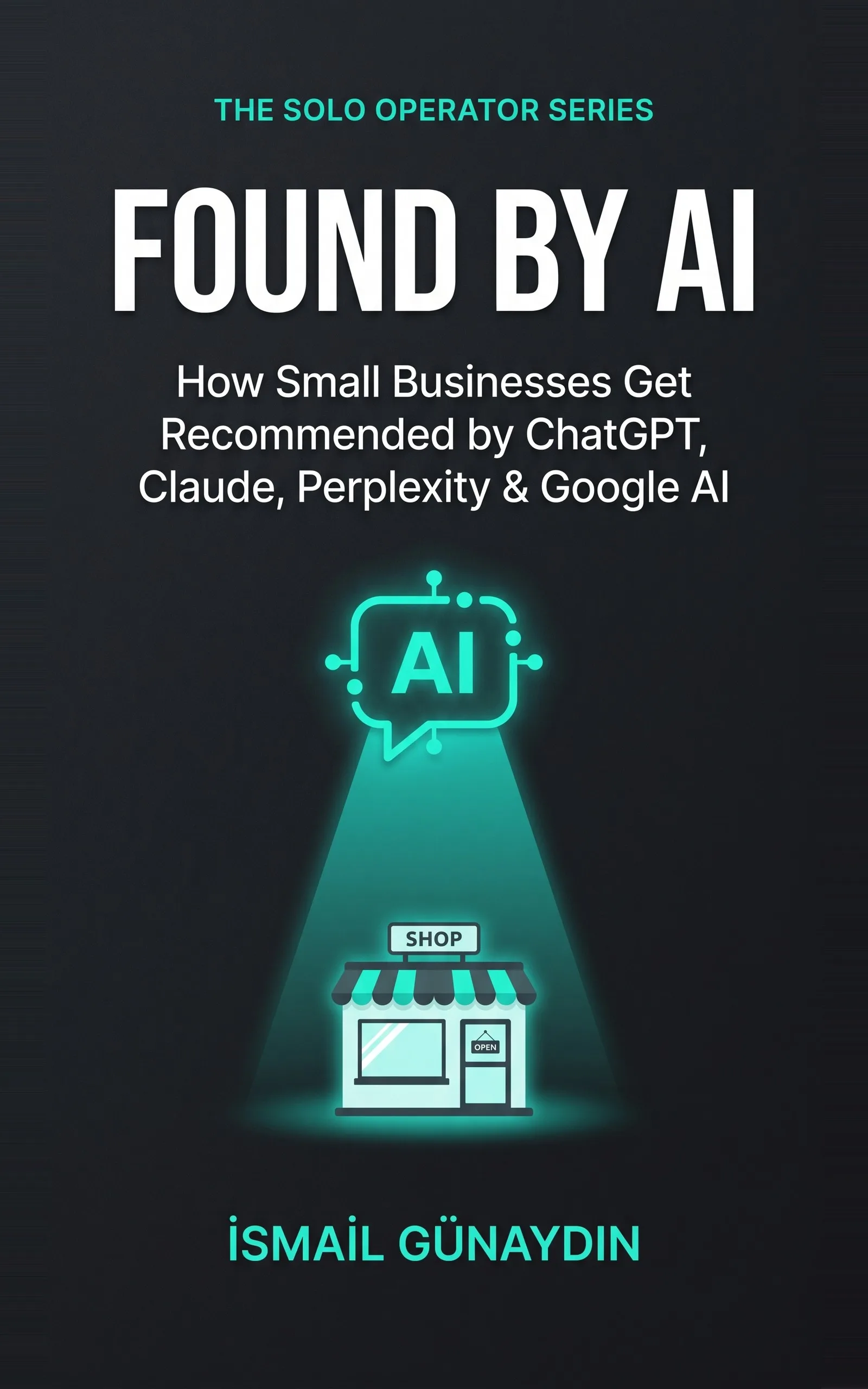
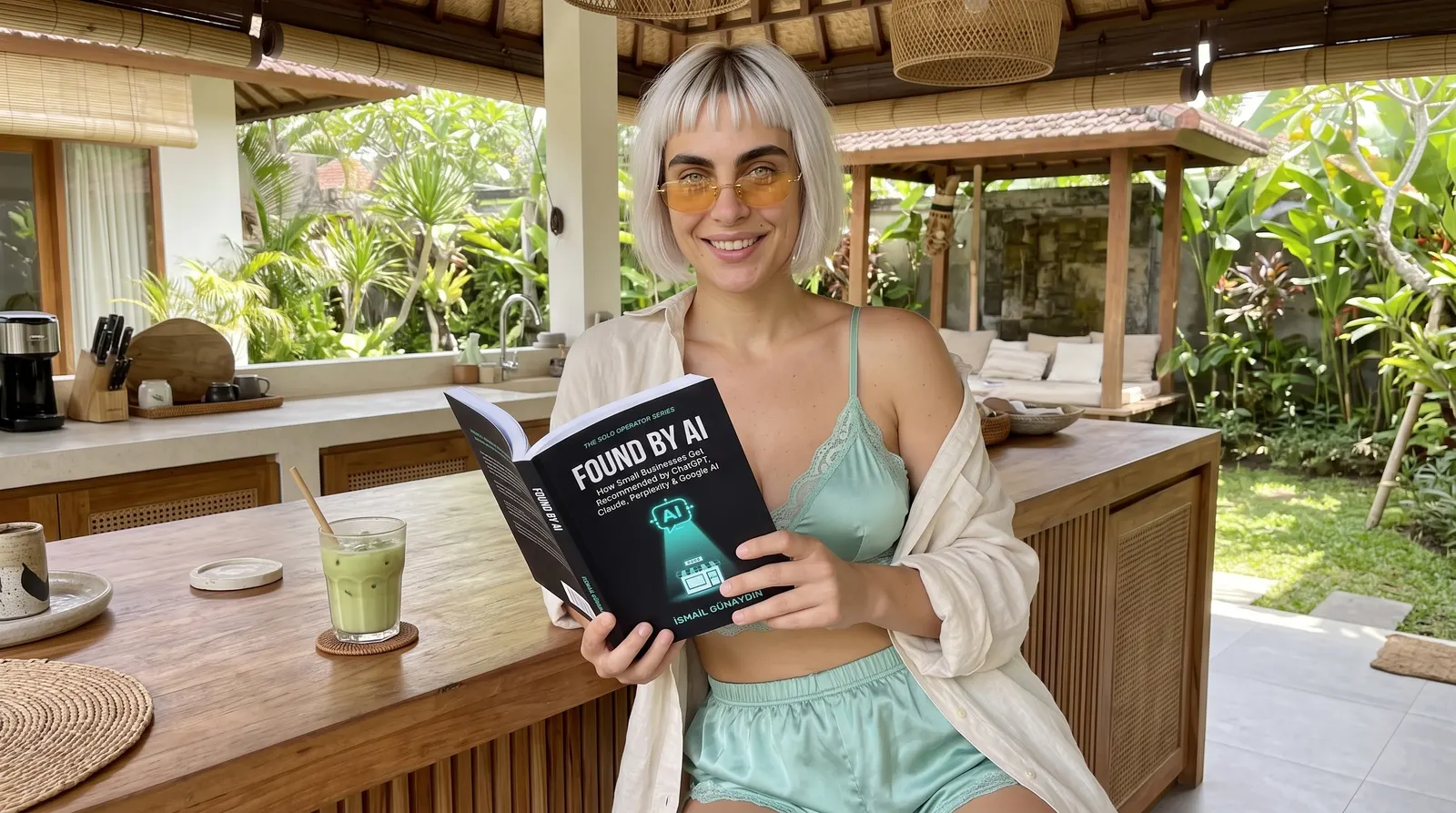
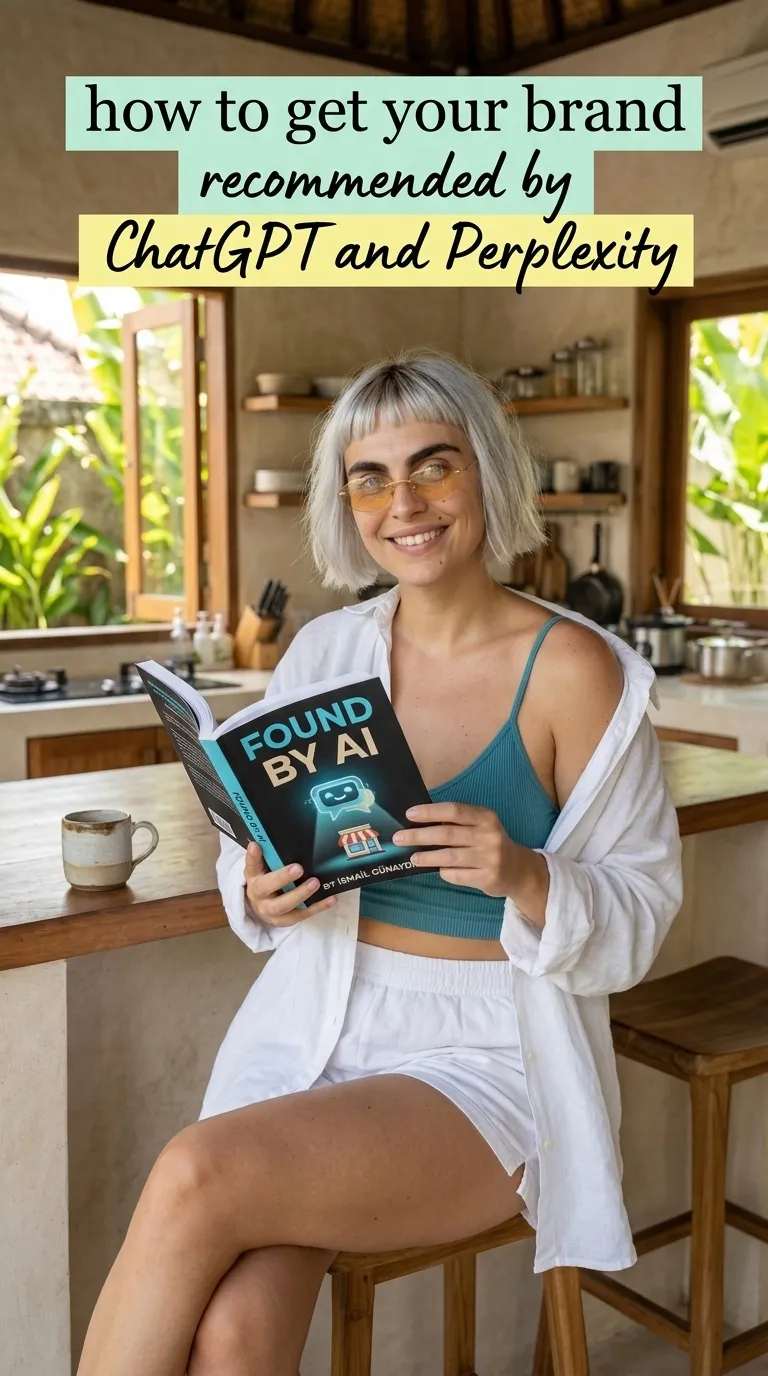
Found by AI
How Small Businesses Get Recommended by ChatGPT, Claude, Perplexity, and Google AI. By İsmail Günaydın, 70 pages.
Where this problem is in the book:
- Introduction: The New Front Door
- Can I Even Find You?
- Do I Trust You Enough to Name You?
Links go to Amazon. I wrote this book and earn a royalty on every sale. Amazon sets the price and handles delivery and returns.
Is Found by AI the right book for you?
Yes, if
- You asked ChatGPT for a business like yours and it named three others
- You know your work is good, and you can't see why the AI ignores it
- You run a small business alone and have no budget for an agency
Skip it if
- You run enterprise SEO with a team and paid tools
- You want a trick to game AI answers instead of being easy to read and trust
Fair doubts before you buy
I have read ten SEO guides. Why would this one be different?
Most SEO guides are about ranking in a list of links. This book starts from a different fact: an AI answer is not a list. It names a few businesses and the customer mostly takes its word. Each chapter is one of the five checks, with a one-page tool you can run that week.
Can't I just pay someone to do AI SEO for me?
You can. Just know that a lot of what is sold right now is ritual, like a special file that is meant to make AI notice you. The fixes in this book are plain and mostly free: open the door to AI bots, say what you are, earn a real outside mention, and write answers a machine can lift.
Is the Kindle version enough, or do I need the paperback?
The Kindle version is enough. Every tool is printed inside its chapter. If you like to fill things in by hand, the free workbook on this site has all seven tools as printable pages.
Get Found by AI
An AI names a business only after five quiet checks pass, and each check can be fixed with a one-page tool.
Links go to Amazon. I wrote this book and earn a royalty on every sale. Amazon sets the price and handles delivery and returns.
Part of The Solo Operator Series, five short books that can be read in any order.
Questions people ask about this
- Why doesn't ChatGPT recommend my business?
- Usually because one of five checks fails. The AI could not reach or read your site, could not tell what you do, found nobody besides you saying you are good, found no clean sentence to quote, or your pages do not use the words customers really type. How good your work is was never one of the five.
- How do I get my business recommended by ChatGPT?
- Fix the five checks in order. Let AI crawlers in and make sure your words are real text. Say in one plain sentence what you do, who for and where. Put a named person on the business and earn honest outside mentions. Write answers that lead with the answer. Then match the questions real customers ask.
- Does ranking high on Google mean ChatGPT will mention me?
- No. When Ahrefs checked which pages AI engines cite, only about 12% of them ranked in Google's top ten. The AI builds its own picture of your business from what it can read. Ranking well does not pass that picture along for you.
- How can I check if ChatGPT knows about my business?
- Ask it. Open ChatGPT, Perplexity and Google's AI and type the exact questions your best customers would ask. Note if you appear, who appears instead, and what the AI says about you. The book calls this the AI Visibility Snapshot, and it takes about four minutes.
- Do I need an llms.txt file to show up in AI answers?
- The book says no. Google's own engineers have said on the record that they don't use llms.txt and compared it to the old keywords meta tag. An hour spent making your real homepage readable as plain text does far more.
- Do reviews help ChatGPT recommend my business?
- They can, because they are a voice other than yours. The book treats outside reviews as one of the main trust signals an AI looks for before it names a business. Ask happy clients to review you on a platform you don't own, never tell them what to write, and never buy reviews.
Related problems
- How does ChatGPT decide which business to recommend? The five checks, in order
How ChatGPT, Perplexity and Google's AI pick which businesses to name: the five checks, in order, and where a small business should start.
- ChatGPT describes my business wrong, or can't say what I do. Is it me?
ChatGPT gets your business wrong or calls it something vague. Here is how the AI builds a label for you, and the one sentence that fixes it.
- My robots.txt is blocking GPTBot and other AI crawlers. How do I fix it fast?
Your robots.txt turns away GPTBot or ClaudeBot. Here is how to find what added the block, open the door, and check the AI can read your page.
- Why isn't my local business showing up when people ask AI for someone near them?
Nearly half of people now use AI to find a local business. Here is why yours may be missing from the answer, and how to start fixing it.
- Everything inside Found by AI
Every chapter, who the book is for, and every problem it helps with.