Last updated
What things cost in 1957: milk, bread, eggs, gas and a stamp

| Item | 1957 price | What to know |
|---|---|---|
| Milk, one quart at the store | 23.4 cents | 25 cents if the milkman brought it |
| White bread, one pound | 18.8 cents | 18.4 cents in January, 19.0 by November |
| Butter, one pound | 74.3 cents | About four times the price of bread |
| Eggs, one dozen | 57.3 cents average | 47.9 cents in June, 69.5 cents in October |
| Ground beef, one pound | 42 cents | Rose through the year to 44.6 cents in December |
| Coffee, one-pound can | 108.2 cents in January | Fell almost every month, to 95.0 cents in December |
| Chocolate bar, one ounce | 4.5 cents | The same price in all twelve months |
| Gasoline, one gallon | 31 cents | An attendant pumped it and cleaned the windshield |
| First-class stamp | 3 cents | Unchanged since July 1932 |
| Federal minimum wage | $1.00 an hour | Unchanged from March 1956 to September 1961 |
How to read this 1957 price table
Each line is a national average for 1957. The food prices come from one place: a bulletin the Bureau of Labor Statistics printed in 1959. It lists what Americans paid for about sixty foods, city by city and month by month.
That is why some lines show two numbers. An average for the year is fine for bread, which barely moved. It hides the story for eggs.
The other lines come from their own records. The minimum wage is from the Department of Labor. The stamp is from the Postal Service's rate history.

The egg that would not sit still
Hens lay on a schedule, and in 1957 the American kitchen still ran on it.
A dozen eggs cost 53.6 cents in January. By June they had dropped to 47.9 cents, the cheapest of the year. Then they climbed. They were 64.9 cents in September and hit 69.5 cents in October. From June to October, that is a jump of about forty-five percent.
Coffee did the opposite. It fell almost every month, from 108.2 cents to 95.0 cents. Nobody announced it. Families just got a small raise from the grocery store.
And the chocolate bar did not move at all. It was 4.5 cents in January and 4.5 cents in December. The same year that could not make up its mind about an egg was completely settled about a candy bar.

What one hour of work bought in 1957
A price means more next to a wage. In early 1957, a factory worker earned about $1.90 an hour. The federal minimum was one dollar.
One hour on a factory floor bought about ten pounds of bread, or eight quarts of milk. One hour at the minimum wage bought about five pounds of bread. Most months it bought a dozen eggs with change left over. It did not quite buy a one-pound can of coffee. You were about two cents short.
Those are simple sums, the published wage divided by the published price. They are not survey results.

More of the 1957 grocery list
The table above has the famous items. Here are the rest of the everyday prices the book gives, all yearly averages from the same 1959 bulletin.
| Item | 1957 price |
|---|---|
| Sugar, five pounds | 55.2 cents |
| American cheese, one pound | 57.6 cents |
| Ice cream, one pint | 29.4 cents |
| Chuck roast, one pound | 52.5 cents |
| Whole ham, one pound | 63.1 cents |
| Round steak, one pound | 93.6 cents |
| Frying chicken, one pound | 46.9 cents |
| Potatoes, ten pounds | 57.1 cents |
| Lettuce, one head | 17.4 cents |
| Cabbage, one pound | 8.7 cents, the cheapest thing in the store |

What a TV, a fridge and a washer cost
Bigger things came out of the 1957 Sears catalog, which still survives. The book's figures come from the 1957 Sears Christmas Book.
| Item | 1957 Sears price |
|---|---|
| Silvertone TV | $122.95 for a 17-inch portable, up to $167.95 for a console |
| Coldspot refrigerator | $384.95 and up |
| Kenmore automatic washer | $249.95 |
| Matching electric dryer | $184.95 |
| Silvertone table phonograph | $76.95 |
| 20-inch child's bicycle | about $33 |
Hold the fridge against a family income of $5,000 a year. It cost about a month's wages. That is why people bought these on time, and expected them to last twenty years.

What about a car or a house?
Most price lists give an "average" car and house price for 1957. The book does not, and it says why.
Cars. No reliable national average exists for 1957. So the book gives real prices for real cars. The Ford Fairlane 500 Skyliner, with a roof that folded into the trunk, cost $2,945. A Plymouth Belvedere four-door was $2,410. Next to a median family income of $5,000, a new car was about half a year's pay.
Houses. The Census Bureau measured the median house price only in census years, 1950 and 1960. There is no true 1957 figure. One famous sale does have a price: in March 1957, Elvis Presley bought Graceland, outside Memphis, for $102,500.
Records. The record prices that float around online could not be traced to a source for 1957, so the book leaves them out. A record player, as above, cost $76.95 at Sears.

Reading the prices out at the kitchen table
Picture the birthday. Someone reads out "a quart of milk, 23.4 cents," and the person turning seventy says, "We had a milkman." Then a story comes. The milk truck, the bottles on the step, who had to bring them in.
That is what these numbers are for. A price list on its own makes the past look easy. Bread at nineteen cents sounds like a cheap world. It was not. There was simply less to buy. Most homes had no air conditioning, no second phone and no second TV.
So read the prices, and then ask what is missing from the list.

Where the full price list lives
This is the problem The Year You Arrived: 1957 was written for. We trust its numbers because Nancy Whitaker lists every source at the back, and says plainly when a number could not be checked.
What Things Cost is the chapter for this page. It covers the meat counter, the produce aisle, the three things the year did with its prices, and the August turn into a recession that nobody saw at the time.
The Year, Month by Month gives the prices for each month on its own page. If you want the price of eggs the week someone was born, that is where to look.
The Numbers turns 1957 prices into today's money. We have a short version of that on our page about 1957 prices vs today.
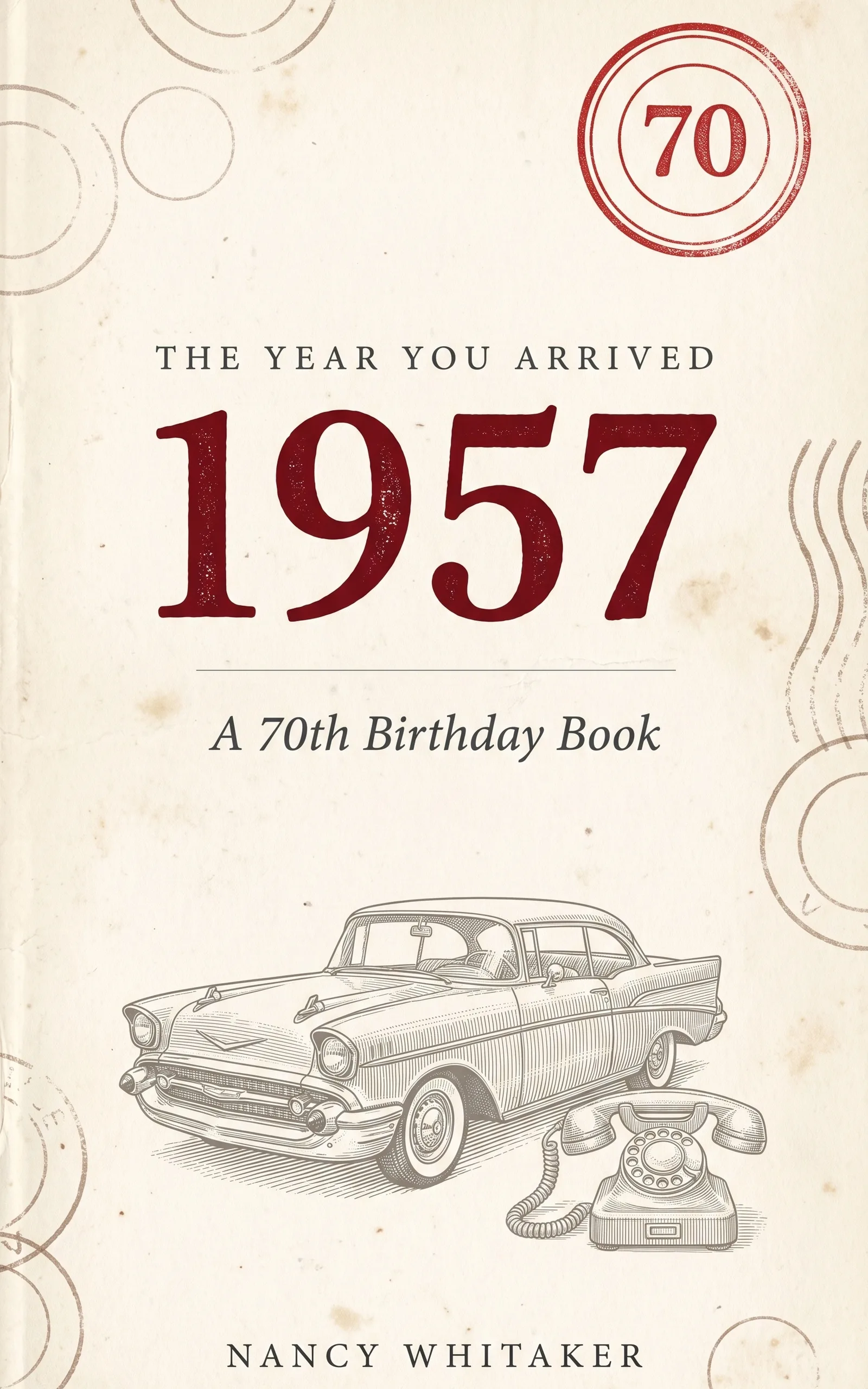
The book for this problem
The Year You Arrived: 1957
A 70th Birthday Book of Real Prices, Headlines and Everyday Life, From the World You Were Born Into to the One You Grew Up In. By Nancy Whitaker, 170 pages.
Where this problem is in the book:
- What Things Cost
- The Year, Month by Month
- The Numbers
Links go to Amazon. ToolGenX publishes this book under a pen name and earns from every sale. Amazon sets the price and handles delivery and returns.

Is The Year You Arrived: 1957 the right book for you?
Yes, if
- You want 1957 prices you can trust, not ones copied from site to site
- You are making a birthday card, toast or quiz for someone born in 1957
- You want to know what an hour of work bought back then
Skip it if
- You need prices for a year other than 1957
- You need the price of a new car or a house in 1957, which the book does not give because no reliable figure exists
Fair doubts before you buy
These prices are all over the internet. Why would I need a book?
Many of the figures online are copied from site to site until nobody knows where they came from, and some are simply wrong. The food prices in this book were read out of the 1959 government bulletin. The book also gives the price for each month, so you can find the prices from the weeks someone was born.
Do the prices in the book come with the today comparison?
Yes. A later chapter turns each 1957 price into today's money, using the government's price index, and then sets it next to what the item costs now. Food comes out cheaper. The stamp does not.
Get The Year You Arrived: 1957
A 70th birthday book that tells the year they cannot remember with sourced prices and headlines, then asks about the years they can.
Links go to Amazon. ToolGenX publishes this book under a pen name and earns from every sale. Amazon sets the price and handles delivery and returns.

Questions people ask about this
- How much was a gallon of milk in 1957?
- Milk was sold by the quart then, not the gallon. A quart cost 23.4 cents at the grocery store and 25 cents if the milkman brought it to your door. Four store quarts make a gallon, so a gallon's worth came to about 94 cents.
- How much was a loaf of bread in 1957?
- A pound of white bread averaged 18.8 cents in 1957. It was cheapest in January at 18.4 cents and reached 19.0 cents in November.
- How much was gas in 1957?
- Gasoline averaged 31 cents a gallon. An attendant came out, filled the tank, checked the oil and cleaned the windshield, and that was simply what buying gas meant.
- What was the minimum wage in 1957?
- One dollar an hour. It had been one dollar since March 1956 and stayed there until September 1961. The average factory worker earned about $1.90 an hour in early 1957.
- How much did a stamp cost in 1957?
- Three cents for a letter. That rate had held since July 1932 and lasted until August 1958, when it rose to four cents.
- What was the average income in 1957?
- The Census Bureau put the median family income at $5,000 a year. Half of families earned more and half earned less. About one in ten cleared $10,000.
Related problems
- 1957 prices vs today: what got cheaper, what got dearer
Compare 1957 prices with today the honest way. A 1957 dollar is about $11.92 now, and food came out cheaper. The minimum wage did not.
- What happened in 1957, month by month, from Elvis to Sputnik
What happened in 1957? One key event for each month, from Elvis in January to Sputnik and the Vanguard rocket, with dates you can check.
- The 70th birthday party is this weekend and you need quiz questions about 1957
Need a 1957 quiz for a 70th birthday party, fast? Twelve questions with answers, all checked, plus party ideas built on the year.
- Everything inside The Year You Arrived: 1957
Every chapter, who the book is for, and every problem it helps with.