Last updated
You want to ask your parents about their childhood but you do not know what to ask

Sunday lunch, and the question you did not ask
It is Sunday. Your mom is at the table. The plates are cleared and there is a quiet moment.
You think about asking her what it was like when she was little. You almost do. Then someone asks about the drive home, and the moment goes.
On the way back you think, next time. You have thought that for years.
There is a small fear under it, too. What if you ask and she says "oh, it was normal," and that is the end of it?

Why "tell me about your childhood" goes nowhere
That question is too big. It asks a person to sum up eighteen years in one go. Nobody can, so they say "normal" and change the subject.
It is not that they do not want to talk. It is that the question gives them nothing to hold.
The other trap is waiting for the right time. There is no right time. The book says it plainly about a mother's story of the day you were born: if she is still here to ask, ask now. It is the last part of the record that is still open, and it closes.

Small questions open big stories
The shift is simple. Ask about one thing, on one day, in one place.
Here are questions from the book for a parent born in 1957. Pick three. Do not read them all at once.
For the early years: What did your school give out at milk time, and what did it come in? What was the name of your first teacher? How did you get to school, and who did you walk with?
For the middle years: What did your bicycle look like, and how far from home were you allowed to ride it? What did you do on a Saturday morning between waking up and lunch? Which show were you not allowed to watch, and did you watch it anyway?
For the teen years: What was the first record you bought with your own money? What was your first car, or whose car did you drive? Did you ever wait in a gas line, and what did your father say while you sat in it?
Dates help too. A person born in 1957 was six on November 22, 1963. Many schools sent children home early that day. Ask where they were when they heard. Ask about February 9, 1964, when about seventy-three million Americans watched the Beatles on The Ed Sullivan Show, as Smithsonian Magazine reports. Ask about July 20, 1969, when they were eleven or twelve. The Air and Space Museum tells how the country watched that night.

The basics most family history lists start with
Many lists online open with the same plain facts: full name, where they were born, the house they grew up in. Those are good starters, because they are easy. The book's blank pages ask them in a way that pulls a story along with the fact.
- What was your full name, as it was written on the day you were born?
- Where were you born, the town and the hospital if you know it? What day of the week was it?
- Where was your first house? What could you see from the front door?
- Which room was the television in, and where was the telephone?
- What did the kitchen smell like on a Sunday?
- Describe your mother in three words. Then your father.
- Who were your brothers and sisters, in order?
- Which neighbor do you remember best, and why?
- What is the first thing you remember? Not the story you were told. The one that is yours.
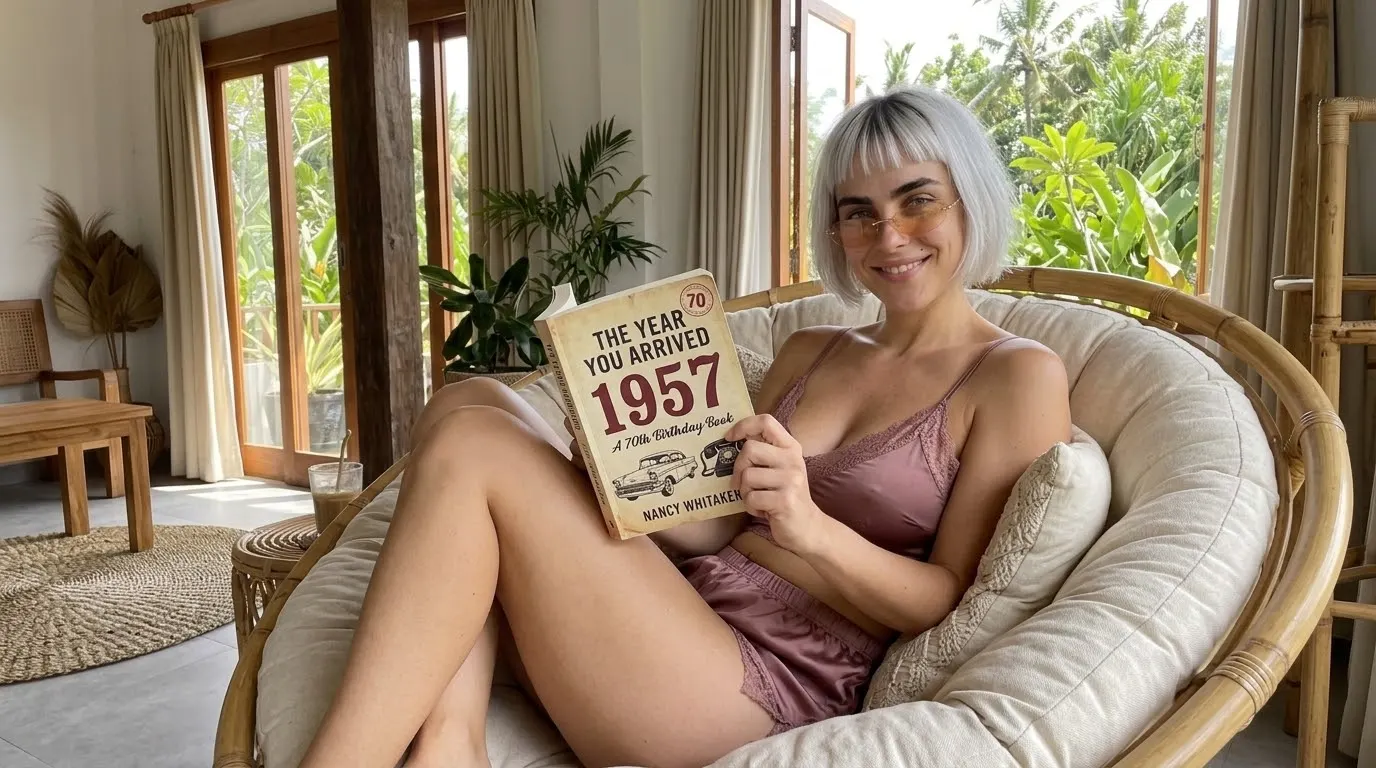
Deeper questions, for later in the talk
Searchers also look for "deep" questions. Save these for when the talk is warm, not for the first five minutes. They come from the last pages of the book.
- What did you think your life would look like at seventy?
- What were you wrong about? What were you right about?
- What was the best year, and why that one?
- What would you tell the child in your first memory?
- What did you do after school, and who decided?
Then do the most useful thing of all. Hold the pen yourself. Read a question, listen, write. People who will not write things down will often talk for an hour while you do.

The questions are already in this book
This is the problem The Year You Arrived: 1957 was written for. We like how it moves from telling to asking.
First Memories covers the early 1960s, from the toys to the Kennedy funeral to the Beatles. It ends with questions about school and two things worth digging for: your mother's version of the day you were born, and whatever your father never talked about.
The Schoolyard Years covers 1965 to 1969 and the moon landing, then asks about bicycles, chores and what they wanted to be.
Becoming a Teenager covers the end of the draft, the 1973 gas lines and turning eighteen in 1975, with questions about first records and first cars.
Your Own 1957 gathers it all into blank pages to fill in, from the day itself to turning seventy. The last page is for them to write something to you.
If this is for a birthday, see our page on a meaningful 70th birthday gift that is not a mug.
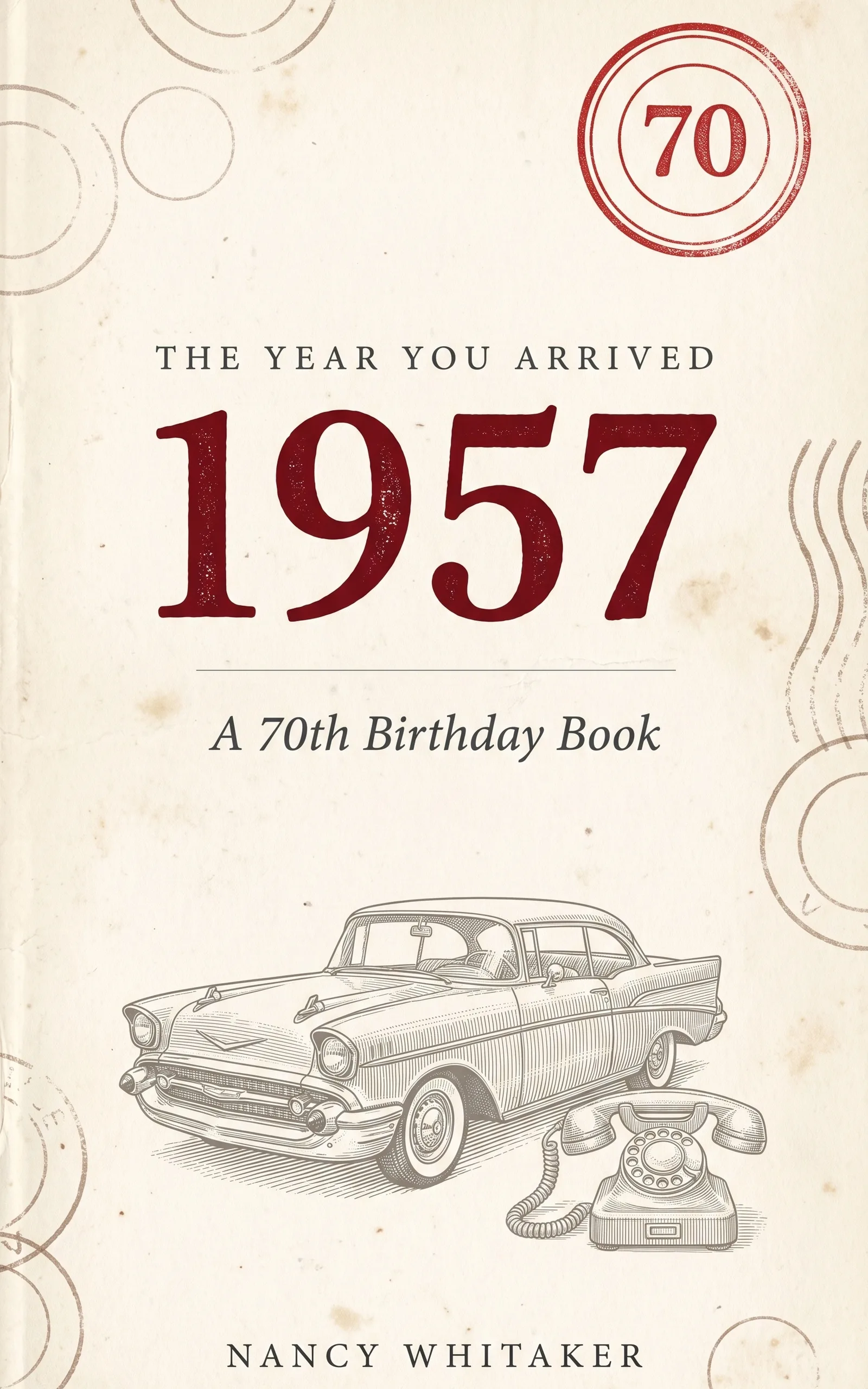
The book for this problem
The Year You Arrived: 1957
A 70th Birthday Book of Real Prices, Headlines and Everyday Life, From the World You Were Born Into to the One You Grew Up In. By Nancy Whitaker, 170 pages.
Where this problem is in the book:
- First Memories
- The Schoolyard Years
- Becoming a Teenager
- Your Own 1957
Links go to Amazon. ToolGenX publishes this book under a pen name and earns from every sale. Amazon sets the price and handles delivery and returns.

Is The Year You Arrived: 1957 the right book for you?
Yes, if
- You keep meaning to ask your parents about their past and never do
- You asked once and got "oh, it was normal"
- Your mom or dad was born in or near 1957
Skip it if
- You want a list for a parent born in the 1970s or later
- You are looking for therapy questions about family conflict
Fair doubts before you buy
Can't I just find a list of questions online for free?
You can, and some are fine. Most are written for any age, so they ask big general things. The questions in this book are tied to a real timeline: the day Kennedy was shot, the moon landing, the gas lines of 1973. Dates give a memory something to hold on to.
My mom says she does not remember much. Is it worth trying?
Yes. The book's advice is to ask for the small things rather than the big ones: what the weather was, who drove, what was said in the car. Once a person starts, they remember more than they expect to.
Get The Year You Arrived: 1957
A 70th birthday book that tells the year they cannot remember with sourced prices and headlines, then asks about the years they can.
Links go to Amazon. ToolGenX publishes this book under a pen name and earns from every sale. Amazon sets the price and handles delivery and returns.
Questions people ask about this
- What should I ask my parents before they die?
- Ask the things only they know. Ask your mother for her version of the day you were born, in small details. Ask your father about whatever he never talked about. Nobody else can answer those, and nobody will ask if you do not.
- What are good questions to ask a parent about growing up in the 1960s?
- Ask where they were on November 22, 1963, the day President Kennedy was shot. Ask if they watched the Beatles on The Ed Sullivan Show in February 1964. Ask what they wanted to be in the summer of 1969, when a man walked on the moon.
- How do I start a conversation with my parents about their past?
- Give the talk a reason. A photo, a birthday or a book with questions in it works well. Sit next to them, read one question, and write what they say. Do not correct them. Let one story lead to the next.
- What questions should I ask my dad about his teenage years?
- For a man born in 1957, ask about his first car, whether he ever sat in a gas line in 1973, and what he wore that he would not want photographed. Ask what he was told he would do after school, and who told him.
- How do I record my parents' stories?
- Write them down as they talk, in their words. A book with blank pages keeps it all in one place. Many people who will not write things down will talk happily while someone else does the writing.
- What are the top 10 questions to ask your parents about their childhood?
- Ten from the book that work well: 1. Where were you born, and what day of the week was it? 2. What could you see from the front door of your first house? 3. What is the first thing you remember? 4. What was your first teacher's name? 5. What was in your lunch? 6. How far could you ride your bike from home? 7. What was the first record you bought? 8. Where were you on November 22, 1963? 9. What was your first job, and what did it pay? 10. What did you think seventy would feel like?
Related problems
- You want a meaningful 70th birthday gift that is not another mug
Skip the mug and the gift card. A 70th birthday gift with meaning asks them to tell their story, and we show you how to give one.
- 70th birthday gift ideas for a mom or dad born in 1957
Your mom or dad turns 70 in 2027. Gift ideas built on 1957 itself: real prices, real news and the questions only they can answer.
- Birthday book, photo book or card: which is the better 70th birthday gift?
Choosing between a birthday year book, a photo book and a card for a 70th? What each one holds, who does the work and what it leaves behind.
- Everything inside The Year You Arrived: 1957
Every chapter, who the book is for, and every problem it helps with.